
‘A play for everyone’: Braiding Peonies brings racialized and immigrant voices to the stage
Written by theatre newcomer Sobia Shaikh, the play was inspired by incidents of racism in Newfoundland and Labrador
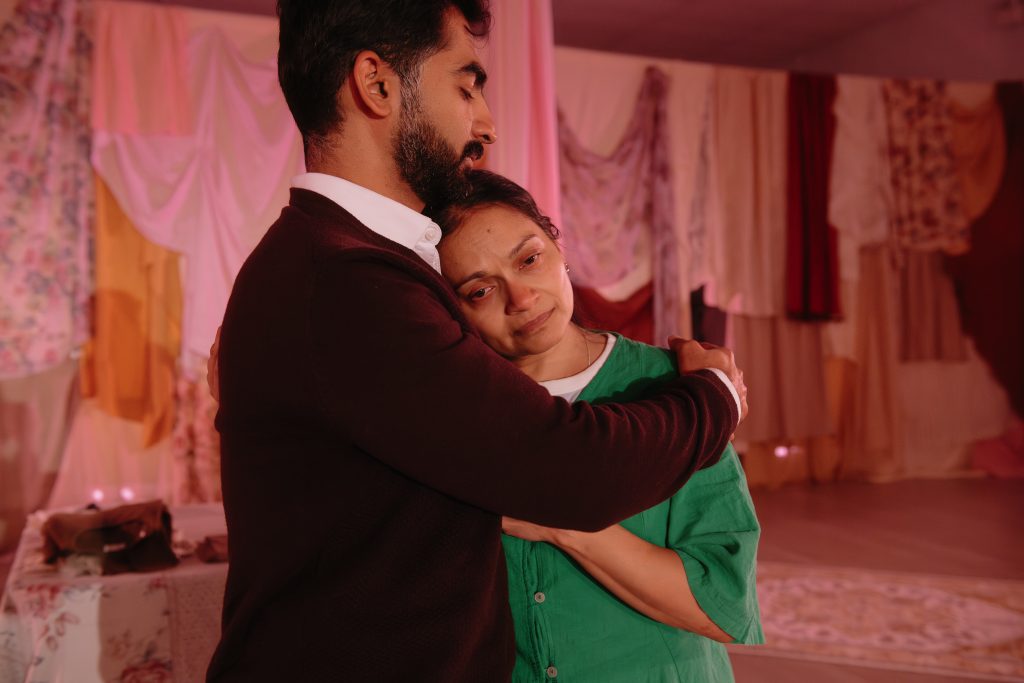
From Tempting Providence to Come From Away, plays about Newfoundland and Labrador have always looked inward for endless material in the lived experiences, traditions and voices of the province’s residents.
Braiding Peonies is the latest production to step into the spotlight and continue the tradition of telling local stories through theatre. This time, the focus is on Muslim immigrants.
Centring on a Muslim family living in the province, the story follows the family as it navigates the aftermath of a racist attack against her 17-year-old child Samreen.
Playwright Sobia Shaikh says the show was inspired by increasing reports of racism in Newfoundland and Labrador. She refers to the 2022 assault on young Muslim women who were attacked outside a Mary Brown’s in St. John’s. “There’s been not one incident, but several, and many of them don’t get documented in the media,” Shaikh says.
Will you stand with us?
Your support is essential to making journalism like this possible.
Braiding Peonies distinguishes itself from other plays by drawing on the experiences of minorities in the province, says the play’s director, Santiago Guzmán. “I think that I was unapologetically trying to carve it for people like me who struggled to be seen and to be heard.”
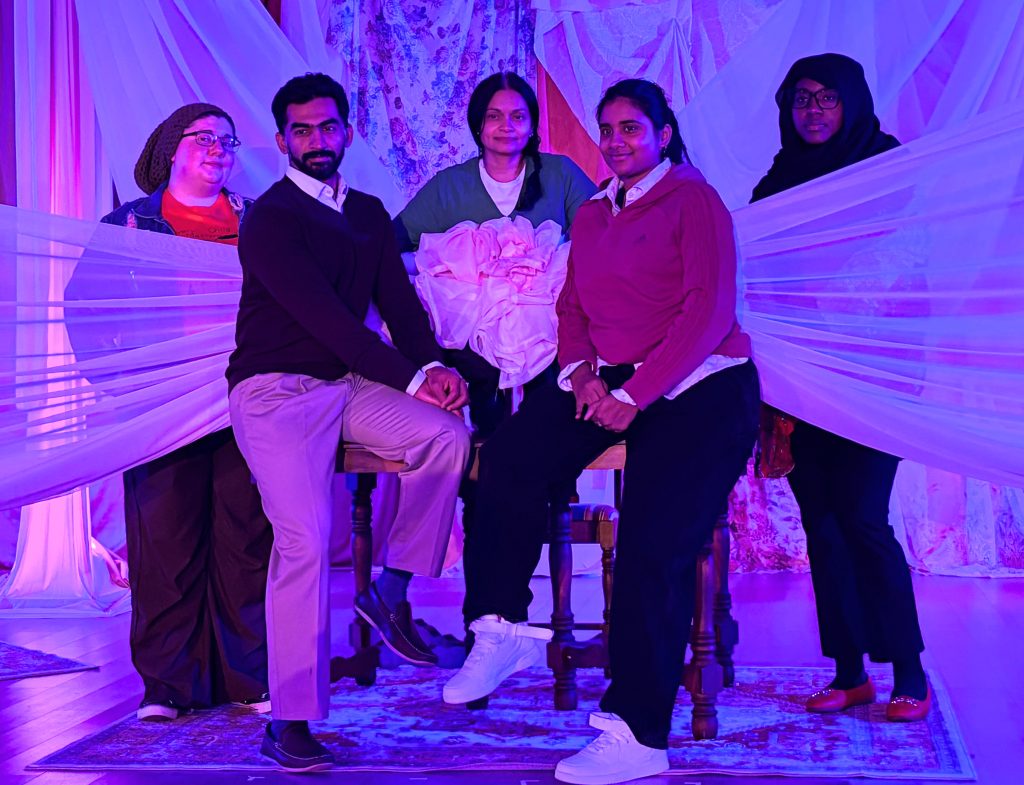
Many of the production’s cast and crew, including the choreographer and sound designer, are from racialized communities. “It’s appropriate because, for example, the music or the choreography […] we wanted some cultural specificity,” says Shaikh.
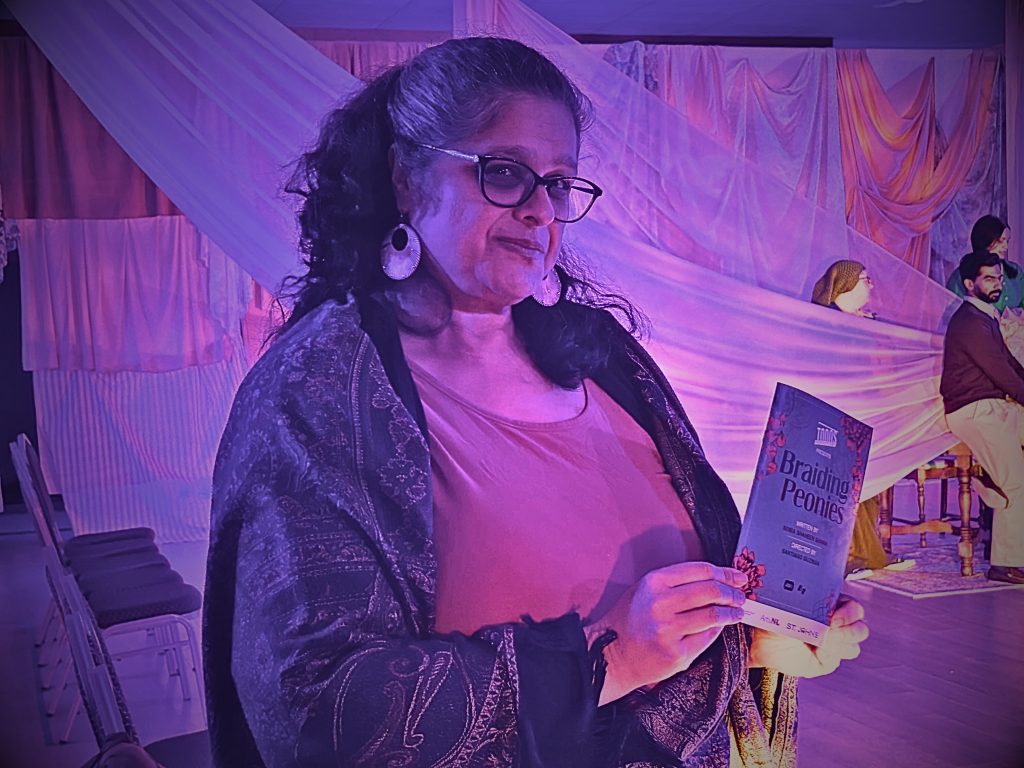
Selina Asgar, who plays Samreen’s mother Sadiqa, a mother trying to get justice, says there are few opportunities for racialized actors to portray important characters in theatre and film in the province, and she hopes Braiding Peonies will help change that.
“You get background casting and stuff like that, but you don’t get stories that are centric to a different community,” she says.
Nicole Obiodiaka, who plays Lalla Zainab, says over the past few years, the province has seen a growth in diversity, but that the theatre scene “hasn’t necessarily caught up to that, to reflect those stories, and things like [Braiding Peonies] are very important because they reflect what the province or the city looks like today.”
Obiodiaka is also the founder of Centra, an organization that provides training and resources for Black artists in the province, “so that black artists—theatre artists—can be employed outside of just productions that are equity, or like BIPOC focus — that they can be across everywhere,” she says.
‘A way to disrupt that distance’
Guzmán says Braiding Peonies was created with inclusivity at its core, regardless of race, gender identity, or ability, which is why every element of the production is thoughtfully shaped.
From picking The Lantern as the play’s location, a community space that offers opportunities for “different people from different backgrounds,” Guzmán explains, to arranging the audience seating on the same level as, and surrounding, the stage — the production emphasizes openness and connection.
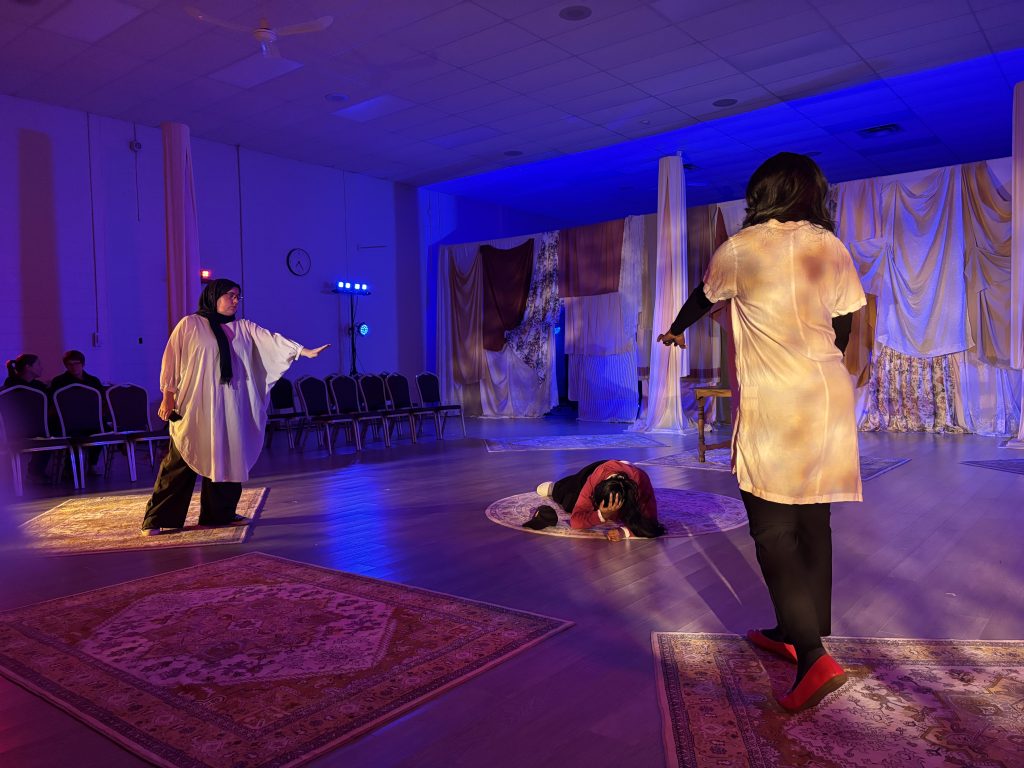
“It’s a way to disrupt that distance that exists between the storytellers that are usually on a stage and a proscenium stage,” Guzmán says.
The show also offers ASL interpreters and live descriptions for anyone who might need visual cues. Guzmán adds that anyone who wants to see the show but cannot buy a ticket can reach out to him.
“It is very important to me that people who have different access needs […] can partake in the storytelling process at any point,” he says.
Creating space for everyone
Originally from Mexico, Guzmán says when he moved to Newfoundland more than 10 years ago to study theatre, he quickly realized theatre in the province was predominantly white, and so were the stories being told. “The fact that I have an accent or that I am brown is a problem or a situation,” he says.
Guzmán decided to focus on playwriting instead of acting. As he learned about the importance of local experiences to storytelling in the province, he decided he wanted to help tell stories and experiences of marginalized communities, whether Black, Indigenous, Persons of Colour, landed immigrants, people with disabilities, or 2SLGBTQAI+.
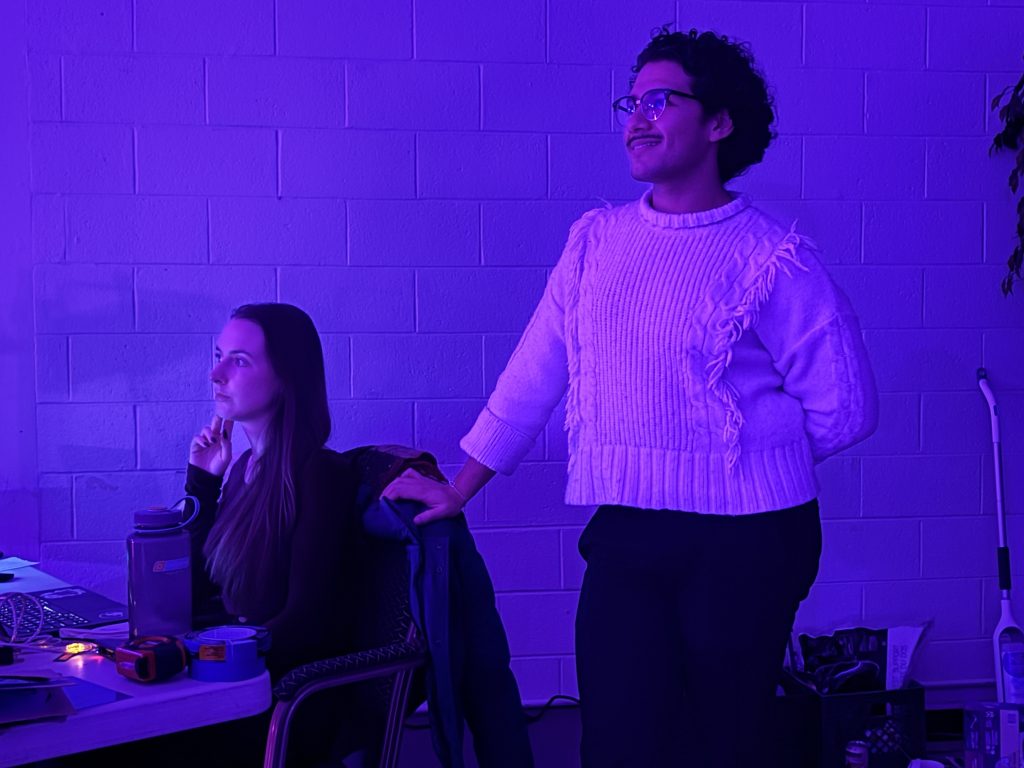
“People in the community were not seeing diverse stories because people from diverse backgrounds were not telling these stories,” he says. This led Guzmán to create TODOS Productions, a theatre company that highlights and lifts all artists.
The effort was noticed by the National Art Center(NAC) in Ottawa, which asked Guzmán if he was interested in creating a play that explored the abolition framework in theatre as part of NAC’s multi-year project Stages of Transformation.
Through the abolition framework, NAC hopes to dismantle institutional practices that lead to the exclusion of racialized, Indigenous and disabled artists, and to co-create theatre project with artists and communities.
Once Guzmán was on board, he immediately thought of Shaikh, who as chair of the Anti-Racism Coalition of Newfoundland and Labrador, was at the forefront of many important conversations around dismantling racism in the province.
Shaikh had never written a play before and was initially reluctant to take on the challenge. But she says with support from Guzmán, the NAC, and the local arts community—and by attending workshops and events—Shaikh was able to create a story that places marginalized people at the centre of the play, rather than in the peripheries.
“One of the conversations in there is how faith plays into this family, and how each character is so diverse in not just their ethnicity, race and the culture, but also in their understanding of faith,” she says.
‘Everyone can relate’
Shaikh wants audiences to enjoy the play and the actors’ performances. “This project isn’t just my words, my play, it’s all of these people—the director, [everyone who has] been part of it. So I hope [the audiences] get a full embodied experience,” she says.
Shaikh adds that she would like to see people have conversations about justice and what healing from violence looks like, especially in Muslim and racialized communities.
Asgar says while Braiding Peonies focuses on a Muslim family, everyone can relate to the story and find inspiration in it. “I would like for people to come see this, just to come see it,” she says. “Not because it’s about racialized people, not because it’s about Islamophobia, or […] transphobia, or any of those elements in it, but just because it’s a good story and there’s something in it that I think everybody could take from it and benefit from.”
Leahdawn Helena, who plays Boon, a two-spirit, Mi’kmaw-Moroccan character in the play, says the show isn’t meant to shame anyone; instead, it’s grounded in love and kindness.
“Visually the set and the lighting design are really beautiful. The characters are very real and very human, and I think they’re very relatable. No matter what your background is, they’re a family. And there’s nothing more relatable,” Nekm says.
For Guzmán, being a theatre creator means continually promoting the values of justice, accessibility, anti-racism, and representation. “I am not there to teach you. I’m there to show you a story.
“In 2025, when there is so much tension and so much division based on difference and lack of understanding, I think this is an invitation to say, ‘This is a play for everybody’.”
Braiding Peonies runs at The Lantern Community Centre in St. John’s until Nov. 30. Show and ticket information can be found here.

Author

Related Articles
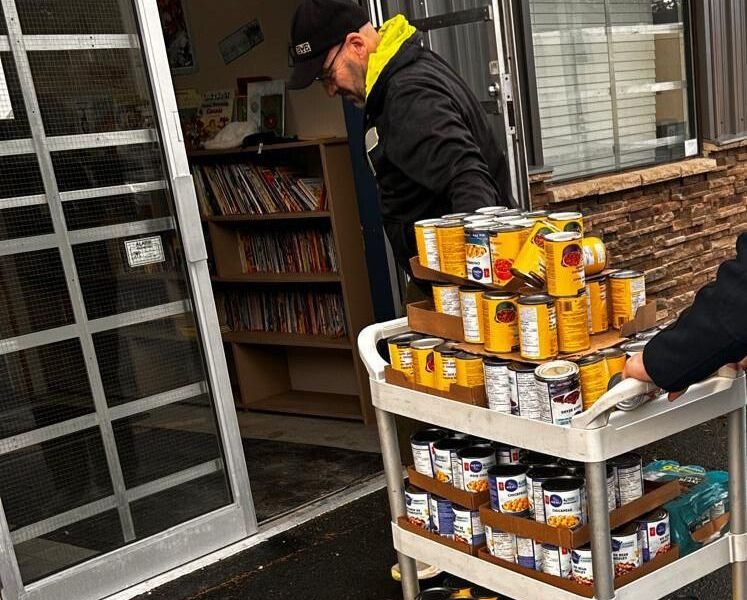
Muslim youth donate 600 pounds of food to Avalon food bank
As the province continues to see high rates of food insecurity, communities are coming together this holiday season to make sure households have food on the table
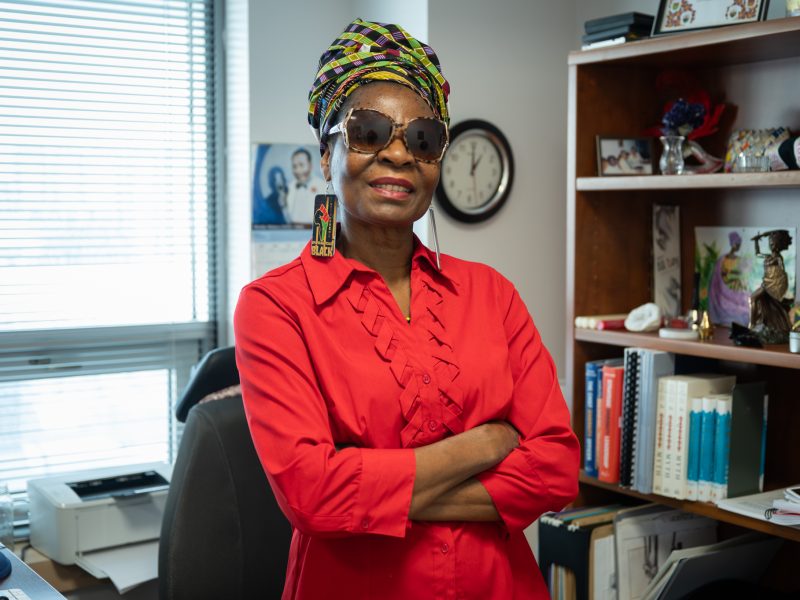
Head of Memorial University’s EDI office leaving role
In an interview with The Independent, Delores Mullings spoke candidly about challenges with the equity, diversity and anti-racism position
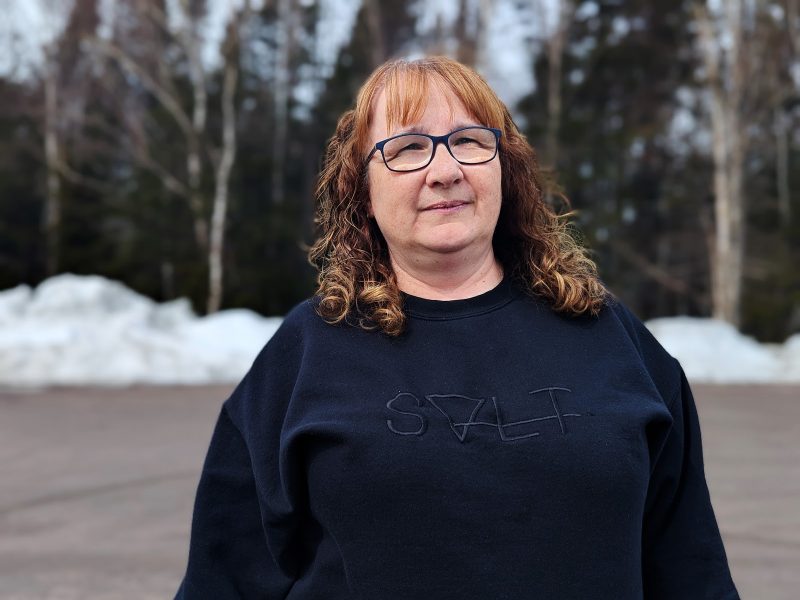
Labrador woman calls for nursing reform following husband’s death
Susanna Rumbolt says her husband Tim, who was battling cancer, should not have died following appointments with an oncology nurse in St. Anthony