
Airport CEO says province’s new ‘air travel loop’ for the Island drawing ‘ire’ and ‘anger’ in Labrador
The Liberals’ air service agreement with PAL Airlines to develop an ‘intraprovincial’ air travel loop via St. John’s, Gander and Deer Lake comes as Labradorians face unaffordable airfares for necessary travel
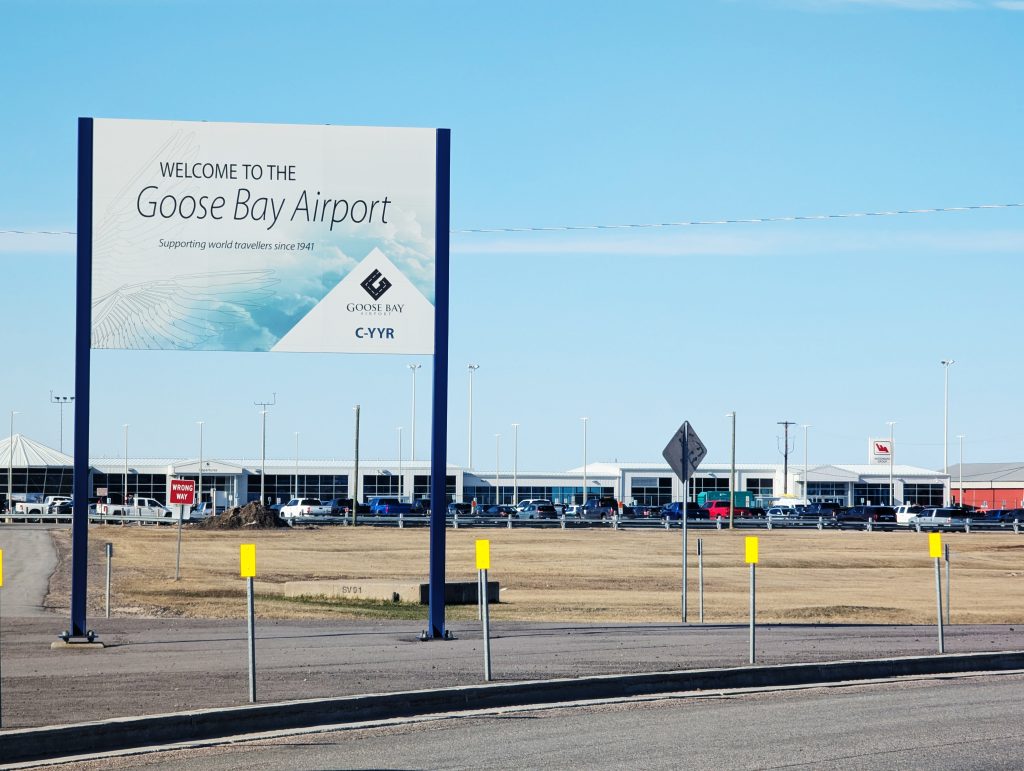
The head of Labrador’s central airport says he was shocked and disappointed by the provincial government’s recent announcement that it will potentially subsidize air travel for tourists on the island while Labradorians face barriers to necessary air travel due to high costs.
On April 29 the province announced an air service agreement with PAL Airlines for an “intraprovincial air travel loop” between St. John’s, Gander and Deer Lake. The seasonal route, which will run four days a week from June 15 to September 20, 2025, will help in “creating the potential for economic benefits for the tourism industry,” according to the province’s news release, which also notes the agreement “represents a significant step forward in enhancing intraprovincial travel for both residents and visitors.”
Goose Bay Airport Corporation CEO Rex Goudie says the announcement was a “tone deaf response to issues that confront people in Labrador.”
But Steve Crocker, the province’s minister of tourism, culture, arts and recreation, says the government bases air service agreements on proposals it receives from airlines and airport authorities. He says the new PAL agreement stems from a proposal initiated by the Gander International Airport Authority.
Will you stand with us?
Your support is essential to making journalism like this possible.
“This is not a subsidy, this is a revenue guarantee. There’s a big difference,” Crocker says. “We have a revenue guarantee with WestJet, for example, last year on London-Gatwick, the cost to the taxpayers of this province was zero. This is about non-resident travelers.”
Crocker says the PAL agreement is targeted at tourists who travel from other places to St. John’s, then fly on to Gander or Deer Lake. If the agreement is successful, he explains, the new “loop” won’t cost the public anything. Asked for details of the agreement so the public can understand what it could be on the hook for if the project isn’t successful, the department refused to share the information, citing “commercial sensitivities”.

In Labrador, air transportation is an essential—and often only—mode of transportation. Tickets from Wabush to St. John’s typically cost more than $1,200 round trip, while those who travel the 161-kilometre route from Happy Valley-Goose Bay to Rigolet typically pay more than $800 round trip.
Last November the Goose Bay Airport Corporation submitted its own proposal for a program similar to one the Government of Quebec created to make air travel more accessible for residents in remote regions of that province. The Quebec Regional Air Access Program is open to residents and tourists and helps many in the Nunavik region of the north, which has an estimated population of 12,000—less than half of Labrador’s roughly 26,000 residents.
The Goose Bay airport’s proposal, reviewed by The Independent, suggests travel from Labrador’s three main airports—Wabush, Goose Bay and Blanc Sablon—to St. John’s should have maximum fares in the range of $650 to $750. At present, round-trip flights from those airports to St. John’s can cost well over $1,000.
The Goose Bay airport estimates the proposed price cap would cost the province between $1.2 and $2 million annually. “While we got a partial response on the request for airfare development,” Goudie says, “we haven’t had any response in terms of how they’re going to address affordability.”
Goudie says the airport learned about the proposed “intraprovincial loop” last September and repeatedly reached out to the province about being involved in the agreement. He was under the impression the proposal hit a dead end due to lack of a strong business case for the loop.
“My first reaction was shock and disappointment—shock that the province can carry on development and intraprovincial air service without including Labrador in the discussions,” Goudie says. “So from my perspective, particularly in light of all the issues in Labrador that we’ve known have been ongoing for some time.
“This announcement is tone deaf. The reality is, we already have links to St. John’s, Gander and Deer Lake. So I’d be interested in seeing the business case.”
Crocker says the PAL agreement is intended for tourists who travel from other provinces to St. John’s, then pick up a second leg to Gander or Deer Lake. He says the agreement in question would not have benefitted Labrador. “The reality is, our research shows a traveler leaving Calgary [and] going to Goose Bay does not come to St John’s. That traveler flies to Montreal, or flies to Halifax,” he says. “This initiative would not benefit the non-resident visitor to Labrador.”

The minister says Labrador would instead benefit from an agreement with an airline that would create or increase routes between cities like Halifax or Montreal to the region. “We’re more than happy to support new routes or incremental growth in routes that can benefit Labrador.” Crocker says he’s open to proposals from other airports, and that in response to the Goose Bay airport’s November 2024 proposal the province allocated $250,000 to the airport corporation to support a study for incremental growth. That funding expired on March 31, 2025 with only $40,000 spent so far, but Crocker says the province is committed to reallocating the remaining $210,000 if Budget 2025-2026 is passed.
Asked for clarification, the department of tourism says in an emailed statement the Goose Bay Airport Corporation continues to “incorrectly merge two issues,” and that the department’s mandate is to support air services like new flights to and from the province, which is different from providing affordable airfare for residents of Labrador.
The department says creating a strategy to address affordable airfares for Labrador residents will require a broader government approach, “one which [the provincial government] will continue to explore.”
Crocker says challenges around affordability are not unique to Newfoundland and Labrador, and that the province is engaging airlines to make travel more affordable. But that, he says, will require cooperation and more support from the federal government.
“If you buy an airline ticket today and ask for a nice, big long breakdown of where your fees are gone, you’re going to be shocked at how much of your airline ticket price is going directly back to the Government of Canada. It’s absolutely ridiculous,” he says.
Crocker says the province was pleased by the federal government’s March 2025 announcement of up to $6 million in funding from the Atlantic Canada Opportunities Agency for route development within the Atlantic region, $1 million of which was earmarked for Newfoundland and Labrador.
“Hopefully we can work with the federal government and get them to drop some of these fees, and find ways to actually make travel more affordable for those of us who live in northern and remote areas,” Crocker says.
Goudie finds the province’s blame on the federal government interesting because federal taxes and fees are the same for all airports across the province and country. “They see it as a barrier to developing Labrador, but they don’t see it as a barrier when it comes to assisting other airports,” he says.

Goudie points to the government’s stated goal for the new service agreement: “to strengthen intraprovincial connectivity to drive tourism and economic growth.” Just as island residents can avail of PAL’s flights between St. John’s, Gander and Deer Lake, Labradorians too could benefit from a similar agreement in Labrador that targets tourists but also helps make air travel accessible to Innu, Inuit and others living in remote areas.
He says Labrador’s many tourist offerings, such as Torngat Mountains National Park, Red Bay, Battle Harbour, the Churchill Falls Hydro Facility, and winter tourism, would be more accessible if air travel weren’t such a barrier and would benefit Island residents and tourists alike. Goudie says the Goose Bay airport’s own research shows a direct flight from Goose Bay to St. John’s was a key market opportunity to expand the airport’s offerings.
“To suggest that this program is not the right fit for Labrador is incredulous,” Goudie says. “It is hard to determine what is the right fit when we are not part of the discussion despite our repeated requests to be included.”
Goudie says there’s a growing sentiment in Labrador that the provincial government only sees Labrador as a place to extract natural resources, and that the air service agreement for the island has only exacerbated that feeling.
He points to Labrador’s resources like hydro, iron ore, and rare earth minerals, and the billions of dollars in wealth that’s extracted from the Big Land. Goudie says Labrador enriches the province through overall economic activity, employment, and taxation, with more projects on the horizon. Yet Labradorians often feel excluded when they see the government supporting island residents but not meeting basic needs of Labrador residents.
“We are not a resource to be exploited without any regard to our needs. The cost of air travel and the quality of service is the issue right now,” Goudie says. “But it’s a symptom of a larger issue: Labrador is being ignored by the government in St. John’s and that must end. This announcement only awakened the ire and the anger of people.”
Goudie says MHA Perry Trimper and Minister of Labrador Affairs Lisa Dempster have both advocated on behalf of Labradorians on air travel affordability, but Goudie still hasn’t been able to have a meeting with Crocker on the issue.

Author

Related Articles
PCs have no plan to meet ambitious housing targets
Finance minister pins housing hopes on federal funding, says his own portfolio of rental properties doesn’t put him in a conflict of interest
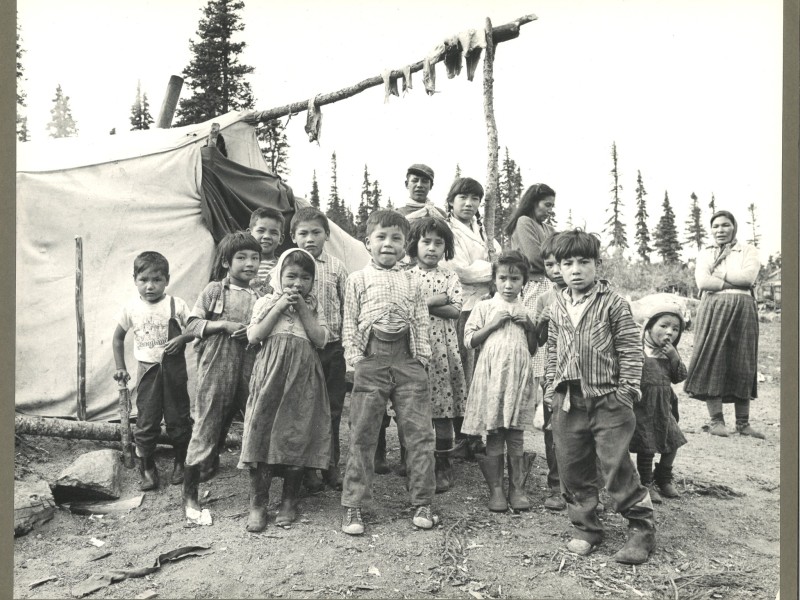
Photos returned to Innu ahead of Labrador exhibit showcasing history, culture
Cultural Guardian Jodie Ashini hopes the archival photographs will help strengthen youth’s connection to Innu culture, and ultimately improve mental health

Can N.L. have oil and gas, and climate targets too?
Finance minister says yes, but ATI requests show there’s no plan for how to do both — and reveal significant unpublished emissions estimates