
Community members lead effort to disrupt flow of drugs into Sheshatshiu
Checkpoints installed after dozens of community members gathered in the Innu community Monday evening

More than 60 Innu in Sheshatshiu gathered for a hastily-arranged meeting Monday evening on the situation of drug use and trafficking in their community.
A small group of women organized the meeting in the wake of multiple overdoses and drug-related deaths fewer than three months into 2025.
“We have people that are on life support as we speak, are fighting for their lives. You know, how many more people are we going to have to lose, and how many more people are we going to bury?” said Florence Milley, who attended the gathering.
After the meeting, the Sheshatshiu Innu First Nation Band Council established checkpoints at the two road entrances to the community and established checkpoints that will be monitored by Sheshatshiu’s Community Security Officers (CSOs).
Will you stand with us?
Your support is essential to making journalism like this possible.
All vehicles entering the community are being stopped by CSOs, who have been given authority to deny any vehicles they deem a threat to the community. All non-Innu will be required to sign in and out at the checkpoints.
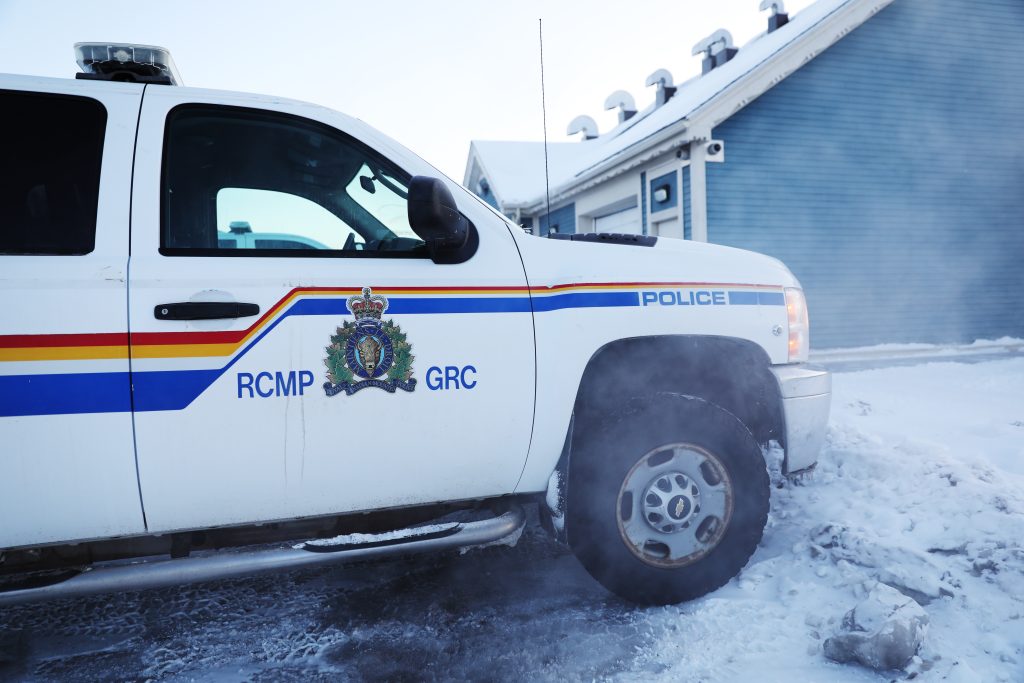
On Tuesday morning, Chief Eugene Hart and other community members met with RCMP at the Sheshatshiu Youth Centre to discuss the police force’s abilities and limitations when it comes to drug-related investigations.
On Tuesday afternoon, more than a dozen volunteers began what Milley called a “peaceful protest” of known or suspected drug dealers in Sheshatshiu. “We’re not going to stop until they stop,” she said Tuesday night. For the protest, community members went door to door, asking people they say are dealing drugs to leave the community, she explained.
Milley said she’s proud of the people taking a stand in her community. “I am a firm believer that the Innu, if they want something to happen, you take it in your hands to make it happen right now,” she said. “We’re not known to be sitting back and waiting for leadership to do something. We want to have a clean and sober community, and that’s what we’re aiming for. We’re not here to hurt nobody.”
The Sheshatshiu Innu First Nation Band Council is working on a bylaw that would give Community Security Officers and RCMP the ability to remove from the community non-Innu who are breaking the law. Milley said the band is working to make sure the bylaw is legal and doesn’t impact non-Innu in the community who aren’t involved with drugs.
Rise in prostitution and young people using, say meeting attendees
The meetings began with a group of people brainstorming ideas over the previous weekend. The organizers are not being named, due to concerns for their safety following past attacks on those who spoke out against drug trafficking.
“There’s been a huge crisis,” Milley said during Monday’s meeting, which The Independent was invited to attend. “So this is our first meeting — I’m glad to see there’s a huge turnout. I wasn’t expecting that.” For Milley, attending was personal. She has been clean for 12 years, and sober from alcohol use for 13 months.
Emotions ran high during the initial meeting. Some of the attendees included folks currently in recovery, as well as parents and grandparents whose lives have been impacted by addiction and substance use. “Every person had a story, and every person in that room is affected by drugs. Either it’s their child, their grandchild, their mother, their father, even their grandparents,” Milley said. “Everybody’s affected.”

Residents discussed the danger of speaking out against people they believe are dealing drugs; some say they’ve had family members, including children, beaten and vehicles vandalized.
Residents shared how Sheshatshiu is seen as a gold mine, with stories of children as young as 10 shooting up heroin near the school, and youth smoking crack on the side of the road. Milley said those were some of the hardest stories to hear. “I keep wondering, you know, what is that kid going through? But how can we help that child to stop using, because he’s going to be the next person, he’s going to be found either overdosing, sharing needles, you know, passing [on] HIV,” Milley said. “Because we don’t know what’s in this community anymore.”
Community members spoke about how prostitution has grown with the increase of drug use, and how parents are spending their money on drugs, causing children to go hungry. Others commented on how normalized drug use has become, saying the RCMP, which has a station in the community, is not doing enough to combat the issue. Cocaine, heroin, fentanyl, speed, and crack are all circulating in Sheshatshiu, Milley said.
RCMP previously told The Independent that drug investigations are part of normal operations and that many investigations are initiated based on information the force receives from the public.
Tuesday morning’s meeting with RCMP was important because there have been longstanding issues between Innu and the force, Milley said. That relationship worsened in 2014, after an RCMP officer who worked in Labrador for 18 years was convicted of drug trafficking after being transferred to New Brunswick.
Milley said a detox facility is desperately needed in both Sheshatshiu and Natuashish, the two Innu communities in Labrador, as well as psychologists and emergency placements for children.
“It’s like a drug war. I’ve never seen anything so powerful, so small — a little piece of powder can damage your family overnight. That’s what it feels like. It’s like they just dropped a drug bomb in our community, and it’s been going on for too long.”
Milley hopes to see other levels of government support the community. “If we can save at least 20 souls, I’d be happy. But this community is in crisis. The government got to do something to help us,” she said.
“This is not going to be the last meeting,” Milley said. “There’s going to be more coming.”

Author

Related Articles
The RCMP vs. the media: Bracken trial approaches its endgame
This court case could decide the future of press freedom — and police oversight — in Canada
Accounting watchdog to investigate Deloitte over fake citations in $1.6M healthcare report
Chartered Professional Accountants N.L. is leading the investigation after Deloitte admitted AI was involved
PC’s minimum wage increase ‘far from a living wage,’ says NDP leader
NDP Leader Jim Dinn is calling on the PCs to legislate wage increases