
Inuk designer brings renowned creations home for Labrador fashion show
April Allen has exhibited her work in Paris, Milan, Osaka and Vancouver — but Happy Valley-Goose Bay tops them all for one reason
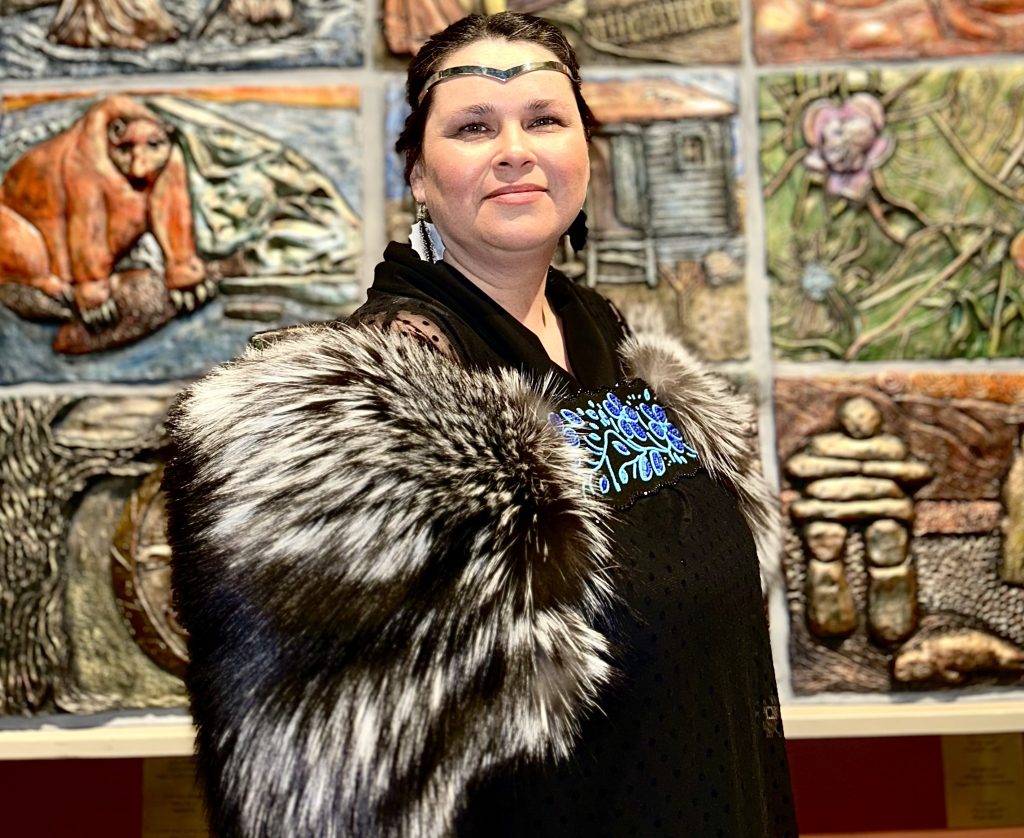
On each stage graced by April Allen’s work, fashion models carry more than striking designs down the the catwalk. They also exhibit Inuit culture, and advocacy.
From Rigolet, Nunatsiavut, Allen is an artist, educator, and fashion designer who showcases Inuit culture with vibrant, colourful, and fun designs featuring furs, sealskin, leathers, sequins, and beadwork.
The Inuk designer created her business Stitched By April almost six years ago and has since brought her creations to Paris, Milan, Vancouver, Japan, Santa Fe, and most recently Happy Valley-Goose Bay, where Allen’s fashion show closed out the 50th Labrador Creative Arts Festival.
But the artistic skill that has taken her around the world all began back home in Rigolet. Allen returned to Labrador during the COVID-19 pandemic to be with her family. That’s when she started making face masks for Labradorians.
Will you stand with us?
Your support is essential to making journalism like this possible.
“My mom and I volunteered to create face masks for Labrador, and I think we made over 500 masks altogether with another girl in town,” she recalls. “That’s kind of where I fell back in love with sewing, because my mom taught me at a very young age how to knit and sew.”
Allen says that period of time wasn’t easy, though. She had been working as a dental therapist, but “developed an illness that kind of forced me to retire out of that field of work,” she explains. “I went from having a career to not being able to do anything.”
After falling to depression, Allen says what began as creating face masks ultimately turned her life around. From attending art shows, to creating accessories like earrings and slippers, to attending Indigenous fashion shows, Allen says it was then she “really fell in love” with creating designs made for fashion shows. “I thought to myself, ‘I could do this.’”
After returning home to Rigolet, Allen began researching fashion online; she also leaned on her mother for advice on how to sew patterns. “I never would have imagined the roads where it would lead me, and just from the skills that I learned from my mom and the generation of seamstresses in my family,” Allen says, reflecting on her origins as a designer.

Last month Allen attended Vancouver Indigenous Fashion Week for the third time, something she describes as “the most amazing experience I’ve ever had as a fashion designer.”
“When you’re there, you’re with community,” she says. “Everyone is so supportive, everyone is there to inspire one another, support one another, and it feels like you’re with family.”
Allen showcased her designs during the event’s first night. The Red Dress Night theme was chosen to remember and celebrate Indigenous resilience and to honour missing and murdered Indigenous women, girls, LGBTQ+ and Two-Spirit peoples.
“It was a very emotional night because there’s so many red dresses, the power behind it, and all of the voices taking up the space to show the world,” Allen recalls. “The world would have seen it through social media and things like that, so to be able to be a part of that and to be able to advocate for this is truly an amazing experience.”
Allen uses her fashion pieces to advocate for issues like safe drinking water in northern communities. “I’m really proud of my water dress,” she says, explaining she made the dress “to bring awareness to clean drinking water initiatives in our northern communities, because a lot of our communities still do not have clean drinking water all across northern Canada.”
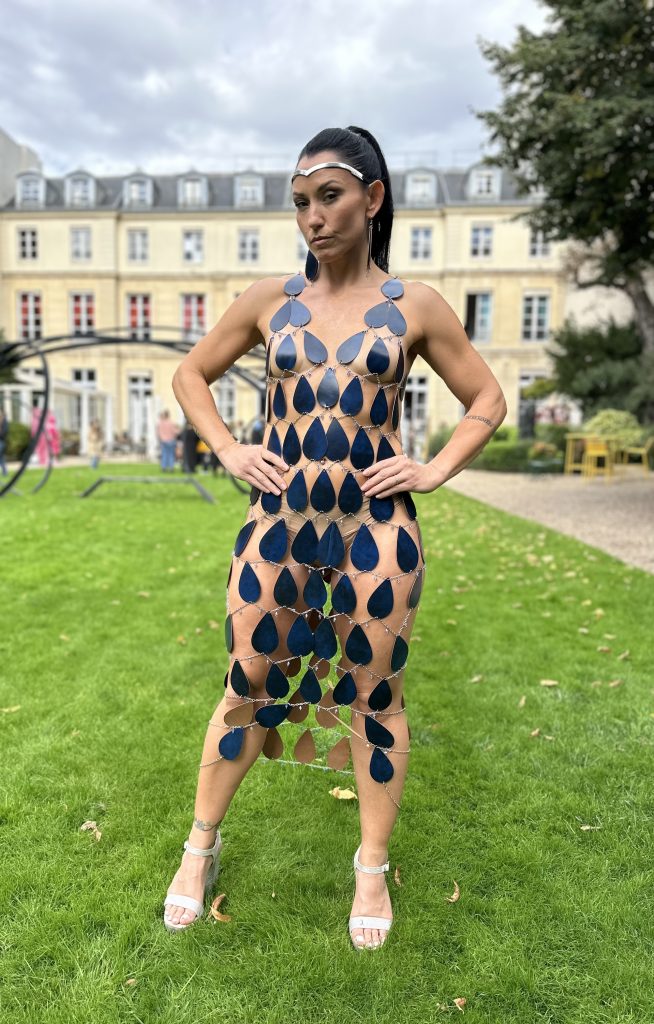
To make the dress, Allen turned pieces of leather into water droplet shapes, then “pieced it all together by chain.” She also consulted an engineer friend “to see if where I was piecing it together would work.” Allen put the pieces of the chain and leather together and made it to fit her relative and model Coralee Attwood. “We had Coralee stand there for five hours while I pieced the front and back together so it would fit her perfectly,” Allen recalls.
Her inspiration for the water dress came from growing up on Labrador’s north coast. “We grew up on the water hunting and fishing all of our lives and spent a lot of time out on the land and at the cabin,” she says, adding her mother Joice was a fisherwoman, “so we spent a lot of time out on the ocean.”
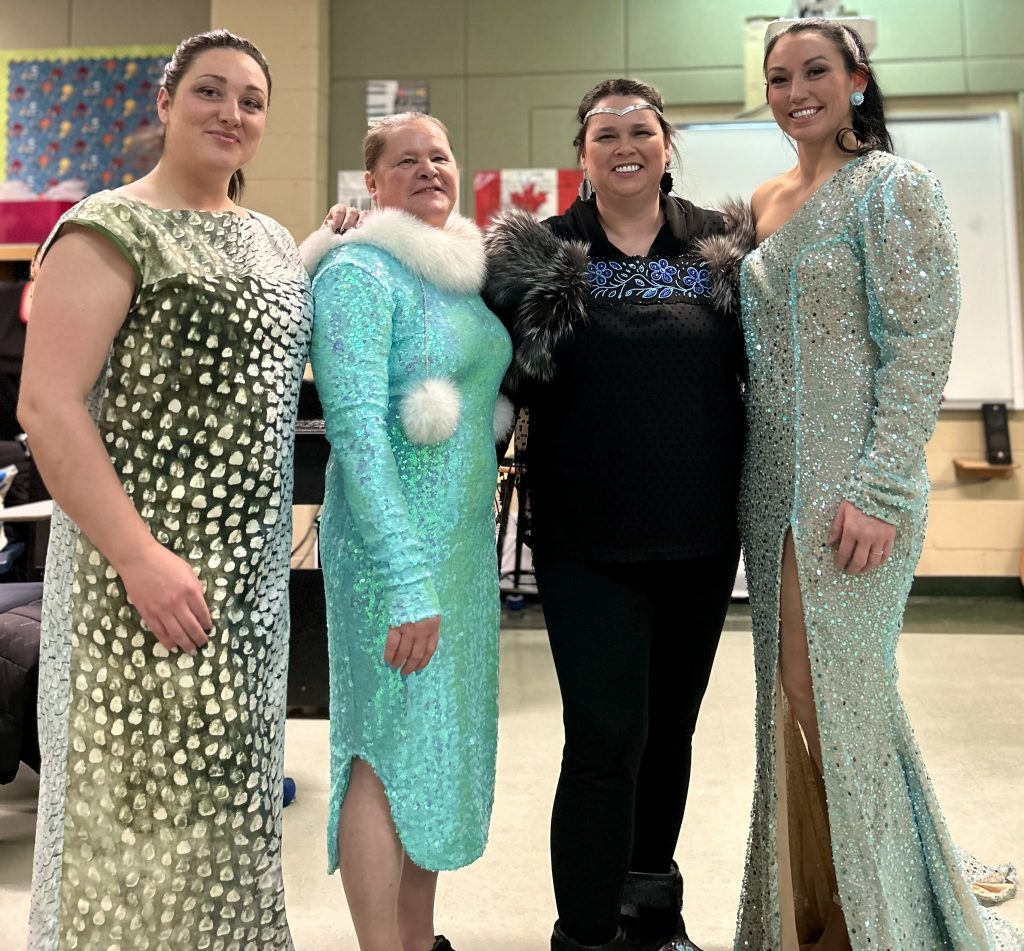
Stitched By April has numerous pieces that include furs, something Allen also attributes to growing up in Nunatsiavut. “Our way of life and our values that we carry with that, and the respect for the animal and land, is truly amazing.
“I remember being a little girl around Easter time, being out on the land in a tent in the snow and trees, and going out to find Easter eggs in the trees was really cool,” she recalls. “And, you know, other people don’t get to experience that.”
Allen attributes her success as an internationally-recognized fashion designer to her “huge support system of friends and family that have taken a lot of responsibilities to be able to bring this all together.”
After coming such a long way in five years, Allen hopes her work will inspire Inuit youth to pursue her dreams. “For me to come from a small community, and to be able to grow into this fashion designer who’s showcasing globally around the world, is pretty amazing,” she says. “I’m really hoping that our youth can see that and realize that they can do anything that they want to do.”

Author

Related Articles
Meaningful response to homelessness requires more than new builds, says NDP leader
Jim Dinn’s comments come in response to PC’s announcement of 10 new ‘micro homes’ in St. John’s
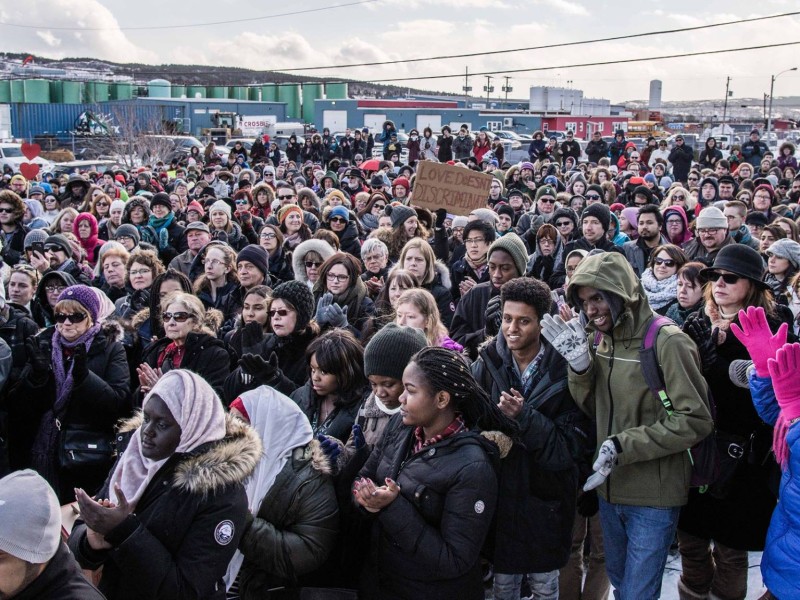
Muslim community commemorates 9th anniversary of Quebec City Mosque shooting
Anti-hate advocates say there’s still work to be done to combat Islamophobia in the province

PCs invite public input ahead of Budget 2026
The coming provincial budget will be the Progressive Conservatives’ first in more than a decade