
New program helps Inuit connect to the land
Nicholas Flowers suggests wearing layers, taking tea, and connecting with knowledge keepers to help get out on the land

The Nunatsiavut Government recently launched Aullâsimapvet, a pilot project funded by Environment and Climate Change Canada that helps Inuit cover the costs of gas, ammunition and food.
“It’s a way to help get Inuit back on the land,” says Crystal Allen, cultural program manager with the Nunatsiavut Government. “This project is going to help them get out and get back to hopefully living some traditional ways of life and reconnecting to their roots.”
The program is needed as the high cost of living creates barriers for people going on the land, Allen says, explaining the project also benefits Nunatsiavummiut as a community because it will help train the next generation to be stewards of the land, track land erosion and sea level rise, and to report anything out of the ordinary.
A mind-clearing experience
Will you stand with us?
Your support is essential to making journalism like this possible.
“As Inuit, it’s vital that we get out on the land,” says Nicholas Flowers. “Our survival historically depended on it, and the knowledge of being aware of the seasons and the landscape and the ocean, the ice, and the interconnectedness between it all is essential to our survival.”
The Hopedale man grew up going out on the land, learning traditional and survival skills from his father. Flowers says those experiences shaped the person he is today. As a young adult, he decided to try camping alone at Trout Ponds near Hopedale.
“I was going through a bit of a hard time—like I was struggling with my mental health at the time—and that experience did a lot for me because it allowed me to test my own survival skills, my own self reliance,” Flowers explains. “It helps clear your mind so you can focus on what’s really important in life, and that’s being out there in nature and connected to the land.”
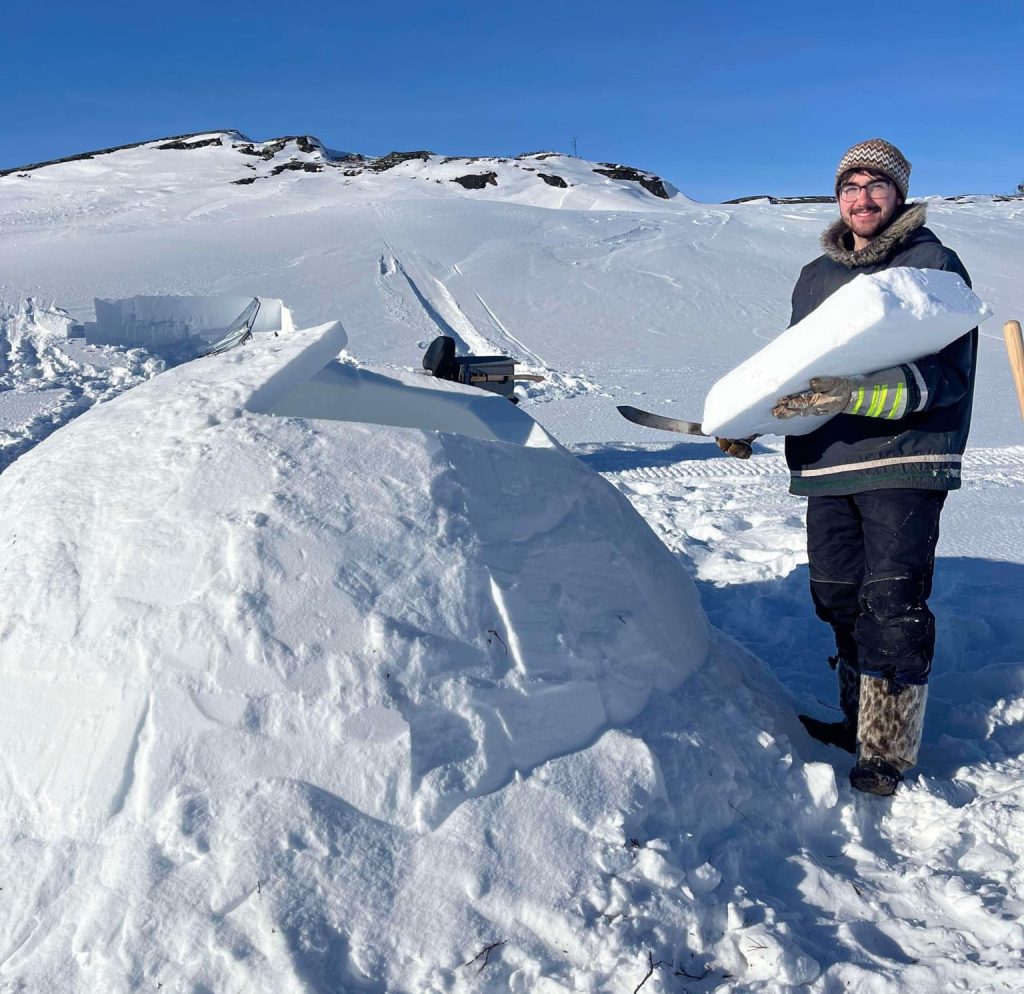
Start small and connect to knowledge holders
Flowers’ experiences aren’t something all Inuit have had, as Inuit throughout Labrador work to heal from intergenerational trauma due to colonial practices, including residential schools, day schools and forced relocations.
But as more Inuit adults start spending time on the land, Flowers says it’s important to start small and manageable. During the pandemic, Flowers says he and his sister Veronica started going outside for walks around and just outside the community. Slowly, people could build up for longer trips further from town.
If Inuit want to learn hunting and trapping skills or go further from their community, he says it’s important to connect with a family or community member who they trust and has knowledge of going out on the land.
Even offering to help gather wood or check snares could be a good way to start, he says. “It can be really nerve-wracking for people who haven’t got much experience being out on the land. You know, it’s intimidating,” Flowers says. “It’s a boundary you have to overcome, but once you do it for the first time, you’ll feel confident to do it again and again.”
Flowers recommends people dress in layers, as warmly as they can, and wear layers of socks with insulated boots because comfort is key. It’s smart to bring warm tea or coffee in a good thermos to stay both warm and hydrated, he said.
It’s also important to let a family member or friend know where you are going, for how long and when you’ll be back, in case anything unexpected happens while you’re out. And it’s crucial to take a GPS or satellite phone and consistently track the weather, he says.
When learning how to go out on the land, people should respect those with knowledge about the land and animals and trust their guidance, Flowers says, as well as following Inuit practices to respect animals and nature.
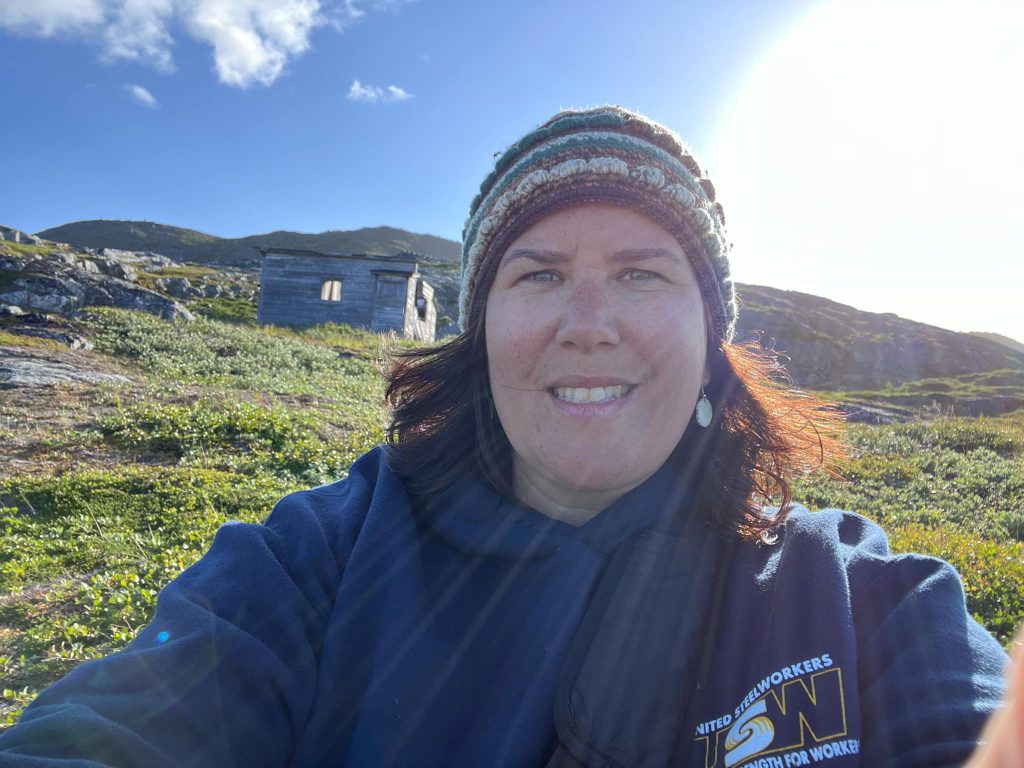
Allen hopes the new program will also help people connect to their families. She grew up going out to where some of her family is from at Webb’s Bay, and now recently travelled to Herbron where both her and her partners’ families have roots, she says. “I know everyone’s busy with their work lives and school, it’s just being able to be with your family and having the time to teach your nieces, nephews or your kids things that you were taught growing up.
“It’s being lost, and a way to grab onto it now and teach them while we can.”
Nunatsiavimmuit can apply for the Aullâsimapvet program by submitting their application to coordinator Brandon Lane by Feb. 28, 2025.

Author

Related Articles
Hit comedy series North of North makes Nunatsiavummiut ‘feel seen’
‘I was completely obsessed with it from the very beginning,’ says Makkovik artist
Student federation calls for investigation into racism at Memorial University following head of E.D.I. and anti-racism’s departure
The Canadian Federation of Students wants an investigation of MUNL’s ‘upper administration with regards to all forms of racism within the institution, specifically as it relates to anti-black racism.’
Labrador town building 40 more homes for seniors amid housing crisis
Happy Valley-Goose Bay’s Housing and Homelessness Coalition launched 32 seniors apartments last summer; now it’s building more