
Nunatsiavut minister says Labrador Air Access Program ‘risks reinforcing existing inequities’ for Inuit
Travellers can’t fly from one Inuit community to another, and prices remain disproportionately high for north coast residents
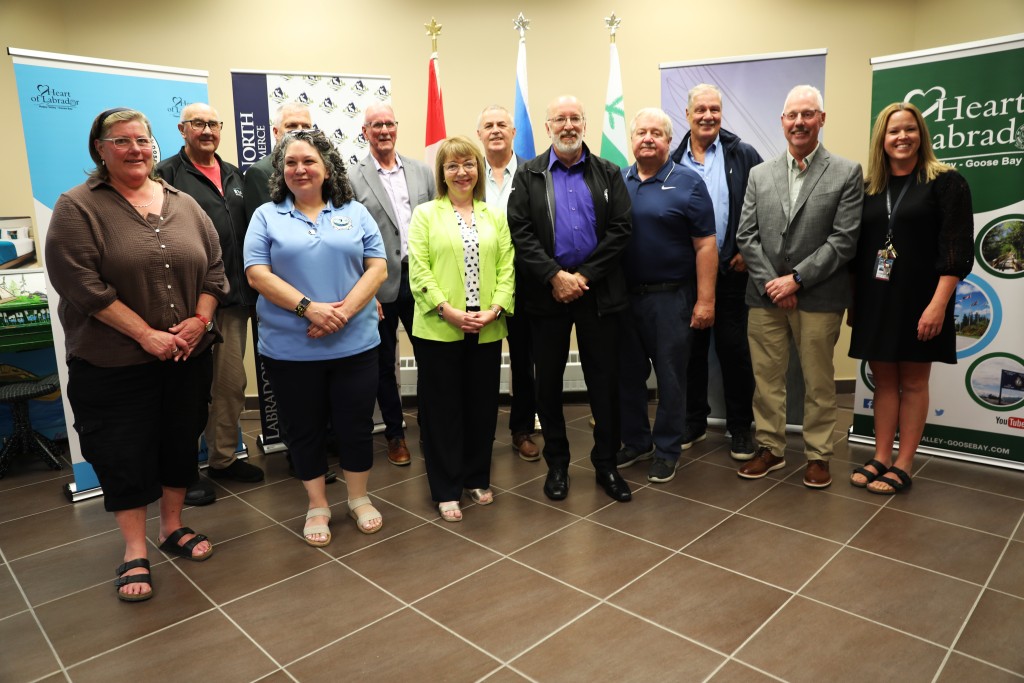
The provincial government’s new pilot program intended to make air travel more affordable for Labrador residents “doesn’t go far enough to address the needs of Labrador Inuit communities,” Nunatsiavut Government First Minister Melva Williams said in a news release Tuesday.
The Inuit government, which represents around 7,000 Inuit in or from coastal Labrador, says while the new program subsidizes a 30 per cent reduction in airfares for flights out of Labrador, it’s not equitable for Inuit living within Nunatsiavut.
The Labrador Air Access Pilot Program, announced by the Liberals on Aug. 28, will subsidize 175 airline tickets per week via an online form, with an annual limit of two round trips per person. The program is intended for personal and leisure travel and doesn’t permit travel for business purposes. Labrador residents flying out of a Labrador airport (or St. Anthony or Blanc-Sablon) to either Deer Lake, Gander or St. John’s are eligible for the reduced fare, while residents of Labrador’s north coast may also fly to Happy Valley-Goose Bay. But the program doesn’t allow Inuit and other northern residents to fly from one northern community to another, nor does it proportionally reduce the cost of air travel for Inuit in Nunatsiavut.
“Over the past number of years, I have asked numerous Ministers of Transportation for more affordable air travel for Labrador Inuit and for a program such as this,” Williams said Tuesday, adding Nunatsiavut Government is “pleased to see movement on this issue, but our communities still face the highest travel costs for air travel – not only in all of Labrador, but the entire province.”
Will you stand with us?
Your support is essential to making journalism like this possible.

Nunatsiavut says the government has not clarified how many of the 175 weekly tickets will be designated for Labrador’s five remote Inuit communities. “This absence of transparency raises serious concerns about the program’s true intent and whether it will meaningfully serve the needs of Labrador Inuit,” Williams said.
As an example, Nunatsiavut offers in its statement, “a ticket from Rigolet to St. John’s is $1,388.75, compared to $628.64 from Happy Valley-Goose Bay and $636.69 from Wabush – both of which benefit from year-round road access. These figures highlight the systemic disadvantage faced by Labrador Inuit communities, where air travel is not a luxury but a necessity.”
“When rates are basically set the same for travel out of Labrador West and Happy Valley-Goose Bay, why should Labrador Inuit communities still be forced to pay more?” Williams said. “We understand the challenges of doing business in northern remote areas, but that shouldn’t mean our people pay proportionately more. The Labrador Air Access Program is a good start, but it doesn’t go far enough to address the needs of Labrador Inuit communities.”
Nunatsiavut Government is asking the province to offer a bigger discount for passengers travelling from Nunatsiavut communities, and for a breakdown of how seats will be allocated. “Without these critical details, the initiative risks reinforcing existing inequities rather than resolving them,” said Williams.

Author

Related Articles
PCs have no plan to meet ambitious housing targets
Finance minister pins housing hopes on federal funding, says his own portfolio of rental properties doesn’t put him in a conflict of interest
Photos returned to Innu ahead of Labrador exhibit showcasing history, culture
Cultural Guardian Jodie Ashini hopes the archival photographs will help strengthen youth’s connection to Innu culture, and ultimately improve mental health

Can N.L. have oil and gas, and climate targets too?
Finance minister says yes, but ATI requests show there’s no plan for how to do both — and reveal significant unpublished emissions estimates