
Province Losing Water Bomber Pilots As Threat of Wildfires Grows
Union representing Newfoundland and Labrador’s eight pilots says it has made its case to the province for hiring more.

Newfoundland and Labrador is one of the best prepared provinces in Canada when it comes to wildfire response—a crucial asset amid rising risks associated with extreme weather and climate change.
But that status is deteriorating as pilots leave the province in the early days of what could be a catastrophic fire season. NAPE, the union that represents the pilots, says Newfoundland and Labrador has lost three to other jurisdictions in recent weeks. “They were expected to work throughout the forest fire season,” NAPE President Jerry Earle tells The Independent.
On June 12, amid ongoing collective bargaining talks between NAPE and the government, Earle and one of the province’s eight remaining pilots met with Fisheries, Forestry and Agriculture Minister Elvis Loveless to make their case for better resources and working conditions.
Earle says they are concerned about their workload, explaining they could work weeks at a time with no days off. He says they also talked to Loveless about compensation, the province’s decommissioned water bomber, and shrinking resources.
Will you stand with us?
Your support is essential to making journalism like this possible.
Loveless and his team were “receptive” to the presentation and “welcomed” it, Earle says, but they made no firm commitments.
In a written statement to The Independent, the department says they “understand the matters raised by our employees,” and that the negotiations are “led by [the] Treasury Board and Minister [Siobhan] Coady and we must respect that process.”
The department also noted that “staffing issues are not isolated to our province or to water bombers. In fact, it is the airline industry in general that is facing staffing shortages.”
Waning Resources
Earle says the pilots presented Loveless with a list of requests that included hiring six more aerial firefighters in addition to the eight currently serving, and for the province to fix its fifth water bomber, which was damaged in 2018 and has been out of commission ever since.
“Fourteen pilots would effectively staff those aircrafts and be readily available for Newfoundland and Labrador,” Earle says, “and also would be able to provide backup for other provinces.”
According to the province’s previous collective agreement, water bomber pilots make between $60,000 to $80,000 per wildfire season. In comparison, Ontario’s sunshine list notes an average salary of $109,345 for its aerial firefighters.
Earle says that with the province’s current complement, pilots cannot plan ahead or take important days off to be with their families. “Some people would like to be able to say to their children, ‘Yeah, I will be off with you on that particular day,’” he says.
While the government has said water bomber staff are prepared for the wildfire season, Earle says that’s “completely inaccurate,” and that they’re under-resourced and stressed. “They know they have their human resources depleted, physical equipment depleted, and ground crew depleted.”
There are eight pilots trained to fly the four planes, but each plane must be operated by two pilots. There are also regulations on pilots’ flight times. Under the current circumstances, Earle says as few as two planes could be operable at any given time.

“We cannot effectively, full-time operate them throughout the full forest fire season,” he says. “There may be days we have four, there will be many days we will only have three, [and] there’s days we may have as little as two.”
Earlier this month Exploits MHA Pleaman Forsey, who serves as the PC’s shadow minister for Forestry and Agriculture, called the situation “completely unacceptable.”
“Emergency preparedness means being ready for the unexpected,” he said in a June 9 statement. “We need more capacity, not rusting equipment. That responsibility lays at the feet of the Furey Government,” he said, referring to the decommissioned plane.
Climate Change Likely to Bring More Fires
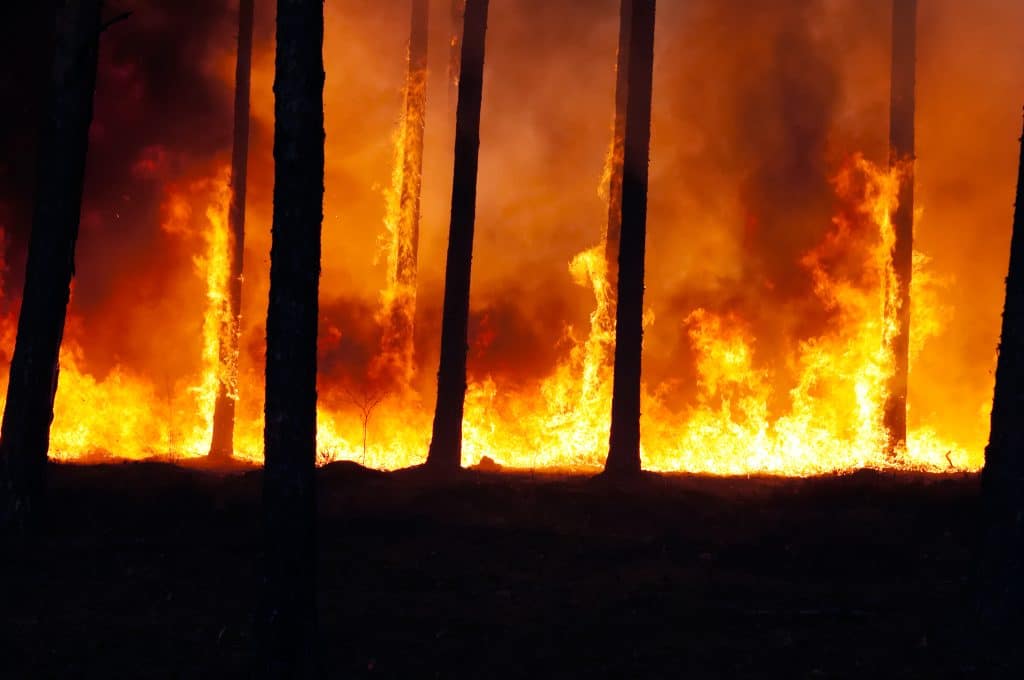
While heavy rains in recent weeks have helped keep Newfoundland and Labrador a low risk for wildfires, experts say the province will likely see an increase in wildfires as climate change brings more extreme weather.
Climate experts are predicting warmer and wetter weather conditions in this province, but also more wind. “Wetter doesn’t necessarily mean more rain in the summer,” says Lucas Brehaut, a wildfire research scientist with the Canadian Forest Services. “It could mean snow actually changes [so that] in the winter we experience more rain.”
Joel Finnis, a climatologist and professor of geography at Memorial University, says the extreme winds that come with the growing number of hurricanes and post-tropical storms we’re seeing could enable more forest fires by uprooting trees and making fuel out of dry timber.
At the beginning of May, the province had 33 wildfires in total, a dramatic increase from the two fires recorded last year within the same period. As of June 27, the province has recorded 79 forest fires, including several active fires which have burned more than 12,000 hectares.
Resources Strained Across the Country
In a debate on May 24, Loveless told the House of Assembly that the province’s water bombers are fully staffed and that Newfoundland and Labrador can rely on help from other provinces, if needed.
“We know the difficulties that are happening in the western part of this country right now but, as a province, we know we have friendly agreements with other provinces that help us, we help them,” he said. “The Premier made the commitment to Alberta, which we’re following through on, and if we need them, they’re there for us.”
As of June 26, there were 494 active wildfires across Canada, according to the Canadian Interagency Forest Fire Centre (CIFFC). Of those, 259 are out of control. So far this year there have been almost 3,000 fires nationwide, which have burned more than 7.7 million hectares.
The CIFFC, a federally incorporated not-for-profit organization that coordinates Canada’s interprovincial fire responses, has noted an extreme demand for resources this season. Thousands of firefighters and hundreds of soldiers are working to control fires.
Canada is also receiving international assistance from countries like the United States, Portugal and France. Since May, the Biden Administration has sent more than 600 firefighters to Canada. In a June 4 tweet, French President Emmanuel Macron said over 100 firefighters were being sent to Quebec.
In an effort to bring international firefighters to assist with the fires, Immigration, Refugees and Citizenship Minister Sean Fraser announced Canada is expediting their travel documents.
The CIFFC’s National Fire Situation Report rates Newfoundland and Labrador’s wildfire preparedness level at 1—the highest amongst Canadian provinces alongside New Brunswick. The grade is based on a number of factors, including the fire danger, number of anticipated fires and a province’s ability to respond to resource requests from other provinces. Nationally, the CIFFC gives Canada a national preparedness rating of 5, the lowest possible level.
Jennifer Kamau, a communications manager at CIFFC, says the level is calculated based on how provincial agencies responsible for wildfire management respond to certain criteria, and that the agencies “input their numbers” themselves, generating a rating.
Earle points out that Quebec shared resources with the province last year, but that it is presently battling a number of its own fires. “So if we have a depleted fleet in Newfoundland and Labrador already […] and we can’t draw upon their resources, we have to go further away, he continued, pointing out there are also fires in Ontario demanding resources.
“Last week all of our water bombers were called out of Newfoundland to respond to Nova Scotia,” Earle says. “So it’s fine for somebody in the government to say that we have other provinces we can call in, but our bombers are getting called out.”
Newfoundland and Labrador and New Brunswick are presently the only Atlantic provinces with water bombers.
MHA Calls for Proactive Approach
On Monday residents in Labrador lost power for several hours after fires on the Quebec and Labrador sides of the provincial border threatened transmission lines.
The outage came just days after Wabush Mayor Ron Barron called on the province to re-station a water bomber in Labrador West. The region lost its plane when the now-decommissioned bomber was damaged in 2018 and the province’s fleet was reduced to four.
Labrador West MHA Jordan Brown says the province must be better equipped and is calling for a proactive approach. “If we constantly rely on outside sources then there might be a time when outside resources say, ‘Sorry, we have our own situation here,’” he says.

In early June, the forest fires in Quebec shut down the railway and Highway 389, which connect Labrador West to Quebec. The wildfire damaged infrastructure, including the rail line.
Had the fires reached Labrador West, Brown says, they would have had to wait for the province’s water bombers to return from Nova Scotia. At the time all four were sent out of province.
“We had no coverage in Labrador at the time, so if the wildfire had crossed over into Labrador West, we would not have had any coverage here,” he says.
Brown says his community is concerned about how long it will take for help to reach the province’s most western region. “The next community to us is hours and hours of drive,” he says. “So we have concerns.”
He’s calling on the province to reinstate the water bomber and crew. “We didn’t appreciate cuts to the protection of the region and I think that the government really needs to reconsider placement.”
Finnis says that depleting resources could become a problem. “Leaving us with reduced infrastructure this year, next year and the year after seems to be like we are just waiting for it to become a problem,” he says. “And eventually it is going to become a problem.”

Author

Related Articles

PCs under fire for ‘disappointing’ treatment of Black History Month
Celebrated Black community leader and anti-racism advocate target of racist comments after speaking out online

New play portrays barriers facing N.L. women in politics
Women won the right to vote a century ago but are still underrepresented in public office. St. John’s playwright Ruth Lawrence’s play tackles that head on.

Meaningful response to homelessness requires more than new builds, says NDP leader
Jim Dinn’s comments come in response to PC’s announcement of 10 new ‘micro homes’ in St. John’s