
Student struggling to continue studies says Memorial not adequately supporting Palestinians
MUN Students for Palestine says there’s a double standard in how, and to whom, university provides support
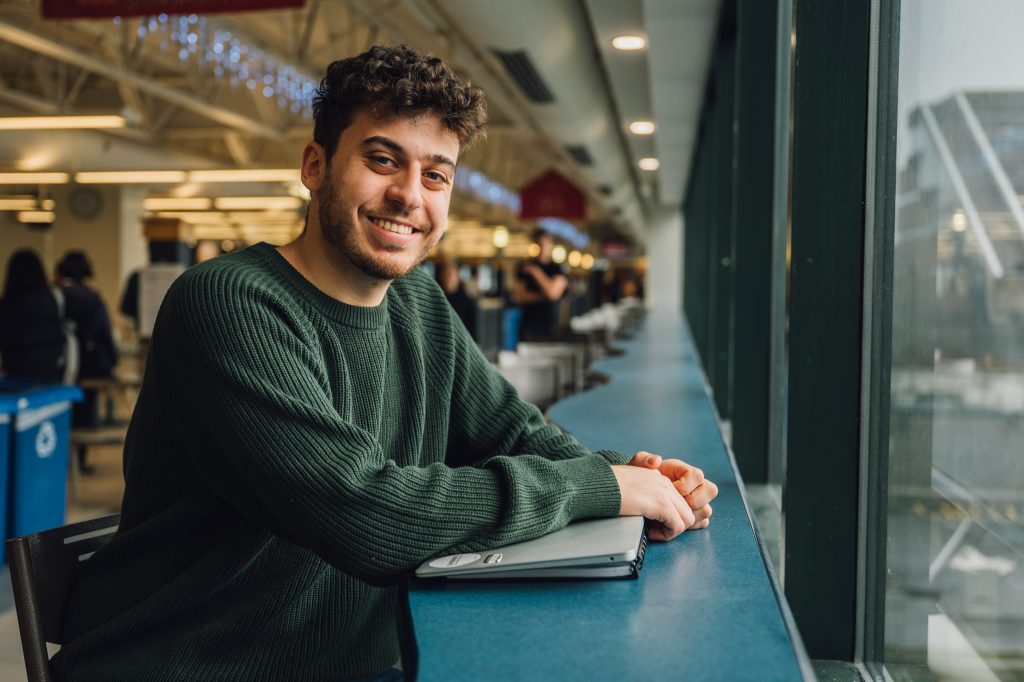
When Faisal AbuGhazaleh arrived in St. John’s in 2021, he didn’t imagine he would be completing his degree while simultaneously watching a genocide unfold back home and living with the daily fear of losing his family.
Originally from Jerusalem, he was drawn to Newfoundland when Memorial offered him a scholarship for his studies. He began a degree in business administration in 2020 during the pandemic and arrived in St. John’s the following year after lockdowns were lifted.
Now AbuGhazaleh, 22, is in a hard spot trying to finish his education.
“My whole life I’ve lived through this violence that’s been committed against Palestinians by Israel, so it’s not my first time seeing it, but it’s my first time seeing it from outside the country,” he says. “When you’re inside the country you do feel fear, but it’s different because you’ve lived through this your whole life. But when I’m outside the country I fear for my family, because you can’t protect them, you can’t be with them. It makes it 10 times harder than living there.”
Will you stand with us?
Your support is essential to making journalism like this possible.
One of AbuGhazaleh’s big challenges, now, is figuring out how to finance the rest of his education.
He and other Memorial students are sounding the alarm on the university’s failure to adequately support Palestinian students months after promising to do so. They say there’s a double standard at play.
Owing thousands of dollars in tuition and residence fees, AbuGhazaleh and other Palestinian students were initially unable to register for fall courses this year, since the university puts a hold on unpaid student accounts.
When Ukrainian students faced a similar dilemma following Russia’s invasion of their country in 2022, Memorial promptly provided tens of thousands of dollars in bursaries to Ukrainian students.
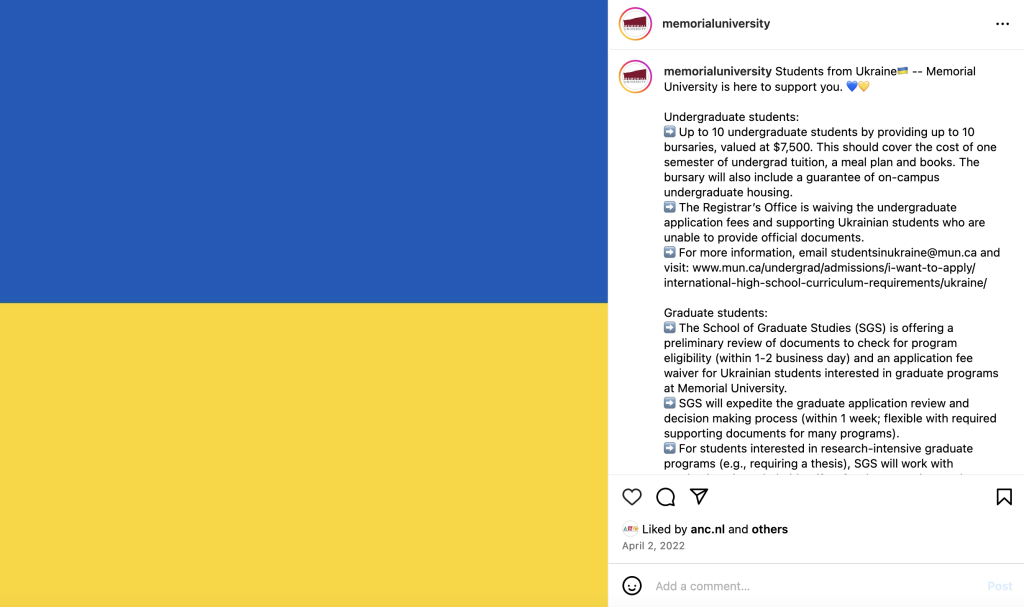
Following student protests on the St. John’s campus, which culminated in an occupation of the university’s administration building last spring, Memorial indicated similar relief measures for Palestinian students would be forthcoming.
But students say that still hasn’t happened.
Lots of promises
After MUN Students For Palestine established a protest encampment at Memorial’s St. John’s campus in May, students and university officials began a series of meetings and negotiations. Among the students’ requests was the establishment of a bursary fund for Palestinian students.
At a June 13 meeting with students, Memorial Provost and Vice-President Academic Jennifer Lokash agreed to this request. In an audio recording of the meeting obtained by The Independent, Lokash can be heard stating her support for a “special fund”.
“I was thinking how to manage something like that, a new fund like that,” Lokash says in the recording. “We could make that a very collaborative exercise, so your group and us, and even MUNFA […] I think that some kind of bursary fund is something that we could do, definitely.”
On June 14, Memorial followed up with a formal memo, also obtained by The Independent, summarizing its commitments, which state that “Memorial will explore, with student and faculty collaboration, bursaries and other additional supports for Palestinian students.”
On July 5, Memorial published a statement on its website outlining commitments to Palestinian students, including “establishing, in consultation and collaboration with students and employees, a bursary program to support at-risk students.”
During its July 11 meeting, Memorial’s Board of Regents was also informed the university had committed to “establishing, in consultation and collaboration with students and employees, a bursary program to support at-risk students.”

Then, on Aug. 14, the university announced those supports, including “a bursary program to support at-risk students, waiving application fees and continuing to offer other enhanced supports for current Palestinian and Israeli students.”
MUNL also said it would, for the fall 2024 semester, offer “additional financial and academic supports, specifically regarding deadlines and late fees for Palestinian and Israeli students experiencing hardship.” And that it would also “work with individual students to lift financial holds on their accounts to allow them to register for the fall 2024 semester while still owing tuition and fees and to remove late payment fees from their accounts if fees are not paid on time at the beginning of the fall 2024 semester.”
Half a year later, students say Memorial has failed to produce a dedicated bursary for Palestinian students, and that several emailed requests for information about the bursary either went unanswered, or they were told the information was not available.
During an Oct. 24 meeting with Heather Tobin of Memorial’s student support office, students say they were told Tobin’s office had received word some additional funding would be coming for what she called Memorial’s “Global Disasters Emergency Fund,” which might be earmarked for Palestinian and Israeli students.
“That’s not confirmed yet but that’s what we understand,” Tobin can be heard saying in an audio recording of the meeting obtained by The Independent. “We need to get confirmation on what that will look like. We’re still waiting. That money will be administered from this office once we have the amount and that information.”
The Independent asked Memorial University about the status of the bursary program it has repeatedly referred to. The bursary was “established in August by the Office of the Provost and Vice-President (Academic) for students at risk, with the focus at this time being on Palestinians and Israelis attending Memorial,” a Memorial spokesperson said in a Nov. 15 email. “It has $10K from undesignated donor funds meant to be used for an area of greatest need. As with all bursaries, these funds will be allocated on a case-by-case basis.”
As of Nov. 15, the university said, no students had applied for the bursary.
Students say they weren’t told about the bursary, and that those who inquired were told the money isn’t there.
The university also said it would waive application fees for Palestinian students, but that no Palestinian students have availed of that offer either.
Memorial’s public-facing claims are at odds with what students say they’ve been told in their meetings with university staff. Students say they have received no concrete information about any new funding available for Palestinian students.
As an international student, AbuGhazaleh pays over $11,000 in tuition fees alone (fees for newer students are even higher) and estimates that his family helped cover about 70 per cent of his expenses. His father ran a tourism company back home, and his mother is a second-grade elementary school teacher in the West Bank. The financial support they were providing ground to a halt when Israel began bombing Palestine. AbuGhazaleh says Israel’s attacks began two days before his father was going to send him his winter tuition money.
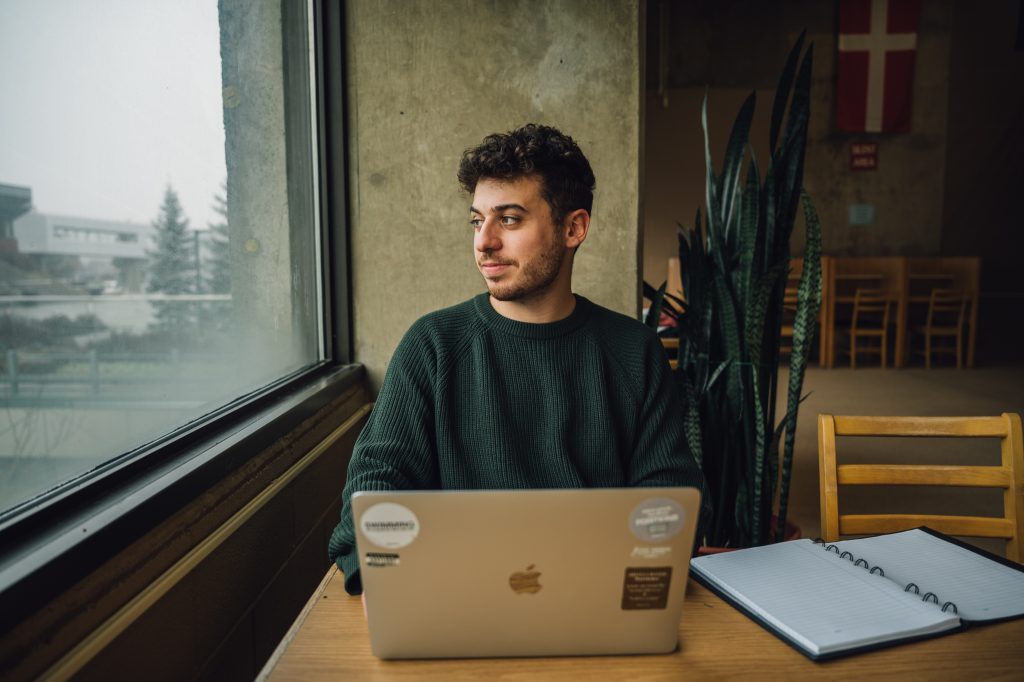
He didn’t know what to do, and in October 2023 began a torturous process of seeking financial support once his financial connections with home were cut off.
“I had to jump from one [university] office to another. It took me several days. I didn’t know where to go and many of the administrative offices didn’t know where to send me either. They would just give me a random name, and then I would go to that office, and they would tell me, ‘Sorry, this isn’t the right office,’” he recalls. “So there was a lot of redirection that exhausted me, because I was dealing with personal emotional stuff with my family, and on top of that I had to deal with these finances, and on top of that I had to deal with school, and work. It just became too much.”
Once MUN Students For Palestine was formed in May 2024, the group provided a support team to help AbuGhazaleh navigate the university’s bureaucracy; it began lobbying for the dedicated support fund for Palestinian students.
“They keep saying they’re just waiting for the funds to be allocated, and none of that has been communicated with us,” AbuGhazaleh says.
He says he was able to access some funding through Memorial’s existing emergency support fund, a short-term loan program the university runs for students. But that process has been challenging, too.
“For each round of me receiving these funds from the student support office, I had to write a paragraph explaining why I needed the money. Then I had to sit down with an advisor and tell them why I needed the money over and over again, which takes an emotional toll on me because I’m barely able to talk about what’s happening in general, let alone speak to an advisor that I barely know and try to make them feel sorry for me. It’s been humiliating,” he says.
“And then there’s a very long wait time between having these meetings and getting the funding. I would have to meet up with an internationalization office advisor who would redirect me to a student support advisor, who would have to ask their supervisor, who would have to relay that to the financial administration office, and then in their biweekly meetings they would have to review my file and decide if they would give me funding,” AbuGhazaleh says. “Then, after they decide, it takes about two more weeks for them to send a response. So it’s not as easy as they make it seem.”
AbuGhazaleh has gone through this process four times, in November, January, April, and August, all while watching the genocide unfolding in his homeland and trying to keep up with his studies and employment.
The money he’s accumulated through Memorial’s existing programs is far less than the $7,500 the university provided to Ukrainian students for a single semester — and he says he has used all of the funding to pay off a single semester of the residence fees he owed Memorial.
AbuGhazaleh moved out of residence last summer because he could no longer afford it.
“I was told [by university staff] to go to the residence office and talk to the coordinators there and see if they would waive my fees,” he recalls. “But they said no, they were not able to. I had two meetings with them and they refused to waive my fees.”
Double standards?
The $10,000 Memorial says it’s earmarked for Palestinian and Israeli students pales in comparison to the financial support the university has provided Ukrainian students since the outbreak of war in that country. In April 2022, less than two months after Russia’s invasion of Ukraine, Memorial announced it would provide $7,500 per student in bursaries to Ukrainian students; it also established a designated email account for inquiries and financial requests.
According to the minutes of the May 2024 Board of Regents meeting, in the fall of 2023 three Ukrainian students “received scholarships and bursaries of $14,000 each.” During that same meeting, the board voted to allow those students, along with other Ukrainian students on specially-designated emergency visas, to pay domestic student tuition rates ($648 per undergraduate course) instead of the $2,163 per-course rate for international students. No such offer has been made to Palestinian students.
“It’s frustrating and it’s so repeatedly disappointing,” said Nikita Stapleton, a member of MUN Students For Palestine. “I have had to be on the other end of the call when a Palestinian student calls me and says, ‘The university says it’s doing this but I wasn’t actually able to get that support,’ and they’re crying. It’s disappointing and it’s frustrating,” she said.
“There was an immense amount of relief and optimism in that June 13 meeting and then slowly with every single visit to every office that we went to asking for follow-up, and every email that went unresponded to, we started to lose that optimism,” Stapleton added. “It’s become clear that the administration’s priority is not supporting students — it is managing public relations.”
Owing thousands of dollars, AbuGhazaleh — and other Palestinian students he knows — were unable to register for fall courses this year until the last minute, since the university puts a hold on unpaid student accounts. MUN Students For Palestine lobbied for the holds to be lifted for Palestinian students, something Memorial did not do until late in the summer.
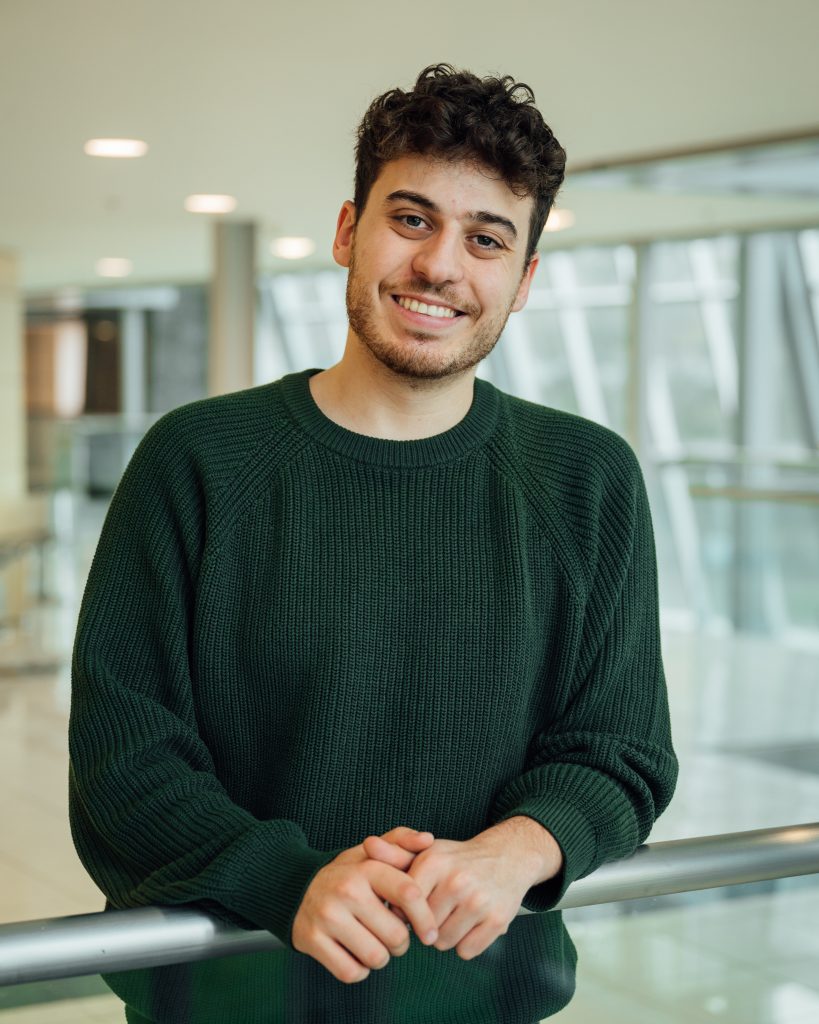
Days after the anti-government uprising in Bangladesh, Memorial announced on Aug. 1 it would lift financial holds on Bangladeshi student accounts in light of the turmoil at home. MUN Students For Palestine complained about the double standard, and on Aug. 14 the university announced it would lift financial holds for Palestinian students, too.
Students say they have been told there will be no similar support for the winter semester. A Memorial spokesperson told The Independent that requests to lift financial holds would henceforth be assessed on a case-by-case basis “for students that meet specific criteria.”
AbuGhazaleh struggles to continue his studies while watching Israel’s genocide from afar. Now out of Memorial’s costly residence, he is presently working both a full-time job and a second part-time job while taking full-time course load.
“This creates an immense amount of pressure, especially in my last year,” he says.
AbuGhazaleh is acutely aware that he’s not the only one.
“I’m lucky, because I’m outspoken,” he says, explaining that when he joins MUN Students For Palestine for on-campus events, other students have told him they are “struggling with the same thing,” and that while seeking support from Memorial, “‘they just shut me down,’” he recalls. “And those students gave up and never went back; they’ve had to slow down their academic progress, take smaller course loads.”
The Independent requested an interview and further details on some of the points raised by students in this story. On Nov. 18, Memorial responded with a brief statement: “With regards to the bursary, the university has provided a response, and won’t be giving interviews on the matter.”

Author
Related Articles
Muslim community commemorates 9th anniversary of Quebec City Mosque shooting
Anti-hate advocates say there’s still work to be done to combat Islamophobia in the province
PCs invite public input ahead of Budget 2026
The coming provincial budget will be the Progressive Conservatives’ first in more than a decade
‘Goodnight Moon’ and the child in all of us
Artist Matthew-Robin Nye is in pursuit of wonder, and thinks we should be too