
The ‘focal point’ of Spotted Island is gone
Locals are picking up the pieces of the community’s beloved and colourful fishing stage

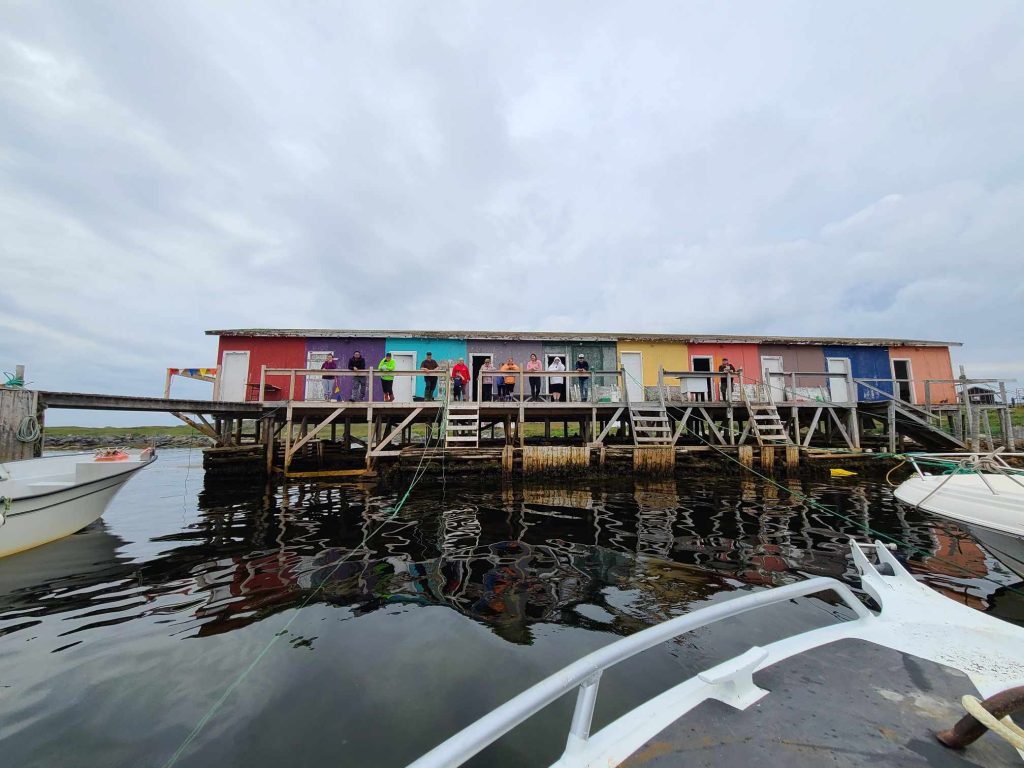
While growing up, Shawn Holwell remembers his grandfather Christopher walking across the Spotted Island community stage with pride. The colourful stage was built in the 1980s and served as a welcoming point to anyone approaching the summer community.
On Saturday morning, Holwell’s friend sent him a video from Domino Harbour near Spotted Island. It showed debris. Worried about the worst, Holwell’s friends in Black Tickle climbed up to where there was a view of the fishing village and took some photographs.
The colourful, long stage with multiple family fishing sheds was gone.
“As soon as they sent the pictures and, to not see that 100-foot by 20-foot building there right smack in the middle of Spotted — yeah, it’s difficult,” Holwell said. “It’s gonna be missed.”
Will you stand with us?
Your support is essential to making journalism like this possible.
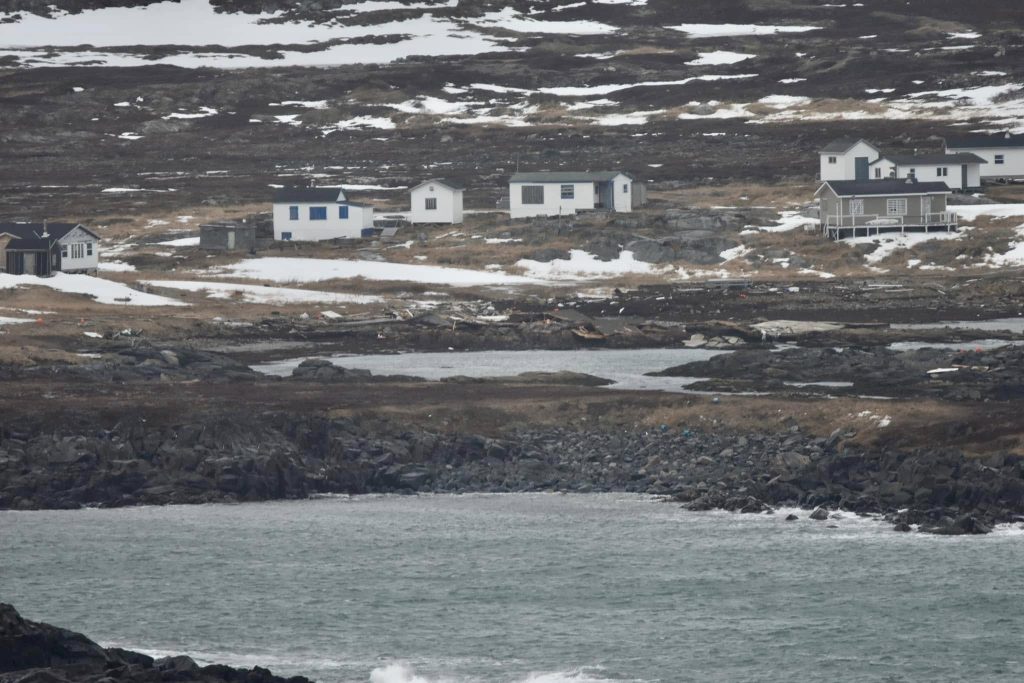
Spotted Island is on the east coast of southern Labrador, near Black Tickle. According to historical records, Inuit and settlers have seasonally or permanently occupied Spotted Island since at least the 18th century. In 1867 it was the site of a heroic effort by Captain William Jackman, who is claimed to have single-handedly saved 27 others from a ship that had run aground. And in the 1950s Spotted Island was home to a U.S. military aircraft control and warning station during the Cold War.
Now a summer fishing community, about 80 to 100 people return to Spotted Island each year, Holwell said. The multi-coloured stage was the welcome point where fishing boats pulled up throughout the years and where people worked long hours in the summer.
“It was the focal point. I mean, it was the gathering point,” Holwell said. “It’s very sad.”
Growing up in Spotted Island, Lori Snow remembers sneaking onto the stage to fish as a child. Children weren’t allowed to play on the stage due to the risk of falling into the water.
“There’s so much to remember,” Snow said.
She and the other kids would run under the stage at low tide, play hide and seek in the stage buildings, and collect fish hearts to use as bait.
“It’s just such a staple,” Snow said. “It was just a big something that we all just took for granted, I guess.”
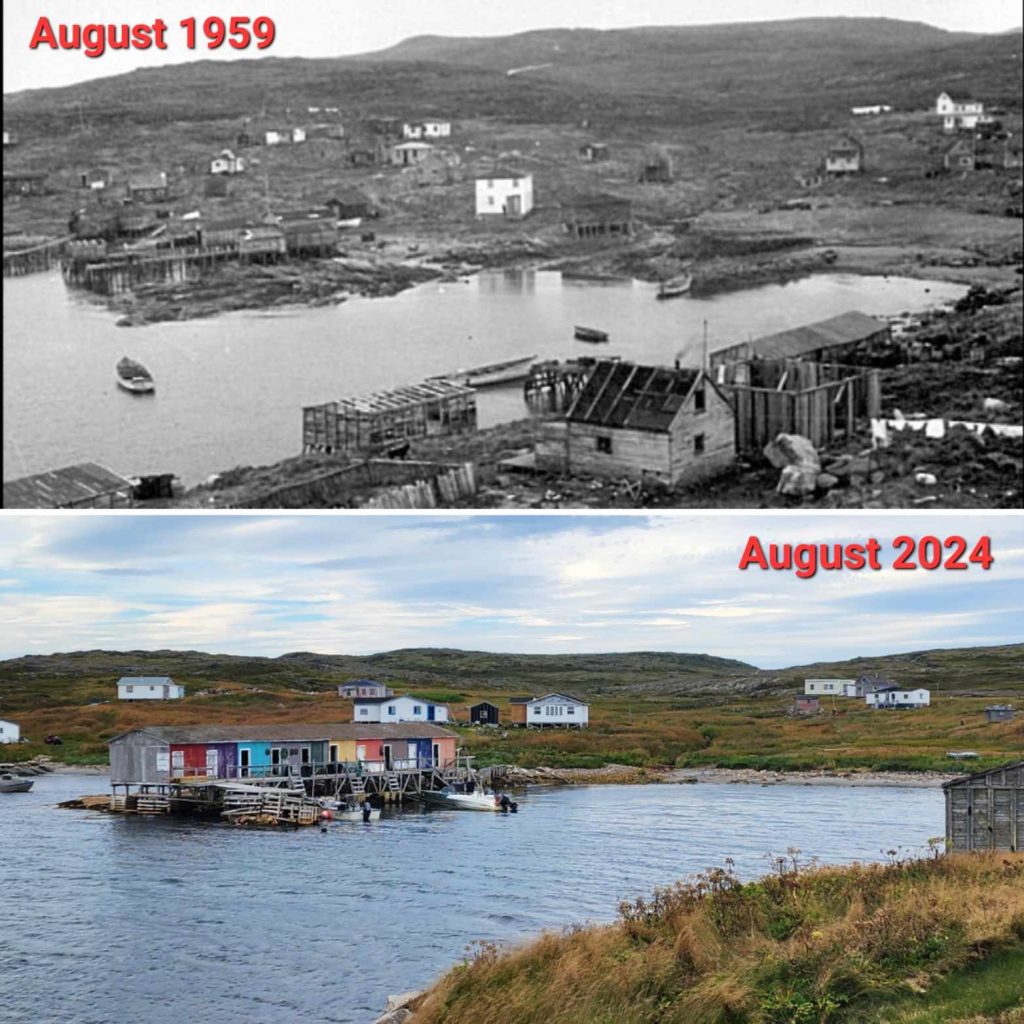
The stage is gone but the memories remain. Snow recalls a day when she and her cousin Stephanie were playing on the stage, being careful not to get caught, when Snow slipped on fish guts and fell into the water.
“[Stephanie] grabbed this empty bucket and threw it down over like, ‘Get in the bucket. I’ll haul you up.’ And I mean, I’m soaking wet, I’m four years older, she’s maybe 60 pounds. And that’s the first thing I thought of when I seen the pictures,” Snow said. “That memory just stuck there.”
“It was more than just a building,” she added. “If you spoke to every single person that grew up on Spotted, they would have a story. Every single one of us.”
Storm east of Labrador caused large swells
Environment and Climate Change Canada had warned people in the area about a storm that was off the east coast of Labrador over the weekend. The storm caused strong northerly winds and produced high waves moving into the southern Labrador coast.
Warning preparedness meteorologist David Neil said ECCC warned people of six- to eight-meter waves, with the waves staying at those heights from Saturday into Sunday night, and winds peaking around 80 kilometres per hour.
In those situations, there is a possibility that property could be damaged, Neil said, adding such storms aren’t uncommon.
“Usually this time of year, we see some intense storms that come through here. We’re no stranger to that,” he explained. “And they do get quite deep if they go up over the Labrador Sea and they can linger around a little bit. But by and large, a lot of the storms do kind of go through fairly quickly.”
Wanda Cabot immediately thinks about the elders that were once gathered around the wharf, catching up on the latest and cleaning their fish.

“There’s just so many memories. I can picture the people, our elders, that’s gone now,” Cabot said. “You can’t even hardly explain, because it’s people that’s not with us anymore, and it just was a great place you know, to gather as a community.”
It meant everything to come into the harbour and see everyone gathered, she said, adding she hopes people can come together to rebuild, even if it will be different.
That’s like a part of your community, part of your heritage, your history, all that’s gone,” Cabot said. “The building is what made the community what it is.”
The community wharf and stages were a sign of safety for Erin Snow.
“When you’re traveling around the ocean, the Atlantic Ocean and Labrador sea, you don’t know what kind of weather could come about,” Erin said. “When you took the turn to go into the Spotted Island community, that stage was like you were safe.”
It’s something people will grieve, Erin said. It represented the generations of fishermen who built the area and the families who lived there, she said.
Talks already in the works for commemoration, rebuild
There are a lot of thoughts running through Holwell’s head for the future, he said. In the short term, he and a few others hope to go out on plane to clean up some of the debris and get a sense of what’s left.
In the longer term, Holwell said they hope to set up a committee to plan for the future. There will be more cleaning up, then something will need to be rebuilt for people to be able to dock their boats along the rocky shore.
This summer, Holwell hopes the committee can start a plan to rebuild in the next few years and he’s already contacted their local politicians and the NunatuKavut Community Council for support.
“It’s going to be a major adjustment,” he said. “At the end of the day, you know, our stage is gone, and we got to come up with some kind of plan to get it back.”

Author

Related Articles
The RCMP vs. the media: Bracken trial approaches its endgame
This court case could decide the future of press freedom — and police oversight — in Canada

Accounting watchdog to investigate Deloitte over fake citations in $1.6M healthcare report
Chartered Professional Accountants N.L. is leading the investigation after Deloitte admitted AI was involved

St. John’s teen says community, activism helped her find her voice
13-year-old Nyala Adam was inspired by a local summer camp focused on social justice and cultural inclusion