
‘This house needs to be torn down’: Sheshatshiu families hope for new homes in 2025
The Sillitt family is frequently sick, their bathroom ceiling is falling down, and their basement foundation unsafe

For a family in Sheshatshiu, the beginning of 2025 marks another year of begging the Innu community’s band council for a new home they hope will improve the health of their children and family.
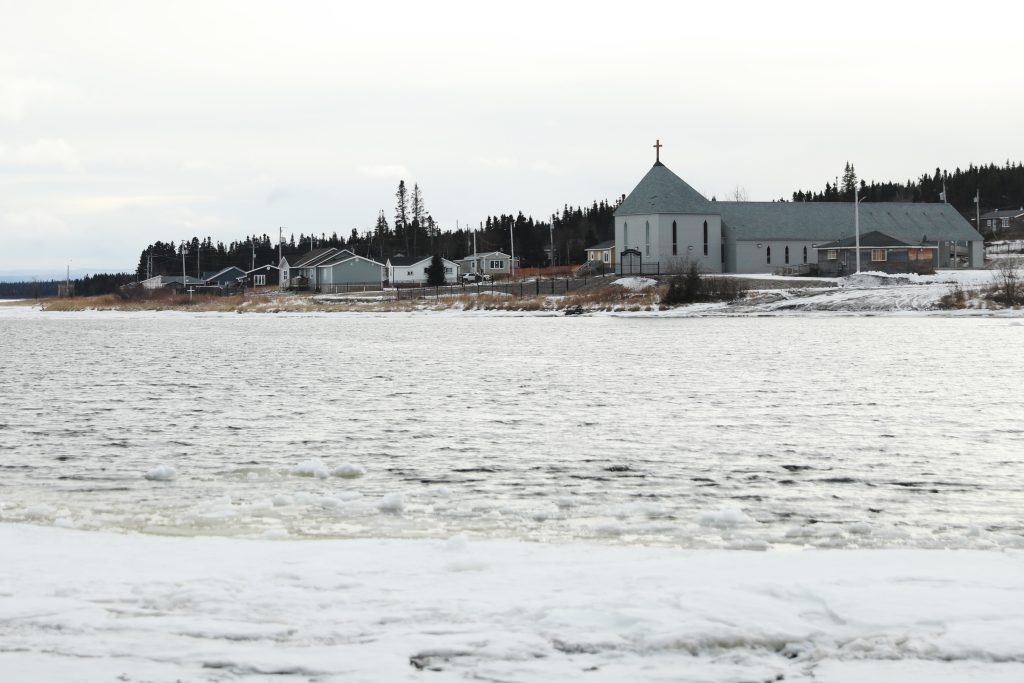
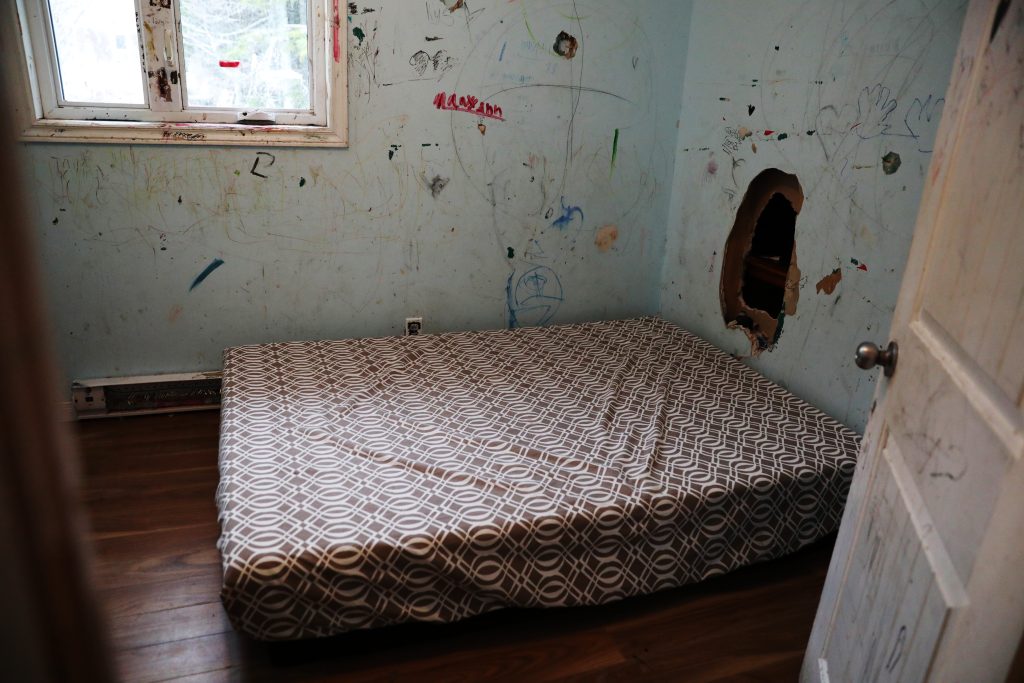
Anniette Sillitt’s family is crowded into a home on Beach Road, overlooking the shore of Lake Melville. Her mother sleeps on a bed in the living room, her brother on the living room couch, and children crowded on mattresses on the floor as rooms in the basement are unfinished and unsafe.
“We try to keep the house clean because of my mom’s health issues, and my brother — so we’re trying our best to keep it clean and to get our kids to be comfortable. But it seems like my kids get sick every week, and I think it’s because of the mold,” Sillitt says.
Consistently cleaning cannot fix the underlying issues, Sillitt explains. The basement frequently floods, inviting dampness and mold into the home. She said they clean it as best as they can, but the mold returns.
Will you stand with us?
Your support is essential to making journalism like this possible.
The family has frequently asked the band council for repairs or a new home, but the repairs they’ve been able to access weren’t enough. Their flooring was replaced, and the walls were painted, Sillitt says. Previous renovations also resulted in load-bearing beams in the basement being cut and replaced with two-by-fours, while nails were left sticking up from the floorboards.
The repairs didn’t address the core issues; they simply covered up the mold only for it to return, Sillitt says.
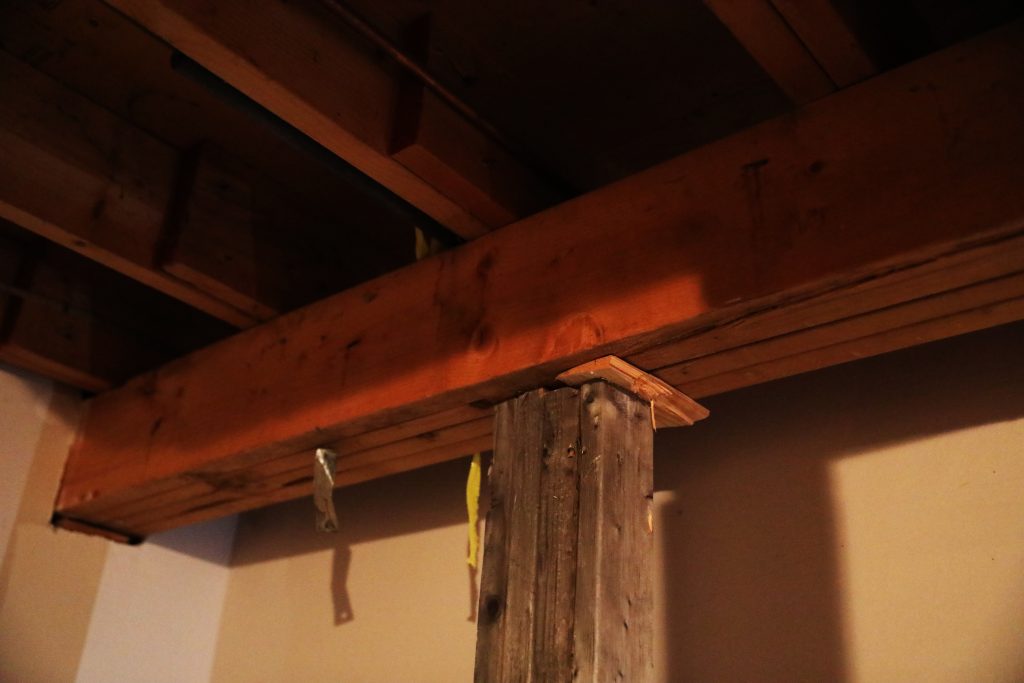
Sillitt says she is grateful her father left her the home when he died in 2006, so she has a roof over her head and is not homeless. But almost 20 years later the home is not fit for people to live in, and the porch is slowly collapsing.
“This house is gonna fall and collapse anytime soon,” she says, adding it “needs to be torn down.”
The bathroom ceiling is slowly collapsing and had to be propped up, and a water pipe leaks into a bucket the family dumps outside after each shower, Sillitt says.
Since the family hasn’t been able to get appropriate renovations or a new home, Sillitt has turned to the rental market. But without any luck.
“I can’t find anywhere else to stay, like an apartment or anything,” she says.
Her family’s living situation is a continuation of the housing struggles Sillitt’s parents faced in the 1980s, when her parents moved from house to house with their young children.
In 1983 they were able to move into the current home with help from NL Housing, although the house was unfinished. To this day the basement still hasn’t been finished.
“My little girl […] said, ‘Mom, I want a new house,’” Sillitt says. “Even the five year old is asking for a new house and I told her I’m trying.”
Sillitt is the sole provider in her home, but she is often sick herself, she said.
“If we get selected, hopefully my kids will stop getting sick. They get rashes, and I think it’s because of the mold,” Sillitt says. “I just hope I get selected, and the people that need it the most. I know everybody’s struggling.”
Sillitt’s brother used to be on home-dialysis, but his health deteriorated. Sillitt believes the mold in the house and the general conditions of the home impacted his health and hopes he could return to being on home-dialysis if he is in a new, healthy home.
“Every day I pray, like, ‘When am I going to be next?’” she says. “It really hurts me.”
Funded by feds, administers by First Nation
Indigenous Services Canada provides funding to First Nations for on-reserve housing, and the band councils decide where the funding is allocated. First Nations can also apply for other funding programs, such as the Rapid Housing Initiative or a special stream of the Canada Housing Infrastructure Fund.
Sillitt is waiting for the Sheshatshiu band council to announce who will receive the next 33 newly-built homes funded by the band and the federal government’s Rapid Housing Initiative.
The federal government also announced funding to renovate 26 homes in Sheshatshiu, funded by the First Nation and the Affordable Housing Fund’s Indigenous Repair stream. Those renovations are anticipated to be finished by spring 2027.
Sillitt knows she isn’t alone. Florence Milley is currently unhoused. Milley and her two boys are living with her sister while trying to find a home.
Milley was living in a one-bedroom home in Happy Valley-Goose Bay, but a breakup with her partner forced her to declare bankruptcy 17 months ago, she says. Milley applied to the Sheshatshiu band council for housing, and for emergency placement housing, but hasn’t been successful.
It’s tough on her family, especially as her son is diabetic and on the autism spectrum and thrives on routine and security. Milley has submitted a housing letter and doctor’s letters and is holding onto hope that she may be selected as a recipients of one of the 33 new homes.
“I’m hitting the brick wall, and I don’t know what my other options are. To pack up and move?” she says. “I’m frustrated. And I know a lot of mothers like me are in the same situation.” While it would be challenging to leave her family, especially her 97-year-old grandmother, she wants a home that she can call her own, Milley says.
Some homes in the community have previously been abandoned, Milley says. She would like to see a policy put in place that band council could repossess homes which sit unoccupied for a particular amount of time and give them to the next family on the waitlist.
Milley grew up without running water and says even though homes now have plumbing the overall situation hasn’t significantly improved. Many are overcrowded, with residents sleeping in kitchens, living rooms and sheds. Many are unhoused, she says.
“I grew up poor, and I feel like that now; I know I got a great job, but I feel like I’m a poor person who’s homeless,” she says.
Milley wants the chief and council to provide a date when they’ll announce the house allocations.
She has also been researching “tiny homes,” which are creatively-designed trailer homes built for families, and the possibility of buying a shipping container to convert into a home.
“There’s options, but they need to put the right people in place to think of that type of plan,” Milley says. “We have homeless people in our own communities that are just slipping through the cracks and make no wonder why people give up.”
Milley hopes to see a long-term plan to fix Sheshatshiu’s housing crisis, as opposed to building a few dozen homes when hundreds are needed and the population continues to grow, she said.
“I’m tired of waiting because I’m running out of options, because the housing crisis in Sheshatshiu is massive,” she says. “I know there’s 300 people waiting on the list right now, waiting to get housing.”
The Independent reached out to Sheshatshiu Innu First Nation for comment but did not hear back by deadline.
A 2021 report by the Canadian Human Rights Commission’s said Sheshatshiu and Natuashish face a “severe housing crisis, largely as a consequence of federal funding not keeping up with the rapid growth in population and the rising cost to build houses in these communities.”
Sillitt says she has tried to talk to the chief and council often, and has shown a councillor around her house to highlight the issues. She says she has heard there are more than 200 people on the waiting list for a new home.
“I hope they select really good people [who] need houses.”

Author

Related Articles

Library advocates say federal bill could make postal costs untenable
If passed, the Liberals’ budget bill would give Canada Post the authority to cancel special postage rates for libraries and free mailing services for the blind and visually impaired
Premier Wakeham non-committal to improving labour conditions for foreign workers
N.L. depends on migrant workers for economic growth, but advocates say policymakers are ignoring the human rights violations some workers face
Wakeham says PCs will implement promises not in party platform
The premier’s statement comes days after Wakeham mandated his cabinet to prioritize commitments in election platform