
Town of Happy Valley-Goose Bay calls public meeting to discuss recent public safety report
Additional RCMP resources have been allocated to the central Labrador town, but some say more police will increase criminalization of Indigenous people and homelessness.
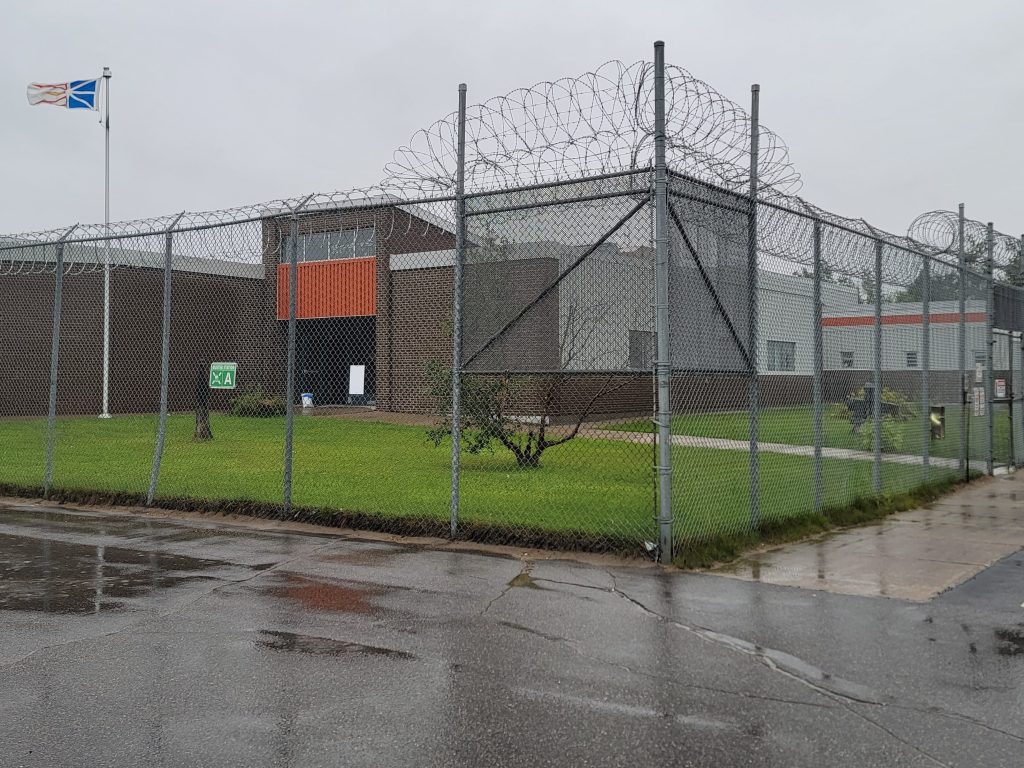
The mayor of Happy Valley-Goose Bay said he’s happy to see the recommendations outlined in a recent public safety review of his community, but he also questions some of the report’s findings.
George Andrews, who has served as mayor of the central Labrador town since 2021, told The Independent town council was given a “quick and dirty” overview of the report, written by the provincial government-appointed Policing Transformation Working Group, before it was released to the public and media in late October.
Then, on Nov. 6, the province announced a $20-million public safety investment that includes five new RCMP officers for Happy Valley-Goose Bay, citing recommendations from the Policing Transformation Working Group’s report.
While Andrews and others on council agree with much of the report’s contents, the mayor is concerned with a line that states “people also commented on the need for leadership from town leaders to help de-escalate and temper negative perspectives about public safety.”
Will you stand with us?
Your support is essential to making journalism like this possible.
“It alludes to the fact that some community members may feel that our messaging creates a situation where people think that the situation is worse than it is, and that’s pretty disheartening,” he said. “We haven’t, as a council, come out and said anything outside of the fact that our residents are concerned with public safety.”
Andrews pointed to a rally outside the town hall in August that drew about 300 people concerned about safety in the community. He said people are worried about what’s happening in the community and it’s not council’s job to diminish their concerns.
“We have never put out anything outside of what we’ve been hearing, and out of sheer frustration in terms of public safety,” he said. “For us, as a council, it was disheartening to see that there — that we haven’t provided leadership.”
More views from public needed: mayor
Andrews also takes issue with who the report’s authors talked to — or didn’t talk to. The report states that, beginning in August 2024, the Police Transformation Working Group held 38 meetings with 85 individuals or groups to seek their views on public safety, and that the working group received two written submissions and emails from six residents or former residents.
“I don’t see a whole lot of average community members,” he said. “I see a lot of government agencies; I think there were only four businesses consulted, there was no public open opportunity for anybody in the public to make any kind of input into the policing transformation report.
“So, we’re going to give them that,” he said, referring to a Nov. 19 town hall meeting called by the council to get residents’ feedback on the report, which Andrews said will be the first time residents will have a chance to tell their perspective on what’s happening in the town.
“It’s one thing to ask organizations about what’s happening here, but I don’t think this really captures what the people of the town are saying, and seeing,” he said.
On the recommendations themselves, Andrews said he’s glad to see a commitment for more police officers and making Happy Valley-Goose Bay a priority area for rolling out RCMP body cameras.
Other recommendations include enhancing collaboration between the RCMP and the Mobile Crisis Response Team, supporting the development of a Community Safety Plan for the town, and developing a pilot project for Happy Valley-Goose Bay to establish a safe community “situation table.”
“If it enhances safety for a police officer or the community or whatever, we’re all for it; I can’t say anything negative about it,” the mayor said. “One thing I didn’t like (in the report) was combining the issues of public safety and homelessness; those are two separate issues and I think they should be dealt with as two separate issues. Council has never said that one is causing the other.”
Andrews referenced crime statistics in the report, which say the Happy Valley-Goose Bay RCMP detachment was ranked second in the province in the reported number of Criminal Code Incidents — representing 8.45 per cent of the provincial total.
The report notes that “almost half of the town’s population identify as Indigenous (Inuit and Innu),” and that “Indigenous people are [disproportionately] represented in the homeless population and in the justice system in Happy Valley-Goose Bay and throughout Canada.”
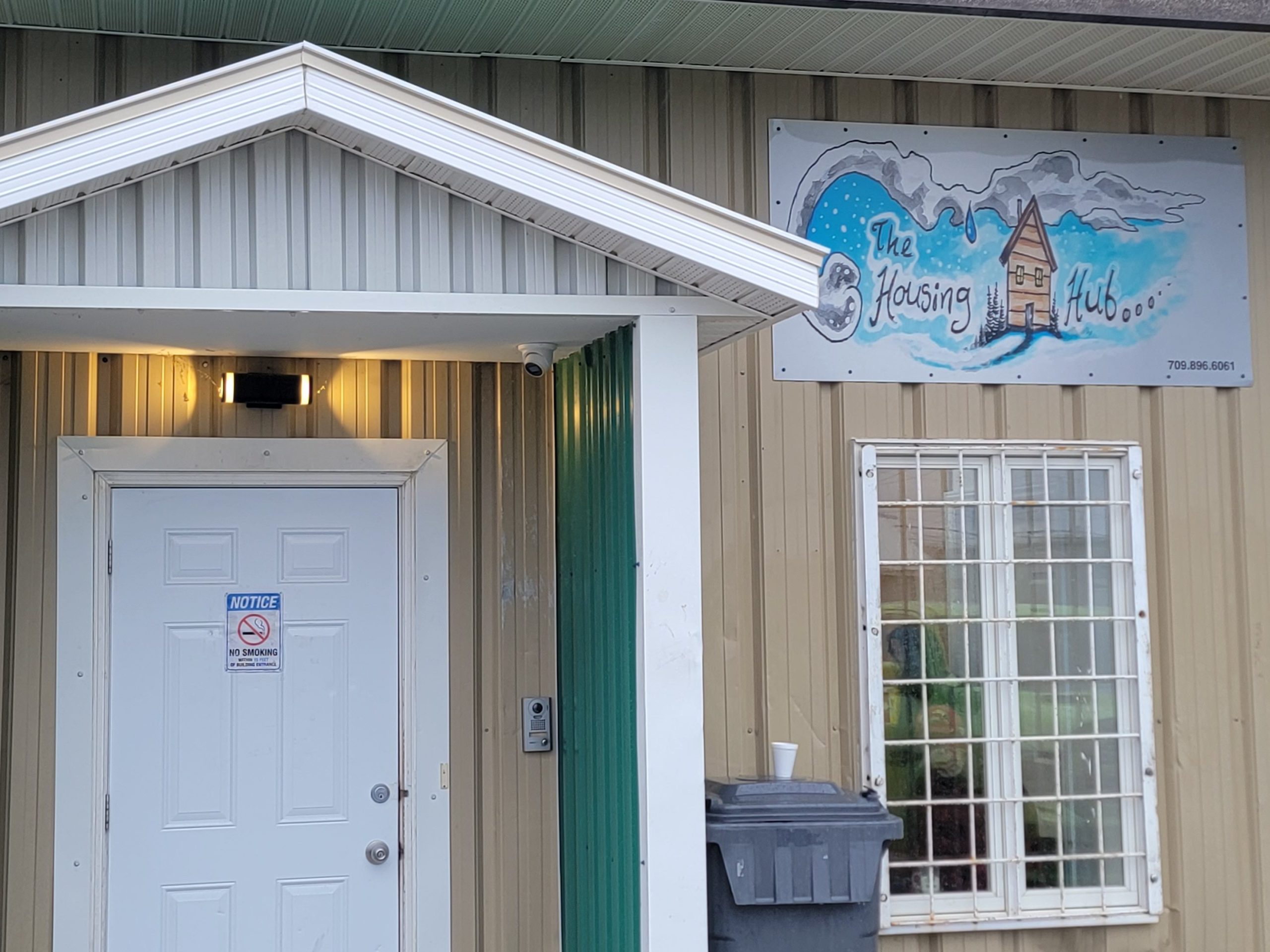
Therefore, it continues, “it is imperative to acknowledge the specific experiences of colonialism and residential schools, and the subsequent intergenerational trauma of Indigenous peoples,” including how the effects of residential schools are “associated with higher rates of depression and substance use, mental distress, and suicide, as well as increased rates of chronic and infectious diseases.
“The criminalization of people with substance use disorders and other mental illnesses exacerbates the stigma and discrimination already experienced by Indigenous populations.”
Sarabeth Kippenhuck, who has lived in Happy Valley-Goose Bay her entire life, told The Independent she is happy to see more police resources come into the community. Still, she doesn’t think just putting people in jail will help with the root causes of crime and homelessness in the community.
“If you have addiction issues, you have mental health issues, if you have intergenerational trauma, none of these things are being helped when people are incarcerated,” she said. “So putting people in jail with these traumas, with these addiction issues, you’re not helping them. You’re just jailing them and then expecting them to change while they’re in there, with no help.”
Kippenhuck said she thinks there needs to be more of a focus, both within the justice system and without, on helping the unhoused population in Happy Valley-Goose Bay, many of whom are Innu or Inuit, with the issues they are facing, as opposed to further criminalizing them.
The rise of a ‘transient population’
There has been a rise in recent years in the town’s ‘transient population’, with many on social media conflating the arrival of newcomers with crime. Andrews said it’s not council’s job to determine why certain types of crime have increased.
Asked if the increase in police officers could lead to further criminalization of the transient population, many of whom are Innu or Inuit, he reiterated the two issues are separate and should be treated as such.
The Independent asked Minister of Justice and Public Safety Bernard Davis whether he’s concerned an increased police presence in Happy Valley-Goose Bay could further criminalize Indigenous people. He said he doesn’t see policing as the only answer to what’s happening in a lot of communities.
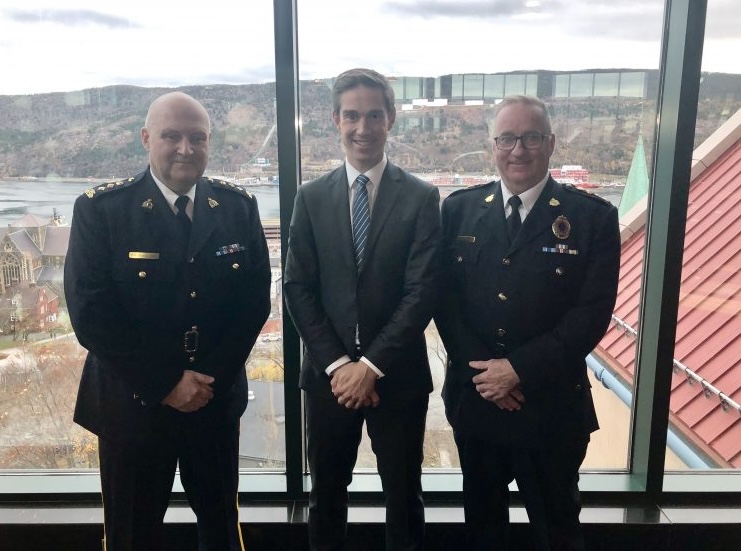
“There were six recommendations that came out of the Policing Transformation Working Group and all six are very important,” the minister said. “Some deal with stronger communication between different stakeholders, some deal with the development of a situation table, which can deal with individual cases that occur in the moment and have everybody around the table that can deal with those particular situations before they escalate to criminal activity.”
In addition to the situation table, Davis referenced the recommendation for a community safety plan. He said it’s something the government is seeing a movement towards nationwide and would help people understand what roles each person plays in the system.
“That way there’s no breakdown in communications—or very limited breakdown in communications—that could happen when you’re trying to deal with a situation that has escalated,” Davis said. “Those two things, coupled with the police involvement, I think will make a big difference in Happy Valley-Goose Bay — and the town council, from my interpretation, sounds pleased with that.”

Author

Related Articles
‘Skepticism and cynicism’ marring public view of Churchill Falls and Gull Island, says researcher
Grand Chief Jodie Ashini says Innu Nation won’t support proposed deal ‘while fundamental issues with the Innu remain unresolved’
Gander didn’t protest U.S. ambassador during 9/11 visit, but still sent a clear message to Trump
There were no boos when Pete Hoekstra appeared at the 25th anniversary commemoration. Instead, Newfoundlanders kept their focus on the nearly 3,000 lives lost — and reminded America that Canada will not bow to anyone
Police should not have fined them over their dog, Quigley, say St. John’s B&B owners
Lesa and Gery Winsor say their 6-year-old Border Collie-Retriever is trained to sit at the end of his driveway; officer told couple RNC gets ‘a lot of complaints about dogs being off leash’