
Where is gender on the agenda in the N.L. provincial election?
As party policies and platforms trickle out, community groups are watching for commitments on poverty, gender and equity issues
As the province barrels into the third week of the fall election campaign, one of the questions community organizations are asking is: where are gender and equity issues on the agenda?
In March of this year newly minted Liberal Prime Minister Mark Carney eliminated the cabinet position of Minister for Women and Gender Equality (and also failed to uphold the gender parity cabinet pursued by his predecessor). Following a national outcry from organizations like YWCA Canada and others, and an election in April, the position was restored. But what’s possibly more ominous are rumoured funding cuts of up to 80 per cent to Women And Gender Equality’s national budget. This would impact dozens of organizations across the country, including some in this province which rely on federal funds for programs, services and staffing. Meanwhile, attacks on the rights of trans and gender diverse people, echoing those in the US which preceded broader attacks on women, visible minorities and immigrants, have emerged from conservative provincial governments in Alberta, Saskatchewan, Quebec and elsewhere.
So where are gender and equity issues in the Newfoundland and Labrador provincial election?
With an exceptionally brief campaign period, there’s limited time for debate on issues. Parties have been focusing on one-off press releases and announcements rather than crafting formal, coherent policy platforms.
Will you stand with us?
Your support is essential to making journalism like this possible.

“I have noticed a trickle-out policy approach,” said Amanda Bittner, a political science professor at Memorial University. “It feels like over the last few years, parties are often not releasing a full-costed platform until late in the campaign,” she added. “Voters deserve information.”
Bittner said that “without receiving clear messaging about party visions and intentions, it’s difficult to make an informed choice on election day.
“It’s clear that a lot of voters in the province are tired and anxious after a hard few years and what looks like it’s going to be a hard few more years, given the state of the economy and the high costs of living, never mind the instability caused by climate change and the American president.”
The NDP released a fully costed platform on Sept. 26 and the PC Party has a ‘platform highlights’ compilation on its website. The platform mentions ‘equity’ five times (but not ‘women’ or ‘gender’) in the context of commitments to pay equity as well as a provincial action plan to combat hate. The PC platform document does not mention ‘women’, ‘equity’ or ‘gender’ once. When the topic isn’t directly addressed, voters are left to piece together party commitments to gender and equity issues by reading between the lines of party statements, spending commitments and media releases.
Childcare and healthcare
Childcare and healthcare commitments have traditionally been considered one of the barometers of a party’s commitment to gender equity, given their complex gendered implications. The NDP has promised to remove provincial sales tax from children’s essentials such as clothing, car seats, and footwear. The party has also committed to “overhauling” the province’s $10-a-day childcare system by improving working conditions for early childhood educators in order to attract more of them to the province and thereby expand available spaces.
The NDP has committed to reversing Liberal government tuition hikes in post-secondary education and restoring a tuition freeze, along with paid work terms for students in healthcare, social work and education. It has also promised to add 1,000 more healthcare workers to the public system over the next four years, along with 20 new seats at Memorial’s medical school. The party is promising better wages and benefits for home-support workers, and the gradual integration of those workers into the public healthcare system.
The party, led by St. John’s Centre MHA Jim Dinn, has also promised to add three therapy visits per year to public health coverage (MCP) in order to start incorporating mental health supports into the public healthcare system, to sign on to the federal Pharmacare program, and create an independent Disability Advocate position.
On the healthcare front, the PC Party has also committed to improvements, including expansion of the program covering medical transportation for receiving “essential” care outside your region, guaranteeing jobs for students (but only in programs where there are demonstrable staff shortages) and paid work terms for students in medical and healthcare programs. Many of these commitments are presented in vague terms, which leaves questions as to what would be considered “essential care” for medical transport or how staff shortages would be measured in a field.
Other commitments, for instance “increase access and decrease wait times for people who need mental healthcare and addiction services,” are likewise presented without clear benchmarks or specifics. But the PCs have attached concrete dollar amounts to several of their healthcare commitments: $9.5 million for paid work terms; $16.2 million for the tuition rebate program; $4.6 million for expansions to the medical transport program. The party has also committed to adding 50 more seats to MUN School of Nursing programs, doubling the size of Nurse Practitioner training seats, and an unspecified “expansion” of the MUNL medical school.
The Liberals, meanwhile, remain committed to expanding the healthcare models introduced under their 10-year Health Accord. That includes adding 14 new family care teams to the existing complement of 21, and 10 new mobile primary care teams.
Where is gender on the agenda?
“I’m not hearing a lot about gender-ish issues,” said Bittner. “Voters seem to be fairly preoccupied with healthcare, cost of living, food insecurity, poverty and its effects, and parties appear to be focusing on that by talking about nurses and doctors and policing.
“Gender-based equity issues are still a problem in the province, whether we think about the lack of child care spaces available, the rise in gender-based violence and especially intimate partner violence, and gender-based pay gaps. And of course these issues are deeply tied to the state of the economy as well.”
In the absence of clear policy statements or commitments, the province’s community organizations are taking action to deepen the conversation around poverty, gender and equity.
Maria Gentle is executive director of the YWCA St. John’s. Her organization has reached out to local candidates with a series of questions to ascertain their position on these issues.
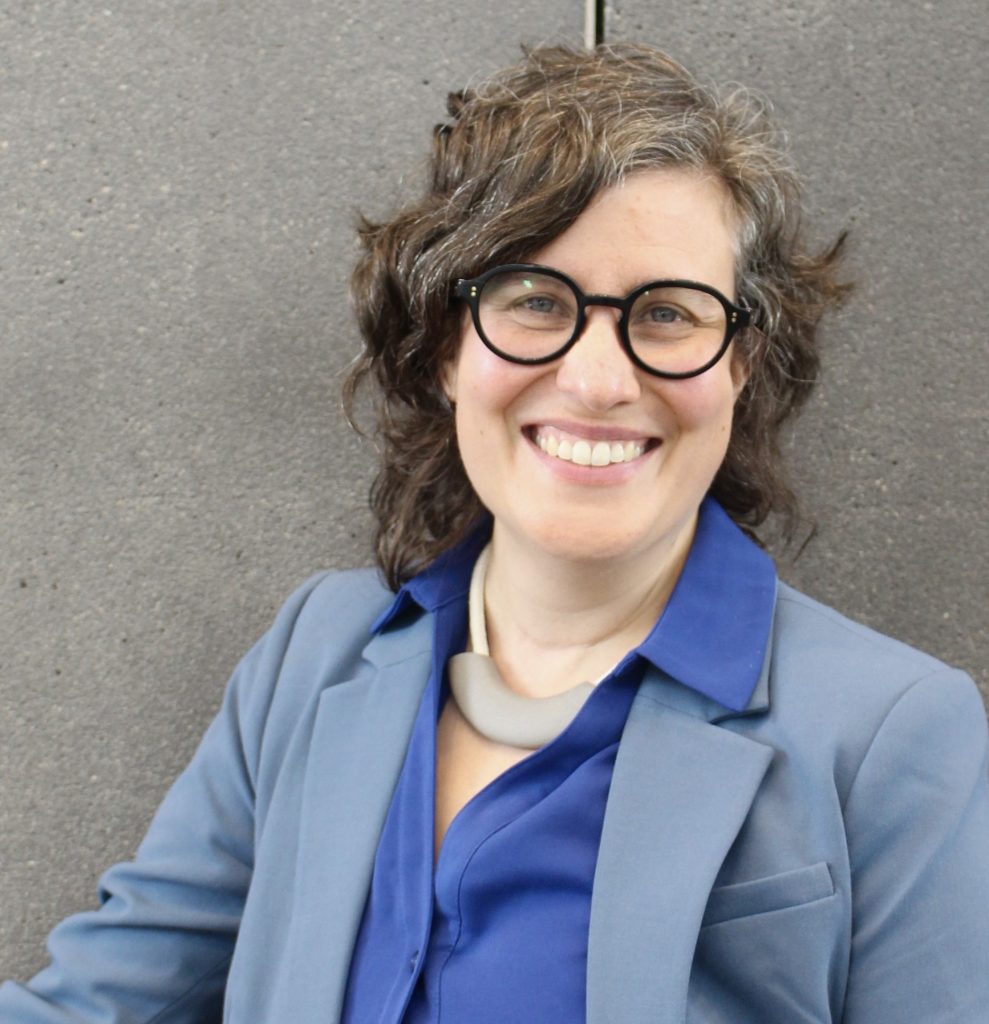
“The challenge is that when we speak to gender equity, especially in this climate, it makes it sound like it’s a special interest problem,” Gentle says. “We know the returns on gender equity and on equity, diversity and inclusion initiatives. Social good is more than the bottom line, right? It really does give you a return.
“But in times when there’s a national conversation on austerity, it’s really hard for the conversation on gender equity to come to the fore,” she continues. “So what we’re trying to do with our surveys and reaching out to candidates is to let them know these issues do [have an] impact. When we address poverty, when we address gender equity, when we address childcare, that impacts everyone and makes our communities safer. That’s what makes communities thrive and that impacts everybody.”
YWCA St. John’s issued a series of survey questions to candidates in the St. John’s metro region. The questions focus on access to childcare, on whether candidates support a guaranteed basic income policy, on providing flexible funding for survivors of gender-based violence, on protecting and expanding programming for gender diverse people and newcomers. They’re also seeking a commitment from candidates to stand up against anti-trans sentiment and attacks on the 2SLGBTQI+ communities.
In other provinces, some parties—notably provincial iterations of the federal Conservative Party—have slid into full-on, US Republican-style attacks on trans and gender-diverse people, making policy statements and imposing legislation in direct opposition to scientific and medical evidence and advice. Because their anti-trans legislation conflicts with fundamental Canadian human rights, both Saskatchewan and Alberta have signaled a willingness to use the ‘notwithstanding clause’ to suspend the federal Charter of Human Rights. This has sparked outcries and legal challenges from civil society and rights groups across the country, who have expressed alarm at core constitutional human rights being suspended in order to attack the rights of an extremely small minority group.
Politics in Newfoundland and Labrador have remained relatively free of partisan attacks on human rights. PC leader Tony Wakeham marched in this year’s St. John’s Pride Parade to demonstrate the party’s support for the 2SLGBTQIA+ community, together with PC candidate Kristina Ennis and out lesbian and Indigenous PC MHA Lela Evans, who has been a vocal advocate for expanded supports for queer, trans and gender-diverse people.
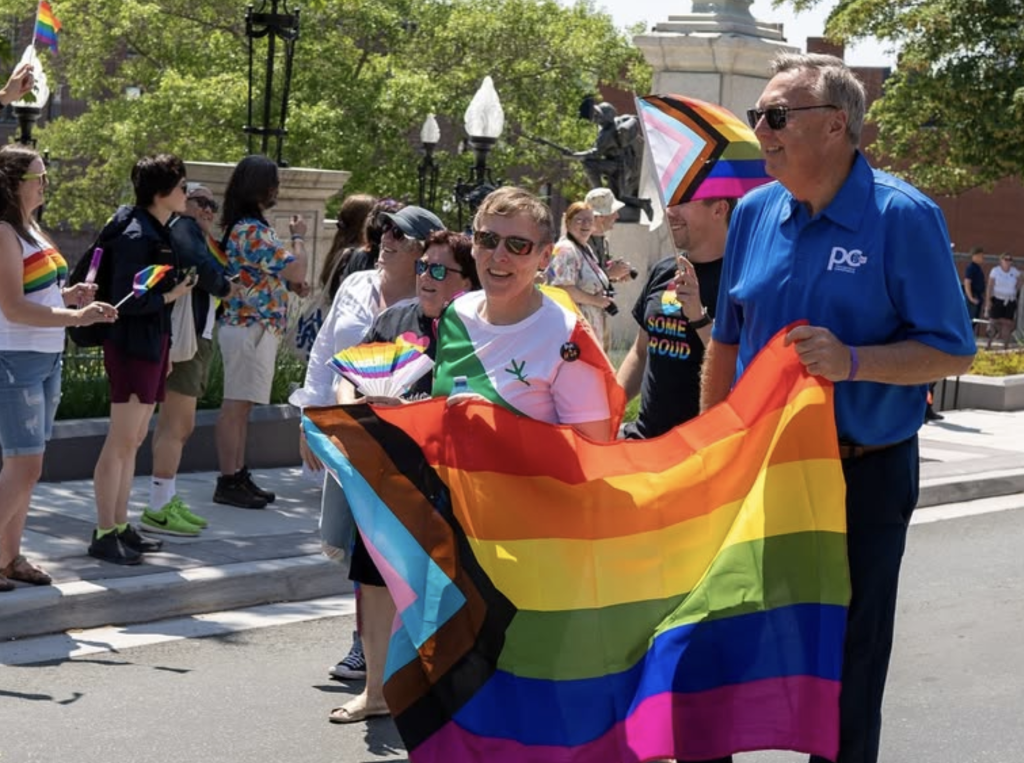
In response to questions from The Independent regarding Quadrangle NL’s 2024 study on the health care needs of 2SLGBTQIA+ Newfoundlanders and Labradorians, Wakeham also reiterated the party’s commitment to expanding supports for queer and trans people in the provincial healthcare system. The NDP, for its part, has promised to develop a provincial plan to combat hate, and create a dedicated Hate Crimes Investigation Unit. The party has also promised to strengthen the powers of the province’s Human Rights Commission.
Because of the troubling national and international rights landscape, Trans Support NL has also reached out to the three major parties seeking responses to a series of questions focusing on the needs of Two Spirit, trans and gender-diverse residents. Their questions focus on healthcare access, safety and rights, gender-inclusive education and support for community organizations.
Poverty deeply gendered
Poverty has also been flagged as an important issue impacting gender and equity. To that end, the NDP has committed to raising the minimum wage to $22 an hour over the next four years, with automatic increases for inflation.
The party has also promised improvements to labour laws to make it easier to form a union and tougher to use scabs in labour disputes. Unions are associated with improved equity outcomes for women and other marginalized workers, so these initiatives are likely to have a beneficial gendered impact, along with the party’s commitment to enhance sick leave provisions with 10 paid sick days per year and a ban on employers requiring medical notes (data indicate sick leave use is gendered in complex ways as well, itself a reflection of the broader lack of supports and consideration for women and gender-diverse workers under existing labour standards).
The NDP is promising a Tenants’ Bill of Rights that would limit rent increases and ban both ‘renovictions’ and no-cause evictions, along with allowing those fleeing abuse to break leases without penalty. New Democrats also promised to build 1,000 new public housing units, at a cost of $150 million, over the next four years.
The PCs have centred their anti-poverty commitments around lower taxes. There is a contradiction here: to benefit from lower taxes, one must earn enough to pay taxes, and tax cuts rarely help those experiencing poverty. In fact, the public services and programs that do help people in poverty—as well as those with lower and middle income levels—are those paid for by taxes, so when governments cut taxes they are often slashing their own ability to provide the public services and supports that are often of more direct benefit to residents.
The Liberals are also promising to cut taxes (also paradoxically cutting their revenue base for providing more services), in particular the provincial portion of HST from residential electricity bills. The NDP has also committed to the same tax cut.
Nevertheless, the PCs do have concrete commitments on the anti-poverty front: an increase to the NL Seniors’ Benefit by 20 per cent (the NDP is promising a 25 per cent increase) and a 3,000-child expansion of the NL Child Benefit, along with a tuition refund for graduates who work in the province (it’s unclear precisely how this would work) and paid work terms for students (the platform does not specify which students; one hopes the vague phrase is intended to capture all students on work terms). Liberal commitments thus far include an extra 40 housing units for seniors in Labrador City.
As an incumbent government, the Liberals are campaigning in many ways on the strength of their record in office. In June of this year they announced increases in housing and income support as part of their ongoing poverty reduction plan, itself a component of the Liberals’ provincial Health Accord. These measures were criticized by the other parties as both inadequate increases in and of themselves, and as a failure to address the root causes of poverty.
A new provincial anti-poverty coalition has emerged, composed of 14 grassroots community organizations from across the island and Labrador. Women’s Centres, Indigenous organizations, shelters and food security groups co-signed an open letter to provincial party leaders that was released on Sept. 25. The letter makes a series of detailed requests for improvements to income supports as well as implementation of a guaranteed basic income (in its platform, released on Sept. 26, the NDP is committing to “work with the federal government to explore the expansion of the current pilots on Guaranteed Basic Livable Income here in the province”).
Tari Ajadi is director of strategy for Stella’s Circle and a media spokesperson for the coalition.
“We were all seeing the massive challenges that folks across the province are experiencing as it relates to the onslaught of a cost-of-living crisis, and the way that poverty has become systematically entrenched,” he says. “As community organizations we do our best to fill gaps as needed, to make sure that folks have different supports from somewhere in the community. But ultimately we can’t solve this crisis. We want meaningful and tangible commitments to poverty reduction.”
Poverty is deeply gendered, Ajadi explains, and so tackling poverty also means working to improve equity outcomes. “The gendered dimension to poverty is one of the most important aspects of this conversation,” he says. “When we think about the ways that poverty is intersectionally felt—thinking about gender, thinking about race as well, newcomer status, language, disability—we can see quite clearly that our society targets those that are marginalized.
“Our society downloads the burdens of poverty onto women and gender diverse folks, it downloads the burdens of poverty onto folks with disabilities, and I could continue down that list,” Ajadi continues. “So when we’re talking about a meaningful poverty reduction strategy then we’re talking about one that is also necessarily intersectional. If we don’t pay attention to any of these inequities then all we do is just reproduce a really harmful and marginalized status quo and we don’t fix any of those challenges.
“To me, beyond the self-evident fact that equity in our society is a valuable thing in and of itself, I think it also has broad implications for the way that our society functions. When we’re talking about having a healthier province, you don’t get [that] without addressing poverty. You don’t get a healthier province without addressing gender inequity. If we start to think about the economy, guess what? Ultimately, gender inequity contributes massively to a diminished economic output. I’m not saying that addressing gender inequity should just be about an economic lens, but I’m saying that you can absolutely apply an economic lens to the issue of gender inequity. So all of these things are very much wrapped up in this important and crucial issue, which is what do we do with the resources we have to make sure that no one is suffering, to make sure that people have a roof over their head, that they have food to eat, they have childcare, they have health care? These are foundational questions to everything else, and until we get to the point where we can have a meaningful conversation about what our plan is to get there—which is why we’re talking about a basic income guarantee—then all of this other stuff is ultimately falling on a terrain that is itself so rotten that very few people can climb it.”
Ajadi says the coalition is concerned that strategies for tackling poverty in a meaningful way are not being adequately discussed by the parties in the election campaign.
“I think that parties are tripping over themselves to talk about public safety without recognizing that when you have poverty reduction you have fewer public safety challenges,” he says, adding “even where there has been discussion around poverty reduction they’ve been dwarfed by other conversations.
“This issue is bigger than any particular partisan political lens.”
Supporting community organizations
As community organizations and coalitions face increased pressure to support a growing base of clients and community members impacted by the cost-of-living and other crises, they’re also looking to the province to support the work they do. In June, the PC Party promised “increased support for community-based organizations” without stating which ones or what form of support. Many organizations eke out a precarious existence relying on short-term funding that remains uncertain from year to year. The need for long-term, sustained funding (as opposed to project-based grants) is something community groups have been vocal about for years.
“I don’t think that need can be overstated,” says Gentle. “If services and community are not supported, it’s unhelpful to government. I don’t think there’s any question about the role community plays in supporting the vision for a thriving province.
“When you look at the wildfires and the way communities pulled together in collaboration with—and sometimes in spite of—government, I don’t think there’s any doubt about the impact community organizations—large, small, formal, informal—make on the well-being and safety of this province. So when we speak about gender justice, gender equity, it’s really important that we name it. That’s the work that needs to be done,” she says, adding that while there have been “a lot of strides and a lot of gains, we also risk rolling back.”
Colt Politte, executive director of Quadrangle NL, the province’s 2SLGBTQIA+ community centre, says the province “has the biggest role to play here.” He cites a number of women’s organizations and other local non-profits that are heavily reliant on provincial funding. “They do have some federal dollars but it really is that provincial support that keeps them going and keeps them able to support their communities.”
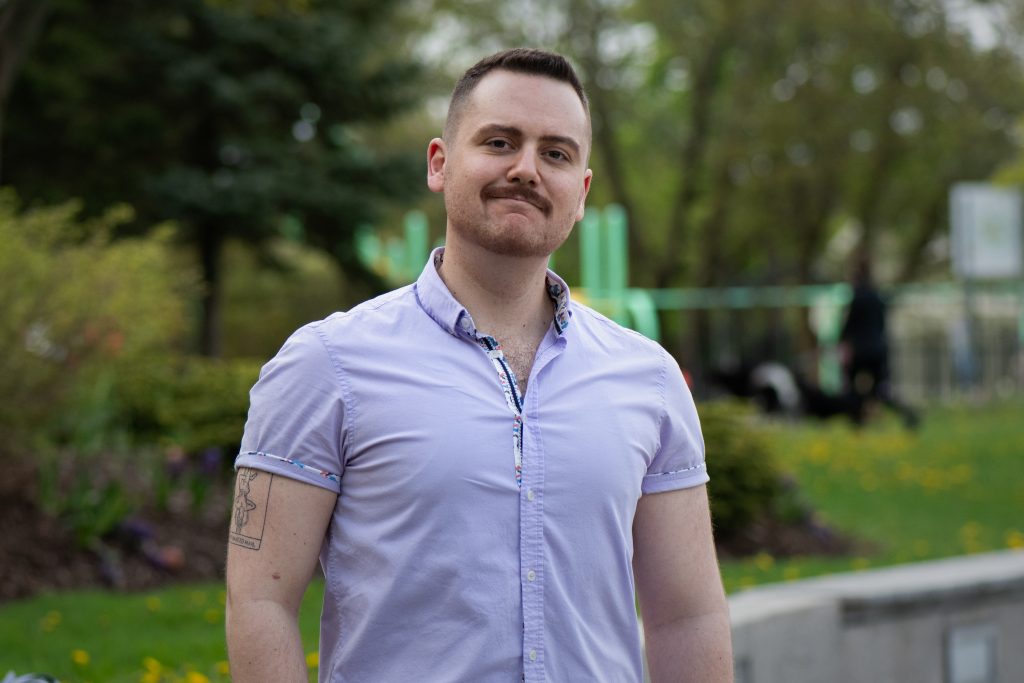
Politte also wants to hear more from candidates and parties about their commitments to gender equality and the organizations that are working on the issue. “When it comes to gender diversity and even women in general, we don’t really hear it mentioned unless candidates are asked, and it really should be part of a platform from the beginning,” he says. “It shouldn’t be something that folks like you or me have to ask a candidate about; it should be talked about early and often, and not in a way that’s as though, ‘this is something that we have to do.’ This helps communities grow and thrive and usually saves money from somewhere else or brings back economic support. It’s an investment.
“I would like to see an understanding that when we talk about women and gender-diverse communities, that’s more than half the province,” Politte continues. “That’s more than 50 per cent of the province. And that’s province-wide, not just St. John’s. It’s also Labrador. And I would like to see candidates start acting like it really is 50 per cent of their constituents, or more.
“We’re seeing an increase in hate, we’re seeing an increase in attacks on DEI work and on equality work in general, and what I would love to see is strong commitments and investments made into this sector—not just to Quadrangle but to all of our women’s centres, to other non-profit groups that are doing the work of supporting our communities,” Politte says. “Because we know that government isn’t doing it, and that if government’s not doing it then we need to do it. But we can’t do it without their support.”

Author
Related Articles
Accounting watchdog to investigate Deloitte over fake citations in $1.6-million healthcare report
Chartered Professional Accountants N.L. is leading the investigation after Deloitte admitted AI was involved
St. John’s teen says community, activism helped her find her voice
13-year-old Nyala Adam was inspired by a local summer camp focused on social justice and cultural inclusion
PC’s minimum wage increase ‘far from a living wage,’ says NDP leader
NDP Leader Jim Dinn is calling on the PCs to legislate wage increases