
Why Nutrition North is failing Labradorians
Despite a $145-million price tag, healthy food is still unaffordable in the north

If the Nutrition North Canada program is supposed to make healthy food affordable in the remote regions of northern Canada, then the $145 million federal program can be considered a failure.
The people of northern Labrador frequently post pictures on social media showing outrageous prices for grocery items. Last month, Nain resident Mary-Lou Harris shared a picture of freezer-burned meat that was already three-months expired. It cost $73.
The statement that the program doesn’t work isn’t disputed by many. In fact, last October the federal government ordered a review of the program. Elected officials and those hoping to win in the upcoming federal election aren’t exactly heaping praise on Nutrition North either. “It isn’t working the way the program was supposed to — it’s not,” Torngat Mountains MHA Lela Evans stated bluntly when asked about the program.
Evans represents six Indigenous communities in Northern Labrador. All of the communities have one thing in common that heavily impacts their local economies: they aren’t connected by any highway. That means food and other essentials must be shipped or flown in, driving up the cost. Evans has used Facebook to document her region’s high food prices over the years. She recalls once posting a picture of a pack of “fatty” pork chops that contained “little meat” that cost $28 a few years ago.
Will you stand with us?
Your support is essential to making journalism like this possible.
Philip Earle, the federal Liberal candidate in Labrador, has firsthand knowledge of the program. During his many years in the provincial air travel industry, he saw firsthand how Nutrition North worked—or didn’t work. He remembers Nutrition North’s predecessor, the Food Mail program, which involved Canada Post. When the food mail program was replaced, it became a transaction between wholesaler and retailer, which Earle argues has led to a decline in quality control. “The element of inspection, which was led by employees of Canada Post, disappeared.”

Now, says Earle, “if the wholesaler shipped a lower-quality product, and the retailer was happy to accept it, the only person who bore the brunt of poor quality was the consumer.” Earle also suggested the previous food mail program was easier to audit, since the federal government funded it, and Canada Post facilitated it. Now, with Nutrition North’s facilitators being wholesalers and retailers, it’s much different. “It was a fundamental shift in the program and, personally, I think that was a mistake.”
Labrador’s NDP candidate, Marius normore, and Conservative candidate Ella Wallace did not respond to The Independent’s interview requests by deadline.
The Nutrition North program was introduced by the Conservatives in 2011 and overseen by the Liberals for the last decade. The program subsidizes essential food and goods like fruits, vegetables, meats as well as diapers and hygiene products. The federal government is spending $145 million during the 2024-25 fiscal year to subsidize food for 125 northern communities.
Over the years, fingers have been pointed at North West Company, the largest grocery chain in Canada’s north. The Manitoba-based grocer has been accused of pocketing money from the program rather than passing on the full savings to consumers. The company is facing two lawsuits alleging the company has misappropriated federal dollars. In a brief statement, a spokesperson for North West Co. told The Independent they believe the claims of misallocated money to be false.
“The North West Company is reviewing the claim and cannot directly respond to it out of respect for the legal process,” said Brigitte Burgoyne, director of communications and public relations. “What we can say for now is we believe the allegations are unfounded and untrue.”
The outrage towards the grocery chain isn’t new. Back in 2015, some Iqaluit shoppers who relied on North West Co. for their food organized a boycott, blaming the company for the high prices. The accusations aren’t entirely without merit. In 2023, an economic study by Tracey Galloway and Nicolas Li found that just over two-thirds of the Nutrition North subsidy was passed onto the consumer. On average, they write, “retail prices were lowered by 67 cents for every additional dollar of subsidy, well below the full pass-through expected under perfect competition.”
When asked by the Independent how they audit retailers that receive the subsidy, a spokesperson for Indigenous Services Canada said a “sample” of businesses go through a compliance review. “Each year, a sample of registered businesses and charitable organizations are chosen to undergo a compliance review. This process helps determine whether they are complying with the terms and conditions of the funding agreement they signed with Crown-Indigenous Relations and Northern Affairs Canada and are transferring the subsidy to customers. The compliance reviews are also conducted by an independent and accredited third-party, not federal government employees.”
In Northern Labrador, Lela Evans says it’s hard for smaller grocers to access the subsidy, and that the paperwork and red tape required by the federal government needs to be cut down. “It makes it difficult for honest businesses to apply the subsidy. It’s very time consuming; it’s a lot of resources,” she says. “A lot of the businesses are small, they don’t have a lot of people working with them.”
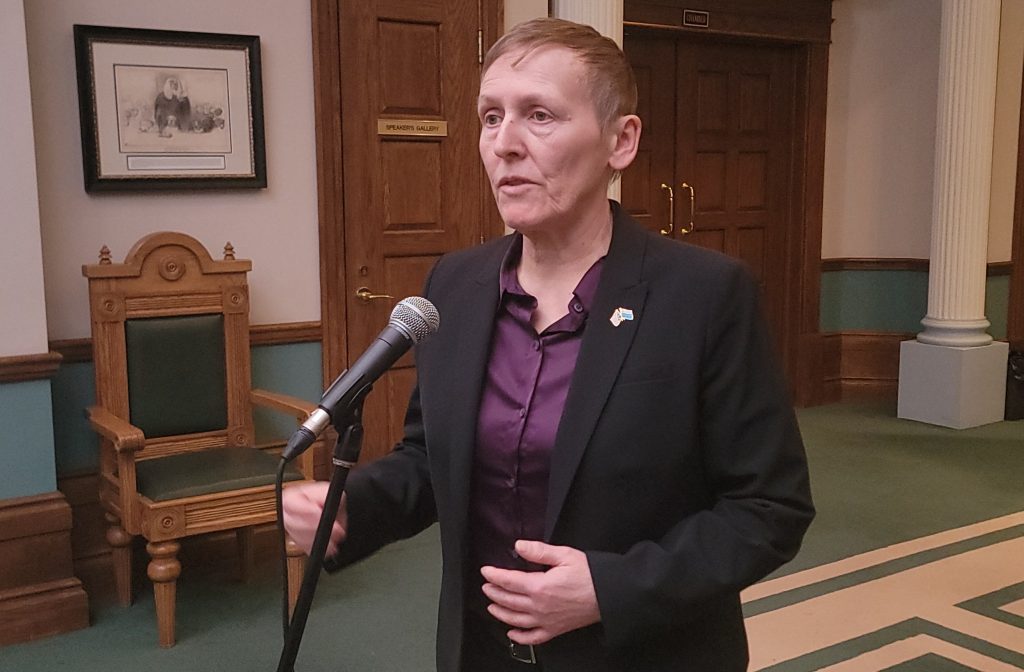
But Evans praises the smaller stores for doing their best to use the subsidy to bring prices down. She says sometimes businesses will absorb some of the cost for staples and raise the prices on inconsequential items. “It’s a balancing act. It takes a lot of time, energy and effort,” she explains. “In Postville we have a family-owned store going on three generations. They work really hard to keep the prices of food down.”
Evans would like to see the program become easier for smaller businesses to apply the subsidy, while still making sure no one misuses the allocated funds. “They should clean up the way the subsidy is applied,” she says. “Remove some of the bureaucracy, but also have the accountability there.”
Earle, meanwhile, wants to see every dollar of the subsidy go straight to the consumer, with no intermediaries. He suggested the federal government could put money directly into the pockets of northern consumers, possibly by using rebates. “For the full value of the subsidy is to see the subsidy go directly to Northerns, versus going to retailers or going to wholesalers.”
Evans believes the program’s flaws and the litigation against North West Co. shows how invisible Indigenous communities are in Canada. She believes if similar problems existed in other parts of the country, the situation would have gotten far more attention a long time ago. “It goes to show how little they think of us. We’re just the Indigenous communities in northern Labrador — out of sight, out of mind,” she says. “If it wasn’t Indigenous people being harmed, there would be a large-scale investigation — there would have been some reckoning.”
The Independent’s debates and federal election coverage is supported by the Covering Canada: Election 2025 Fund.

Author

Related Articles

PCs under fire for ‘disappointing’ treatment of Black History Month
Celebrated Black community leader and anti-racism advocate target of racist comments after speaking out online

New play portrays barriers facing N.L. women in politics
Women won the right to vote a century ago but are still underrepresented in public office. St. John’s playwright Ruth Lawrence’s play tackles that head on.

Meaningful response to homelessness requires more than new builds, says NDP leader
Jim Dinn’s comments come in response to PC’s announcement of 10 new ‘micro homes’ in St. John’s