
‘No one is disposable’
On queer liberation and the politics of disposability.
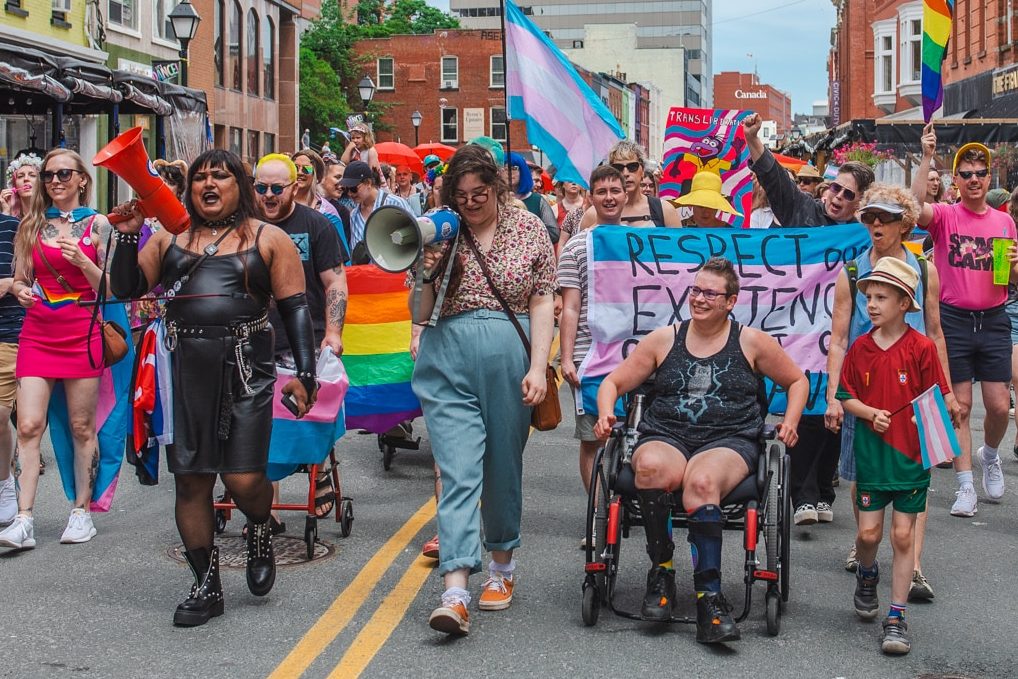
The following is a speech delivered by journalist, activist and author Rhea Rollmann May 31, 2024 at Confederation Building in St. John’s to help launch Pride Month 2024 in Newfoundland and Labradorr. It is republished here with the author’s permission.
I was asked to speak a little about my book, our past, and the queer liberation struggle in Newfoundland and Labrador. And so I thought I would speak for a few minutes about the intersectionality of that struggle, and about the places where queer history happens.
I want you to cast your imaginations back 35 years. Imagine the front of this building, the Confederation Building, and imagine a convoy of a dozen taxis pulling up in front of the building. Out from the taxis emerge dozens of women. They’re part of the Provincial Women’s Lobby, an amazing bit of activism that occurred throughout the 1980s and early ‘90s, bringing together representatives from women-serving organizations in every corner of the province, to lobby government on issues that mattered.
That women’s lobby was one of the first instances in this province where politicians were asked face to face — where they were demanded to account for themselves on the slow pace of legislative change on sexual orientation protections. Seated across tables from each other, the politicians were asked to explain why promises had gone unmet, and progress continued to stall. When they gave politicians’ answers, they were grilled again.
Will you stand with us?
Your support is essential to making journalism like this possible.
The Women’s Lobby that took place here, the debates which followed on the floor of the House of Assembly, the letters that poured in to government throughout the 1980s from a succession of activist groups — most of those letters disappeared with no response; they are a part of the important queer history that took place in this space. The ever more forceful activism that took place later in the ‘90s, which culminated in a vote to amend the province’s human rights code in 1997, all of this is part of the queer history of this space, too.
But the queer history of this province doesn’t only reside in the halls of government. Quite the opposite; our most vibrant histories reside elsewhere. They reside in the cramped rooms and offices of the St. John’s Status of Women Council, where for more than 50 years activists have gathered, seated on threadbare sofas and creaking swivel chairs, writing letters together, compiling policy briefs, partying together, crying and sharing difficult truths together, laughing, and rededicating themselves constantly to the fight for change.
Our queer history resides in the ancient wooden rooms of the LSPU Hall, where in 1981 the Gay Association In Newfoundland had its first meeting, where countless queer performers — Tommy Sexton, Jacob Chaos, Cathy Jones, Maxim Mazumdar, Paul Power, Santiago Guzman and many others — helped to open eyes and minds and hearts in a way that statistics and policy briefs never will.
Our queer history resides in the crumbling plaster facades of buildings like 156 Water St., which today is an upscale housewares shop, but in 1993 was the beating heart of a gay dance club called Solomon’s. It was out of that building in the early hours of July 8, 1993 that Brian Nolan, an easy-tempered young man who worked for Air Canada, exited to go home after a night out with friends. He didn’t make it past Solomon’s Lane before being confronted, assaulted and wrongfully arrested by RNC police officers, and further assaulted at the penitentiary when he was dropped off there.
And our history resides in the wooden clapboard house on Prescott Street where Brian eventually stumbled home the next morning after his ordeal, was reunited with his partner Shawn, and made the difficult but courageous decision to fight for justice.
Fast forward to 1995, and we catch up with our queer history again, this time being made in the halls of the Supreme Court building downtown, where after two long years of torturous, stressful legal battles, the Supreme Court agrees to accept Brian’s human rights complaint, and for the first time in our history reads in sexual orientation as a protected right under the province’s human rights code.
The officers got off with a slap on the wrist and a couple days’ docked pay, but Brian’s long struggle reset the legal landscape for gays and lesbians across this province.
Our history resides in so many other places, like the countless bedrooms of countless homes across this province where throughout the 1980s and ’90s volunteers with the AIDS Committee of Newfoundland and Labrador helped the sick and dying in our communities. They did so with absolutely zero government support for many years. AIDS patients were not even allowed in the province’s palliative care units — but our community organized and mobilized to meet the gap.
“There aren’t any of those people here,” was the response of a provincial health minister of the time. But there were, and always have been. The real tragedy of the AIDS crisis in this province wasn’t just the quick transmission of a mysterious virus; it was the willingness of policymakers and those who could have helped, to simply turn a blind eye to the deaths of a community they deemed disposable and inconvenient to their daily status quo.
In the absence of government support our community mobilized, and cared for each other, and rose up loud and proud and defiant until our visibility and our presence and our demand for a different way of living and co-existing with each other could no longer be ignored.
There are many lessons to be learned here. But it is so rarely that we actually absorb and learn from the lessons of our history.
What was so vile about the public response to the AIDS crisis of the ‘80s and ‘90s was not just that it was rooted in ignorance and fear, although certainly that played a part. It was the deliberate designation of a group of people as disposable. The deliberate acceptance that a group of people — in this case queer people, people with HIV — could be written off, left to die, left unsupported, and that this should not disturb the daily routines of everyone else.
The notion that a group of people is disposable — that we ought not to be moved or pause our daily lives to do what we can to help them — is what facilitated the hundreds, possibly thousands, of deaths of people with HIV from this province. And that mentality — that frame of mind which accepts a group of people as disposable — lingers in the present day as well.
It manifests in the actions and words of those who refuse to acknowledge housing is a human right, and who authorize the clearing of an encampment of unhoused people in our own city’s downtown simply because they don’t want to see it, and don’t want the tourists to see it.
It manifests in the actions and words of those who sit by while tens of thousands of Palestinians are being slaughtered by Israeli soldiers and government in an ongoing, deliberately orchestrated genocide.
It manifests in the actions and words of university administrators who refuse to take a stand or even divest their universities’ endowments from funding the manufacture of bombs and bullets that are killing Palestinian children.
It manifests in the actions and words of those who would spend $6 million on repatriating the remains of an unknown soldier across the Atlantic from France, instead of spending it in ways that could help mitigate the deaths of thousands of known Palestinians, or the suffering of hundreds of known unhoused people in our own province.
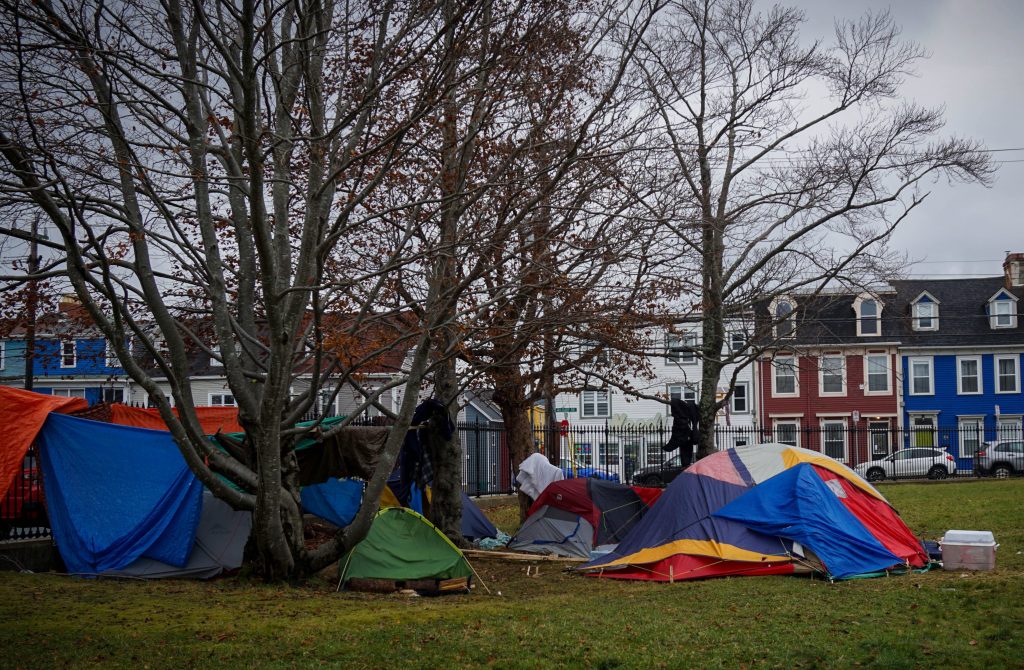
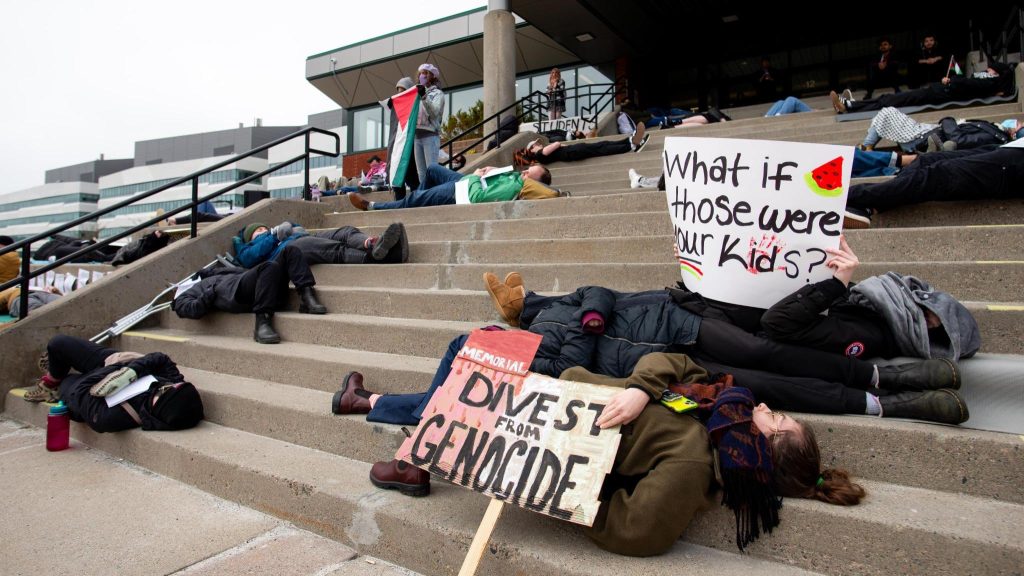

To designate those people as disposable, which is what white settler government policies continue to do, is to show that in fact very little has been learned or remembered from the activism of barely three decades ago.
It is essential that we not forget this history, nor the solutions that it offers us.
Queer activists turned the tide in the 1990s by their refusal to remain silent, their refusal to be rendered disposable, their refusal to accept a status quo in which their role was to be sidelined and suffer and die. They rose up and fought back, just like in 2012 when Indigenous communities rose up against settler colonialism in the Idle No More movement, just like in 2013 when Black communities rose up against white supremacist police forces in the Black Lives Matter movement, just like in 2023 when unhoused residents of our own city rose up against the politics of disposability of our provincial government, and just like two weeks ago when student activists for Palestine at Memorial University rose up against university investment policies that profit off of a genocide.
Today it is in spaces like the Tent City encampment that was at Colonial Building, or the Students For Palestine encampment at Memorial University, that the queer history we shall honour in future years is being made.
The real lesson of the ongoing queer liberation movement, and the lesson that we honour every time we raise a pride flag or come together in solidarity, is that no one is disposable, whether for reasons of sexuality or gender or class or ethnicity or any other reason. And if we want to truly honour the proud legacy of queer liberation in this province, we’ll do so not just by raising flags and parading down Water Street, but by joining hands in support and solidarity with Palestinian activists, with unhoused activists, with Indigenous and Black and trans activists, and all those who refuse to accept that anyone in our community, in our province, or in our world, is disposable.
That is the lesson our queer history has to offer us.


Author

Related Articles
Throwing shade on solar myths
‘Someday the sun will shine and have-not will be no more,’ Brian Peckford famously said. Solar ‘someday’ can’t come soon enough, writes Angela Antle
No energy justice with Bay du Nord
Newfoundland and Labrador’s Bay du Nord ambitions are out of step with the dire need to phase out global oil production and the province’s benefits agreement with Equinor underscores the need for a new approach to fossil fuels
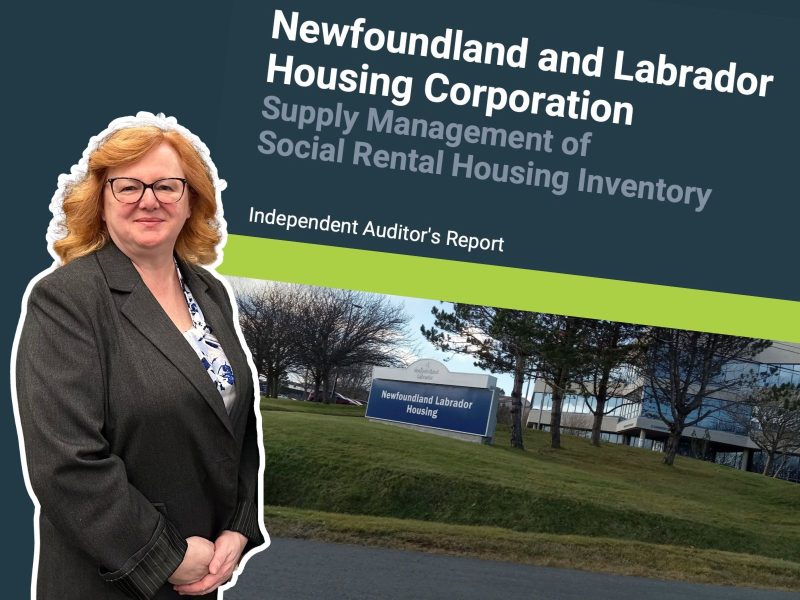
A housing corporation without a housing mandate
The Liberals and PCs have no right to point fingers at each other in response to the auditor general’s scathing report on social housing