
‘We do it because it’s the right thing to do’
Abortion care remains difficult to access in Newfoundland and Labrador, but providers are coming up with creative solutions
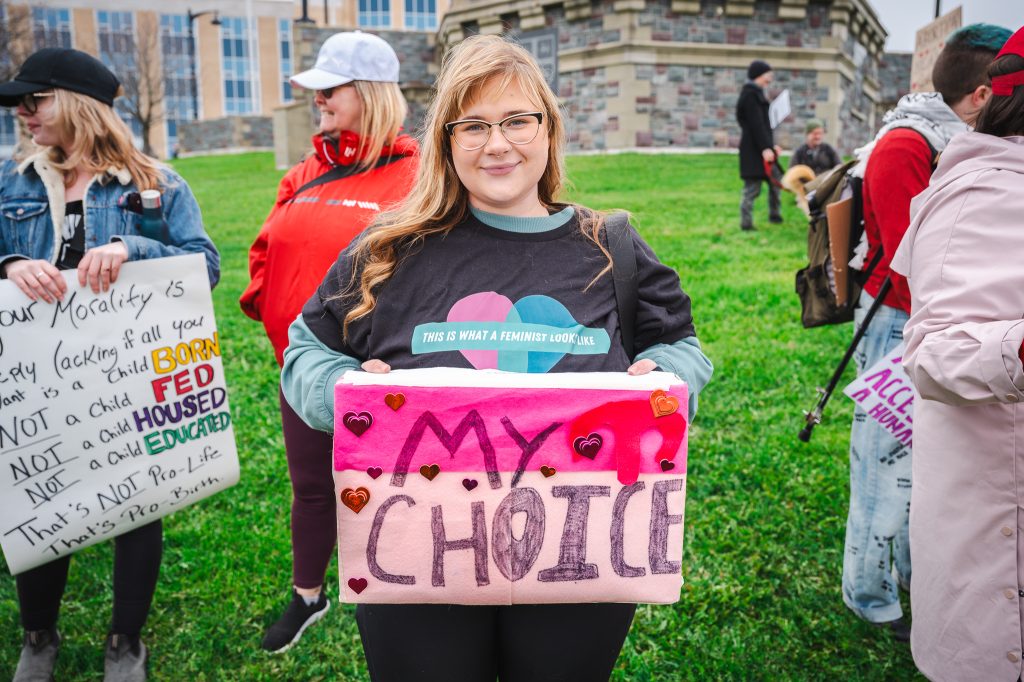
It was on a cold and blustery afternoon last month.
About 60 reproductive justice activists gathered outside the Confederation Building in St. John’s to defend reproductive rights.
The May 17 event was organised as a counter-rally to the annual March For Life held by anti-choice activists. But the March for Life protestors didn’t show up this year.
Will you stand with us?
Your support is essential to making journalism like this possible.
Last year, March For Life organisers flew in a guest speaker, but when they arrived at Confederation Building found themselves significantly outnumbered by pro-choice activists. Last year’s event devolved into a series of guerrilla-style pursuits around the front lawn of Confederation Building as pro-choice activists surrounded the anti-choicers and blocked them from displaying graphic signage on the Prince Philip Parkway.
But the absence of a March for Life event at Confederation Building this year doesn’t mean bodily autonomy rights are safe. Far from it, organisers say.
Three provinces — New Brunswick, Saskatchewan and Alberta — have recently introduced laws interfering with the bodily autonomy and gender identity of children and youth, and depriving them of access to life-saving supports and healthcare.
Meanwhile, this year’s May 9 March For Life event in Ottawa featured two federal Conservative MPs as speakers. One of them, Alberta MP Arnold Viersen, introduced a petition in the legislature last month to restrict abortion access. The other, Saskatchewan MP Cathay Wagentall, introduced a private members’ bill last year which was also seen as opening an attack on abortion rights.
Federal Conservative leader Pierre Poilievre has voted for anti-choice bills in the past and has stated he would allow anti-abortion bills to be introduced and for free votes on them if elected to government.
“It does greatly concern me, because it’s like that saying: if they can take an inch they’ll take a mile,” said 25-year old Beck McCloud, who attended last month’s pro-choice rally in St. John’s with their partner and friends. “If they can get access to abortion revoked, limited or removed, then they will go on to target even more and more people.
“Abortion access is healthcare and it is a human right and it is very important because no one should have their choices—whether for abortion access, whether for other healthcare access—taken away from them,” McCloud said.
“We see targeting of abortion access, targeting of trans and queer healthcare, targeting of various marginalised identities. And each one of these is interconnected and intertwined. Targeting one is targeting them all.”
The event featured speakers from Planned Parenthood NL and the St. John’s Status of Women Council.
Nicole Boland from the Status of Women Council said reproductive rights are “non-negotiable,” and they’re “about dignity, bodily autonomy and justice. Every person deserves the right to make decisions about their own body free from coercion or interference. This fundamental right is essential for gender equality and the realisation of human rights.”

Abortion remains inaccessible in this province
The anti-choice work of Conservative politicians like Viersen and Wagentall has created a maelstrom of controversy and has been roundly attacked by other parties, leading Poilievre to distance himself from his MPs’ comments.
But Lisa Faye, executive director of the St. John’s Status of Women Council, says it would be wrong to celebrate the present state of abortion rights, because it remains out of reach for so many people.
“The truth is that I’m equally concerned about the fact that at this very moment while abortion is legal, it’s not actually accessible for the great majority of people in Canada. It’s inaccessible to so many people who are outside of major centres. It’s inaccessible even in some of those major centres where you have to get a letter of approval from a doctor or perhaps a foetal scan or things like this before you’re allowed to terminate a pregnancy,” she said.
“People in rural and remote areas already face too many health barriers and this is another health barrier that’s already in place.”
Rolanda Ryan, who owns and operates the Athena Health Centre and has spent the past 25 years working to make abortion care accessible, describes the scale of the problem in rural Newfoundland and Labrador as “quite drastic.” In 2017, she came up with a novel way to tackle it: a mobile clinic that travels to rural parts of the province.

Travelling abortion care
“It’s a lot of work, but it makes a huge difference for the lives of the people that we service in those areas,” she says.
Ryan’s team normally travels every four to six weeks to remote areas of the island. Between November and April — what Ryan ruefully calls “the bad months” because of the harsh weather they have to contend with — they go to the farthest destinations, along the west coast. During the nicer months they rotate between the west coast and central Newfoundland.
The team consists of Ryan, a technologist, and a physician.
When they arrive at their destination — usually a local medical clinic that has agreed to let them use the facility — they go to work.
“When we drive to the west coast we’re driving eight hours to get there, then we spend two to three hours converting their clinic into our space, then we spend five or six hours working [providing abortion care], then we spend two to three hours changing it back into their clinic and collecting our stuff, and then we spend another eight hours driving home.”
Ryan says all of that is usually accomplished in two or three days, explaining they “often leave Friday and then we’re home Saturday night.”
She says the travelling clinic is “exhausting,” and “incredibly expensive,” but rewarding.
“To see those peoples’ faces who are telling us, ‘I’m so grateful you came out here, I would never be able to get to St. John’s; I simply couldn’t afford it, I’m working a minimum wage job, I’ve got two kids, I’m a single mom’ — or whatever their situation is. So it’s gratifying, good work.”
The team sees anywhere between eight and 15 patients during a visit, Ryan explains. It’s a tricky matter of timing, and if residents’ needs don’t match their visit schedules those patients will have to make the journey to St. John’s on their own. Regional hospitals do not offer abortion services outside of St. John’s.
If someone contacts the clinic nine weeks or less into their pregnancy, they can also support clients in doing a medicated abortion via mifegymiso — also known as the abortion pill — which involves coordinating bloodwork sessions with a local hospital.
Offering medicated abortion in the province, available since 2017, was a “game-changer,” says Ryan. “It meant that people could stay in their home communities, provided they caught the pregnancy early.”
Some people prefer the procedure over the medication, though; it’s a personal choice Ryan says her team always accepts without judgment.
Labrador: an extra layer of barriers

The team only travels around the island. Most Labrador residents must travel to the island for abortions, although there is at least one physician providing medicated abortions there for those who qualify.
Torngat Mountains MHA Lela Evans sees firsthand the hardships caused by a lack of service on the mainland portion of the province.
“There’s an extra layer of barriers put on Labradorians,” she told The Independent.
Unlike island residents, people in Labrador can’t just drive to St. John’s for an abortion. They have to fly, and while they can access the province’s medical travel program, it requires doctors’ referrals and a lot of bureaucratic red tape which undermines the privacy of applicants around what is supposed to be a personal, private decision. Evans said it’s also difficult for residents to learn about and navigate the options available to them.
In 2022 she raised this issue in the legislature, asking government to put clear information on its website explaining to Labradorians how to access abortion care. Then-Health Minister John Haggie said he would look into it, but Evans said nothing’s been done. A Department of Health spokesperson told The Independent in a written statement that the department “is in the process of reviewing how best to inform residents of the reproductive and sexual health services available to them.”

“Sharing information about access and resources doesn’t cost a lot of money but really improves access to knowledge,” Evans said, adding it “helps people to plan and avail of services and to deal with the geographic barriers that people in rural Newfoundland and Labrador face.”
Evans said she knows residents for whom the barriers and lack of information led to them having children they may not have been prepared for. She’s emphatic that abortion and the ability to choose when to have children is a critical part of family planning.
“It’s really impacted their life,” she said. “It impacts their options and overall life in terms of careers, job opportunities, financial security, stability, financial independence, even where they live.
“If you’re going to choose to bring a child into this world you have to have the means to support and care for it, and give it a decent quality of life in terms of food, housing, so many things. Abortion should be thought about as family planning. When somebody has an abortion it doesn’t mean that in the future they’re not going to have children or they don’t want children,” she said.
“For a lot of people it’s about making sure that when they bring a child into the world they can provide it with the necessities of life and give it the opportunities that a child deserves.”

Planned Parenthood NL Executive Director Nikki Baldwin also describes medicated abortion as a game-changer. But they warn it’s still not as accessible in rural parts of the province as it should be.
Baldwin says some pharmacies will not stock it, either due to moral opposition or because it’s not something that’s in wide demand. It’s often couriered to rural communities, but not all communities are accessible by courier. And it still requires blood-work sessions and aftercare.
“I feel like everywhere there’s a hospital, they should have somebody providing this service, because it’s health care, and it’s necessary health care,” Ryan says.
Unfortunately, she explains, many physicians aren’t comfortable providing that care, in many cases due to religious beliefs, or stigma from their peers or from the wider community.
“There’s a host of reasons why physicians don’t always want to open up abortion care and why [doctors] right across the island are sending patients to us even when they have the necessary skill sets to provide this service,” Ryan says. “But these physicians live and work in these communities and they have families in those communities, so I respect that they have to somehow be able to still work and live there and not have their children, or their spouses or themselves, be ostracised for providing abortion care. It’s not that they don’t believe in it or don’t support it, but more often than not they’ll refer those patients to us.”
Stigma lingers
Canada’s restrictions on abortion were struck down as unconstitutional by the Supreme Court more than 35 years ago, in 1988. Despite an unsuccessful effort by the federal Conservatives (then Progressive Conservatives) to recriminalize abortion in the early 1990s, that’s remained the status quo since then. Yet Ryan says the stigma around abortion remains pervasive in many parts of the province.
“The stigma is amazingly strong,” says Ryan, adding she’s “always surprised at the stigma around abortion care, since it truly is health care.”
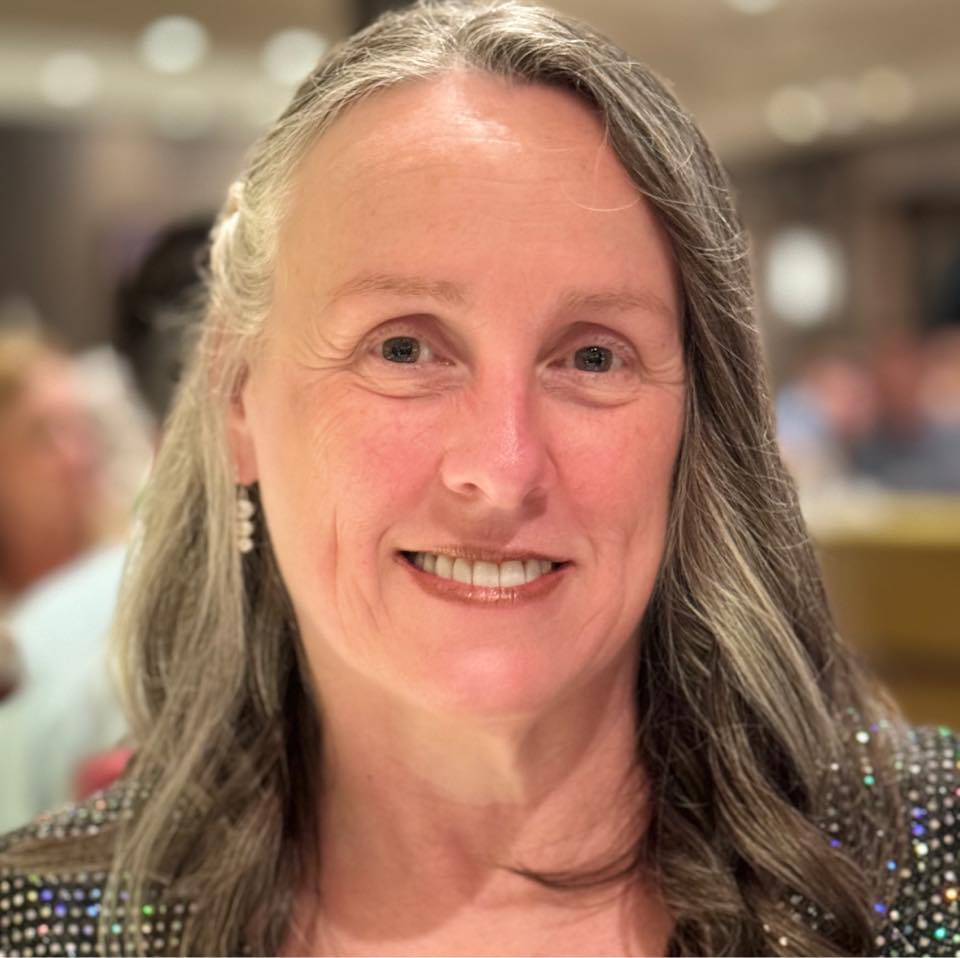
Ryan says she’s got a thick enough skin to brush off the hate she sometimes faces, but understands that not everyone is able to do that. But she thinks they also need to remember their obligations as a physician.
“I’ve had my fan club of haters,” she says. “I just go, ‘So what — you hate me. What I’m doing is good work, what I’m doing is valuable work; I am helping people, and just because you don’t approve doesn’t change the way I feel about the work I do and about myself.’
“I feel like I’m really truly helping people, changing lives by giving them autonomy over their body and letting them not be forced into a pregnancy that they don’t want or can’t afford or are a victim of, or whatever. The people who work here truly believe that abortion is good work, it’s healthcare.
“The people who don’t like us are loud, and so for the physicians considering it — if they know that it’s going to create a lot of stigma, I can understand their hesitation. But I really feel like that if you made an oath to help others, and to do no harm, then I feel like you should know that sometimes you’re going to do things that people don’t approve of, and sometimes you’re going to do things that upset people. But that’s a part of your job. You can’t be friends with everybody.”
A financial challenge, too
Patients seeking abortion care at Athena Health Centre don’t need to pay; abortions are covered by MCP, so physicians bill the government directly for the service. But tumultuous changes in both the economy and in healthcare have required creative thinking to keep the service going.
Athena initially operated using a fee-per-service funding model, with government paying per procedure performed. But when COVID-19 hit in 2020, costs began skyrocketing. At the same time, abortions plummeted, which Ryan attributes to the fact people weren’t socialising as much. The impact of these two trends — higher costs and fewer procedures — caused the clinic to nearly go bankrupt.
In 2022 the clinic negotiated a new formula with the province, shifting to block funding in order to keep the service open. But now a new problem has arisen: demand for abortion services has skyrocketed as well.
“Our numbers have gone way off the charts — higher than they’ve ever been,” Ryan says. “And the prices have never come down. So despite now having block funding, every single quarter I’m landing in the red.”
Ryan attributes the rise in demand for abortion care to the cost-of-living crisis the province is experiencing.
“Because of the increased cost of living, a lot of people who would have made other decisions are now in here — people in relationships, people who have families. They’re now in here saying, ‘I just can’t afford another child.’ So now people who may have been able to continue a pregnancy are no longer able to, because they simply can’t afford it. So our numbers hit over 1,000 per year for the first time since COVID, and they have not settled down since.”
‘Simply an option in life and not something bigger’
Faye is a single parent, and deeply familiar with the difficulty of raising a child in today’s economy. But she’s hopeful that the rising numbers also reflect a shift in attitudes, and a recognition that termination is a part of routine health care.
“I think about the difference between how my mother might have spoken to me about the possibility of termination and the difference in how I speak to my daughter,” she says. “I speak to my daughter about termination as her right. I speak to her about it as something that nobody should ask her any questions about — it’s something that she should just be able to go and do because it’s her body.
“The way my mother spoke to me about it was as a sin, as something that if you chose to have sex then this would be the outcome. I hope that today’s young people are being spoken to in a way by the people in their lives that allows them to know that it’s a real option. Perhaps that’s why more people are terminating, because they understand that it’s simply an option in life and not something bigger than that.”
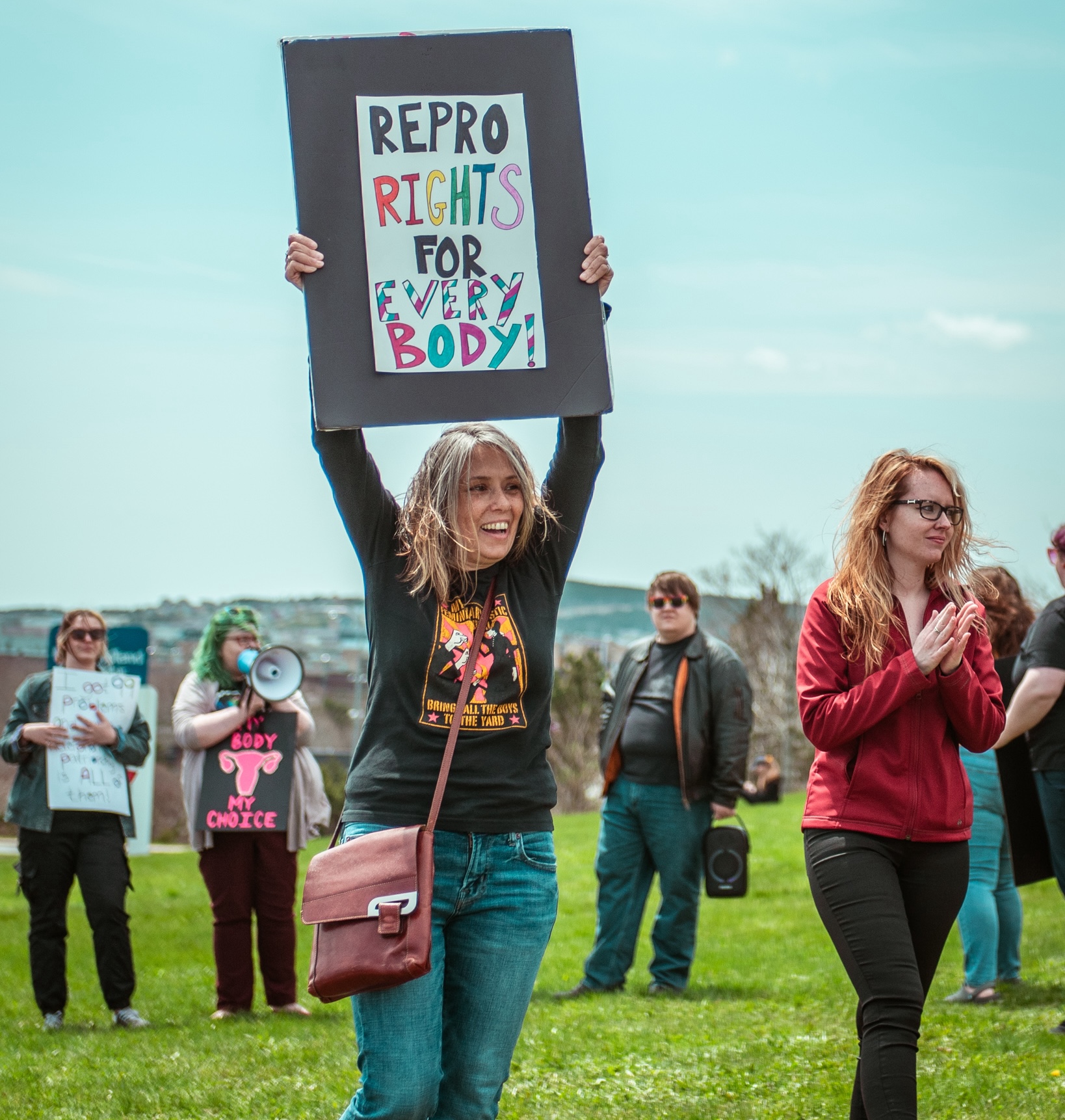
Faye also suspects part of the rise in demand for abortion care could be the fact that contraceptives are still not as accessible as they ought to be. Planned Parenthood is underfunded and overwhelmed with demand, she points out, and many people in the province don’t have family doctors. Meanwhile, many birth control methods are unaffordable, especially for young people.
“I think there’s so many reasons people might be accessing more termination options and I think the economy is one of them, but I think there’s a lot of factors in our health-care system that are adding to it as well,” she says.
When Ryan began keeping detailed stats in 2010, her clinic performed 776 procedures. Those numbers have been steadily rising — with a significant dip during the first two years of the COVID-19 pandemic — to an all-time high last year of 1,042 procedures. In the first four and a half months of 2024, they had already provided 428 procedures.
Over three quarters of the clinic’s patients last year were residents of the Eastern Health district, with just over 100 patients from each of Central and Western health districts. Thirty-four patients came in from Labrador, and there were also a few out-of-province clients.
The Health Sciences Centre (HSC) performs abortions too, but there’s been a dramatic shift in the share of abortions performed at Athena relative to those performed at the St. John’s hospital. In 2010, the HSC performed 268 abortions. That number has steadily dropped — while overall demand has risen — to an all-time low of 59 abortions at the hospital in 2020. In 2021, the HSC stopped recording statistics on abortions entirely.
Ryan finds the trend, and the cessation of data collection, concerning. She speculates the heightened profile of Athena Health Centre may have attracted more patients but says it also may have to do with the way the service is offered.
To obtain an abortion at the HSC requires a doctor’s referral, and many patients in the province no longer have doctors. An HSC abortion also goes on a patient’s medical record, which makes some uncomfortable. The HSC procedure takes two days, while the procedure used at Athena Clinic is a single-day procedure. Ryan says she’s also been told by some patients that when they went to the HSC to arrange an abortion, they were simply given the phone number for Athena.
Given the demand for operating room space in an increasingly strained public health system, this doesn’t surprise her. But it does raise questions about the future of the service at the province’s largest hospital.

The Independent reached out to NL Health Services for an interview, and was provided a brief emailed statement stating that independent abortion statistics are no longer kept at HSC but are lumped in with other ‘dilation and curettage’ procedures. No explanation was provided for the shift in recording methods. The statement also said that any patients seeking abortions at the hospital without a doctor’s referral are directed to the Athena clinic.
Faye said the barriers to accessing abortion care don’t only revolve around the rural-urban nexus. She said there are also certain demographics that face extra challenges. She’s heard from trans men who face barriers in accessing abortion, and wonders what other groups are falling through the cracks.
“Have we looked as well to ensure that we’re making it accessible [not just to] rural people and to remote people and to people in Labrador, but are we also ensuring that new Canadians can access abortion services in a safe way? Are we ensuring that trans men can access abortion services in a safe way? What’s the audit of the system that has to happen to make it a truly accessible service?”
Faye’s passion for the issue is driven in part by personal experience.
“When I myself accessed an abortion, I had to visit four doctors and face humiliation before anybody would sign an agreement to allow me to terminate a pregnancy. It is a terrible feeling and I can imagine that if I had had other options at that time or if I had known about other options at that time, I would have taken them after one person judged me for the choice I was making,” she recalls.
“I had to have someone come to the hospital with me because I wouldn’t be well enough to leave on my own afterwards, so I had to tell someone,” Faye continues. “And my choices were very limited in terms of who I could tell. I was already a parent, so I had to make sure that I could drop my child off at daycare, get straight to the hospital, have the termination that I needed for my own health, and get back to daycare on time to pick up my daughter. It’s so difficult when the systems make it difficult to access this very necessary health care procedure.
“I feel like if we were talking about other health complications that people are facing we wouldn’t treat them in the same way and it just wouldn’t be that difficult.”
What lies ahead?
The possibility that a federal Conservative government would attack abortion rights the way U.S. Republicans have concerns Ryan, who’s had first-hand experience watching abortion rights come under attack in the U.S. She served two terms as one of the Canadian representatives on the board of the National Abortion Federation, the professional association representing abortion providers in the U.S. and Canada.
“I feel like if you’re in a position of power and you have a position of authority, I really feel that if you have views on abortion that don’t support women’s right to choose, maybe you should abstain from having those conversations. Because over one in three women in their lifetime will have an abortion. Those same people standing up talking [against abortion] have friends, partners, daughters, nieces, grandchildren, and other relatives who have had abortions,” Ryan says.
“They may or may not know it, but when you’re talking [about] one in three women having an abortion, somebody they love has had one. And they need to think about that before they speak. They need to think about the woman who was raped. They need to think about the trans person going through transition who doesn’t identify as female but does have a loving partner and finds themselves pregnant. They need to think about the person who has cancer, who has just discovered they have a pregnancy and have to make a choice between that pregnancy or taking chemo to try and survive.

“People in positions of power and people who others listen to — if they’re anti-choice, I really don’t feel they should be loudly proclaiming that, because it shames people and it makes them scared and it makes them worry and it makes them embarrassed. The people who are talking out are really harassing, on a certain level, the people who have made this choice despite never believing or thinking they would need it.”
Some of Ryan’s colleagues have had attempts made on their lives; many of them wear bulletproof vests to work. One of her board colleagues was shot and killed in his own church. “That was devastating for me. These were my colleagues, friends, people I care about. Watching the clinics close, watching the clinics come under attack — it’s been really difficult. It’s horrific what they go through.”
Faye is also worried about some Conservatives’ growing anti-abortion messaging.
“It concerns me that people would roll back the rights of people to be able to do what they want with their bodies,” she said. “There’s many ways already that it’s inaccessible. To make it actually against the law or to make it further inaccessible is just such a regression in terms of people’s rights.”
For her part, Lela Evans feels the U.S. is a living example of what happens when a party allows anti-choice politics to infiltrate its ranks.
“Well, we see in the United States with the Republicans what unfolded there,” the MHA says, calling it a “warning that the rights that we take for granted, that we’ve fought so hard for, and that allows us to have quality of life and equality in society […] that we have to make sure government never ever takes what we fought so hard to earn away from us.”

Neither the provincial Liberals nor PCs responded to The Independent’s request for an interview, although the PCs provided a written statement acknowledging the particular difficulties faced in rural areas.
“Rural residents face significant barriers, including long wait times and privacy concerns due to the lack of anonymity. Timely and confidential access to all healthcare, including reproductive care, is essential for individuals’ rights and safety, and we commit to ensuring all Newfoundlanders and Labradorians have equal access to the quality of care they deserve,” the statement read in part.
As long as there remain difficulties, Ryan and her team intend to keep travelling the island, tackling them.
“It’s tough, but we do it because it’s the right thing to do and because we’re invested in people who need our help. That’s what we’re here for.”

Author

Related Articles
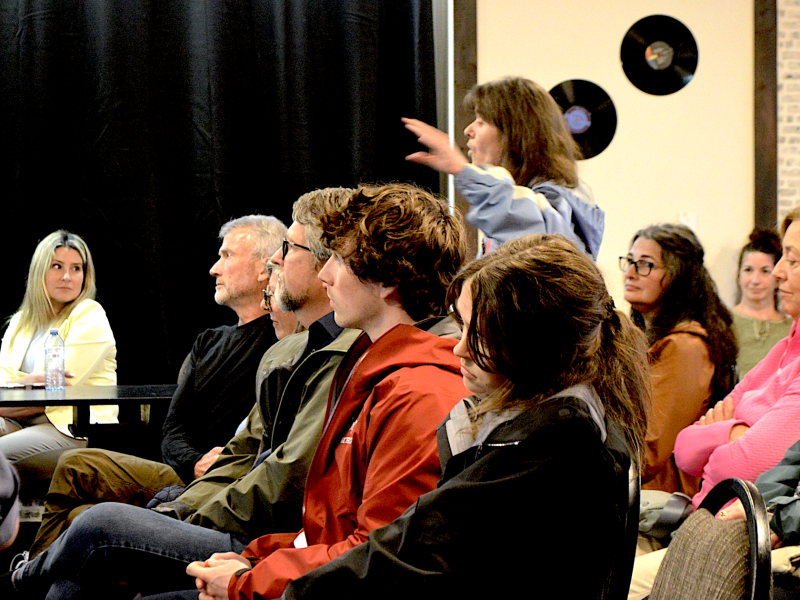
Residents confront St. John’s mayor, who says city is ‘in pretty good shape’
During public event, Danny Breen acknowledged issues as residents challenged him on safety, development, council fights, and even the threat of a class-action lawsuit

St. John’s to host first Dyke March
Organizer Shaylin Smith says the July 16 event will mark a ‘return to grassroots protest’

BP withdrawal from Bay du Nord a ‘win’: climate advocates
Equinor says controversial project still on track, as concerned residents ask oil execs tough questions during public meetings this week