
Canada must reverse refugee healthcare funding cuts
The cuts are likely to reduce medication adherence, increase hospitalizations, and download healthcare costs to the province
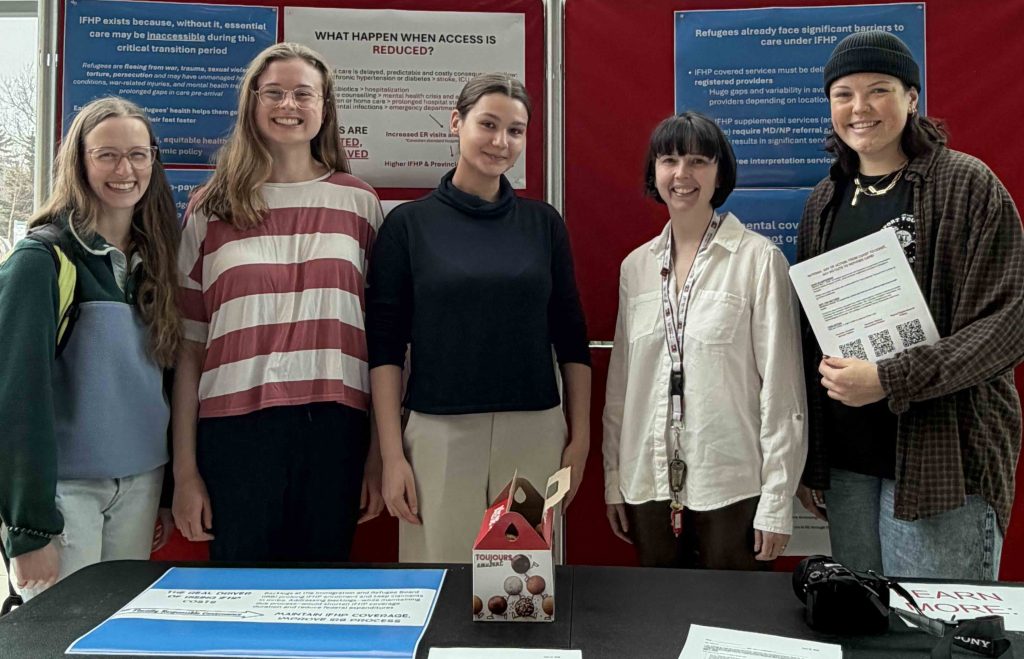
Healthcare experts and students are calling on the Mark Carney government to reverse refugee healthcare cuts, which they say will leave many who already face barriers to care without even less access.
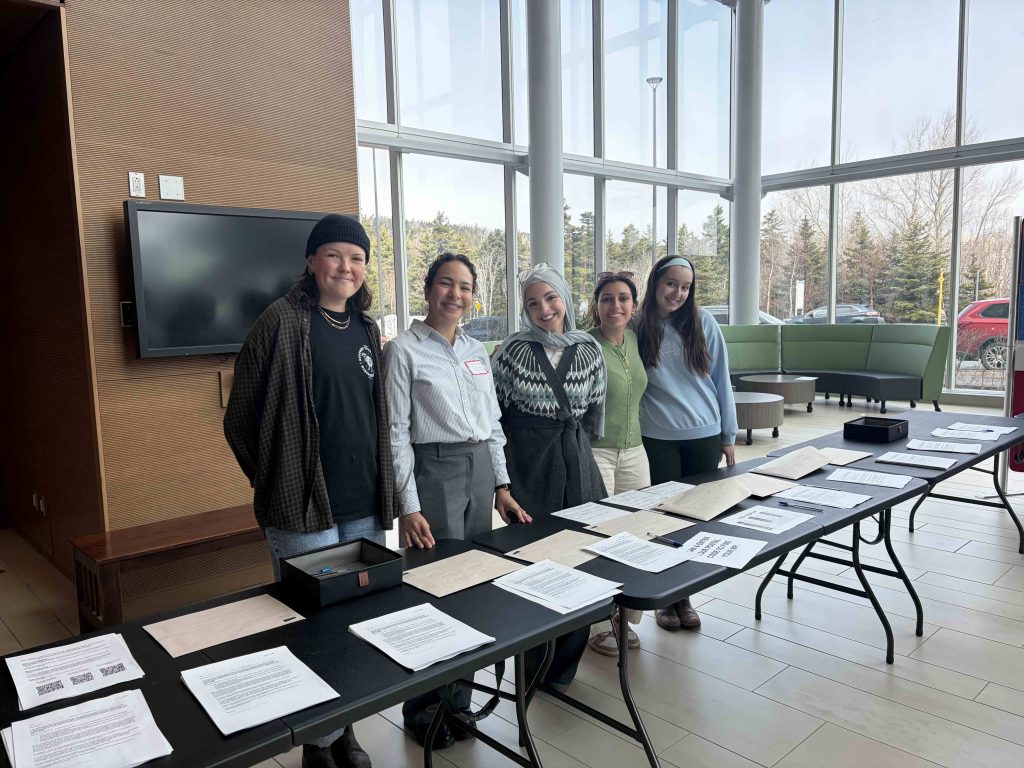
On April 14, physicians and medical students from Newfoundland and Labrador joined colleagues, refugee advocates and community members in nine other Canadian provinces to protest the federal defunding of refugee healthcare.
The No Cuts to Care Coalition emerged in response to cuts to the Interim Federal Health Program, a federally-funded insurance policy that offers comprehensive medical care for refugees in their first year of settlement in Canada.
Far from being a luxury, these benefits are comparable to those low-income residents in our province receive under the Newfoundland & Labrador Prescription Drug Program, and in supplemental health benefits. Beginning May 1, however, refugees will need to pay $4 for every eligible medication dispensed (with no cap) and 30 per cent of the cost for supplemental services like dental care, vision care, mental health counselling, and important home supplies such as wheelchairs or oxygen.
Will you stand with us?
Your support is essential to making journalism like this possible.
On paper, the cuts seem modest. In practice, they will be devastating. Many medical professionals have anticipated the concrete effects that these cuts will have on refugees and their families. The management of diabetes, a common condition, routinely requires insulin, and medications called metformin and GLP-1. Many patients with diabetes also have hypertension, which might take up four medications to adequately control. A $4 charge for each medication adds up and can easily amount to an extra $30 every month for a family. In their first year of settlement, refugee families in Newfoundland and Labrador receive less than $1,500 per month, and as costs continue to rise for essentials like food, formula, diapers and rent, parents’ medications are likely to go unfilled.

Calling the essential services covered by the Interim Federal Health Program “supplemental” is a misnomer, and introducing a co-pay will effectively eliminate refugees’ ability to access them. These services include vision care, which includes the glasses that children need to participate in school. Dental care alleviates pain and infection from teeth that have been neglected for years. Medical home supplies include mobility aids or diabetic supplies.
These cuts undermine decades of Canadian commitment to justice and human rights – a commitment that until now has included full inclusion for refugees in Canada’s public healthcare system. Many refugees have complex medical needs, often acquiring injuries or infection during prolonged transit or from living in poverty in refugee camps. Indeed, Canada is one of the only countries to explicitly state they will accept medically “complex” refugees. Until now, the Interim Federal Health Program has covered services that are required for refugees arriving in Canada to be able to work, be well, and participate meaningfully in their communities.
Cruel and unusual
This is not the first time the health of refugees has been pitted against the interests of Canadians. This is based on two myths, often used together: that refugees unfairly receive better healthcare than Canadians, and that “bogus” refugee claimants are exploiting this system.
In 2012, the federal government cut most supplemental health coverage under the program for nearly all refugees and asylum-seekers. The government took particular aim at asylum-seekers, reducing their coverage to include only conditions deemed a threat to public health. Overnight, asylum seekers lost coverage, not just for heart medication or insulin, but also for pregnancy care and child health checkups.
Physicians took to the street with a large coalition of migrants, healthcare workers, lawyers, and community workers to defend refugee healthcare. Doctors and refugee lawyers took the government to court, where the cuts were ultimately struck down as unconstitutional, “cruel and unusual.” In her decision, Federal Court Judge Anne MacTavish noted the effect that eliminating coverage would have on “innocent and vulnerable children, in a manner that shocks the conscience and outrages Canadian standards of decency.”
Healthcare system context
These cuts do not only affect individual refugees; they produce effects that ripple through the entire healthcare system.
Refugees already face significant difficulty trying to access healthcare in a new country: long wait times, cultural and language barriers, and lack of childcare and transportation to be able to attend appointments. These cuts will exacerbate these well-established health inequities.
When patients can’t afford to manage chronic conditions or access preventative care, they show up in already-overburdened emergency departments, sometimes with life-threatening but entirely avoidable complications. Studies have shown that introducing co-pays leads to reduced medication adherence and increased hospitalizations. Once patients are hospitalized, costs for services skyrocket. Hospitalizations for conditions such as stroke and diabetic ketoacidosis – common complications from hypertension and diabetes – can cost the Canadian healthcare system upwards of $6,000 per patient.Unnecessary hospitalizations contribute to Newfoundland and Labrador’s shortage of hospital beds – and patients cannot be efficiently discharged if they lack capacity to purchase the necessary supplemental care at home.
The argument that defunding federally-funded refugee healthcare will save money is simply not borne out by the literature. What’s certain is that these costs will be offloaded from the federal government to the province, as basic health insurance for hospitalizations and doctors are covered by the provinces. This is a shrewd accounting move that targets vulnerable people – all of whom have experienced trauma, and many of whom live in deep poverty as they try to build a new life in a foreign country.
When Canada chooses to accept refugees, it accepts the responsibility to meet their basic needs. Health is among the most fundamental of human needs, and universal healthcare is a core part of Canadian identity. Health is not a luxury – it is a prerequisite for people to attend school, pursue education, work, and contribute to their communities. Without adequate support, refugees are placed at an even greater disadvantage, making it significantly harder for them to build stable, successful lives in the very communities that have welcomed them. We need to continue and protect the legacy of Canada that provides care for those who need it most.
Maria Saleeb and Neria Aylward are second-year medical students at Memorial University. Aylward sits on The Independent’s Board of Directors.

Authors

Related Articles
Hydrogen Hype?
It seems the wind has been taken out of the sails of Newfoundland and Labrador’s wind-to-hydrogen hype. So what does this mean for the province’s renewable energy transition?

No energy justice with Bay du Nord
Newfoundland and Labrador’s Bay du Nord ambitions are out of step with the dire need to phase out global oil production and the province’s benefits agreement with Equinor underscores the need for a new approach to fossil fuels

An LNG future for Fermeuse?
Proposal for massive liquefied natural gas hub exhumed on Newfoundland’s Southern Shore