
Cod recovery is about more than numbers
A response to Canada’s Northern cod quota announcement

Wednesday’s announcement by federal Fisheries Minister Joanne Thompson regarding the increase in Total Allowable Catch (TAC) for Northern cod marks another alarming chapter in what I’ve called the ongoing saga of “managed annihilation”. Disguised as ecological responsibility, these decisions continue to obscure the difference between catching cod for food and catching cod for profit—a conflation that is both dangerous and deliberate.
This isn’t care—it’s managerial choreography disguised as ecological concern.
The TAC increase from 18,000 to 38,000 tonnes, paired with a new voluntary tagging program for tour boat operators, expands commercial access to cod under the guise of sustainability. Meanwhile, those who catch cod to feed their families continue to be entangled in restrictive policies and bureaucratic performances that do not honor the longstanding relational ethics of subsistence fishing—a tension I explored with other researchers in a 2016 edited book, which documents how subsistence practices are undermined and enclosed by colonial-capitalist regimes of resource governance.
Historically, cod fisheries in Newfoundland and Labrador were governed by ecological rhythms, not quotas. Fishing people worked in concert with capelin migrations, weather patterns, and the hunger cycles of cod themselves. Baited hook-and-line fishing was not merely a method but a vernacular, relational practice—deeply embedded in place-based knowledge, lived time, and community memory. As Sajay Samuel has eloquently argued, such practices resist commodification and the abstractions of professionalization, honoring cod as living beings, not inventory.
Will you stand with us?
Your support is essential to making journalism like this possible.
Newfoundland poet Mary Dalton, in her 2020 Pratt Lecture The Vernacular Strain in Newfoundland Poetry, explores the tensions between oral and written forms and illustrates the movement from hesitancy to confident embrace of the island’s rich idiomatic and sonic tongues. Her work celebrates the vitality of poetry that welcomes Newfoundland’s vernacular, echoing the relational ethos of traditional fishing communities and challenging the colonial legacies that sought to suppress these voices.
Scientific management and technological intensification—from jiggers to aquaculture—transformed cod from sovereign beings into biomass, fishermen into laborers and professionals, and the sea and its life into a collection of ingredients for industrial production. This industrial logic is exemplified by organizations such as the International Fishmeal and Fish Oil Organization (IFFO), which openly refers to the ocean and its living beings as “marine ingredients,” reinforcing the commodification of marine life. The shift from baited hook-and-line to jiggers represents a broader erosion of vernacular knowledge and place-based relational practices.
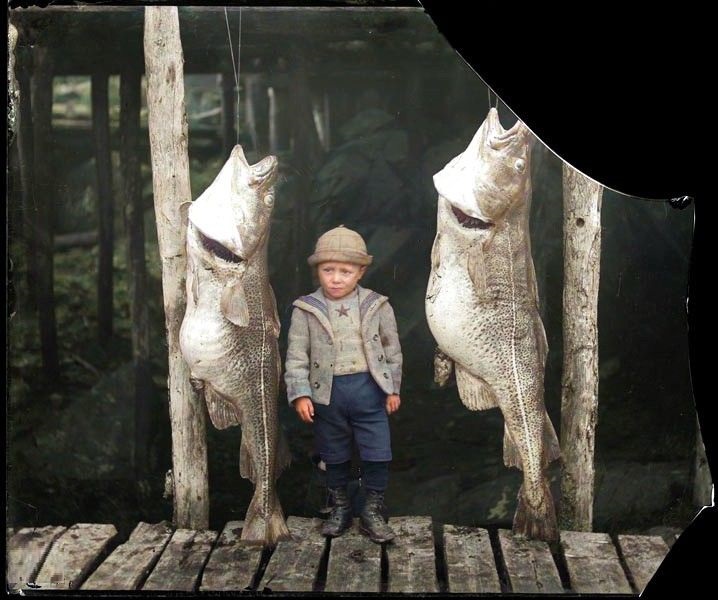
The cod fishery collapse of 1992 was not a failure of science; it was the logical outcome of a system that privileges calculation over care, extraction over entanglement. Indigenous nations, including the Mi’kmaq of Miawpukek and Qalipu, the Innu of Nitassinan, and the Inuit in Nunatsiavut, as well as settler groups like Fishing for Success in Petty Harbour, led by Kimberley Orren and Leo Hearn, all carry diverse vernacular fishing knowledge systems that do not conform to quantified TACs or statistical abstractions. Their practices embody alternative relationships with the sea—ones centered on food, kinship, and reciprocity and embedded in treaties such as the Peace and Friendship Treaties in present-day Nova Scotia. The recent conflicts over lobster fisheries in Mi’kma’ki reveal how these treaties continue to be ignored or violated, as federal regulations privilege commercial interests over Indigenous rights to fish for livelihood and community sustenance.
Now, with cod stocks still fragile—only a year after the moratorium was officially declared over, a move that received significant pushback—the government seeks to present this TAC increase as a sign of recovery. But real recovery means more than numbers—it requires the recognition of relational thresholds, the revalorization of food fishers, and a refusal to let market logic erase kinship-based fishing practices. As Jenn Thornhill Verma, Kimberley Orren, and I argue in our two-part series How and Why We Fish, published in The Independent in 2020—Part 1 and Part 2—cod fishing must be reclaimed as a community-based, relational practice that defies commodification.
These works build on a growing recognition that local knowledge and vernacular practice—what some call ‘fishing for food’—cannot be captured by the metrics of total allowable catch or population statistics and are more oriented toward food sovereignty issues. In the vernacular, this is called the Food Fishery—but it is regulated by DFO as a “Recreational Fishery,” framing it as an amenity rather than a right. This conflation between fish as commodity and fish as food is one of the most dangerous and deliberate distortions in current policy and restricts the kind of relations that are possible between fish and people.
Cod’s future is our future
If DFO cares about the current and future thriving of cod as a species and food source, it should immediately pause any support and further expansion of the industrial cod fishery. It should also:
- Clearly distinguish and protect food fishing practices rooted in subsistence and food sovereignty. This is all the more important when one considers the rising food insecurity and increasing food bank usage across Newfoundland and Labrador.
- Centre Indigenous and artisanal voices in all policy consultations, ensuring they are not equated with the offshore fishing fleet whose interests, scale, and impacts differ profoundly.
- Refuse technocratic greenwashing that conflates industrial expansion with sustainability and rejects the notion that the moratorium is over and it’s back to business as usual. The ecological, social, and cultural wounds from the 1992 collapse remain unhealed and demand reparative, not repetitive, responses.
- Acknowledge the historical harms of fisheries management and commit to relational repair in the context of the Truth and Reconciliation Committee report and the Peace and Friendship Treaty with Mi’kmaq that covers traditional Mi’kma’ki, including Ktaqmkuk (the Mi’kmaw name for Newfoundland), as a minimum. This commitment must align with the principles outlined in the United Nations Declaration on the Rights of Indigenous Peoples (UNDRIP), ensuring that Indigenous Peoples’ rights to fish for food, culture, and livelihood are recognized and upheld.
We do not need more cod for commerce. We need cod for communities, cod for kin, cod for continuity. We fish not to profit, but to relate well to fish.

Author

Related Articles
An LNG future for Fermeuse?
Proposal for massive liquefied natural gas hub exhumed on Newfoundland’s Southern Shore
Thinking beyond the crisis in journalism
There are many legitimate reasons for concern, but news media have an unprecedented opportunity to innovate and create a new era of journalism

N.L. long-term care needs more nurses, who need more time with residents
Only the NDP and PCs are committed to improving nurse-to-patient ratios