
Brigitte Bardot: A tale of propaganda and confessions
As a Newfoundlander, saying I’m an environmentalist sometimes feels like a 12-step-declaration. I blame the ghost of (90-year-old) Brigitte Bardot.

The year was 1977 and I was 11 years old, probably wearing Phentex slippers and eating Hamburger Helper in front of the TV. The Greenpeace propaganda stunt was all over the supper-hour news. Up to that point in my life, I’d never laid eyes on anyone like Bardot. The oh-so-slight gap between her front teeth, that luscious hair, those pouty lips, saying “phoque” out loud and getting away with it! I was bowled over by how she maintained her swagger in the face of the sealers’ righteous anger and the herd of titillated male reporters peppering her with questions in their high school French. 11-year-old me was smitten.
If it wasn’t for my cranky uncle cursing softly as he hoisted himself out of the La-Z-Boy to change the channel, I might’ve declared my intention, there and then, to become an environmentalist and swear only en français. But, even at that young age, I was aware that kind of declaration would not go down well in my family. My great-grandfather, a survivor of the 1914 sealing disaster, would probably turn in his grave. He and his buddies from Turk’s Cove, Trinity Bay returned to Wes Kean’s ship in the storm at the risk of being forever blacklisted. Their act of civil disobedience probably saved them from being among the 251 men and boys who died. What they risked by going against the skipper’s ‘orders’ was significant. Like many families in Newfoundland and Labrador, the ability to get a berth on a sealing vessel often meant the difference between surviving the winter and starvation.
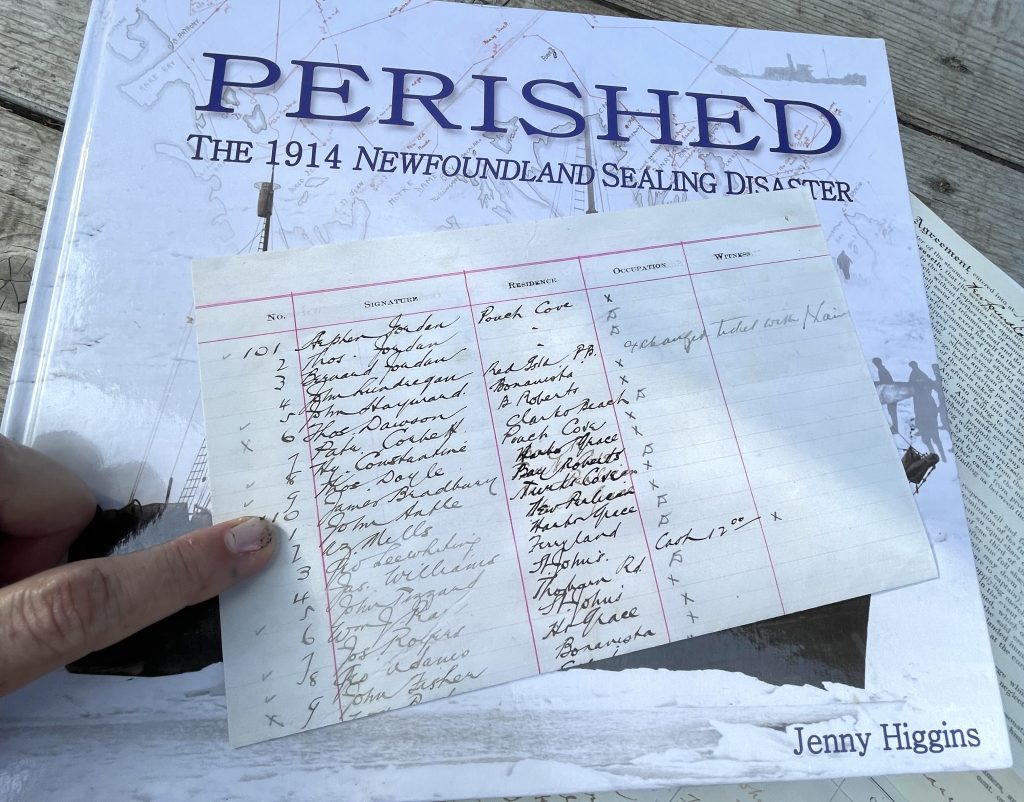
Bardot’s bebe seal stunt was so financially successful, Greenpeace named one of its ships The Brigitte Bardot and, as we all know, it led to decades of anti-sealing protests in Newfoundland and Labrador and elsewhere. Greenpeace Canada has since apologized to the Inuit for the damage done by the campaign, but not to anyone else. The seal hunt, now called a harvest, is aimed at maintaining a balance between the exploding harp seal population and the fish they eat. And even though the hunt for seal pups ended 10 years after Bardot’s infamous photo shoot, the website for the European ban on sealing products still features a whitecoat.
Will you stand with us?
Your support is essential to making journalism like this possible.

The whole baby seal ruckus seems a little, je ne sais quoi, with the planet burning and the NOAA saying the North Atlantic has been running a fever. If only getting the world off fossil fuels was as simple as flying a film star to St. Anthony to snuggle some cute greenhouse gases.
The very same year that Bardot pouted over that (probably stuffed) whitecoat, Exxon’s senior scientist James F. Black, a much less glamorous figure I assure you, delivered a blunt message about the link between oil and gas, excess carbon dioxide and the climate. “In the first place, there is general scientific agreement that the most likely manner in which mankind is influencing the global climate is through carbon dioxide release from the burning of fossil fuels,” Black told Exxon’s Management Committee.
Forty-seven years ago, ExxonMobil knew oil and gas would increase greenhouse gases and wreck the climate. Yet, it and others continued to drill while calling climate science “unsettled,” and in some cases outright denying it. We know that they knew, thanks to independent reporters Neela Banerjee, Lisa Song, and David Hasemyer of Inside Climate News, as well as the LA Times’ Suzanne Rust, Sarah Jerving, Katie Jennings and Masako Melissa Hirsch, and the Energy and Environmental Reporting Project at Columbia University’s Graduate School of Journalism.
ExxonMobil argues that they didn’t know any more than anyone else did at the time and they certainly didn’t bury the information. But their argument has been refuted by a 2023 paper published in Science by Geoffrey Supran, Naomi Oreskes, and Stefan Rahmstorf. The paper backs up Black’s eerily accurate predictions from 1977 and concludes that, “in private and academic circles since the late 1970s and early 1980s, ExxonMobil scientists (i) accurately projected and skillfully modeled global warming due to fossil fuel burning; (ii) correctly dismissed the possibility of a coming ice age; (iii) accurately predicted when human-caused global warming would first be detected; and (iv) reasonably estimated how much CO2 would lead to dangerous warming. Yet, whereas academic and government scientists worked to communicate what they knew to the public, ExxonMobil worked to deny it.”
And CO2 keeps accumulating. Last year the American Meteorological Society, made up of 590 scientists from 59 countries, reported unprecedented growth in the three most important climate gases: CO2 is up 50 per cent, Methane (which comes from so-called ‘natural’ gas) is up 166 per cent and Nitrous Oxide is up 25 per cent from pre-industrial levels.
The result of those high levels of greenhouse gases in our atmosphere has resulted in Africa, South America, the Caribbean and Europe all having their warmest January to July on record. There are wildfires burning all over North America. The Jasper wildfire resulted in the death of a young firefighter, the loss of homes and historic Parks Canada sites and it is still burning a month later.


All of that is just this year so far. In recognition of the scale and increased frequency of broken records and climate anomalies, the NOAA just changed its climate communication schedule to issue monthly reports.
Instead of letting all this get me down, it puts me in a fighting mood. I’m focusing on spotting the ongoing propaganda war being waged by oil and gas and their cronies. I’m reminded of a quote by professor and author George Lakoff: “Political ground is gained not when you successfully inhabit the middle ground, but when you successfully impose your framing as the ‘common-sense’ position.”

The war is all about maintaining the status quo so that those with status (and oil) keep on getting richer. Climate (and the rest of us) be damned! Genevieve Guenther just released an excellent book called The Language of Climate Politics: Fossil Fuel Propaganda and How to Fight It — an accessible page turner with up-to-date example of ‘common-sense’ climate communications that counters fossil-fuel propaganda. It explains how we got here, how the International Panel on Climate Change reports are watered down, and why the global Conference of Parties meetings are a farce. I’ll ‘drill into’ some of the chapters in my next column.
As many head back to school, it’s worth noting that a staggering 84 per cent of young people admit they cannot spot misinformation. If you have kids or students, I suggest Professor John Cook’s brilliant Cranky Uncle Game which uses humour to expose science denial and fossil-fuel propaganda. It’s a free, crowd-funded, multi-lingual game that teaches users how to spot faulty logic and climate fallacies. There are guides for educators and the more you play, the more resilient you become.
Recognizing fossil fuel propaganda and climate change denialism is extremely important, and urgent action is also required. Bardot is still in the game. She’s running a foundation for animal welfare. I didn’t see one baby phoque on Greenpeace Canada’s site. It is safe to say they’ve pivoted hard from animal welfare to address climate change — recognizing, I suppose, that without a healthy environment, there won’t be any animals to protect.
Greenpeace is calling on governments to legislate that oil companies like Exxon Mobil and others start paying into a Climate Recovery Fund. It’s also lobbying against plastics in the oceans, deep-sea mining, and it has contributed to Denmark’s 2020 decision to withdraw from future oil production. Greenpeace also supported the Swiss Climate Protection Law which comes with a €3.2 billion program to reduce GHG emissions, and it is now leading a UN Global Ocean Treaty. How’s that for a little good climate news?
It’s one thing to declare I am a Newfoundland-born environmentalist, but a supporter of Greenpeace? Do I Dare? Great Gramps might actually be cool with it; after all, he spoke truth to power when he and his sealing buddies refused to play the Keans’ greed game. Instead of turning in his grave, he might even raise a fist in solidarity.

Author

Related Articles
Why taxpayer subsidies for Big Oil won’t create more jobs
As Equinor delays Bay du Nord decision, report finds less than 1% of Canada’s jobs now in fossil fuels
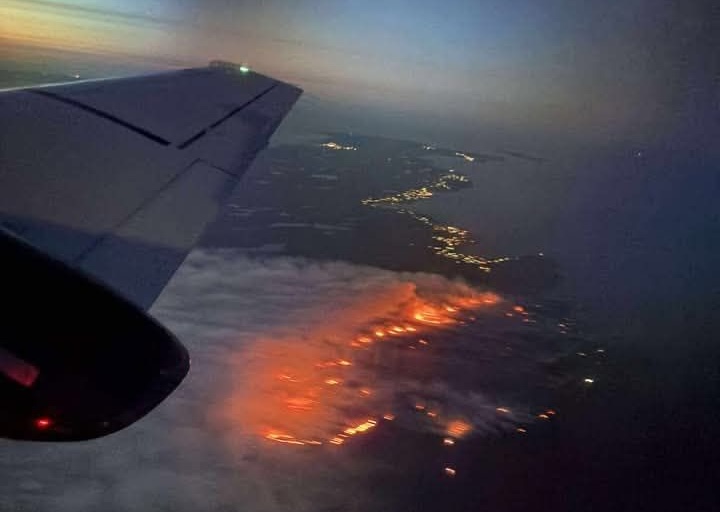
Dear Mr. Wakeham: Climate changes aren’t coming — they’re here
Not only are wildfires caused by climate change, new research links the heatwaves that cause them to oil companies active in Newfoundland and Labrador

‘Close to panic level’: Survey respondents chime in on climate crisis
More than 100 readers responded to The Indy’s first climate survey, and almost all share deep concerns