
Remembering our trans and gender-diverse histories
What is it we are meant to remember, on Trans Day of Remembrance?

Trans Day of Remembrance has been honoured since 1999, when the first gatherings were held to memorialize the murders of Black trans women Rita Hester and Chanelle Pickett in the US. Within a decade commemorations had spread to more than 185 cities in over 20 countries, and today the day is honoured across the world, including several events here in Newfoundland and Labrador.
But the day has become something more — a time not only to remember those lost, but to celebrate the lives and accomplishments of trans and gender-diverse people, and to acknowledge our ongoing struggles. We see the well-recognized faces and stories of well-known trans activists circulating on social media, and while their stories are important to know, it’s equally important not to lose sight of our own vibrant and important local genderqueer history.
This province has a rich trans and gender-diverse history, much of which I encountered while working on my broader queer history of Newfoundland. The earliest references to trans folks in Newfoundland and Labrador medical literature appear in the early 1970s, when medical professionals familiar with gender dysphoria first arrived in the province and put their words to peoples’ experiences. But of course gender diverse folks were around long before that.
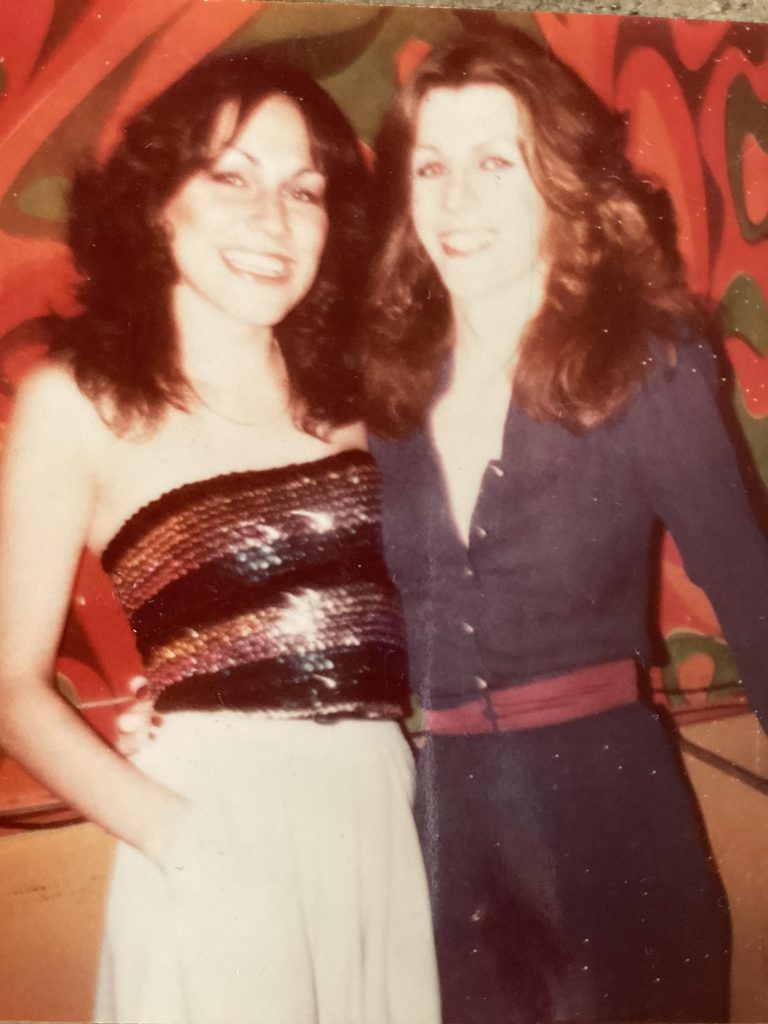
One of them was Jeanie Sheppard, born in rural Sandy Point in 1957. Her community was resettled—a process complete by the early 1970s—and the struggle her family faced following resettlement epitomized the flaws of that ambitious yet misguided policy. The family eventually abandoned Newfoundland for Toronto, where Jeanie went on to become a well-known singer and performer in Montreal and Toronto nightclubs. After marrying and moving to the United States, she was murdered by an abusive husband in 1980.
Will you stand with us?
Your support is essential to making journalism like this possible.
Alexandria Tucker was another trans woman from this province who struggled to make a life here in an era before there was a service path for medical gender transition. After unsuccessfully trying to access the sorts of gender-affirming health care that were increasingly accessible elsewhere in Canada—one psychiatrist explicitly told her to leave the province—she relocated to Victoria B.C.
As Alexandria wrote in her yet-to-be-published memoir: “All I could think of was just how disgusted I was in that being only 15 years old I was left to fend for myself. No doctor wanted to help me with this problem I lay on their table. Their only solution was to suggest I move to a larger city where they would know what to do for me. ‘Then again you could always visit the Waterford hospital,’ one woman said with evident abhorrence in her voice.
“I guess in retrospect, Newfoundland was not ready for me and although I said before that I did not leave in fear, as I look back, I know now that I did. I not only walked away with my back stiffly turned on a town that to this day I long for, I ran.”
While studying toward a college degree, Alexandria was attacked during a spring break trip to the U.S. in 1998. A trained martial artist, she defended herself and was arrested by transphobic police officers, who tortured her and refused her access to a lawyer. After being beaten and having signed a coerced confession, she struggled through more than two years in a men’s prison until she was released — dropped at the border with no money, left to find her own way back to Victoria.
She rebuilt her life courageously, throwing herself into activism—labour activism, queer activism, anti-poverty work—and sued the U.S. government over the violent discrimination she’d experienced in that country. Tragically, the PTSD from the experience took its toll and she died in 2005.
Liam Hustins was well known as an activist here in the province during his undergrad years, where he helped to start one of Memorial University’s first queer student organizations. He, too, eventually left the province, and transitioned in Toronto where he also worked to build a career as a writer and artist. Many people in Toronto still remember him as having supported and opened doors for trans men in that city, before his death at a tragically young age in 2004. According to those who were close to him, he missed his home province terribly and spoke of it frequently both personally and professionally, but knew the sort of life he aspired toward would not yet be possible here. His ashes were scattered in the Atlantic Ocean, which he loved, but his name lives on in a memorial at the Buddies in Bad Times theatre in Toronto.
These are but a few of the remarkable trans lives I was privileged to encounter during my research. There were others, too. By the late 1990s there was a surge in queer, trans and genderqueer youth in local junior high and high schools—as well as Memorial University—and they played an important role in drawing the attention of the province’s predominantly gay and lesbian queer rights groups to the needs of trans folks.
While medical officials with what is today Eastern Health still struggled over how to respond to the growing demands for gender-affirming health care, in the late ‘90s a team of progressive medical professionals based in St. Anthony began developing the province’s first service path for trans folks, and began training medical professionals all over the province in how to provide modern support and care. Most importantly, they pushed back against stigma and ignorance, and taught those professionals to listen to the experience and insights of trans folks themselves.
The road from then to now has been a long and bumpy one, but an immense pool of gender-diverse Newfoundlanders and Labradorians, as well as cis allies, have done tremendous work in improving conditions in this province. Still, so much more needs to be done. This province’s inadequate health care system affects trans and gender-diverse people particularly harshly. Basic gender-affirming surgeries available in other provinces are not available here, and medical travel isn’t fully covered; neither are many of the surgeries. Many types of hormone therapy are not accessible here.
And there remains a serious need for education. While bigots and hate-mongers are small in number they are loud and increasingly confrontational. The provincial government’s refusal to consult local community experts before passing legislation is a notoriously widespread problem. Recently, Service NL Minister Sarah Stoodley introduced amendments to the province’s name change laws that were swiftly passed in the legislature, and which set this province backwards by years, as they harm both trans people as well as women victims of violence. Much of this type of thing could be mitigated if government did what it is supposed to do: speak to community experts.
The complexities of memory
What is it we are meant to remember, on Trans Day of Remembrance? What does it mean to remember trans loss, at a time when loss remains such a harsh reality of trans peoples’ lives in the present? How do we historicize a struggle that remains as fraught as ever? It’s not as though we are at risk of forgetting; the lives of most trans people are inscribed by the reality of ongoing transphobia on a daily basis.
What do we even call those whom we remember? Lately I’ve heard the term ‘trailblazer’ used to refer to queer and trans elders—the term ‘elder’ being disliked by some for a variety of reasons—but I like that term even less. It’s rooted in a very western, colonialist valorization of conquering the wilderness. Isn’t it time to move away from these very white, very colonialist conceptions of heroic pioneers paving a path? I would not want to be remembered as a ‘trailblazer’; my aim is the much more humble aspiration to work toward a world in which we live in harmony with each other and with our natural environment.
Nor is it true that any of these ‘trailblazers’ travelled a trail no one had trod before. The history of trans people is as old as the history of humanity, and every achievement celebrated in the short-term memory of our English-language history books is built on generations—centuries, in fact—of struggle by trans and gender-diverse people who went before.
Yet even the language we use—‘trans’—centres our memorializing around a very western conception of what it means to be gender-diverse. How many other forms of gender diversity—literally hundreds, in non-western cultures and languages—are forgotten or ignored when we center trans-ness, an identity itself rooted in very colonial western binary conceptions of gender?
On November 20 we saw a wave of social media posts honouring “trans icons.” I do not want to honour trans icons, whatever that means. I want to honour the names we do not know: those who passed their lives in quiet struggle and did not have the privilege of a platform and a following and access to media and politicians and a place in the history books.
I want to honour the trans people who braved existence in a transphobic world without the public stature of those historical icons. The ones who lived and persisted in rural corners of our province; who moved to St. John’s only to discover they fit neither into the gay community nor the lesbian community, but who nevertheless lent their energies to the struggle of a then-very-binary queer rights movement even though it failed so devastatingly to include them. The ones who struggled not only with transphobia but with racism, with anti-sex-work stigmas, with disabilities that rendered their experience of gender diversity all the more complex. The ones whose names we do not remember because they left, giving up their homes and families in exchange for new homes and new families that recognized them for who they were.
Loss is its own form of memory. That’s why it’s so important we remain sensitive and remember, on days like this above all, those with whom we share loss. While we mourn the trans and gender-diverse children lost to transphobic violence and to ‘parental rights’ laws that serve to protect abusers, we mourn too the Palestinian children lost to the Israeli government’s ongoing war of genocide. We mourn the loss and suffering of Indigenous children to colonial violence. And so many others — not just children, but individuals of all ages whose hopes and possibilities have been cut tragically short by hatred, violence, ignorance.
Being sensitive to the sense of loss that unites us all reminds us that our liberation, too, is entwined. That’s why Black gender-nonconforming writer and activist Travis Alabanza reminds us in their recent book None of the Above, “that as a cisgender world grapples with a community refusing to be hidden, they must try to reinstate their power by doing what an often colonial gender project knows how to do: divide and regulate.”
This, Alabanza explains, helps us “make sense of the violence.”
To challenge one form of oppression—a gender binary—is an implicit challenge to other norms and forms of oppression. Our struggles are interrelated, and so is our liberation. So on a day of remembrance like today, let us remember that above all.
Rhea Rollmann is a writer, journalist and audio producer based in St. John’s. Her book ‘A Queer History of Newfoundland’ is out now from Engen Books.

Author
Related Articles
Throwing shade on solar myths
‘Someday the sun will shine and have-not will be no more,’ Brian Peckford famously said. Solar ‘someday’ can’t come soon enough, writes Angela Antle
No energy justice with Bay du Nord
Newfoundland and Labrador’s Bay du Nord ambitions are out of step with the dire need to phase out global oil production and the province’s benefits agreement with Equinor underscores the need for a new approach to fossil fuels

A housing corporation without a housing mandate
The Liberals and PCs have no right to point fingers at each other in response to the auditor general’s scathing report on social housing