
Advocates hope to launch province’s first supervised consumption site in St. John’s
Building community, they say, will be an important part of addressing the overdose crisis

As an overdose crisis continues to claim the lives of 22 Canadians a day, researchers say Atlantic Canada has an opportunity to learn from other jurisdictions and get ahead of the crisis before its full brunt strikes the region.
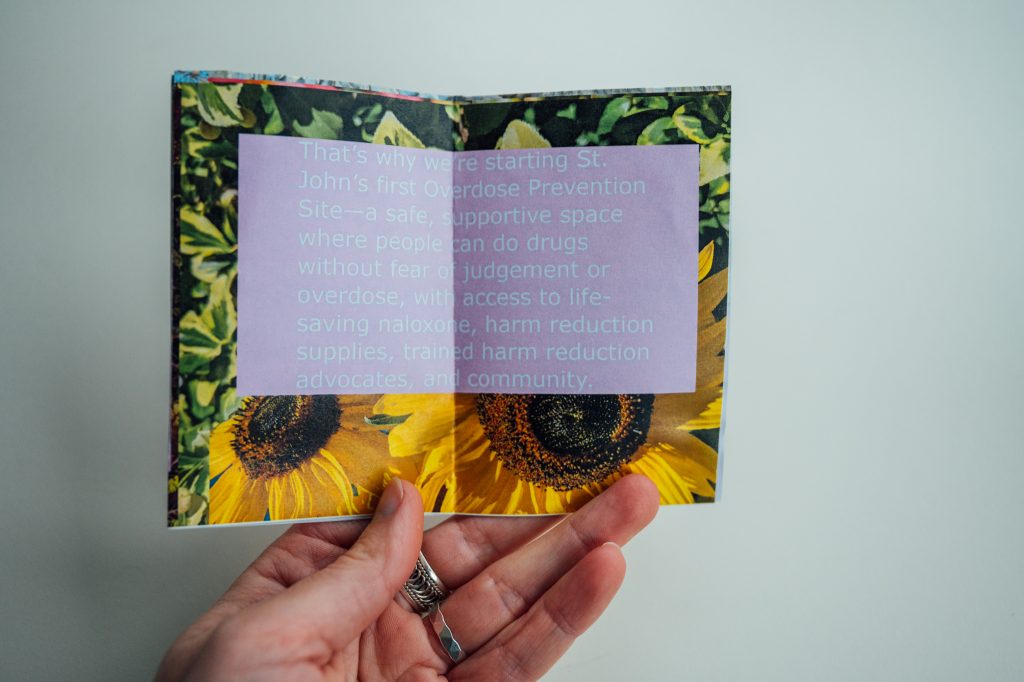
Organizers who want to open St. John’s’ first supervised consumption site say they’re inspired not just by a desire to save lives, but also to build community in the process.
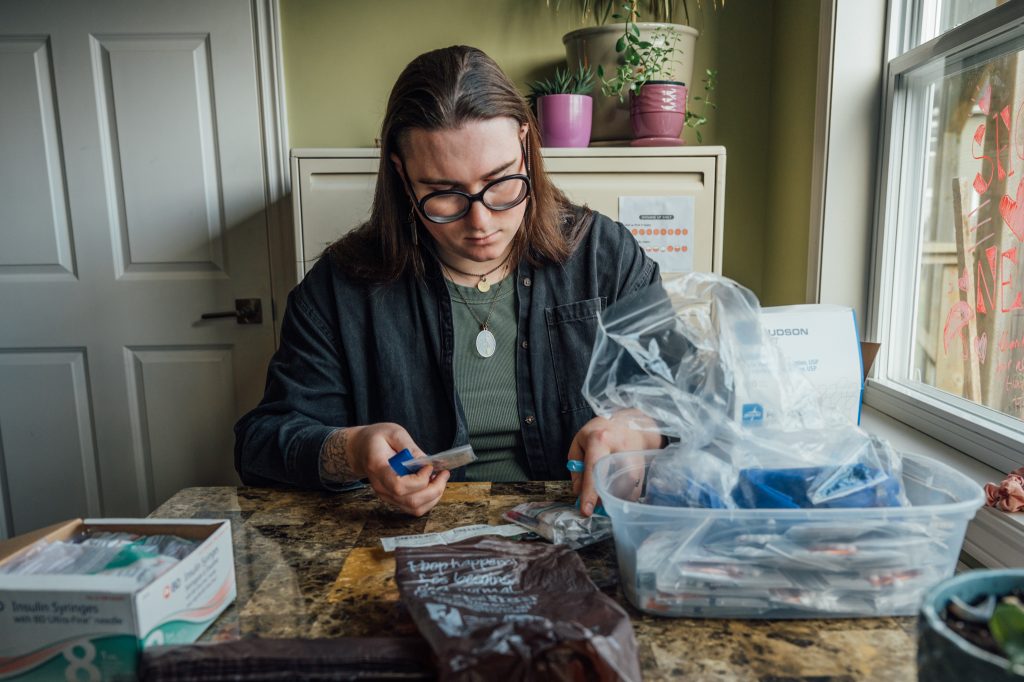
Luca Schaefer worked at a supervised consumption site (SCS) in Peterborough, Ont. before moving to St. John’s in 2022. Her experience at Tweak Easy is what inspired her to bring a team of volunteers together to fundraise for what they’re calling Tweak Easy East.
When Schaefer arrived in St. John’s she was struck by the absence of any similar initiative, while acknowledging local needs are different from place to place. She began volunteering with organizations like Safe Works Access Program (SWAP) and Safe Harbour Outreach Program (SHOP), two organizations already doing harm reduction work in the community. But the impact of Peterborough’s Tweak Easy — a SCS where drug users can spend a few hours in a safe, non-judgemental environment and access other support services—lingered in her mind. As she got more involved in local community work, she says she encountered growing support for the idea.
Will you stand with us?
Your support is essential to making journalism like this possible.
“There was so much sharing, and experiences of tragic loss and pain, but also experiences and stories of so much joy,” she said, recalling her time at the SCS in Peterborough. “It was truly just about the slow process of getting to know someone — recognizing their face, getting to know them. People really sought us out as someplace that could provide that connection they were deprived of. They would talk to us about their kids being taken away from them, about family outcasting them. It felt good to be there to catch them so that they wouldn’t be isolated, because they’d lost a lot of supports.”
Community-building driven by tragedy
When Mkwa Giizis’ friend Cassie died from a drug overdose in September 2021, they knew the time for talking about the crisis was over: it was time for action. Giizis reached out to friends and community members, then nine days later opened Tweak Easy, which was Peterborough’s first overdose prevention site.
In its three years of operation, it has grown from six volunteers to dozens, including community members who work to keep the space running while distributing thousands of dollars’ worth of food and harm reduction supplies.
It’s also received a new name: E-Yaagwaamzijig. The Anishinaabe phrase translates as ‘Those who are careful’ and was given to the project by an Indigenous professor at Peterborough’s Trent University. Giizis says it’s an apt translation of the English term ‘harm reduction workers.’ Integrating Indigenous practices into the work they do is important for Giizis.
“We don’t just show up with donations, we do drumming and we provide access to medicine and we do things to take care of our spirit as well,” they explained. “One song that we sing together is a water song, it gets very slow and then very fast, and you can see how much joy that experience brings to people. With medicine in hand, with the drums, people don’t feel judged. They don’t feel like they’re not worthy of those things.
“That’s what society and stigma often tells us — that we’re not worthy of these really beautiful things. So reclaiming our joy, reclaiming our wellness, is a really big first step toward community healing. Yes we’re poor, but just because we’re poor and just because we’re not clean doesn’t mean that we can’t have good experiences too.”
Building community is an important part of what sites like Tweak Easy do, Giizus explains. That means bringing people together in joy, but also providing a space to grieve.
“When you’re a person who’s in addiction and surrounded by people in addiction, when we lose our friends a lot of the time we don’t get invited to their funerals and we don’t get to be included in grieving in the same way,” they said. “So that was the other part of this, having somewhere where we could come together and eat some food and grieve and talk about stories and laugh together and experience joy and keep warm and have our own sense of community in ourselves.”
Schaefer’s goal is for community members to take a lead role in organizing the St. John’s site. In just the first couple of weeks of fundraising she’s been contacted by people of all backgrounds wanting to volunteer and help with the initiative: registered nurses, harm reduction workers, and people who use drugs. She’s looking to put together a ‘lived and living experience advisory council,’ prioritizing people who use drugs, to supervise and develop concrete policy for the initiative.
The Tweak Easy East team has launched a GoFundMe campaign hoping to raise $10,000. If they hit the $5,000 mark, Schaefer says they can start operating at a basic level. The money they’re trying to raise will be used to purchase tarps and tents, safe and sterile supplies for the site, food, and stipends for volunteers supervising nightly operations. If successful, they’d launch the pop-up site on a weekly basis with a three-hour nightly shift.
Harm reduction initiatives growing, but also targeted by the far right
Susan Smith is a local community organizer who has spent much of her life working with community harm reduction initiatives. She’s witnessed firsthand the growing adoption of harm reduction principles in St. John’s, something she hopes will extend to the SCS initiative.
“Over the last 15 years here in St. John’s we’ve seen a great deal of change in our understanding of what it means to have harm reduction ethics within our community organizations,” she said. “We’re still not where we could be, but I think we have more understanding that you can’t wait until someone is in what you decide is their recovery stage before you start working with them. We want to work with people while they’re still using so that we can mitigate those harms.”
In many cases, police have allowed SCS — those officially sanctioned by governments, and those operating without official permission — to operate, says Dr. Gillian Kolla, a professor at Memorial University’s School of Medicine who studies SCS and other initiatives to support drug users. She explains that as frontline workers who are often the ones serving as first responders in overdose situations, police have come to recognize the benefits of the sites and harm reduction principles more broadly.
“Because they’re responding to so many overdoses, because they’re responding to overdose-related deaths, because they have to notify families after these deaths occur, [police] very much are seeing the impacts of the overdose crisis firsthand,” she says.
Smith says that many people who use drugs don’t want to do it in public, but often have no where else to go. That’s when “police often are really supportive of having a place like a supervised consumption site to direct them to,” she says. Because police “often are the ones who realize that this revolving door of putting people in prison and having them come in and out of prison isn’t very helpful and doesn’t actually provide them with the services and supports they need.”
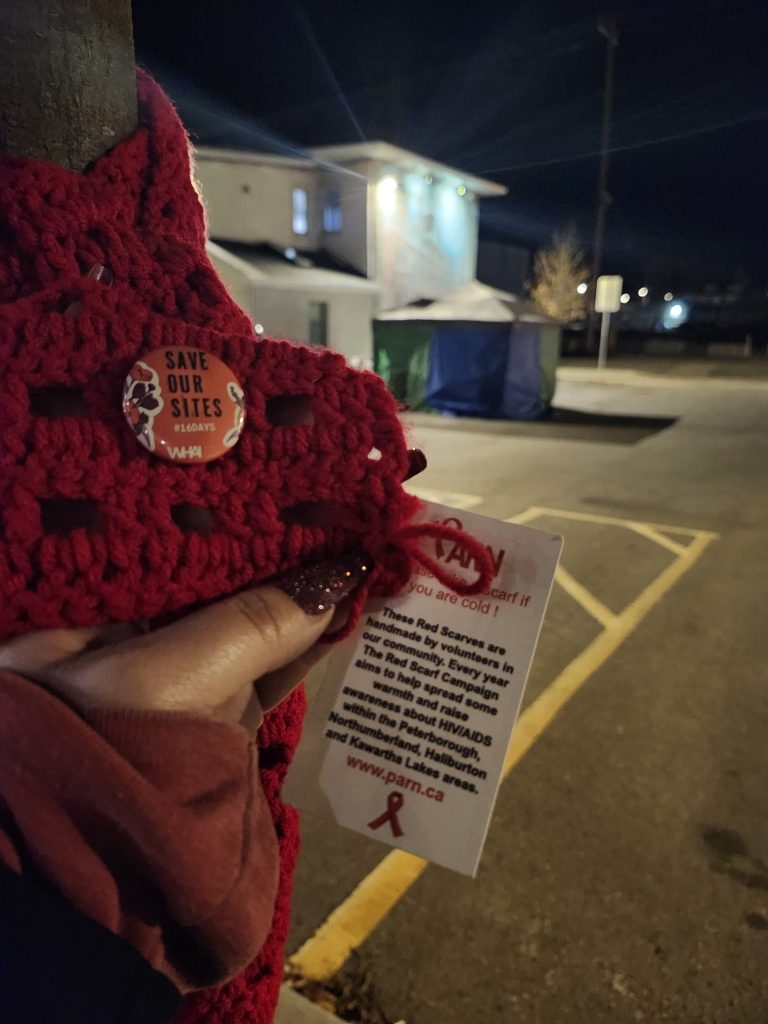
But that permissiveness is not always the case. This year, a new police chief in Peterborough announced a “no tolerance” policy for illegal public drug use in the city, which worried the city’s harm reduction workers and sparked criticism from Peterborough Public Health’s chief medical officer of health. Giizis and volunteers continue their weekly operation anyway.
Giizis acknowledges a “change in the temperature of the room when it comes to harm reduction.” The Conservative Party of Canada has issued a barrage of media releases and statements attacking harm reduction funding. Party leader Pierre Poilievre has called it a “taxpayer-funded hard drug experiment.”
Ontario’s Conservative provincial government has also turned on harm reduction initiatives and is seeking to shut down a number of previously approved supervised consumption sites.
“It’s ignorant,” Giizis says in response to the rhetoric. “For me it’s the lowest form of ignorance because you’re not uneducated, you’re unwilling. These guys know that people will die, and they don’t care. They know that people will get more unwell. There are so many assumptions, so many narratives being thrown around and a lot of it is not factual.”
Evidence shows clear benefits to supervised consumption sites, says researcher
The first supervised consumption site was established in Switzerland in 1986. They spread throughout Europe in the 1990s, then across the globe. The first Canadian SCS opened in Vancouver in 2003 after advocates set up an unsanctioned—illegal—site the previous year as a way of pressuring authorities to act.
This has become a pattern, explains Kolla. Often advocates will set up an unsanctioned site as a way to pressure local and regional authorities to establish a legal one. In order to operate legally, the site must obtain a federal exemption from the Controlled Drugs and Substances Act, allowing the use of drugs on-site. Drugs are not provided at the sites; users show up with their own pre-obtained drugs. But the provision of safe and sanitary equipment and conditions for users helps prevent the spread of diseases like HIV and Hepatitis B and C. The presence of trained staff and volunteers means that if an overdose occurs, intervention is rapid and often life-saving.
However, Canadian provincial and federal authorities have moved slowly in scaling up approvals of supervised sites to meet demand and need, says Kolla. While Vancouver’s Insite opened in 2003, the next SCS wasn’t approved until 2016. During that time, Insite also had to fight to remain open. When a federal Conservative government was elected in 2006, it tried to shut it down. After a lengthy legal battle, the Supreme Court of Canada ruled in 2011 that closing the site would be a violation of the Charter of Rights and Freedoms.
In the wake of this ruling and an increase in overdose deaths, advocates began opening more unsanctioned sites in 2016, and in 2017 there was a gradual expansion of SCS across the country. By 2018 there were 18 sanctioned sites operating in Ontario alone. But this year the Doug Ford government passed legislation aimed at shutting down several of them.
Despite right-wing political opposition to SCS, over 20 years of research at Canadian sites—and 40 years of research globally—have produced irrefutable evidence of the life-saving benefits of both sanctioned and unsanctioned SCS, Kolla explains.
Between March 2020 and January 2024, Health Canada reported 38,971 non-fatal overdoses at Canadian SCS, reflecting the numbers of lives saved by the sites.
Kolla is quick to emphasize that what’s happening in Canada is not an increase in drug use, and that Health Canada data shows drug use has remained stable for several years. What’s happened is that the introduction of more potent opioids like fentanyl into the unregulated drug supply has caused an increase in overdoses and deaths. It’s a challenge being partly mitigated by SCS.
The sites are also cost-effective, Kolla explains, because they reduce the spread of diseases like HIV and Hepatitis B and C – the treatments of which are costly on provincial health care systems.
The sites serve a number of other benefits, she continues. They provide users a point of access to other support programs and services like housing, health care and food. There’s strong evidence, she says, that users who are seeking to change their substance-use patterns are more likely to do so when they have access to an SCS and trusted support personnel.
One study showed a 30 per cent increase in treatment participation rates following the opening of an SCS in Vancouver. Contrary to fears that the presence of an SCS might attract crime or public drug use, research shows a 50 per cent decrease in public injection and a small but statistically significant decrease in assaults, robberies and homicides near the sites.
“The fact of the matter is that people use drugs. We’ve spent the past 50 years heavily criminalizing people who use drugs, and people are still using drugs,” Kolla says. “If you don’t have a supervised consumption site in an area where there’s a lot of people using drugs, then your whole community has become an unsupervised consumption site. And that is not actually productive for anyone.”
Kolla finds the conservative attack on SCS frustrating, especially since it stands in stark opposition to the data. She notes the Ontario government commissioned two expert reviews on SCS, both of which recommended keeping them open. The government then ignored those reviews and tabled legislation to close them anyway.
“I think it’s incredibly distressing and incredibly disappointing to see politicians completely ignore the research evidence on how we can save peoples’ lives in the midst of an overdose crisis that is killing 22 Canadians every day,” she says. “As somebody who has lost friends and family members to overdose, what’s particularly distressing to me is the fact that they’re willing to use peoples’ deaths for political gain and for political purposes.”
Kolla says the inflammatory rhetoric politicians are using has become “incredibly dehumanizing” and “dangerous,” noting the communities of drug users and unhoused people she works with have been reporting heightened levels of abuse and violence directed at them by members of the public.
“I think that we need to actually make the direct link between the vitriol we’re seeing coming out of some political parties, and the ways in which people feel emboldened to attack and harass vulnerable community members.”
Forced treatment, or supervised consumption?
In Newfoundland and Labrador and elsewhere, debates have emerged around forced treatment and “abstinence-based” approaches for drug users.
“Taking away someone’s autonomy is very disempowering and can be traumatizing,” warns Smith. “You’re not reaching the person.”
Schaefer says many of those who support these approaches are “just trying to make drugs disappear. Right now we live in a world with drugs. If we don’t make policy and cultural changes that address that basic fact, we’re going to harm people and make it more harmful and riskier to use drugs. Criminalization is not going to aid in that. Forcing people to go into detox centres isn’t going to do that. Forced-anything isn’t going to do that.”
Kolla agrees that forced treatment “is very, very dangerous and very, very ill-advised.”
She says the evidence also shows forced treatment simply doesn’t work, and that there are high rates of return to substance use when people leave treatment. One of the most dangerous times for a fatal overdose, she says, is when people are released from forced treatment. She also points out that voluntary treatment options are often unavailable due to underfunding and long wait lists. It doesn’t make sense, she says, to spend money on expanding forced treatment, rather than investing that money in voluntary treatment programs which show much better outcomes and are already in high demand.
“We’re in the middle of an overdose crisis where people are already dying in very high numbers, and we know that forced treatment will likely make that worse,” Kolla says. “And we know there’s a large number of people who would like evidence-based treatment options but can’t get them voluntarily because they don’t exist. So I think forced treatment is a red herring that distracts us from actually addressing the problems and the lack within our current health system. It’s a very bad idea.”
An opportunity to be proactive
Kolla isn’t familiar with the Tweak Easy East initiative, but is familiar with the Peterborough site and says there’s an opportunity in Atlantic Canada to proactively tackle the overdose crisis before it reaches the levels she’s seen in provinces like Ontario.
“There’s a long history in Canada of people who use drugs, their allies and community coming together to provide community care and support for each other,” she says. “I think this is part of a long tradition of people coming together to help each other out.
“There’s a movement in some of the Atlantic provinces to get ahead of this and open services and supports for people before we see the worst impacts of this trend that’s been ongoing in the rest of Canada.”
That sentiment drives Schaefer and the Tweak Easy East team as well.
“There’s a clear need,” Schaefer said. “There’s always going to be a need for increased access to safe harm reduction supplies. People are always going to need connection. People are always going to need an escape from isolation. People are always going to need a place where they can have a little bit of respite. What those needs look like is going to change but the fact is that drugs exist, people who use drugs exist, and people are going to need safer spaces to use drugs.
“I hope this legitimizes and shows people the need and benefit of safe consumption sites in St. John’s so that we can get public funding that provides connection, safety, community, and stops people from dying.”

Author
Related Articles

As Innu exhibit opens in Labrador, Grand Chief says truth must come before reconciliation
Innu Nation Grand Chief Jodie Ashini says it’s disappointing to open the Innu Pakassiun exhibit without the provincial government’s participation, but Innu know their history and who they are
Liberals’ Bill C-39 a wake-up call for Canadians: Avi Lewis
‘Cracks starting to show in the Carney consensus,’ Lewis tells N.L. NDP convention in St. John’s

As NDP convention gets underway in St. John’s, will N.L.’s third party prioritize growing rural support?
Former party candidates say it’s a steep hill to climb, but there are ways