
Lawnya Vawnya speaks to province’s thirst for musical diversity
For Montreal-based electro-punk duo HRT, St. John’s performance marks a homecoming
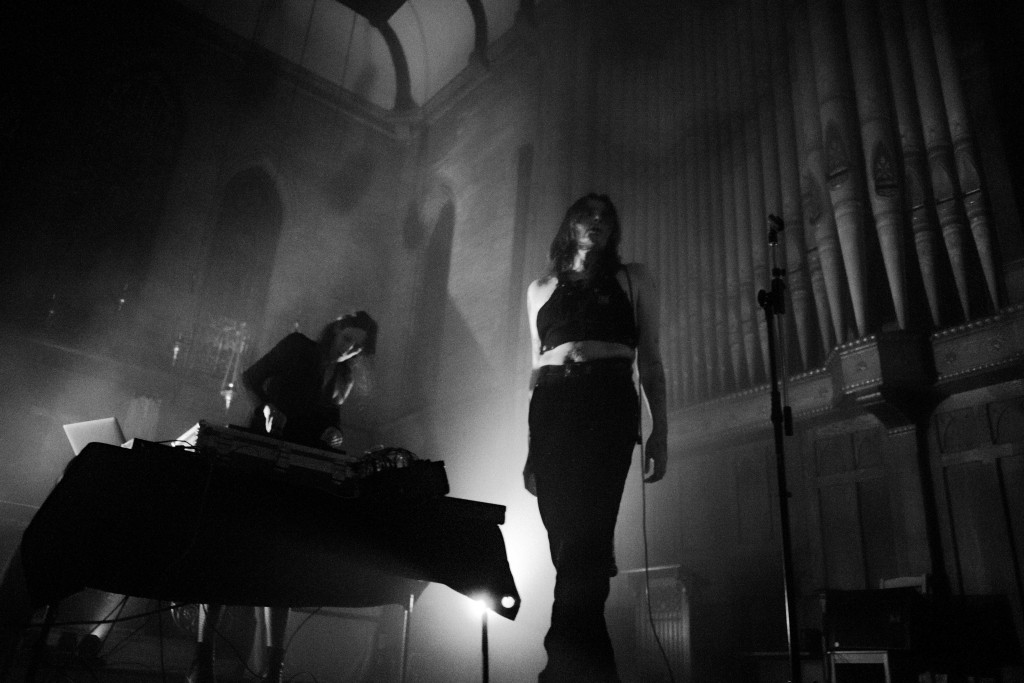
If there was an official start to Newfoundland’s summer music season, Lawnya Vawnya would be it.
Now in its 16th year, the annual St. John’s music festival is set to light up the capital city with local and visiting emerging and established artists who will join together in open jams, workshops, panel discussions and concerts.
The musical diversity Lawnya Vawnya attracts seems to grow each year, with this year’s guests including punk outfits Uzu and Desperta (who perform in Arabic and Spanish, respectively), BC-based Indigenous rock band Gamksimoon, Calgary-based Meisha and the Spanks, members of Halifax’s queer DJ collective Nectar, Iraqi-Canadian hip hop artist Narcy, among others. They’ll be performing alongside local performers like Zaynab Wilson, Kelly McMichael, the Kubasonics, Feminotica and Sick Puppy.
For some visiting artists, Lawnya Vawnya will mark their first experience in Newfoundland.
Will you stand with us?
Your support is essential to making journalism like this possible.
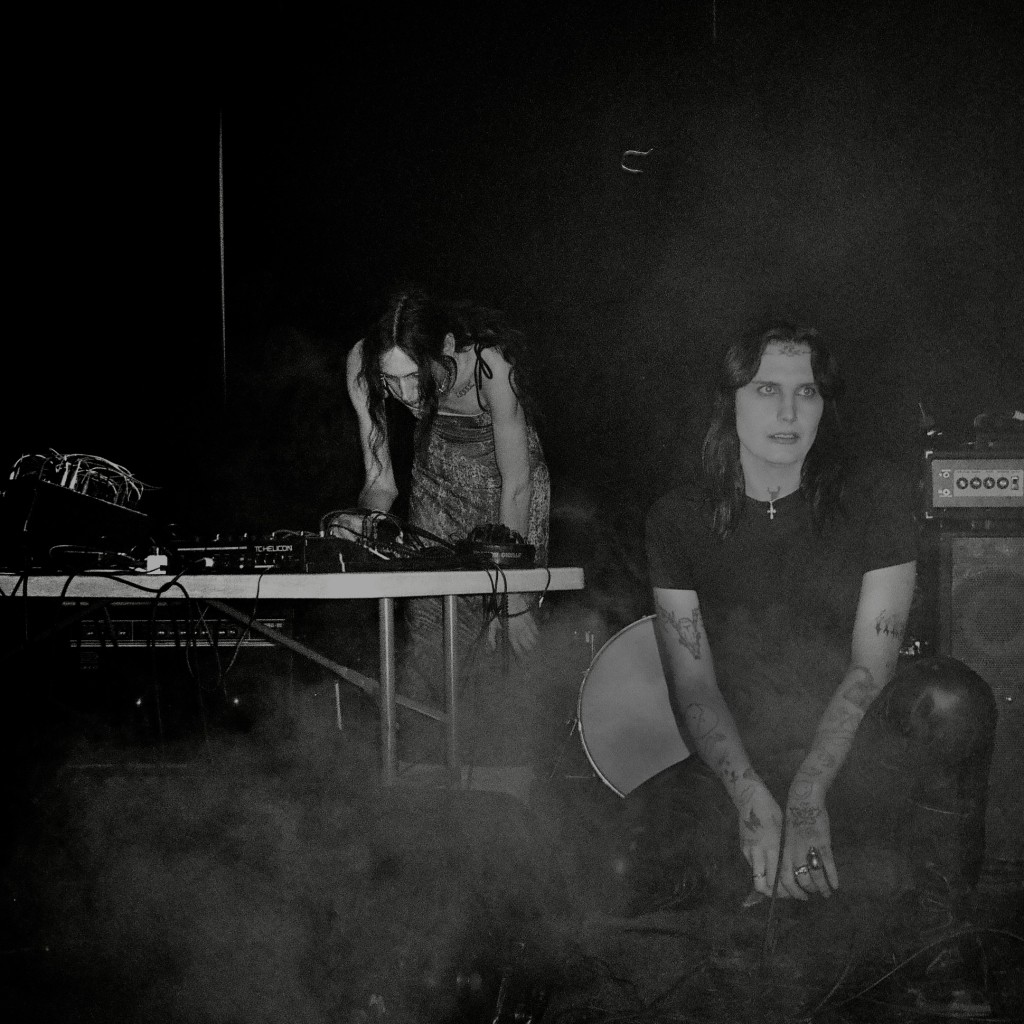
For others, like Montreal-based genre-defying (but let’s try) electro-punk duo HRT, the festival will mark a homecoming of sorts. Both members hail from Atlantic Canada — Kirby Lees from Nova Scotia, and Ana Westcott from Conception Bay South.
Westcott moved to Montreal in 2010 with hopes of attending music school. When that didn’t pan out she swung back and forth between Newfoundland and Quebec before settling in Montreal in 2012. Lees, who graduated from NSCAD University in 2014, struggled to choose between Toronto and Montreal but eventually opted for the latter.
The two met at a Montreal cafe where Westcott worked. Westcott was interested in making music and Lees offered to loan her some equipment. “I tricked you into being in a band with me,” Lees recalled during a recent virtual interview with The Independent. “I said I’ll help you make music, and then our first jam we were kind of like, ‘I guess we’re a band!’ We booked our first show a month later.”
HRT has never been about fitting in. The duo’s first gig, in July 2018, was an indie folk show, which they opened with “intense, minimalist electronics,” Westcott recalls.
When the Covid lockdown hit, Lees and Westcott took their collaboration online, learning a range of new instruments and jamming for hours on zoom. They streamlined their instrumentation, but the sound grew louder and wilder.
“The setup has gotten less intense, but the sound has gotten significantly more intense. “It’s now quite abrasive,” Westcott says. “In the past we drew on a lot of 1980s industrial and EBM [electronic body music] type stuff, whereas now it’s more hardcore drum-and-base.”
As their sound evolved, so did the duo’s name, which started out as Dregqueen.
“HRT started pretty close to the beginning of my transitioning,” explains Lees. “I thought that having a project by two trans women called Dregqueen was very funny. But everyone thought we were doing drag, which was also sort of insulting. People just weren’t getting the joke, or the nuance of it.”
When the two were able to reunite after the initial Covid lockdown, they changed their name to HRT (short for Hormone Replacement Therapy).
“Like, let’s just make it obvious,” Lees laughs, wryly noting that, “only the girls seem to know what HRT means. These well-meaning, supportive cisboys kept coming up to us after shows just not understanding what was happening. They think we’ve done the thing where we just dropped all the vowels, like HRT means ‘HURT’ or ‘HEART’.”
Trans sounds challenge convention
There is, the two reflect, something indelibly creative and oppositional about music made by trans artists. “I do think that a lot of trans artists that we listen to are making music that is generally pretty against whatever grain is currently happening,” says Westcott, citing electronic musician/DJ Sophie as an example. “And then it does get co-opted into popular music.”
“There’s an argument to be made for a transgender sound,” Lees adds. “There’s a bunch of trans artists last year, and this year too, who’ve put out albums that have just been taking whatever genre they’re in and just really twisting it in a way. […] There is probably something to be said about a trans experience in making music like that, because you’re already facing criticism anyway, so you might as well fully go for it, you know.”
“I wonder how many people know that two massive Vince Staples songs were produced by a trans woman,” she says. “I think there’s a difference between being cool and being palatable, and I think that trans pop musicians are cool.”
The reality of making music and art for trans artists is often tied to the broader political reality. HRT is keen to tour outside Canada, but they note the challenge this poses to trans musicians.
“We can’t play in America because we don’t want to go across the border,” says Lees. “Touring is kind of becoming one of those things where it’s like, what is the risk-to-gain ratio at this point? People keep saying we’ll be okay, but I think one of the big differences between me and those other people is their documents match [their identities] while mine no longer do.”
Even in Canada, transphobic extremists are becoming more visible, including within provincial governments in Alberta, Saskatchewan, BC and Quebec. In Quebec the right-wing Coalition Avenir Quebec (CAQ) has targeted trans people with discriminatory legislation, commissioned widely-criticized reports on trans issues from non-expert cisgender authors, and most recently banned gender-inclusive language at the provincial level.
With transphobia, along with racism and anti-immigrant sentiment, being wielded by right-wing extremists as the wedge for a broader backsliding into fascism, some musicians have been criticized for not using their platform to speak out on the political issues wracking our communities. For Lees and Westcott, using that uniquely trans creative energy and anger is one of the most effective ways of undermining repressive norms and politics.
“Our name is political,” they laugh in unison.
“There are artists and public figures who are doing a lot, and then there’s the ones doing the public-facing Instagram amount of reposting, resharing, what have you. But there’s some people who have actually surprised me in terms of actually taking hits for a cause. They’re actually putting their money where their mouth is, either in terms of giving it somewhere or losing their income because they spoke out about something.”
Homecoming
Montreal has become home for the duo, in part due to the city’s vibrant artistic and musical culture. “Rent here was so cheap for so long that everyone was able to produce art in whatever way they wanted, and everyone moved here from other provinces, cities, and made that happen,” Westcott explains.
“I’ve met a lot of other people here who are doing art in a very intentional way, in a city where it’s possible to be able to do that,” Lees adds. “I think there’s just a more creative space here […] and there’s people around who are also excited about the fact that you’re doing things and they’re doing things. It’s not just about working your job and trying to stay mentally content outside of that.”
Still, both musicians are excited to return to the east coast, where the Lawyna Vawyna performance will mark their time playing St. John’s. “It honestly feels incredible going back,” says Westcott. “I get to go to Ches’s, I get to see friends I haven’t seen in quite a long time. And some of them have kids now so I can see their kids.”
“The things that are depressing are being downtown and seeing stores that I formerly cared about just being tourist shops now. That feels quite bad,” she adds. “It’s weird coming home because things change and when you’re not there that often, a lot of things change. But it feels good to come home and play a show with people I was in bands with before and used to make music with. People in Newfoundland are still making incredible music, doing incredible stuff.”
‘There’s a place for that kind of music here’
HRT is playing a June 6 show at The Rock House on George Street, where they’ll be joined by Toronto-based post-punk goth/electronica outfit Slash Need and St. John’s-based goth-tinged electronic dance artist Feminotica. One of Lawyna Vawnya’s most celebrated features is its pairing of local acts with performers from away to form strong lineups spanning diverse genres.
Gracie Reid, the artist behind Feminotica, is originally from Dildo. A talented multi-genre musician and producer, she’s as proficient with an accordion (which she integrates in creative ways in her electronic work) as she is with a keyboard.
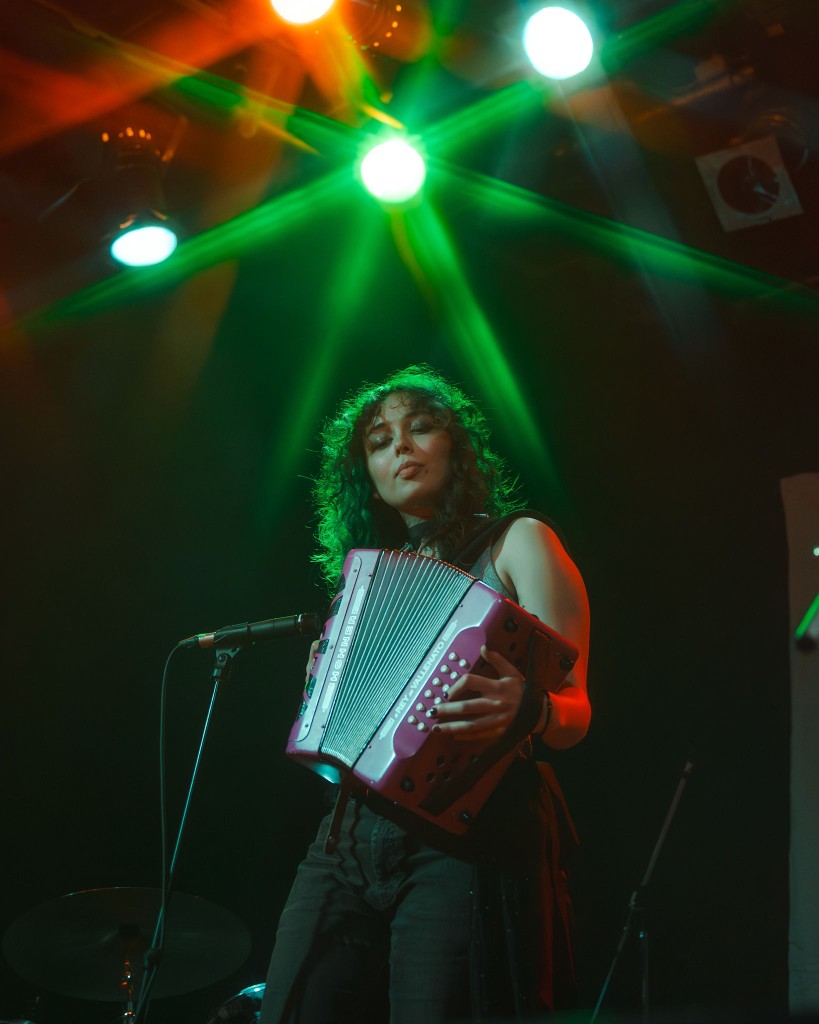
As Feminotica, her high-energy electronic dance music combines striking original tunes with creative renditions of tracks including reworked New Order and Lady Gaga covers. Feminotica’s debut EP Drive was released in December 2025. Reid’s genre-spanning work — from traditional jigs and reels to hard-edged hyper pop — and the attention it has drawn, reflects a growing thirst in the province for local iterations of harder-edged electronic music.
Reid first saw HRT perform in St. John’s, then caught another show in Montreal, she recalls. “That was the first time I saw that type of music in Newfoundland. I was just kind of blown away. I came from a small town and I didn’t think I could actually make stuff like that, or [that] anybody cared about it, because as far as I knew it was all Irish stuff. Then I saw [HRT] and how everybody at the show was all into it and I thought, ‘Holy shit, I want to make that kind of music.’
“The authenticity of it all is very cool,” Reid continues. “I just really like the musical style, that hard kind of machine analogue sound and the […] aggressive synths — it’s kind of dancey but it’s kind of hard as well. The authenticity of them as a duo and what they write about is what draws me.
“It was inspiring because it made me realize that there was a place for that kind of music here.”
Feminotica, HRT and Slash Need are scheduled to perform on Saturday, June 6 at The Rock House as part of Lawnya Vawnya. The full festival schedule and tickets can be found here.
Author

Related Articles
As Innu exhibit opens in Labrador, Grand Chief says truth must come before reconciliation
Innu Nation Grand Chief Jodie Ashini says it’s disappointing to open the Innu Pakassiun exhibit without the provincial government’s participation, but Innu know their history and who they are
Liberals’ Bill C-39 a wake-up call for Canadians: Avi Lewis
‘Cracks starting to show in the Carney consensus,’ Lewis tells N.L. NDP convention in St. John’s
As NDP convention gets underway in St. John’s, will N.L.’s third party prioritize growing rural support?
Former party candidates say it’s a steep hill to climb, but there are ways