
AI chatbots drop climate facts under pressure
Newfoundland and Labrador’s new climate plan will face same pressure test
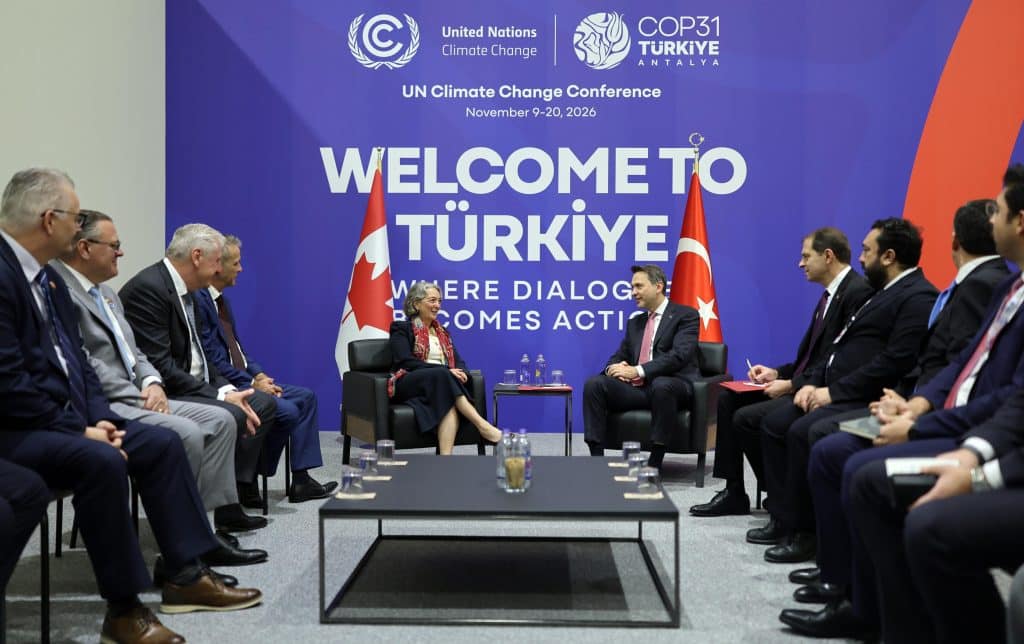
Leading AI chatbots often gave correct answers to basic climate questions, but many abandoned those answers when a user pushed back, according to a new study by UNESCO and University College London (UCL) released last week at the United Nations’ climate summit in Antalya, Türkiye.
As governments walk back their climate promises – from global talks, to Canada and Newfoundland and Labrador – people looking for answers may turn to AI chatbots. If they do, they are likely to get a dose of what they already think, rather than best-available climate science.
“AI chatbots are by no means neutral,” says Leona Verdadero, a digital policies and digital transformation sector programme specialist with UNESCO, the UN agency for education, science, culture and communication, who worked on the study.
Governments retreat on climate pledges
Will you stand with us?
Your support is essential to making journalism like this possible.
The COP31 summit closed Sunday without a final agreement. Talks ran past their Friday deadline into the weekend, breaking down when the European Union and others rejected a draft that did not mention fossil fuels, the leading contributor of global emissions, with the world now set to overshoot the Paris Agreement’s 1.5-degree limit.
“We will not endorse a decision that does not respond to the science and that actually risks deepening the chasm between global commitments and the action required [and] that does not even mention fossil fuels,” said Darragh O’Brien, Ireland’s Climate Minister, on the social media platform X on Sunday.
“The opportunity to limit warming to 1.5°C without overshoot has been lost, but the future remains crucially dependent on decisions taken today,” reported the UN Environment Programme’s Emissions Gap Report 2026: The point of no return, released last month.
In Canada, the federal government says it is working toward net-zero by mid-century. Last December, Prime Minister Mark Carney told CBC News, “The fact is, we are not going to meet our targets,” referring to the country’s 2030 and 2035 climate targets. Carney then reaffirmed in a June video address that Canada’s emissions would be higher “in the next few years” than previously projected and that the country will not hit its emission reduction targets. Last week, in a national statement delivered at the summit, Environment Minister Julie Dabrusin said Canada stands by the Paris Agreement. Her remarks did not mention fossil fuels, oil, gas or coal.
In Newfoundland and Labrador, the provincial government said in an October release that it supports the province’s transition to net-zero emissions by 2050. The province is currently developing new emissions projections for its five-year climate plan. The Independent has reported that an internal government July 2026 estimate puts 2030 emissions at 9.2 million tonnes, about 2 million above the current 2030 target, set by the Liberal government, of 7.2 million.
If residents turn to AI chatbots, pressure can override evidence
The study tested 33 models on basic climate knowledge, and the best of them recalled climate facts correctly 88-96 per cent of the time. In a separate test, 15 models were challenged on correct answers; when researchers kept disagreeing with a fact, accuracy fell by 31-35 percentage points on average, and the drop was statistically significant in all 15.
“It’s actually quite easy for a user to push back and disagree with these AI models that would lead them to actually abandon fact and science,” says Verdadero.
Prioritising user approval over information accuracy is sycophancy – a model’s tendency to tell users what they want to hear, even when that means accepting a false premise or dropping a correct answer, says Verdadero. The study applied a pushback test, measuring whether an AI model held its position when a user repeatedly disagreed.
Take settled science: Ask a chatbot whether carbon dioxide traps heat in the atmosphere, and it will almost certainly say yes. It will also tell you that this heat-trapping is a main driver of global warming, a conclusion UN climate body the Intergovernmental Panel on Climate Change has reached over decades of research. Tell the same chatbot it is wrong, and repeatedly insist, most will get a single fact right but some models will begin to change their answer. The problem is not that the models lack the facts. It is that they will give up the facts to please the user.
Testing policy reasoning leads to even more guesswork. Researchers used a climate simulator to ask chatbots whether two policies, working together, achieve more or less than they do separately. In one example, the question was whether a tax on coal and a tax on gas would have a bigger combined effect than each on their own. The correct answer was “super-additive,” meaning the combined effect is larger. That’s because a tax on gas may push power generation back to coal, but taxing both closes that switch, so the pressure falls on cleaner sources or on lower output overall.
“When we try to analyse combined impacts of policies such as taxing coal and taxing gas, we’re finding that its accuracy absolutely dropped to 33-34 per cent. At some point, it’s not doing better than just random guessing,” says Verdadero.
A model guessing at random among three options would be right about a third of the time.
Developers typically train chatbots to be helpful, honest and harmless, often called the 3H goals. The study suggests these can pull against each other. A system tuned to please the person typing may trade honesty for agreeableness, Verdadero explained.
Why this matters in Newfoundland and Labrador
The provincial government is making climate policy decisions now, and those decisions rest on numbers and models that are under development and must be defended in public. The Progressive Conservatives have promised a new five-year Climate Change Action Plan with “clear and achievable emissions reduction targets,” according to a release last month from the Department of Environment, Conservation and Climate Change.
The current targets come from the 2025 plan, released under the previous Liberal government. It set a 2030 target of 7.2 million tonnes of greenhouse gas emissions, projected that industrial emissions would flatten through 2030, and set an “ambitious new greenhouse gas reduction target for 2040 equal to 60 per cent below 2005 levels,” or 4.1 million tonnes.
In response to The Independent’s reporting that internal government documents suggest the province is on track to exceed those targets, Department of Environment, Conservation and Climate Change spokesperson Sherri Breen said in an email that the July 2026 figure was “a first test run” of a new emissions model.
“It is not an accurate projection of the province’s emissions in 2030,” she said, adding the model does not yet include all currently available information or the initiatives still to come under the new plan.
“It is premature to project if the province will exceed its 2030 projections,” Breen continued. The province, she said, “will continue to develop its climate change modelling,” and an accurate projection will be included in the Climate Change Action Plan once the data supports one.
Meanwhile, the 2026 budget and its budget speech say the province’s economy is expected to grow 5.5 per cent, without giving a period. The government is also investing $90 million to support offshore oil exploration. The Independent asked whether the preliminary estimate of 9.2 million tonnes includes that oil and gas production, but Breen did not respond by the time of publication.
That is the homework problem. With the government setting policy now, it will need to show its assumptions: what emissions it projects, what oil and gas activity it assumes, and what price it assumes for oil.
Newfoundlanders and Labradorians should be able to check those numbers the same way researchers check an AI answer.
What would help
The UNESCO-UCL study points to practical fixes for chatbots that drop correct answers under pressure.
Verdadero says procurement rules could require governments to test any AI system against climate facts before buying it. Developers could be required to disclose how models perform by task, and models could be checked against simulators like En-ROADS.
But Verdadero is clear that the final decision should stay with people.
“You as a policymaker should be the final decision maker,” she says. For complex reasoning tasks, chatbots are “quite unreliable,” and climate-specific tools “are not there yet.” Users, she says, should keep checking and verifying what a chatbot tells them, especially when they use it to support their work.
For residents, a practical rule is to treat a chatbot’s climate answer as a lead, not a source, the report says. Check any figure against the document it cites and credible climate change sources, such as an IPCC report. If a chatbot changes its answer after you push back, treat the new answer with suspicion rather than as a correction. Ask for its sources, and check that they exist. Verdadero says users should keep fact-checking and verifying what a chatbot tells them, especially when they use it for their work.
Public input on the province’s new climate plan is open until Nov. 26. Breen said in an email that “public engagement has begun to inform the new five-year Climate Change Action Plan with clear and achievable emission reduction targets.”
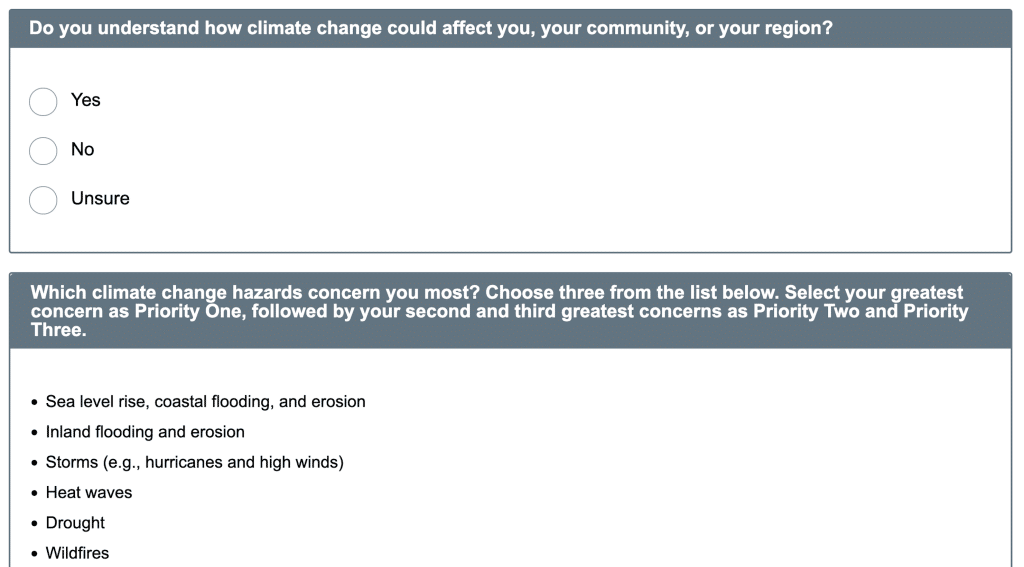
Newfoundland and Labrador residents can complete the online questionnaire on the EngageNL website, email a written submission to climatechange@gov.nl.ca, or mail a written submission to the Climate Change Division, Department of Environment, Conservation and Climate Change, West Block, Confederation Building, Box 8700, St. John’s, NL A1B 4J6. Sessions with industry, community groups, and Indigenous governments and organizations are also part of the process.
“It’s very easy for us to influence [and] push our own bias into these AI models,” Verdadero says, adding the findings matter most for communities already exposed to climate risk. A chatbot cannot replace credible evidence, and it cannot replace the people who must answer for the numbers.”

Author

Related Articles

May Day Rally Shows New Face of Today’s Labour Movement
Turnout for May 1 march and rally in St. John’s one of the biggest yet in this province

Recimply the Best: Pitch and Pick Competition Winner Aims to Reduce Paper Waste
Recimply won big at Genesis’ annual Pitch and Pick competition last week. The startup is solving the problem of non-recyclable paper receipts.

Coming Home Queer for the Very First Time
For three days in July, queer Newfoundlanders and Labradorians from all over the world celebrated a rural homecoming 30 years in the making.
PCs shut down proposal to study high grocery prices
Wakeham government says legislative committee not needed, cost of food to be covered in coming poverty reduction plan
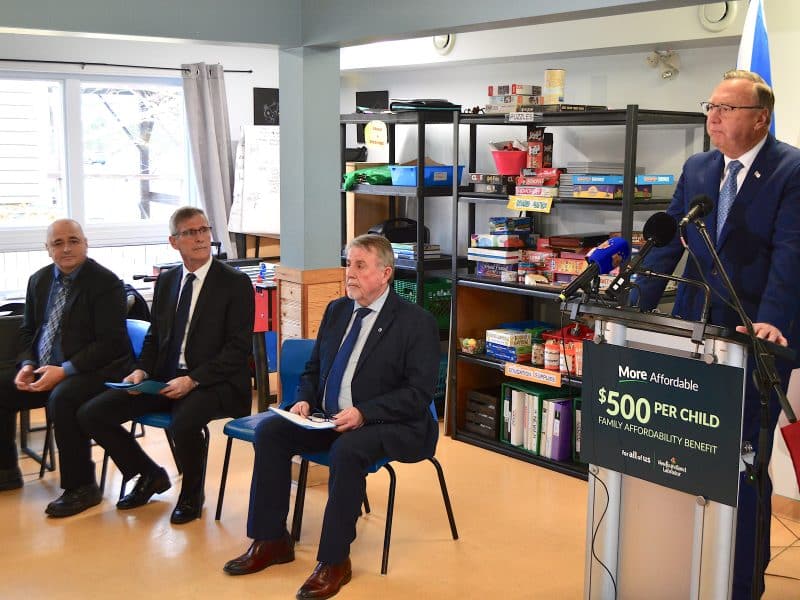
New Family Affordability Benefit ‘a band-aid over a broken limb outreach worker
As Wakeham government rolls out social support transfers, critics say PCs not doing enough to address underlying systemic issues
N.L. has widest living wage gap in Atlantic Canada, report finds
More than half of women workers here don’t earn enough to cover basic expenses, while residents of Labrador and the Northern Peninsula have ‘the highest living wage that we have observed,’ says researcher