
New Family Affordability Benefit ‘a band-aid over a broken limb outreach worker
As Wakeham government rolls out social support transfers, critics say PCs not doing enough to address underlying systemic issues
A St. John’s outreach worker supporting some of the province’s most vulnerable youth is criticising a series of recent “affordability” measures from the Wakeham government aimed at providing financial relief as many continue to struggle with the soaring costs of living.
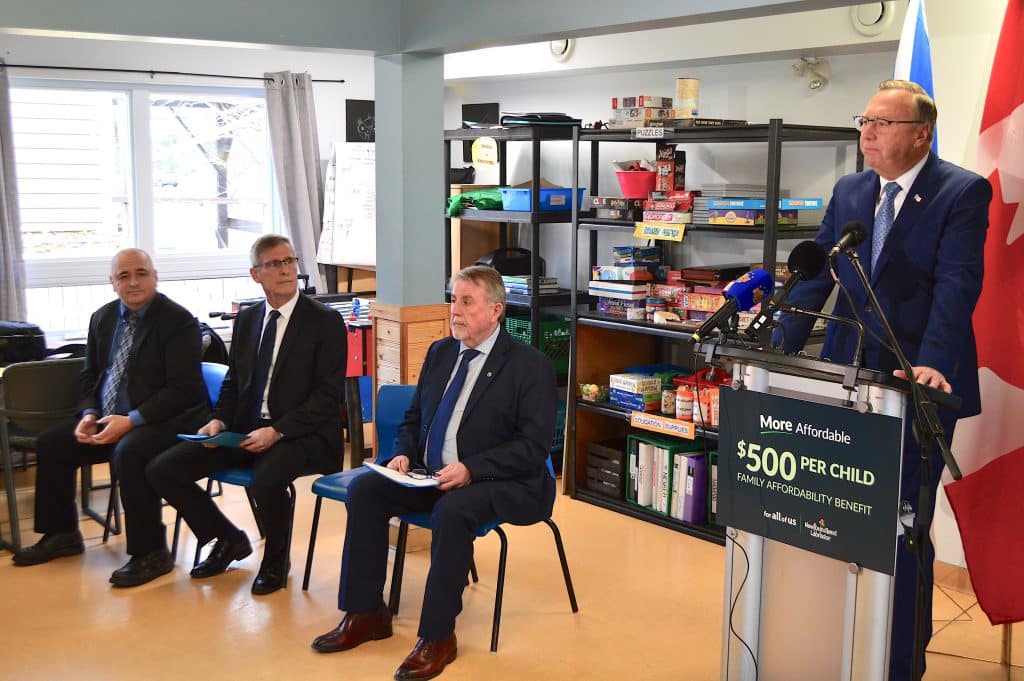
Following an announcement Monday of the province’s new “Family Affordability Benefit” – for eligible families, a one-time payment of $500 per child – Shelby Arnold said the policy is akin to “a band-aid over a broken limb.”
Team lead for educational initiatives at Thrive, which helps youth experiencing poverty, Arnold says the ongoing rollout of financial support for seniors and children will help those groups, but frontline workers are disappointed more hasn’t been done to address the housing crisis – one of the reasons residents require financial support in the first place.
“We have not seen any meaningful, targeted support related to housing, and specifically tenant rights,” Arnold said Monday.
Will you stand with us?
Your support is essential to making journalism like this possible.
“Things like rent control or limits to rent increases go much further in the long-term to protect the very groups the government is attempting to support with $500 cheques,” she said.
On Monday Wakeham, Finance Minister Craig Pardy, and Social Support Minister Chris Tibbs – who is responsible for housing – announced the new “benefit” at the Froude Avenue Community Centre in St. John’s.
The government says the one-time payment will help more than 46,000 families and about 77,000 children across the province. At a cost of $38 million, Pardy said the program is possible because of offshore oil revenues.
It’s not the first time the PCs have attributed social programs to oil revenues at a time when uncertainty in the industry – and the climate crisis – are prompting jurisdictions around the world to move investments out of fossil fuel production and into renewables.
Pardy also pointed to proposed hydroelectric developments on the Churchill River in Labrador, and the proposed Bay du Nord offshore oil project – both of which are facing significant criticism and are not guaranteed to proceed – as other potential sources of revenue that would fund social transfers.
PCs still working on new poverty reduction strategy
Arnold also took aim at the government’s Churchill Falls Energy Rebate, which the PCs project will amount to an average of $351 in annual household energy savings. “An energy rebate does very little when Newfoundland Power [utility bill] arrears pile up and can be a cause of power shutoffs and evictions – yes, even in the winter,” Arnold said.
“The funds will not make a significant or long-term difference in people’s lives. They will be quickly absorbed into debt, holiday spending, gas, or a power bill,” she continued. “They are essentially poverty-alleviation measures, and we are anxious to see what the strategy will be that actually starts to reduce poverty.”
Tibbs said the province’s promised 10-year poverty reduction plan is still in development. While frontline workers like Arnold have said they hoped to see that strategy in play by now, a spokesperson from Tibbs’ department said work on the strategy is “progressing and updates will be provided accordingly.” No timeline was provided.

Last week The Independent asked Newfoundland and Labrador Housing, which falls under Tibbs’ portfolio, for an update on the number of new housing units built in the last 12 months. In an update NLHC spokesperson Marc Budgell said 83 new NLHC homes are under construction in St. John’s and Corner Brook. NLHC has repaired 266 homes so far this year, and the current waitlist for housing as of November 1, 2026, is 2,412, down from 2,477 on October 1. The Wakeham government has pledged to build 10,000 new units by 2030.
Living wage concerns brought to legislature floor
On Monday afternoon NDP Leader Jim Dinn, who also attended the Froude Avenue Community Centre announcement, asked the government about providing residents with a living wage.
“The premier held a news conference in my district to announce affordability measures for families, yet 20 per cent of people using food banks are employed,” Dinn said in the House of Assembly. “If he’s actually interested in affordability, will he increase the minimum wage for Newfoundland and Labrador so that it is a livable minimum wage?”
“I can safely say that every option and every affordability measure would be on the table going forward between now and our next budget,” Pardy responded, offering a caveat that the PCs also need to “control our expenditures.”
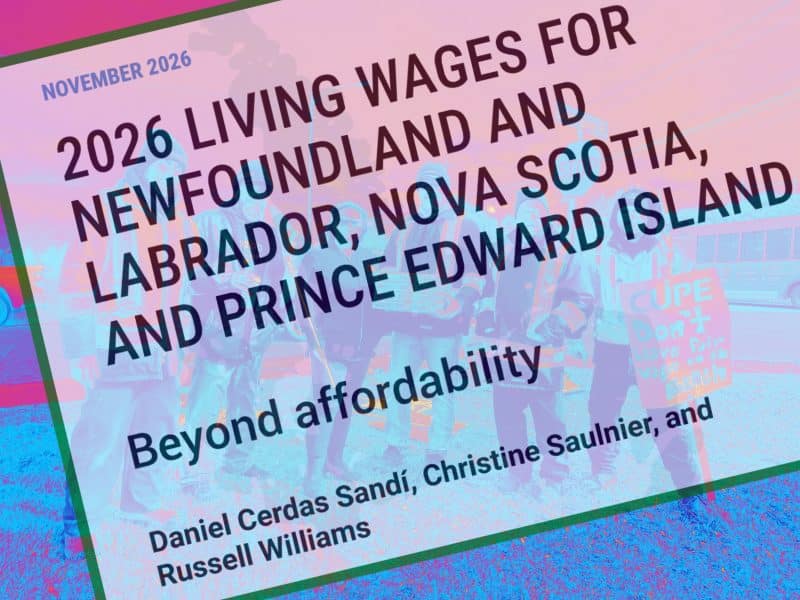
The exchange came days after the Canadian Centre for Policy Alternatives released its annual living wage report for the Atlantic provinces. The researchers behind the report found Newfoundland and Labrador’s living wage is outpacing the province’s minimum wage, which means more and more workers aren’t earning enough to meet their basic household needs.
The report, which factors in government transfers, pegs the province’s average 2026 living wage at $27.18 an hour. That number rises to $30.50 for residents of Labrador and the northern Peninsula. Newfoundland and Labrador’s minimum wage is $16.35.
Pointing to the $500 payment for households with children, Pardy acknowledged the transer is not a “permanent fix”.
But Dinn and the NDP have other solutions. “If you really want to give parents a choice as to how they spend their money, make their lives more affordable,” Dinn said, citing the need to strenghten income support in the long term while reiterating his party’s position that government should remove the HST from children’s essentials.
Liberal leader John Hogan said Monday his party believes “every little bit helps,” but that longer-term solutions are still needed. The former premier said if the Liberals were still in government they would remove the tax from “pre-packaged goods” and further reduce the tax on home heating and electricity bills.
Wakeham hints at possible eligibility changes
Speaking with reporters Monday afternoon, Wakeham responded to Arnold’s critique, saying those with concerns about housing are “absolutely right,” and that’s why his government’s promised poverty reduction strategy is needed.

“We now need to develop a new poverty reduction strategy and we have to look at how we can make housing work if we are building more houses,” the premier said, while also bringing up the idea of shifting income thresholds for those seeking assistance.
“We need to look at our thresholds for incomes as well,” he said, adding “many of the programs that the government offers have not increased in over 10 years.”
Asked if new threshold limits for residents to qualify for government assistance is something residents can expect with the PC’s poverty reduction strategy, Wakeham pointed to seniors as an example.
“When I think about the living wage, I think about seniors who are retired on fixed incomes that haven’t changed in 20 years because there has been no indexing and they’re falling further behind – so we have to start looking at the programs we offer,” the premier said. “We offer a lot of programs, but are we really getting to the people that we need to get to?”
Arnold and others have called for income support – not just seniors’ supports – to be indexed to inflation as a first crucial step in lifting people out of poverty.
“Food bank use has gone up; we know this and we see this in our community and throughout the country. Employed people use food banks. Seniors use food banks. Children and families use food banks,” Arnold said.
“People often need to access food supports because more and more of their limited funds are going towards rent.”
Editor’s Note: NLHC provided new data after this story was published so we have updated to include them.

Author

Related Articles

May Day Rally Shows New Face of Today’s Labour Movement
Turnout for May 1 march and rally in St. John’s one of the biggest yet in this province

Recimply the Best: Pitch and Pick Competition Winner Aims to Reduce Paper Waste
Recimply won big at Genesis’ annual Pitch and Pick competition last week. The startup is solving the problem of non-recyclable paper receipts.

Coming Home Queer for the Very First Time
For three days in July, queer Newfoundlanders and Labradorians from all over the world celebrated a rural homecoming 30 years in the making.

AI chatbots drop climate facts under pressure
Newfoundland and Labrador’s new climate plan will face same pressure test
PCs shut down proposal to study high grocery prices
Wakeham government says legislative committee not needed, cost of food to be covered in coming poverty reduction plan
N.L. has widest living wage gap in Atlantic Canada, report finds
More than half of women workers here don’t earn enough to cover basic expenses, while residents of Labrador and the Northern Peninsula have ‘the highest living wage that we have observed,’ says researcher