
LISTEN: Justin Brake talks Amber Bracken case & press freedom on CBC Radio’s ‘The Signal’ (with TRANSCRIPT)
An hour-long conversation led by CBC Radio host Adam Walsh, feat. Justin Brake, Geoff Budden, Karyn Pugliese, Brent Jolly and Ethan Cox
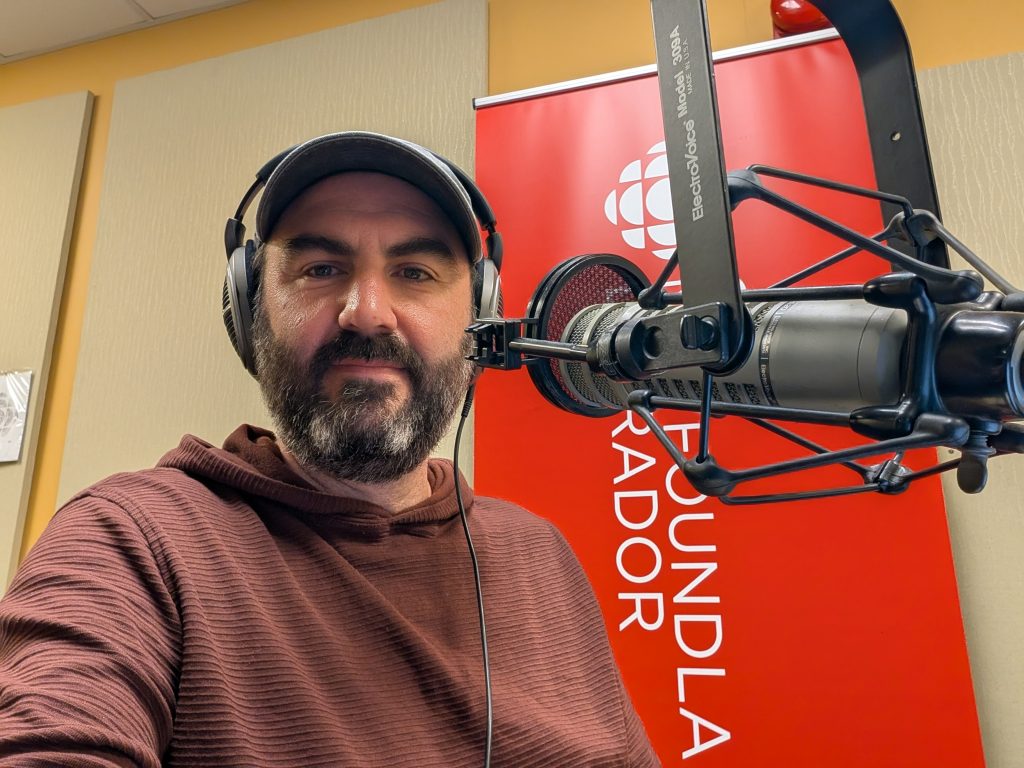
On Monday, Independent Editor-in-Chief Justin Brake joined Signal host Adam Walsh and others to discuss the Amber Bracken & Narwhal v. RCMP trial underway in BC and what that case means for press freedom in Canada.
LISTEN: Stream here, from CBC:
The following transcript has been lightly edited for clarity and brevity. To verify, please check against audio.
Will you stand with us?
Your support is essential to making journalism like this possible.
ADAM WALSH: It’s Monday, March 23. I’m Adam Walsh and this is The Signal. Today in the show we’ll talk about a BC court case that could decide the future of press freedom and police oversight in Canada. We will also talk about its link to a case involving a local journalist, demonstrators at Muskrat Falls and Nalcor, and a previous court case.
Folks, this is one of those shows where you really find out how things can be connected when you look at Canada across the country, when you look at folks fighting for press freedom, folks going to court for it, police oversight, big, big discussions. What makes a journalist? What are the freedoms for reporting? What should you keep in mind when you do that? We’ve got a full slate of people all on the line today [and] each person has so many big important perspectives to add to this conversation.
And that jumping off point, that BC trial — here’s the CBC headline from January 12 of this year: ‘BC trial to test whether RCMP violated press freedoms in arresting photojournalist. Amber Bracken is suing RCMP for legislative, allegedly violating freedom of the press.’ And the story starts—and this will give you a bit of context before I jump into everyone else: “The lawyer representing award-winning photojournalist Amber Bracken in her lawsuit against the RCMP said police wrongly characterized Bracken as an occupier instead of the clearly identified journalist that she was when they arrested her at the site of a pipeline protest in Northern British Columbia.”
Now that arrest was November 19, 2021 and Bracken and news outlet The Narwhal, who she was on assignment for at the time, are suing the RCMP for wrongful arrest, wrongful detention, breach of Charter rights, including the right of journalists to gather and report information to the public. So we will be going over all of that through the course of the 55 minutes here. So I’m gonna say a quick hello to everyone on the line because we have so many people, and then we’ll start doing the march through on everything. So, Corner Brook studio Justin Brake, reporter, editor at The Independent. Hello, sir. How you doing?
JUSTIN BRAKE: I am great Adam, how you doing?
ADAM WALSH: Good. Give folks a bit more of an introduction on yourself too, if you could.
JUSTIN BRAKE: Sure. Well, I’m in the Corner Brook studio because I live on the west coast of the island, in Bay of Islands. And I’ve been kind of following this case from afar because I went through something similar to what Amber Bracken went through in 2021 and has been dealing with in the courts these past few months. And so I’ve been following this case very closely, and it is in a way an extension of my case, which concluded in 2019 here in the Newfoundland Labrador Court of Appeal.
ADAM WALSH: Excellent. Thank you. I love how we will slowly build out context, so then like, zoom in and zoom out for this local then national conversation. But sticking with local, but I believe in Toronto right now, St. John’s lawyer Geoff Budden. Geoff, how are you?
GEOFF BUDDEN: I’m well, thanks. Yes, I am in Toronto.
ADAM WALSH: Alright. I appreciate you joining us and we’ll get back to this shortly, but just a brief line on how you’re involved with this because you were Justin’s lawyer, right?
GEOFF BUDDEN: That’s correct. I received a call from somebody on the board of The Independent in the fall of 2016 and at that point Justin thought he was about to be arrested and needed legal representation. So myself and my then colleague, Alison Conway, represented him in the criminal matters, which eventually were withdrawn, and the civil matter, which ended it with that decision from the Court of Appeal in 2019.
ADAM WALSH: Okay. So everyone just keep that in mind. We’re gonna circle back to that shortly. I do want to say hello to Brent Jolly on the line, national president of the Canadian Association of Journalists. Say hello and just give us a bit more on yourself, sir.
BRENT JOLLY: So the CAJ, the Canadian Association of Journalists, is Canada’s largest national professional organization that serves to advance the interests of journalists from coast to coast. We’ve been involved at sort of the ground-zero level in a lot of press freedom instances. And happy to draw some of the different threads together for everybody today.
ADAM WALSH: Ethan Cox next on the list, Ricochet Media editor. Ethan, how are you doing?
ETHAN COX: I’m very well, thanks for having us. This is gonna be a really interesting conversation, Adam.
ADAM WALSH: Thanks for making time. Tell folks a bit about Ricochet and yourself.
ETHAN COX: So Ricochet is a national non-profit media outlet. We’re actually a registered journalism organization, so a charity, and we’ve been around for about 12 years. We do investigative and feature work, and I’m an advocate for press freedom in part because so often we work with journalists who are on the front lines of these stories, whether that’s in Wet’suwet’en or Fairy Creek, people like Brandi Morin and Jerome Turner, who have won major national awards for their reporting, but so often have these kind of frictions with the RCMP as they try to do their jobs.
ADAM WALSH: Thank you for that. We’ll be back to you shortly. Karyn Pugliese is on the line as well. Hello Karyn, how are you?
KARYN PUGLIESE: Hi. I am great. How are you doing?
ADAM WALSH: Good. Thanks for coming on. So, journalist, editor. You’ve worked for a bunch of folks from CBC to Canada’s National Observer, APTN. Are you back with APTN right now?
KARYN PUGLIESE: I’m back with APTN in a host/producer position, and I guess the reason I’m here today is because I was called as an expert witness in the Amber Bracken trial. I was an intervenor in Justin Brake’s case. And I also sit on the board of CAJ with Brent Jolly. So I feel like I’m here with a group of friends.
ADAM WALSH: I mean, we’ve got such an all-star panel here today. So, what I’ll do for everyone listening, we’ll go back with with Justin Brake now and we’ll start with Muskrat [Falls] and what happened, and then with Geoff. Then I’ll come back to you, Karyn, to kind of link us from Muskrat to the Amber Bracken case. And when we’re done all of it, it will all make sense to everyone and there would be a lot of great context. So, Justin, let’s go back to you and tell us what happened around, in this case with Muskrat Falls for yourself, and we’ll go from there.
JUSTIN BRAKE: Sure. Well, by mid-October 2016 I had been in Labrador for somewhere around a month, covering all kinds of different stories related to Muskrat Falls, but with a general focus on how the project was impacting already, and projected to impact, Indigenous communities downstream. As these protests kind of escalated, I was there every day covering them, and then one day a protest outside the gate, along the trans Labrador highway, somebody broke a lock on the gate and dozens of people flooded through, and I followed them and was tweeting, I was live streaming. I was covering it with no idea what was about to happen next. And so they ended up going about 11 kilometres down the the access road [and] ended up going into the workers’ camp and occupying it for a few days. So I stayed with the story. It was a major story at the time [and] clearly a matter of public interest. But then during the occupation an injunction was amended to include the names of people who were identifiable, who were on the site, identifiable largely through my coverage. And I was named on the injunction. So that’s when, as Geoff said briefly earlier, I wasn’t planning on needing legal representation covering these important stories. So that was my entry into the whole world of press freedom, in terms of having to suddenly become an advocate for myself to defend the work that I was doing.
ADAM WALSH: So what does that mean Justin, there’s an injunction and like, what happens then when an injunction’s brought in and when you see your name in that — like what has to happen?
JUSTIN BRAKE: Well, a court injunction is granted by a judge to a party that is claiming that it needs — and maybe Jeff can speak a little bit more eloquently to this — but basically somebody’s looking for the courts to help them in an emergency situation. In this case, I think Nalcor (who was building the dam) was losing like a million dollars a day or more because work had all been stopped. So when an injunction is granted, then the police of jurisdiction in the area have to enforce it, whether it’s through negotiations or going in and arresting people at gunpoint. And with Indigenous people, it often does happen at gunpoint, unfortunately, which was another reason why it was important for a journalist to be bearing witness and documenting what was happening. But I didn’t know as a journalist, I didn’t know what it meant. I thought this was crazy, like they’re coming after me now [and] I’m just covering the story. But that opinion wasn’t shared by everyone. I recall there were people in the province, including journalists, who thought I had overstepped and I shouldn’t be covering that story — not from where I was.
ADAM WALSH: So there’s this case you’re talking about, but oftentimes in the media you’ll hear about if there’s some kind of a demonstration or a protest or something that can be blocking something, and you hear about a court injunction, it means that folks can’t continue to do what they’re doing according to the court. Or like you said, police can come in and remove people. Geoff Budden, I just wanna go to you and this. This case comes to you. Just take the baton and just start to explain it a bit from the injunction onwards, and what your mind was thinking as a lawyer at the time and what needed to be considered here for this case.
GEOFF BUDDEN: Well, the first thing that occurred to me is, was the judge aware that Justin was a journalist, that he wasn’t there as a protestor or an occupier, but rather reporting on those events? And we we fairly quickly realized, Allison and I, that the court had not been informed that he was a journalist — he was just another name on the list. And we thought that undermined the integrity of the injunction and made an application of that effect, which was denied before the trial judge. But then we took that to the Court of Appeal, which led to some fairly sweeping comments from the Court of Appeal as to how journalists should be treated in similar circumstances.
ADAM WALSH: What were those comments?
GEOFF BUDDEN: Just before we get there, this is all rooted in the Charter of Rights and Freedoms, and particularly Section 2, which says that “everyone has the following fundamental freedoms: freedom of thought, belief, opinion and expression, including freedom of the press and other media communications.” And how that has been taken is really to say, this is not so much for the press but so that the press can inform all of us, make us better citizens, make us informed voters, and keep us abreast of what is happening out there. And that was indeed what Justin was doing.
So the comments from the court are really two key paragraphs of the decision, and this is Judge Green, who is then the Chief Justice of the Court of Appeal, a judge with a national reputation, and and somebody who has probably written more decisions than any other Newfoundland judge. He writes in paragraph 83: “To achieve the goal of reconciliation, better understanding of Aboriginal peoples and Aboriginal issues is needed. This places a heightened importance on ensuring that independently reported information about Aboriginal issues, including Aboriginal protests, is available to the extent possible. Accordingly, where a journalist discovering Aboriginal protests, his or her role should be a material fact disclosed and considered when an applicant seeks an ex-parte order that may reasonably have the effect of interfering or unnecessary restricting the journalist’s coverage.”
And then it gets to the key part that courts across Canada have quoted. He writes: “Let me advance a series of non-exhaustive considerations that could inform parties and the court as to when it would be appropriate to regard the presence of a journalist in a protest as a material fact to be disclosed to and considered by the court when deciding to make an ex-parte injunction order or an ex-parte order granting leave to invoke the contempt process. One: the person is engaged in apparent good faith in a news-gathering activity of a journalistic nature. Two: he or she is not actively assisting, participating with, or advocating for the protestors about whom the reports are being made. Three: he or she does no act that could reasonably be considered as aiding or abetting the protestors in their protest actions, or in breaching any order that has been already made. Four: he or she is not otherwise obstructing or interfering with those seeking to enforce the law or any order that has already been made or is not otherwise interfering with the administration of justice. Five: the matters being reported on are matters that can broadly be said to be matters of public interest. Particular consideration should be given to protests involving Aboriginal issues.” And finally, the judge says, “These considerations all apply to Mr. Brake’s situation.”
And what I understand, Adam, that across the country that police forces and courts are aware of these factors when evaluating how to respond to journalists who, as Justin Brake did, are right there as events unfold, covering them in real time, often, to use that expression ’embedded’ with the land protectors or protestors. So the idea being here is that this court has given guidance as to what should be considered by judges, by police forces, as they respond to occupations or protests.
ADAM WALSH: So then looking ahead […] what have your thoughts been as you’ve watched, like for example, with the Bracken case ongoing now looking back to Justin’s case?
GEOFF BUDDEN: Well, this may not be binding in other courts. Judge Green, he’s very articulate and very well respected, so he’s set out there in pretty understandable plain language, some pretty complicated things. So any police force or anybody can get guidance from them. And what I’ve observed is — and it’s pretty interesting when it’s a case that I was involved in with my colleague Allison to see how it has resonated across the country. And now, as I understand, being referred to in a case in BC that our other guests are much more familiar with than I am.
ADAM WALSH: I wanna go to Karyn Pugliese, who’s on the line as well. So, Karyn, I’m just wondering if you could take the baton and talk about your side on both of these, and your involvement.
KARYN PUGLIESE: When I heard about Justin Brake’s case, I was then the executive director of news and current affairs for APTN, and I was representing APTN. And I was also of course involved with the CAJ and working there with Brent. As an Indigenous person, I guess three of the biggest things on your mind when you hear about something like this is, what happened in Kanesatake in 1990, where police and then the army moved in on a very small community that was land protecting, and journalists were present, and journalists really made an effort to stay towards the end. And then there were two cases in 1996; there was the case of Stoney Point in Ontario, which was a landback movement, where police moved in at night. No journalists were present, and tragically police opened fire on unarmed protestors, killing Dudley George. And then also that same year there was a standoff in Gustafsen Lake, where the RCMP put up a huge exclusion zone around a small group of protestors. It was one of the largest paramilitary efforts in Canada, for what was less than 20 people in at a camp. And no reporters could really see what was going on. And later on, when things did come out in the court cases, inevitably reporters found that they’d been lied to by police about some of the actions that had happened in and around the protest.
As a journalist who had been working, it never crossed my mind that I did not have a right, like the reports who had been at Kanesatake in 1990, to walk across a barricade and talk to people who were there expressing legitimate grievances about land. It never occurred to me that my reporters could get arrested. And when I saw what was happening to Justin Brake, I thought this was quite new, and I was very worried about what it meant for our ability to cover things. Now, Justin Brake won his cases, and we thought for awhile, ‘Okay, this has been settled.’ There’s a rule there that, you know, tells us what journalists can and can’t do. And you’ve got some rules that you wanna obey if you want these privileges. But we continued to see reporters get arrested […] and often these cases would result in somebody getting arrested and it never goes to court; the charges are dropped or the case gets thrown out by the judge. But in the meantime, journalists have been removed from the thing that they were trying to cover and are not able to cover it. This created some concern for myself and my colleagues, and at the CAJ. Brent at that point could probably talk a little bit more about the specific actions.
My role in Amber Bracken’s case was not there to support either side of it. I was called into explain the history of these things to the judge and really explain how reporters are understanding this, why we need to be present to do our jobs. We spent a lot of time with the crown going over the question of, what is journalism? And who is and isn’t a journalist? I think these things are very clear in the world of journalism. If you’re present, as a person who works for a journalistic organization or even as a citizen, and in a moment you see something that’s in the public interest and you tape it, whether it’s an Indigenous protest or whether—I mean, one of the cases that we could look at is what’s been happening down in Minneapolis where people are recording ICE actions on their phone. These are matters of public interest, and they do deserve a degree of protection. And so, what the courts are trying to sort out in between journalists and police [is] what those protections are and what the rules are. We thought we knew the rules as a result of Justin Brake’s case, but it doesn’t seem that we’re on the same page as police, I guess, is what I could say.
ADAM WALSH: So let’s go to back to line one for CAJ President Brent Jolly. […] I’m wondering your thoughts on the conversation so far and your opinion on everything.
BRENT JOLLY: I should also declare that I testified at Amber’s trial in January. So, I just wanted to disclose that for transparency, that I was a witness as well. I think that what I said then still holds true, and I would say in this forum as well is, you know, after the Brake decision came down from the [Appeal] Court of Newfoundland and Labrador, we kind of thought that this was decided. There was a very clear text, you know: don’t be a participant in a particular action. You know, it’s a matter of public interest. There were very clear criteria there. And yet, a couple of years afterwards here we are again, you know, with with Amber Bracken and also Michael Toledano, who were arrested in November of 2021 while they were out reporting on the construction of the Coastal GasLink pipeline in Wet’suwet’en territory in Northern British Columbia.
Even in between that, there was also an interesting court case that came up that the CAJ and Ricochet and a bunch of other news organizations were involved in, which was the situation that happened at Fairy Creek on Vancouver Island, where a series of journalists were arrested or detained, had their camera equipment or other tools confiscated because they were allegedly doing their job and witnessing police tactics. That’s not what law enforcement would say — they would say that they were breaching the terms of the injunction. So what we ultimately did was went to court to seek a modification of that injunction to ensure that journalists would be able to basically go about doing their job in service of the public’s right to know. So, being able to see what is going on, not being held [or] penned up in little detention areas set up by the RCMP, being able to see how extractions were going, because there was a lot of problems with how this was working. And ultimately justice Thompson at the BC [Supreme] Court agreed with us and modified the injunction because he saw very clearly the need, and spoke also very eloquently and very succinctly about the important role that journalism plays in a free and democratic society.
So here we are, in November 2021. We’ve got Justin Brake’s decision. We’ve got the Fairy Creek decision. And here we are with the arrest of Amber Bracken and Michael Toledano. And we’re sitting here kind of befuddled because Amber is a journalist of extraordinary ability and credentials.
ADAM WALSH: Every journalist has award-winning journalist next to their name, if you look their bio, typically, but in this case really big time, like has done work for the New York Times and others. Like, a journalist of note for the work that she has produced.
BRENT JOLLY: Absolutely. She’s a world press freedom photo competition winner. So head and shoulders, a journalist beyond repute. And she was arrested because she, the RCMP said, breached the injunction order. She wasn’t allowed to be there. She was embedding with protestors. And this wasn’t fair, and this wasn’t proper. So the CAJ sort of got going on this because you know, any journalist being arrested or detained for doing their job in service of the public’s right to know is unacceptable. And that’s something that we speak out against. The weekend after. Ms. Bracken was arrested, we sort of got going on doing our advocacy work. We wrote to the prime minister, we wrote to BC’s Attorney General or Solicitor General, we wrote to federal cabinet ministers explaining that this was a completely bogus operation and that the charges against Ms. Bracken should be dropped immediately.
The sad part is, the charges ultimately were dropped. Not to fast forward too far, but it sure took a lot of time and it put Amber through a considerably difficult ordeal, which was completely unnecessary because the Brake decision and others show that this is something that she was allowed to be there [for]. She was within her constitutional rights. The RCMP knew Amber and other journalists were there because we told them that they were going to be there so that they would not arrest anybody, because this is something that we learned through the Fairy Creek incident, was to give the RCMP advance notice of journalists being in the area and not to just lump them in willy-nilly with protestors. And here we are now, honestly, in 2026, March 23, and still having to litigate the fact that Amber’s a journalist doing public service and public interest work.
ADAM WALSH: Ethan Cox, Ricochet Media editor. Hi Ethan, thanks for sitting tight for us. You’ve done extensive coverage around the Bracken case. Picking up from what what Brent was saying, and Karyn, and also from Justin and Geoff before them, what are your thoughts on where we are at this point in the conversation, and how it dips into your coverage and the greater discussion around press freedom in Canada today?
ETHAN COX: Sure. And let me start by saying that I appreciate the audience’s efforts to stick with this, because I know there are a lot of moving parts in this conversation. I think the part that I can shed a little bit of light on here is the oversight reports that have come out, because you’ve heard now about a couple of court decisions in Newfoundland and Labrador and in BC that both found in favour of the media. Another case that you haven’t heard as much about on this conversation is in 2020 there were a series of RCMP raids on land defenders in Wet’suwet’en territory in northern BC, and a number of journalists were arrested there. One of them was on assignment for us, Jerome Turner. He was held at gunpoint, held in the ditch for eight hours, prevented from doing his job. At the time we filed a complaint with the Civilian Review and Complaints Commission — and I’ll come back to that in a minute because it took them five years, but they did respond to that one. But what I found out at the time was that the CRCC, which is the oversight body for the RCMP, had already ruled on this issue in something called the Kent County Report, which pertained to an incident back in 2013 in Elsipogtog [First Nation], again targeting Indigenous land defense actions, where the CRCC had written a full report saying absolutely, under no circumstances, can the RCMP set up these broad exclusion zones and keep journalists away from the site of what they’re doing.
So in 2020, we filed another complaint with the CRCC, and it took five years, but at the very end of 2024 the CRCC came out with 150-page report that summarized all of the jurisprudence, all of the law on this issue, and once again reiterated the fact that it just absolutely is not lawful for the RCMP to be interfering with journalists in this fashion. And what was really interesting about that report is [that] it is the latest development in this case. And that report, unlike any previous reports about this, the RCMP commissioner actually accepted all of its findings and all but one of its recommendations. And he actually issued an apology to Jerome Turner, and to me, for their interference with us. So where we stand right now is that the RCMP commissioner has actually repudiated these tactics, said they’re not gonna use them again in the future. But we have yet to find out what’s going to happen in practice on the ground.
The other thing I wanted to touch on briefly is that this has been a very frustrating fight, and in several occasions despite all of these court victories, despite winning in every instance, things have looked sort of bad for journalists. Brent was mentioning a little bit about the Amber case [being] new and different because she was charged. In the past, in Wet’suwet’en [territory] in 2020, what we’d seen was journalists being catch-and-released. They would be picked up, they would be put in handcuffs, they would be held as if they were arrested, but then they would be released in a Tim Horton’s parking lot or something. And obviously that’s unacceptable. But it was an escalation when they now started arresting and charging journalists.
What we saw coming out of the Amber Bracken case was that municipal police forces started to copy these tactics from the RCMP. We saw in Edmonton, in the case of Brand Morin, when she was covering an Indigenous unhoused encampment for us, she was arrested, she was actually charged criminally with obstruction for doing her job. And those charges weren’t dropped until we launched a multi-month pressure campaign. Those charges were eventually dropped, but again, the cost to her reporting, to us, the amount of energy invested, the cost, was really massive. And then later that year, Savannah Craig, who was a journalist in Montreal with with CUTV, was covering a pro-Palestinian protest at a bank, and she was also arrested and charged criminally for having done her job. So we were seeing that despite all of this positive development in terms of the legal record, that things were getting worse and that these tactics were getting worse.
That’s why the CRCC report that came out is so significant, such a significant repudiation of this, and also why the Amber Bracken case I think is so important. The Amber Bracken case […] isn’t the first time that a court’s going to weigh in on this, and it isn’t like there isn’t a very strong legal record for the court to base this decision on. There is. What’s really unique about the Amber Bracken case is this is the first time that it’s gonna cost the police money. What you’ve heard today is that there’s no cost to the police force when they come in, they scoop up a journalist, they arrest them, they charge them. Eventually they end up dropping the charges, but it’s free. It costs them nothing, and it serves the purpose of completely interfering with the journalist’s ability to cover that story. So what’s really interesting about the Bracken case is, if it starts to cost money, will there now be more of a reticence to just think that it’s free to scoop up journalists to interfere with their reporting because you can get away with it? Does it still count as getting away with it if those journalists can then turn around and sue you and it costs the government money?
ADAM WALSH: You’re listening to The Signal. I’m Adam Walsh, right across Newfoundland and Labrador for this show. Folks, today on the show we’re talking about a BC court case that could decide the future of press freedom and police oversight in Canada and how it is linked to a local court case and decision involving a local journalist, Justin Brake with The Independent, demonstrators at Muskrat Falls and Nalcor, and it’s called the Brake decision through the Court of Appeal here. Justin Brake is on the line or in our Corner Brook studio right now. Justin, let’s go back to you. […] Just your thoughts on this point of the conversation because there’s your case initially, and also you went out west and covered the this Bracken case as well, did you not?
JUSTIN BRAKE: I did, for a week. I sat through a week of the trial and it’s been a five-week trial so far. It’s going a bit over time, so as I understand they’re coming back in April to have a few final days of testimony and then final arguments I believe are being made in June. […] It was valuable because sitting in that courtroom for that week hearing Carol Linnitt, who is I believe acting editor-in-chief of The Narwhal, hearing some of her testimony. Being able to see some of the RCMP members, including John Brewer, who’s now an assistant commissioner in BC but was the head of the Community-Industry Response Group, also known as C-IRG — he was the top cop on the ground during that operation when Amber was arrested. So it was really interesting, for one, to hear both sides, the plaintiffs and the defendants — the defendants being the Government of Canada on behalf of the RCMP — hearing them all cite the Brake decision. So what I learned from sitting through that week of the trial was that the RCMP was aware of the Brake decision and was informing their members on the ground. You know, somewhere between 70 and 100 cops were involved in this operation and they had briefings every day. And it was in the slideshow — we’ve seen the slide deck from the briefing and there it is on one page: the Brake decision. It lays out those criteria that Geoff read out for us earlier, but we don’t know how they interpreted it, like what was told to the officers, because they were all instructed not to take notes of these meetings, otherwise those notes would be entered into evidence. Fortunately, one member did take notes. So we do see some of these notes entered into evidence, and it’s written down in those notes that, everyone on the site at this camp, including the people in this tiny house as part of this operation, everybody was to be arrested.
But John Brewer, again the top cop for the [operation], said he doesn’t remember those directions being given for everybody to be arrested—
ADAM WALSH: —and the issue is because Amber Bracken was in this house where the protestors were, and was arrested, which has now led down the road to this lawsuit happening because of everything I laid out at the start of the show, for alleged wrongful arrest, wrongful detention, breach of charter rights, including the rights of journalists to gather and report information to the public.
JUSTIN BRAKE: That’s right. So the Wet’suwet’en resistance has been going on for like a decade and a half now, so this is just one of the many flashpoints in it. And because it was communicated that there would be an enforcement of the injunction, several land defenders kind of hunkered down in these cabins, or tiny houses, on Wet’suwet’en territory, specifically on the territory of the Gidimt’en clan, and Amber Bracken and independent documentary filmmaker Michael Toledano, who had been with the Wet’suwet’en folks resisting this since like 2010, I believe, or 2011, was in that tiny house as well. So there were seven people inside the tiny house, five land defenders, including a hereditary leader, Sleydo, known as Molly Wickham, plus Amber Bracken, plus Michael Toledano.
Fortunately, because Amber and Michael Toledano were documenting, and Michael Toledano was the last person to be arrested, we actually have video of Amber’s arrest, so we can see her being arrested and identifying herself as a journalist. As Brent said earlier, the RCMP was made known that she was there, specifically at Coyote Camp, the name of this place where the arrests happened. So we heard all this in testimony [and] it’s interesting because we’re seeing how the police were interpreting the Brake decision and applying it, and using it to justify arresting and jailing Amber Bracken for three nights. And then on the opposite side, we’re hearing the lawyers for The Narwhal and Amber Bracken reference the Brake decision in making their arguments [for] why Amber should have been left alone, left to do her work and not arrested.
ADAM WALSH: Let me go back to line three with Geoff Budden here, and we’ll quickly whip through everyone else for a final thought. Geoff, when it comes to something like the Brake decision, and then you look at the current Bracken case, and then you look ahead to perhaps like the Supreme Court of Canada, as a lawyer, and for what you went through with Justin here, what’s the bigger thought of where things could go and what it could mean for Canadians and journalists and the police when it comes to oversight?
GEOFF BUDDEN: I think the general view forward is positive because when courts do consider these matters, the outcome is a recognition of the special place of journalists, why that is a special place for all of our benefits, and it’s just unfortunate that so much on the ground is still problematic, as your other guests have said. I’m the only one on the line who’s not a journalist, but it also has to be kept in mind the impact this has on individual journalists. So it’s fine now, 10 years later, where Justin’s been recognized and himself has received awards for what he did in Labrador. But at the time he didn’t have a lot of support in the community or in the journalism community, I can say that, and he was charged. And as a young man with a young family, that’s always going to be traumatic. I’m sure it’s traumatic for Ms. Bracken. So while the law is generally moving forward, the chilling effect of these charges, of the being named in an injunction the way that Justin was, that’s a real concern from the outside looking in. Perhaps I can say it in a way that the journalists in the call may be reluctant to, but that’s a real concern I think, the chilling effect while this remains in this sort of limbo between where the law is and where the police sometimes think it is.
ADAM WALSH: Let’s go back to Karyn Pugliese. Karyn, any kind of final thoughts from what Geoff was saying or anyone else from this conversation for yourself looking at it from an Indigenous journalist’s perspective on where things are going nationally from everything we’ve laid out so far on the show today?
KARYN PUGLIESE: Well, one of the things that I just always like to point out is, this is not for me. I’m an Indigenous journalist. I can easily just do my job without ever going into a community. I still want a paycheck, right? The reason that we do what we do is because part of this function is to be a watchdog on people in power. And you know, I think most people out there, some of these things might feel close to home. People may have been involved in protests or actions, or had a need for a journalist to come into their lives. Maybe one day you will, maybe you never will. But the ability of us to do our jobs, which is critical, I think, to democracy is something that we really need to work this out and we really need to have it settled. And like I said, I thought it was settled, but this isn’t about us. It’s not about Karyn and her job at APTN. I’m probably pretty close to retiring anyway. It’s about the public’s right to know. It’s about the public’s ability to have somebody in a watchdog function for them.
ADAM WALSH: Yeah, you’re right. There’s us doing our jobs, right? But then when we take these steps back for a moment and thinking about the bigger picture of how countries function, how democracies function, how freedom of the press and all of that. So then, as things move forward, I almost hate asking this question, but where are you in terms of hopefulness around these court cases and where things are headed in this country, especially when we look at other countries and everything that’s going on in the world right now?
KARYN PUGLIESE: As we started down this path, there was a point where I was in the US and I was talking to reporters there and, you know, they have the same problem. I was working with reporters from all over the world who go into a lot of places, and this is a problem that we can solve in Canada. I think that going to the courts is the way that we’re gonna solve it because we haven’t been able to do it any other way. So, we’ll wait and see what happens.
ADAM WALSH: Brent Jolly. Final thoughts for you today, just on where this conversation is landing for you and that look ahead.
BRENT JOLLY: I am hopeful, at the end of this, that we will get this right and that Amber, and that the penalties for breaching the journalist rights, and by extension the public’s right to know, will be upheld and that there will be costs to come with this. And hopefully, as Ethan and others were saying, that causes a culture change — not just in how people see journalists, how Canadians see journalists, but how law enforcement goes about developing media relations strategies with journalists, because arresting and detaining people for simply documenting materials and taking notes and catching visuals, that’s not how we operate in Canada. If you rewind the clock, it wasn’t too long ago that Canada was one of the founding members of the Media Freedom Coalition that was done with the United Kingdom and later the baton has been passed to others.
So I think this is a real opportunity to make sure we get this right, that the rights of journalists are protected, because we have to think about what happens when journalists aren’t there and they’re not there to witness what’s going on and what are the consequences of that? You know, we’ve seen a lot of academic research talk about the increase in white collar crime, in declines in voter participation and civic engagement, higher taxes. This isn’t just about journalists complaining that their job is getting harder and harder to do because everybody’s job in 2026 is harder than it was 20 years ago.
This is about making sure that we respect the democratic norms of having checks and balances on power and that the rights as they’re written down in the Charter of Rights and Freedoms, which Canadians for the last 40-plus years have pointed to as a benchmark of their citizenship are respected and are actually enforced accordingly.
ADAM WALSH: Ethan Cox on line two, Ricochet Media, the editor. Your final thoughts on the look ahead of where things land with you today for this conversation.
ETHAN COX: Well, I think the question at hand is very simple. When this country sends armed paramilitary units to arrest, often violently, Indigenous people who are trying to defend their land and territory, we the public need to have reliable information about what those police officers, what those paramilitary units, are doing in our name with a monopoly on the legal use of force that we’ve given them in a democratic society. And I think we can all understand why the police would prefer not to be observed when they do their job. But I think we can also all understand why that can’t be the case, why there has to be oversight. The key thing about oversight is that when journalists are there, when media are there in these situations, they keep everyone safe. These situations are so much less likely to escalate, so much less likely to turn into physical confrontations where people get hurt, and God forbid, as Karyn outlined has happened in the past, people sometimes die.
The presence of journalists serves democracy, it serves the public, and it serves the interest of everyone that’s there, whether that’s police officers or protestors or land defenders or anybody in between. So these are very fundamental questions in a democracy. It’s gratifying that the courts have been on the side of the media at every occasion. It’s gratifying that the commissioner of the RCMP has acknowledged that they’ve been doing something wrong by trying to interfere with the ability of journalists to cover their actions. Now we need to see that trickle down to the front lines, and we need to see real and meaningful training that ensures that every RCMP officer who meets a journalist on a dark road late at night understands the role of that journalist, what their job is, why they’re there, and the rights that they have.
ADAM WALSH: Let’s go back to Justin Brake. Just your final thoughts on this discussion.
JUSTIN BRAKE: Well, if this discussion has piqued anyone’s interest, pay attention to the rest of this case as it unfolds. It could be over in a matter of months or a year, or it could go all the way to the Supreme Court. It’s very possible that it could be appealed to the provincial Court of Appeal in BC and then to the Supreme Court. But also when the closing arguments come in June, we are going to hear definitively a summary of how the RCMP, which is our national police force, publicly funded, is justifying criminalization of journalism. You know, that saying ‘journalism is not a crime’ — it sounds cliche to me ’cause I heard it so much when I was going through my fight, but it is so on point and true. Journalists should not be criminalized for doing their work when they’re doing it appropriately.
So I’m looking forward to that. But also, to reiterate that broader point that I think Karyn made, [and] Amber Bracken herself made as well in an interview with me: “It’s not about the journalist, it’s about the journalism. It’s about the right to witness. It’s about the right to have a public record on matters of public interest and public importance,” she continued. “So this isn’t about a niche group seeking special protections. It’s about protecting the right of all Canadians to know and understand and have good information about what the matters of record are in our country.”
Author

Related Articles
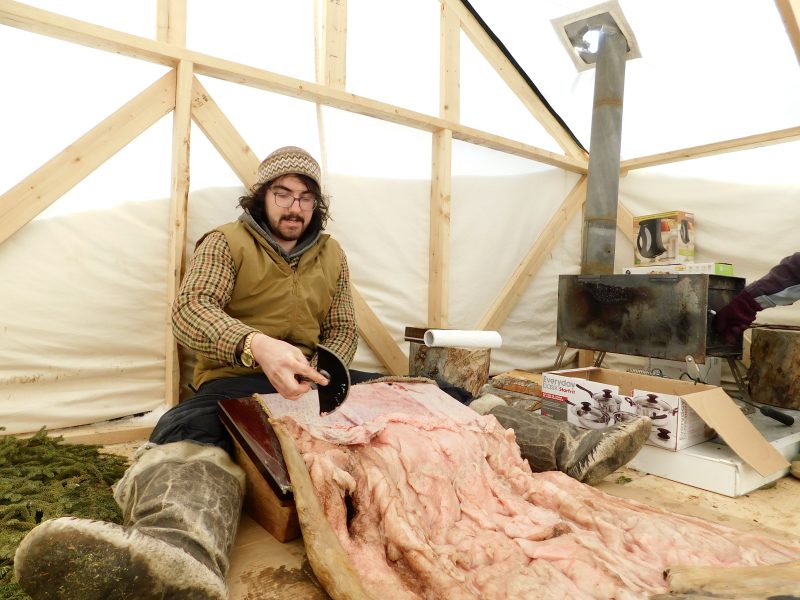
Cultural centre in Nunatsiavut is helping Inuit reconnect with culture and language
After winning the Arctic Inspiration Prize in 2024, Inotsiavik is offering Inuit in Labrador outdoor cultural programming, Inuttitut lessons, virtual programs, and more
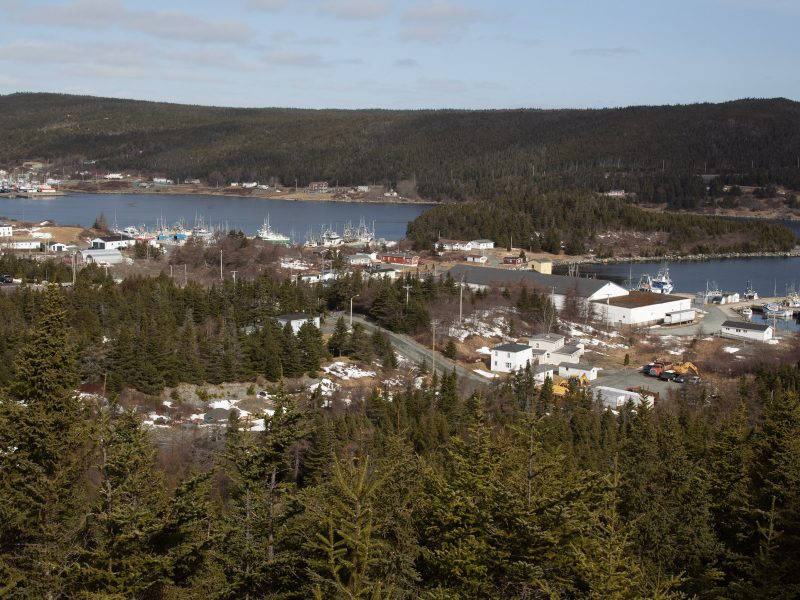
What a Newfoundland community can learn from B.C.’s first major LNG facility
As talk about developing an LNG export project in Newfoundland and Labrador continues, residents have questions — and the answers might be on the other side of the country
N.L. chief medical examiner has begun tracking gambling as a risk factor in suicides
The OCME’s policy change came nearly a year after an Independent investigation into gambling-related suicides