
Access to information: N.L. failed to make public over 1,000 responses in a single year
Province says it’s dealing with an increase in requests, but NDP leader is concerned the mounting problems may be intentional
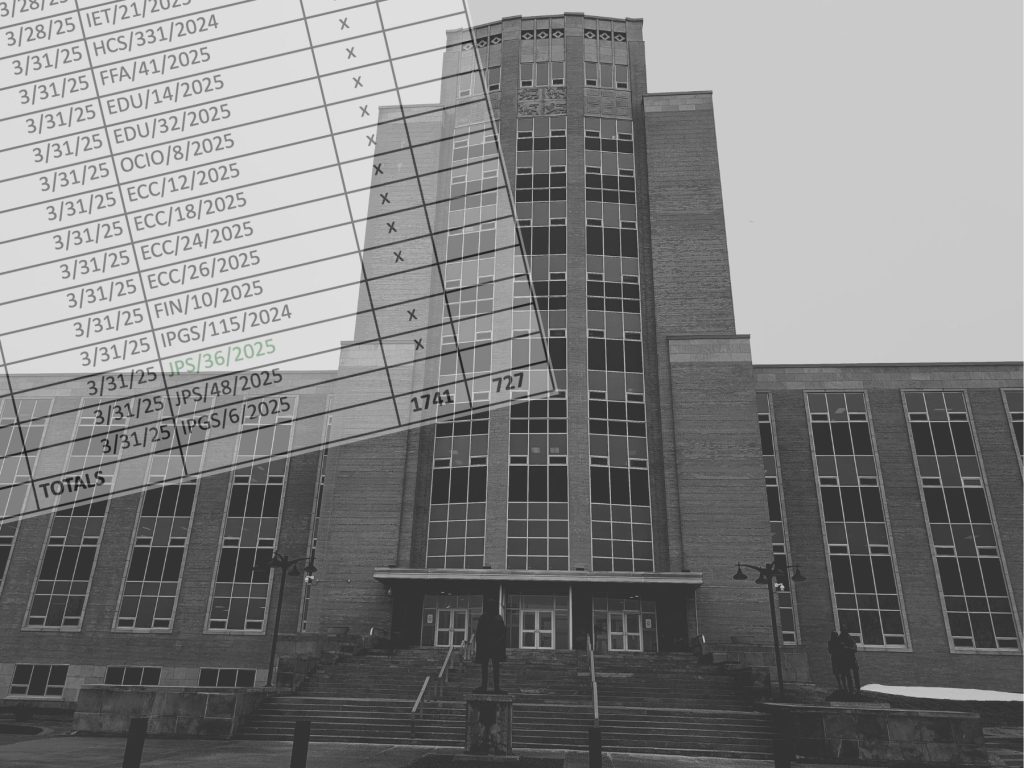
Newfoundland and Labrador is often touted as a leader in Canada when it comes to freedom of information legislation, but new information disclosed, appropriately enough, in response to an access to information request, paints the province in a different light.
After the government responds to an access request, it’s supposed to post its response publicly on its website. After all, the information shouldn’t only be available to the person making the request, but to the public at large. However, figures released by the province show the government failed to make over 1,000 responses public in the 2024-2025 fiscal year alone.
Between April 1, 2024 and March 31, 2025, a spreadsheet produced by the province in response to an FOI request says its Access to Information and Protection of Privacy (ATIPP) Office received 1,741 access requests. Only 727 of those were posted on the office’s website, meaning the government posted fewer than 42 per cent of the requests it received in that time.
While provincial legislation doesn’t compel the government to post completed FOI requests on its website, the government’s own policy states it will publish completed requests 72 hours after a response is provided to an FOI applicant by email, or five business days after a response has been sent by regular mail.
Will you stand with us?
Your support is essential to making journalism like this possible.
The Independent requested an interview with Justice Minister Helen Conway Ottenheimer about the large number of FOI requests withheld from the public. Instead, a spokesperson emailed a statement on behalf of the government saying the ATIPP office has not been publishing as many responses due to increased numbers of requests in recent years.
When the ATIPP website was launched in 2013, the province was receiving around 300 general FOI requests annually. In 2024-25 alone, that number had increased to 2,200 requests, which means “more time is required to review all completed requests prior to publishing, in accordance with the policy,” according to the statement from the government’s Director of Strategic Communications David Sorensen.
The province points out that its policy says the ATIPP office “will endeavor, where possible, to post departmental responses to general access to information requests on the Completed Access to Information Requests webpage.”

In response to the increase in FOI requests, the government “has focused on hiring additional resources to continue to support the processing of access requests,” the statement continues, adding the ATIPP office “continues to review all completed general access requests received by departments and will continue to publish all requests that are eligible for posting.”
Once FOI requests are shared with the original applicant, the ATIPP office and the department that received the request work together “to determine whether additional redactions are required, and to assess whether the request is eligible for posting,” the statement says.
‘An issue for years now’
One Newfoundland resident who makes regular access to information requests, Matt Barter, says he has noticed the ATIPP office’s increasing failure to fulfill its obligations.
Barter, who publishes FOI responses on his website, MattBarter.ca, says he routinely experiences deadline extensions and delays with his requests for information. “It’s actually been an issue for years now,” he says.
In one case, Barter still hasn’t received a response to a 2024 request he made with the province’s Department of Justice and Public Safety, the same department which oversees the ATIPP office. In May 2024, days after the province tore down a homeless encampment in St. John’s, Barter filed a request with the department asking for communications related to the encampment.

More than a year later, he received an email from an unnamed government worker within the department’s ATIPP office saying the department “went through some staffing changes as it relates to processing ATIPP requests,” and that, as a result, “some requests, including this one, have not been processed within the legislated timeframes. We apologize for any inconvenience this has caused you.”
Barter says he still hasn’t received a response to his request, now almost two years old, and has not yet filed a complaint with the province’s Office of the Information and Privacy Commissioner (OIPC), which investigates allegations of public bodies’ failures to meet their legislated obligations under Newfoundland and Labrador’s access to information laws.
In its 2024-25 annual report the OIPC says public bodies, including those of the provincial government, submitted 1,102 applications requesting time extensions for 721 unique access to information requests. In that same time, the report says, public bodies applied 109 times to disregard access to information requests entirely. “Both these numbers represent significant increases since last year, with time extension applications up 34.4 per cent and disregard applications up by 105.7 per cent,” the report says.
OPIC spokesperson Sean Murray said in a written response on behalf of the office that, “[w]hile it is not required by law that government post completed access requests online, it is an initiative that we support and encourage. It helps increase transparency and accountability, and it reduces the need for new access requests for the same information.”
Murray also said it’s the OIPC’s understanding “that additional work is required by the ATIPP Office to ensure that in publishing these requests the personal information of the original access requester is removed.”
Seems like ‘a concerted effort’ to delay release of information: NDP leader
Provincial NDP leader Jim Dinn is sceptical of the situation, citing instances where his requests for information in the House of Assembly have been stonewalled, forcing the NDP to rely on FOI applications and responses published on the government’s website. “Often the only way we can get basic answers is through an [access to information request]. So, am I concerned? Yes.”

“When things aren’t public and decisions are made based on information that you can’t see, or they don’t really have information and you’re trying to find out the rationale or the reason behind [decisions], it’s poor decision making.”
Dinn says the situation is even more “frustrating” knowing that most FOI responses from 2024-25 weren’t made available to the public. “For someone to go through the process of an ATIP means they couldn’t get the answers any other way,” he says. “And it seems to me like a concerted effort almost to delay the release of information. And that is really troubling. That means government is never going to be held accountable, or they’re going to push it all until it falls out of the public interest.”
In the government statement from Sorensen, the province says it is “committed to fostering a culture of openness, transparency and accountability while ensuring the protection of citizens’ personal information and commercially sensitive business information.”

Author

Related Articles

Memorial University student union walks back plan to close radio station amid backlash
‘I wish CHMR the best,’ Memorial University Students’ Union executive says ahead of vote to defund the campus radio station

INTERVIEW: Avi Lewis says N.L. is ‘ground zero’ for the biggest challenges facing Canadians
The federal NDP candidate says socialism and economic populism are the antidote to unfettered capitalism and the ‘epic market failures’ it has brought
What a Newfoundland community can learn from B.C.’s first major LNG facility
As talk about developing an LNG export project in Newfoundland and Labrador continues, residents have questions — and the answers might be on the other side of the country