
No movement on pharmacare amid diabetes epidemic as N.L. waits to resume talks with Ottawa
PCs won’t say if Health Minister Lela Evans and Premier Tony Wakeham discussed pharmacare during Nov. 26 meeting with federal Health Minister Marjorie Michel
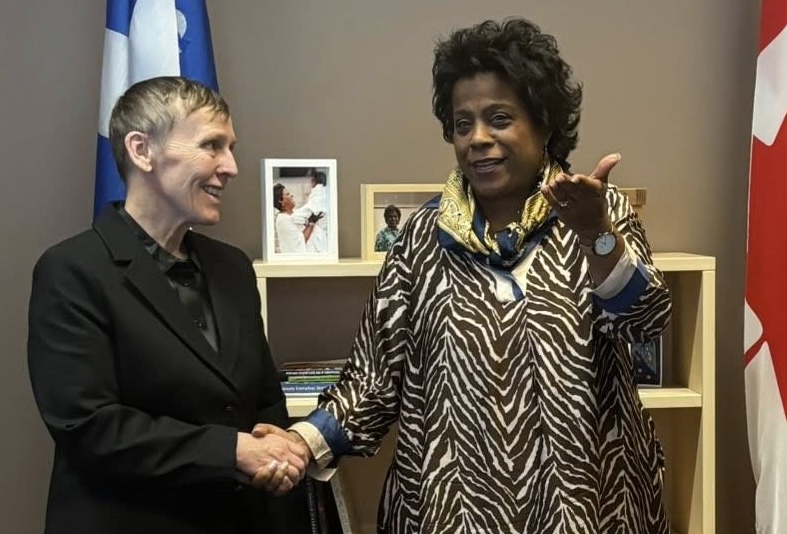
The federal government’s national pharmacare delays are stalling talks between Ottawa and the province’s new Progressive Conservative government, according to the Department of Health and Community Services (HCS), potentially holding up access to millions of dollars in funding for essential medicines and medical devices.
Last month a spokesperson for HCS told The Independent the department had reached out to Health Canada about pharmacare and was awaiting a response. Days later, federal Health Minister Marjorie Michel indicated Ottawa was not actively working with provinces to sign new pharmacare deals.
On Nov. 26, provincial Health Minister Lela Evans and Premier Tony Wakeham met with Michel in Ottawa, but PCs won’t say if the leaders discussed pharmacare.
In October 2024 the Trudeau government passed the Canada Pharmacare Act and committed $1.5 billion over five years to provinces that sign bilateral agreements with Ottawa. The initial phase of pharmacare is intended to provide funding for contraceptives and diabetes medications and monitoring devices.
Will you stand with us?
Your support is essential to making journalism like this possible.
To date, three provinces and one territory have inked deals with the federal government—British Columbia, Manitoba, P.E.I. and Yukon—and account for 62 per cent of the initial $1.5-billion investment; combined, the jurisdictions comprise 18 per cent of Canada’s population.
No new deals have been signed since March.
Newfoundland and Labrador’s former Liberal government was in discussions with Health Canada but those talks were halted for the federal election.
In its fall budget last month the Mark Carney government omitted any new funding for the program, despite Carney’s promise during last spring’s federal election campaign to “protect” pharmacare and that the party was “committed to making sure that Canadians can get the medications they need, no matter where they live or ability to pay.”
How long will N.L. residents pay out of pocket?
Newfoundland and Labrador has one of the highest rates of diabetes in Canada, with roughly one-third of the province’s population—more than 170,000 people—either prediabetic or living with diabetes, according to estimates from Diabetes Canada.
In 2024, 13 per cent of people in the province had diagnosed diabetes, with tens of thousands of residents approaching diabetic blood-sugar levels (prediabetes) or living with undiagnosed diabetes. Diabetes Canada estimates another 13,000 people in the province will be diagnosed by 2034.
Provincial NDP Leader Jim Dinn has urged Premier Tony Wakeham to push for a pharmacare deal with Ottawa but is concerned the federal government may not be signing any more agreements. “I’m not sure where the federal government stands, or if indeed the window of opportunity has passed, which will be terrible,” he said.
Out-of-pocket costs for patients in this province living with Type 2 diabetes can reach $6,000, and $9,000 for those with Type 1 diabetes. Type 1 diabetes occurs when the body produces either very little insulin or none at all. With Type 2 diabetes, the body either doesn’t make enough insulin or doesn’t use it effectively.
The Canadian Centre for Policy Alternatives estimated that Newfoundland and Labrador would receive roughly $84 million over four years if it joined the pharmacare program.
Dinn says joining the pharmacare plan could save the province money on its Continuous Glucose Monitoring Program. “The current provincial program is not universal and still requires income testing,” he writes in his letter to Wakeham. “By signing on to the federal program, Newfoundlanders and Labradorians living with diabetes would finally have access to coverage regardless of their income.”
In addition to the glucose-monitoring program, the province also runs an Insulin Pump Program for residents with Type 1 diabetes. The continuous glucose monitoring program is also offered to women with gestational diabetes, a type of diabetes that occurs during pregnancy which may develop into type 2 diabetes.
More than 60 per cent of the $1.5 billion in federal funding has already been allocated to the three provinces and territory that have signed on.
Laura O’Driscoll is concerned there may not be enough for other jurisdictions that may eventually sign on.
Senior manager of policy at Diabetes Canada, O’Driscoll says a multi-payer approach may be more realistic, a scenario that would see residents with adequate private insurance continue using their coverage, while the national drug plan would focus on those without insurance, or without sufficient coverage. “We understand that in a perfect world, coverage would be universal to all, but understanding cost constraints, […] individuals who have no coverage or insufficient coverage should be the ones to get that access first.”
According to a 2019 report from the Conference Board of Canada, at that time Canadians spent $1.8 billion annually on glucose-lowering medications, with the amount expected to rise.
Province must expand diabetes support
While working towards a pharmacare program, the province also needs to provide better services for people living with diabetes, says O’Driscoll. She wants to see a new chronic disease strategy that reflects the health challenges faced by residents with chronic illnesses.
O’Driscoll says her organization hopes to collaborate with the Progressive Conservative government to develop a plan that is both actionable and measurable. “Because what gets measured gets done, and then we can evaluate it and see,” she says.
In 2017, the provincial Liberal government released a chronic disease action plan, which outlined actions the province would take in 2017 and 2018 to prevent, intervene early and manage chronic disease.
A refreshed strategy, she explains, would focus on both supporting people with chronic diseases and preventing them through community support programs. Instead of simply advising a patient to “exercise and eat better,” for example, healthcare providers could refer their patients to specific free or low-cost programs at a community center.
Elizabeth Benson is a retired nurse whose son was diagnosed at 16 with Type 1 diabetes. Now 40, her son still struggles to manage the disease and the mental stress that comes with constant self-management, costly medication, and stigma, she says.
The 63-year-old mother believes the provincial government can do more to help residents struggling with diabetes by building a more efficient and collaborative health system. “There is support there, but I don’t think enough is being done to put it in the forefront,” she says.
Benson says one of the biggest challenges is simply getting information about available supports and how to apply for them. Even as a retired nurse, she found the application process for a continuous-glucose monitor a challenge. “I don’t know how anyone without any support or social work or anything could access these things,” she says. Her son’s application for a glucose monitor is currently being considered, a process that can take several weeks.
Benson adds that access to a government-funded glucose monitor would help her son, who is on income support and currently only able to check his blood-sugar levels a few times a day. “When […] he’s out on a walk, he goes low,” she explains. He carries sweets with him in case his blood-sugar level gets low, she says, explaining that if his levels fall too low he is often unable to concentrate or safely treat his symptoms.
A continuous glucose monitor would allow Benson’s son to track his blood-sugar levels every couple of minutes, so he can better manage them through his food intake, physical activity, and medication.
O’Driscoll says situations like Benson’s highlight a larger issue about how communication is relayed in the healthcare sector. Since many in the province don’t have a family doctor, she says it’s essential all healthcare providers are given information about new programs immediately as they launch. “I walk down the street right now, two minutes from my house, and there’s a pharmacist,” she says. “You cannot do that with a doctor or nurse.”
Benson notes that patients, especially seniors, may not have smartphones, reliable internet access, or the knowledge of how to find medical information online. She says it would be helpful if pharmacists shared information on new programs directly with people living with diabetes when they visit the pharmacy for medication.
This is especially important for a province that hit a new milestone in July, when Newfoundland and Labrador became the first province in Canada with one quarter of its population is 65 or older. O’Driscoll says the likelihood of being diagnosed with Type 2 diabetes increases with age.

Author

Related Articles

Changing Trails: Nunatsiavummiut losing traditional routes as climate change wreaks havoc in Labrador
Open brooks and thin ice are putting Inuit lives at risk

PCs under fire for ‘disappointing’ treatment of Black History Month
Celebrated Black community leader and anti-racism advocate target of racist comments after speaking out online

New play portrays barriers facing N.L. women in politics
Women won the right to vote a century ago but are still underrepresented in public office. St. John’s playwright Ruth Lawrence’s play tackles that head on.