
Returning home brings mixed feelings for Ukrainians living in Newfoundland
A recent visit home by a Ukrainian refugee living in St. John’s underscores the joys of her homeland amid the harsh reality of the ongoing war
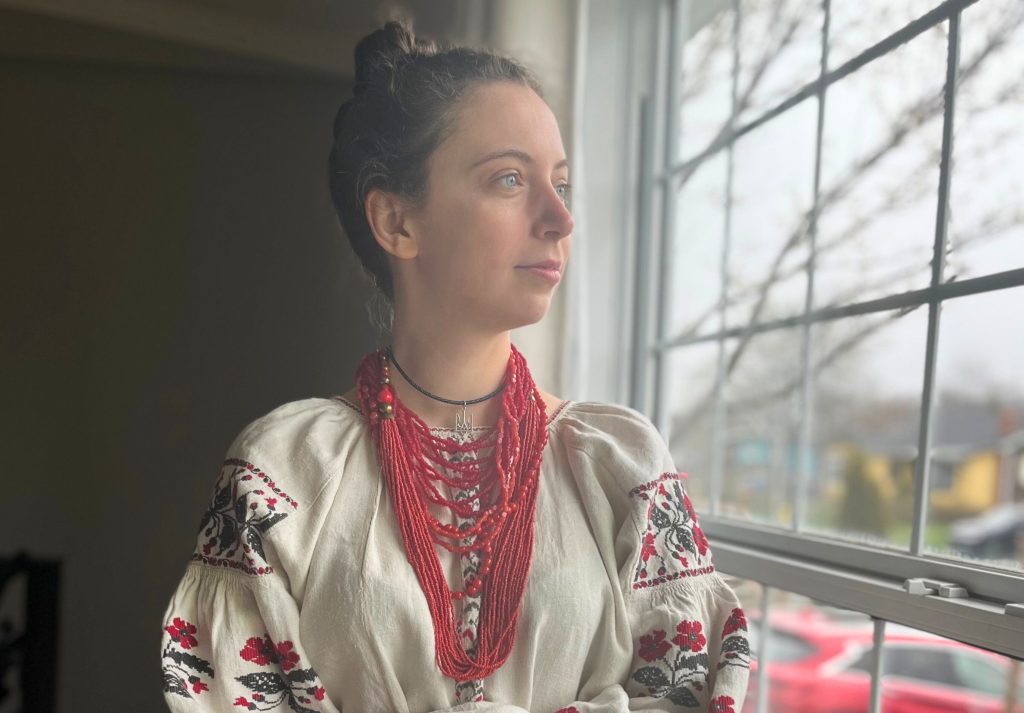
For ex-pat Newfoundlanders, returning home for a visit is usually a carefree and joyful experience: visiting friends and familiar sights, filling up with the tastes and sounds of home.
For the province’s large and growing Ukrainian population, returning home is also a joyful experience, but one fraught with other feelings and challenges. Many thought the country’s war with Russia would be over in a matter of weeks, if not days, and resolved by international diplomacy if not on the battlefield. But more than three years after Russian tanks rumbled across the border—and over a decade since Russian troops first occupied Ukraine’s Crimea and Donbas regions—the largest and deadliest European war since World War II carries on. Casualty estimates vary widely as both governments have been cagey on statistics, but generally hold over half a million soldiers killed and more than a million wounded, along with tens of thousands of civilian deaths.
Yet life continues in Ukraine, even in wartime.
Katarina Gavrilyuk is one of the more than 5.7-million Ukrainians who left the country following Russia’s invasion, and one of the nearly 4,000 who wound up in Newfoundland and Labrador. For her family, landing in St. John’s was a sudden and bewildering adjustment.
Will you stand with us?
Your support is essential to making journalism like this possible.
“After we arrived, for the first three months I was sure that I was in Labrador,” she confesses, laughing. Since the province was called Newfoundland and Labrador, they assumed the larger top portion of the province was Newfoundland, and the smaller bottom island portion was Labrador. It was only after three months living in St. John’s that they were corrected, and told they were on the island of Newfoundland.
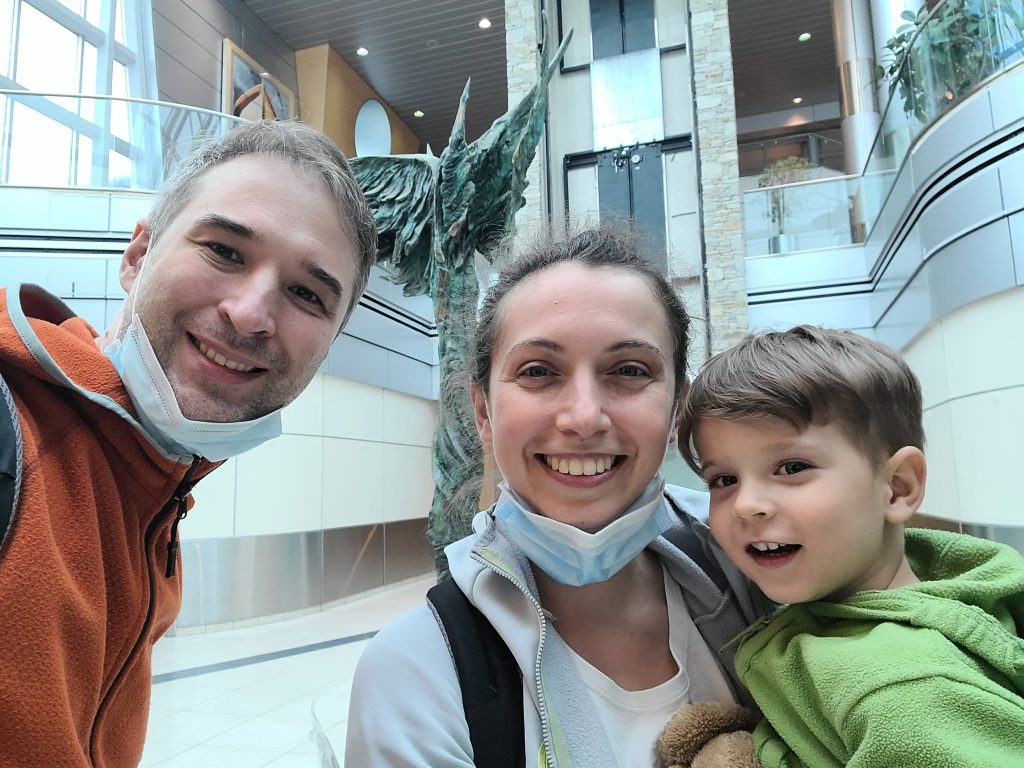
The story signifies what a confusing adjustment it was. Gavrilyuk, her husband and two-year-old child were living in the Ukrainian capital of Kyiv when the war broke out, but it was Gavrilyuk’s birthday so they were on a weekend trip to the city of Lviv, more than 500 km away. Their child had contracted COVID-19 and became feverish and ill; they had an appointment with a local pediatrician the next day. At 3 a.m. a close friend of Gavrilyuk’s phoned and said the war had begun.
“He said, ‘Drive!’ We were on a speaker phone and my husband said, ‘Drive where?’ And he said, ‘Drive to the border! You need to get your child out.’”
They got in their car and sped to the border, Gavrilyuk holding her sick and feverish child. She remembers phoning the hospital as they drove, dutifully trying to cancel the next day’s appointment because they were fleeing the country.
“Nobody picked up the phone, and I was like, ‘Why is nobody picking up?’ It’s strange the way you think about things when everyday life gets shifted like that.”
They got to the border with plans to cross into Poland, but then learned Poland required COVID tests to cross the border — so Gavrilyuk and her husband wouldn’t be able to get their child across. Instead, they crossed the border into Hungary, which didn’t require COVID tests to enter. From Hungary, they eventually managed to relocate to Poland.
“In the end, we moved more than 26 times,” Gavrilyuk recalls of the next four months with a shudder. During that period no one expected the war to last longer than a few months, so they wanted to stay close to home, ready to return as soon as possible. But as the war dragged on they realized they needed a more permanent home. They were able to get entry to Canada, and flew directly to St. John’s in June 2022.
They’ve since reconstructed a life for themselves here, along with thousands of other Ukrainian refugees. But Gavrilyuk tries to return to Ukraine every year, a journey she makes alone; her husband would not be permitted to leave if he entered the country. The arduous journey to Ukraine, which took Gavrilyuk three days, was one the couple didn’t want to subject their young child to.
Home for a rest
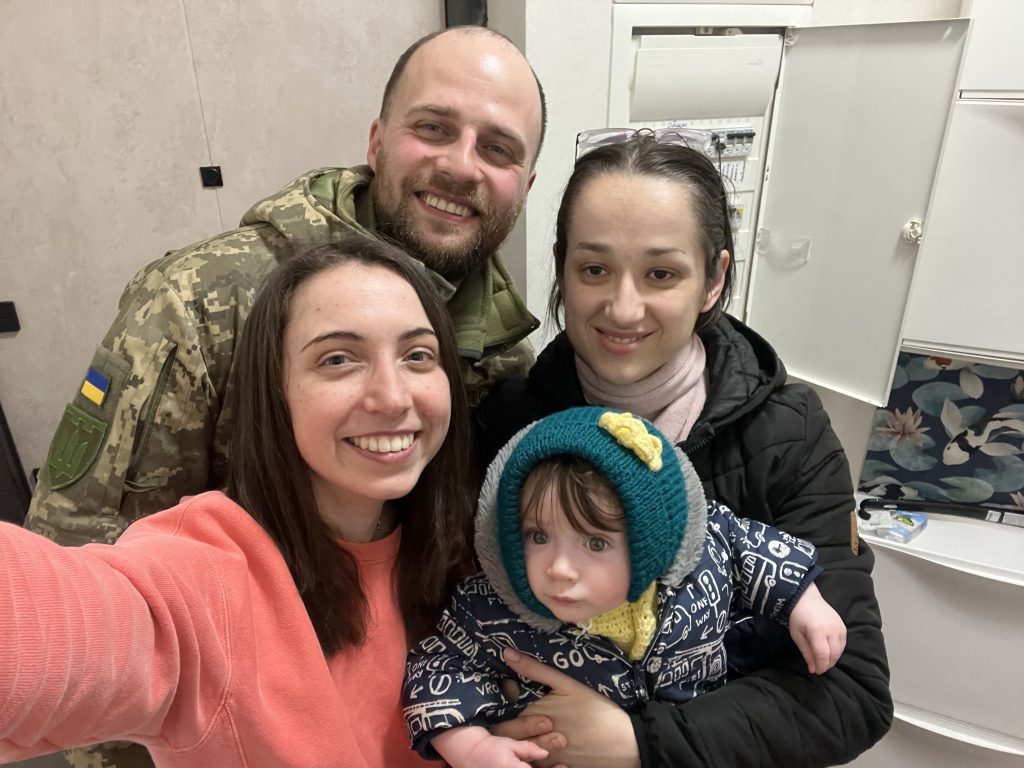
For Gavrilyuk, an important part of any journey home is visiting her best friend, Gera.
“We knew each other for 20 years before the war,” she explains, smiling as she shares the memories. “We’re besties. I love him very much.”
The two went to university together and trained as scientists. Gera received a PhD in biology and was building a research career in pathophysiology, studying heart disease and hypertension, when the war broke out. He immediately joined the army, and is now commander of a large Ukrainian military unit.
Gavrilyuk’s father still lives in Ukraine, but she’s unable to see him because he’s in the Russian-occupied Donbas region. She hasn’t seen him in person in six years, and for the past year and a half they weren’t even able to speak on the phone as communication lines with Donbas were cut. Last week the connection was finally restored and Gavrilyuk was finally able to talk to her father on the phone. The stress of not being able to see and speak with him took its toll, she says. Her mother was in Crimea when that region of Ukraine was occupied by Russia in 2014. Her mother relocated to northern Ukraine, near the city of Irpen, but when that region was also occupied by Russian troops she fled the country and took refuge in the United Kingdom.
Visiting home helps Gavrilyuk stay connected to those she’s close to, but it’s a reminder of the distance between them as well. Another of her best friends, who works at the Kyiv Zoo, was pregnant when the war began. Gavrilyuk was looking forward to being godmother to her friend’s daughter. But the child was born after they fled the country; the little girl has another godmother now. Gavrilyuk has only been able to meet the child briefly a few times.
Although the war is ongoing, with regular air and drone strikes against the capital of Kyiv, Gavrilyuk says she doesn’t feel worried about going back. “I feel safe,” she shrugs. “As long as you take precautions, it’s really safe. In other countries you might be killed by criminals on the street, and Ukraine is in fact much safer in some ways.”
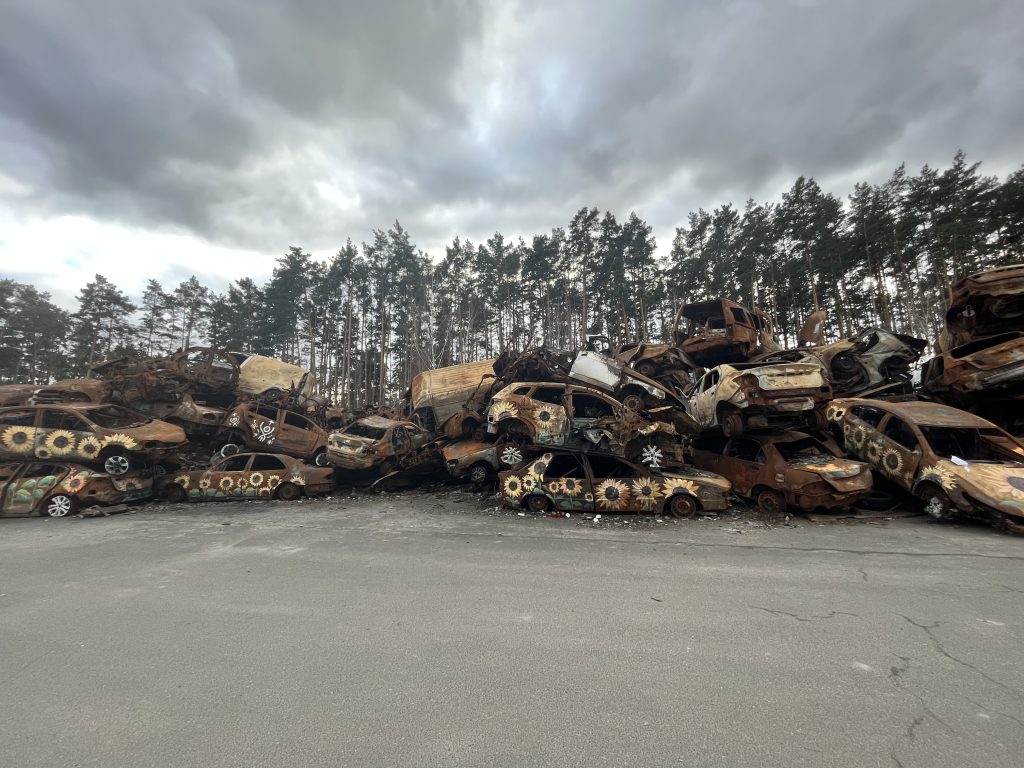
Even so, she is reminded daily of the war. Gavrilyuk recalls waking up one night during her visit home, hearing voices and shouting. She woke the friends she was staying with, and they told her everything was okay and to go back to sleep. The next morning she discovered it was a Russian attack that destroyed two high-rise apartment buildings and killed three people, injuring dozens more. While Kyiv’s air defense systems are strong, the sheer scale of Russia’s attacks means some missiles and drones get through. The attack that night also hit the zoo where her friend works.
Daily life has shifted in other ways. She points out wryly that you no longer need a prescription to get anti-depressants from a pharmacy.
“I think they should add them to the water,” she quips. “People are tired. They cope with it however they can.”
Coping is easier in some parts of the country than others. The city of Vinnytsia, which Gavrilyuk appreciates for its delicious croissants and cafes, has seen less damage from Russian strikes than cities closer to the front lines.
“Life goes on in such a way that if you didn’t know there was a war going on, you almost wouldn’t feel it there,” she says. “But of course the residents do feel it because it’s difficult to find a single person in Ukraine who hasn’t suffered from the war. Everyone has relatives or friends who have been in the fighting, and has someone—either civilians or military—who has been killed by Russian troops, has a relative missing.”
There are other sobering reminders of the war. She visited the city of Kharkiv, the site of fierce fighting between Russian and Ukrainian forces. More than a quarter of the city, which had a population of 1.5 million when the war began in 2022, has been destroyed.
“They just bombed it and bombed it and bombed it,” Gavrilyuk says. “Today there are no battles going on in the city, but Russian bombs can still reach it and they’re just slowly destroying the city. And the time between an alert going off and the missile striking is much shorter, because the distance between Kharkiv and the Russian lines is much smaller.”
Last month a Russian missile attack targeted a kindergarten academy there, but Ukrainian firefighters were able to rescue all 48 children trapped in the burning building.
Gavrilyuk got to visit her friend Gera during her trip home. It’s not often he’s able to take leave from the front lines, she says, but he was able to get leave to visit during her trip. She remembers cooking him a meal, his first home-cooked meal in over a year, she says.
He brought her a gift from the battlefront: a small six-month old kitten. Gavrilyuk has always loved cats; after they arrived in Newfoundland, her husband managed to find her a cat with one yellow eye and one blue — the colours of the Ukrainian flag.
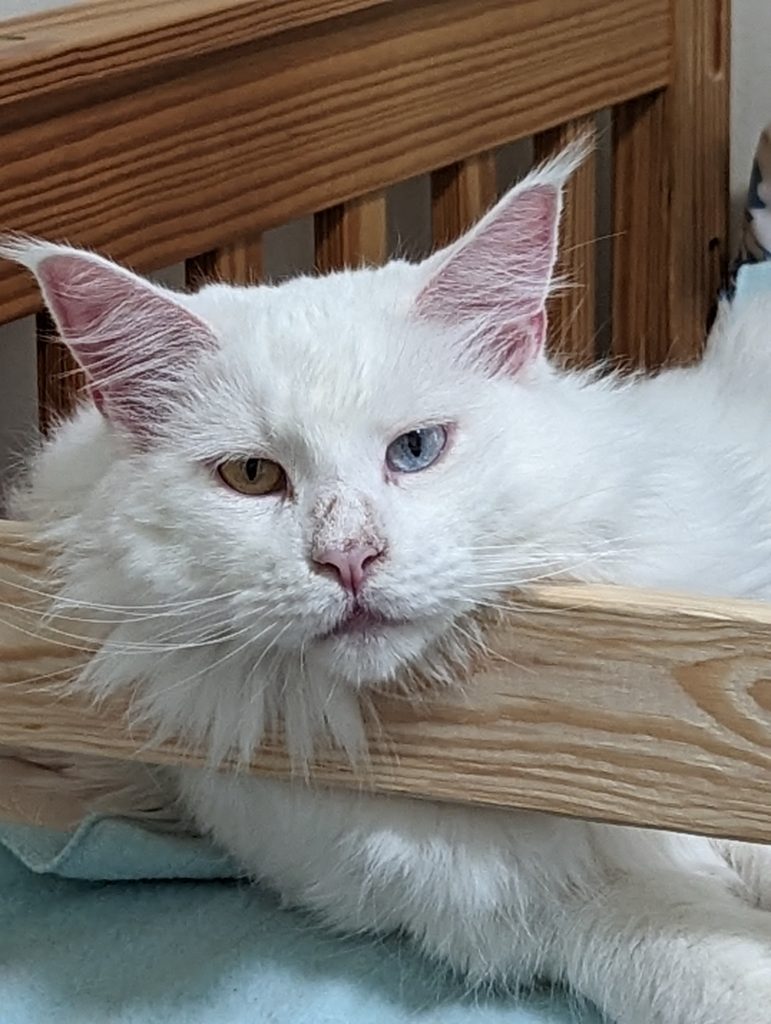
“Gera said to me, ‘You already have a Canadian cat with a Ukrainian heart, and now you will have a Ukrainian cat to take back with you to Canadian soil.”
Her trip home took four days—a lengthy car ride from Kyiv to the border, a 24-hour wait at the border due to electrical and power problems, then train and plane rides through Poland, Germany, Toronto, then Newfoundland. But she and the kitten made it home.
Teaching about Newfoundland
While her Ukrainian friends don’t know much about Canada, they do know a lot about Newfoundland, she says smiling.
“All my friends know all about Newfoundland. I show them pictures, I bring them Screech and maple syrup. This time I brought them mustard pickles. Basically I hate these pickles; how can you eat pickles that are sweet?” she says. “But they’re really popular here so I brought them [and am] educating them all about Newfoundland.”
A similar process played out upon her return, she explains. The Ukrainian community in Newfoundland is eager for updates and first-hand accounts from any Ukrainians able to visit home.
“When we go to Ukraine, we congratulate each other,” she explains. “People ask how it was [and] we explain where we went. People ask: ‘Did you see this, and did you do that?’”
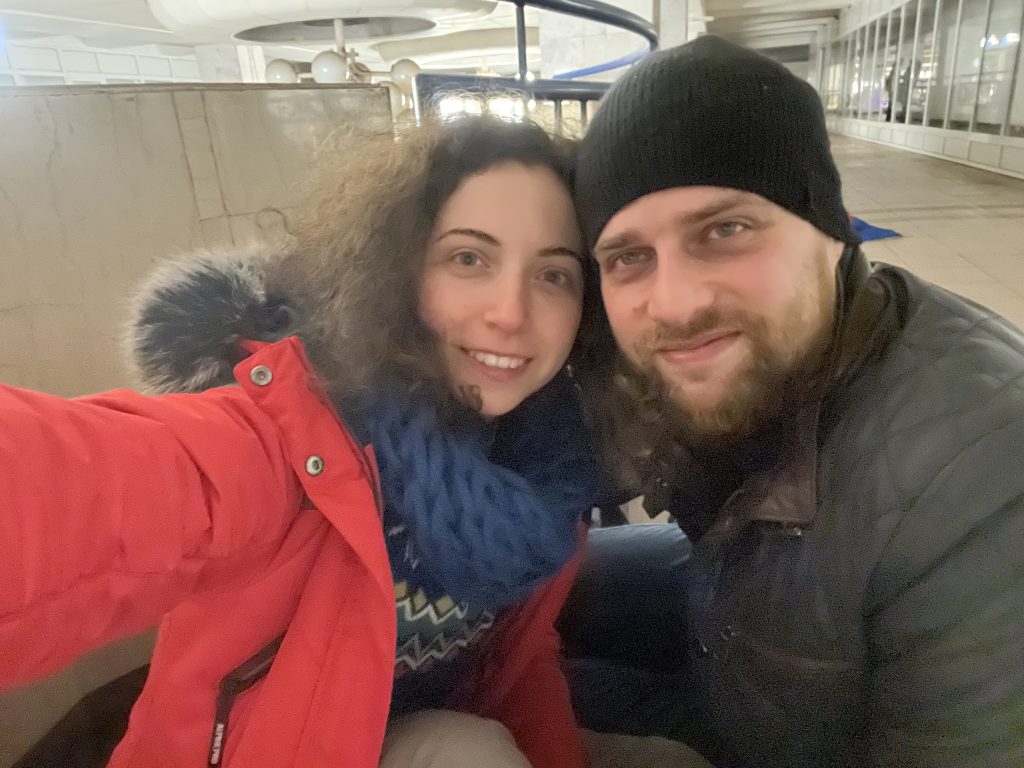
Gavrilyuk recently went to see the acclaimed Shallaway Youth Choir perform in St. John’s. At the performance, the choir spoke about visiting England where they travelled to the Royal Newfoundland Regiment’s historical battle sites and learned about the history of Newfoundlanders in the First World War. It was a poignant moment for her, she said, because it underscored the difference between Ukrainians and Newfoundlanders. For most Newfoundlanders, the memory of war is distant: something they learn about in history classes at school. But for Ukrainians, the reality of war is in their minds every day.
“I felt jealous,” she says. “I want to be able to think about war the way Newfoundlanders do — as something that happened a long time ago.
“But I’m also proud of Newfoundlanders, that you remember all of this and carry the memory like you do.”
Gavrilyuk still finds the reality of war in 2025 to be surreal.
“I’m not sure anyone expects war in the 21st century,” she says. “I still don’t understand how, in the 21st century, we can have a war like this, how so many people can die in this way. Like at this very moment I can pick up my phone and talk to someone in Australia. I can fly anywhere in the world. And yet we still have war.”
While Gavrilyuk is a fierce supporter of Ukraine, there’s a broader principle at stake too, she says. If a country like Russia can get away with waging war in this day and age, it sends a message that other countries can too.
She points to the recent threats from US President Donald Trump about annexing Canada. The threats to Ukraine from Russia’s President Vladimir Putin began the same way, she warns.
“It’s interesting to see the parallels,” she says. “When President Trump started talking about invading Canada, and Canadians all laughed at it, we Ukrainians were more like, ‘Hmm.’ We aren’t so sure it’s a joke. We all pray it is, but I’m just saying, we’ve been in that situation, and we don’t want you to be in that situation.”

Author

Related Articles
The RCMP vs. the media: Bracken trial approaches its endgame
This court case could decide the future of press freedom — and police oversight — in Canada

Accounting watchdog to investigate Deloitte over fake citations in $1.6M healthcare report
Chartered Professional Accountants N.L. is leading the investigation after Deloitte admitted AI was involved
PC’s minimum wage increase ‘far from a living wage,’ says NDP leader
NDP Leader Jim Dinn is calling on the PCs to legislate wage increases