
Town of Happy Valley-Goose Bay gathers politicians, residents for ‘public safety’ discussion
The community had four suspected intentionally set fires in one night one week ago, and one suspicious fire last night
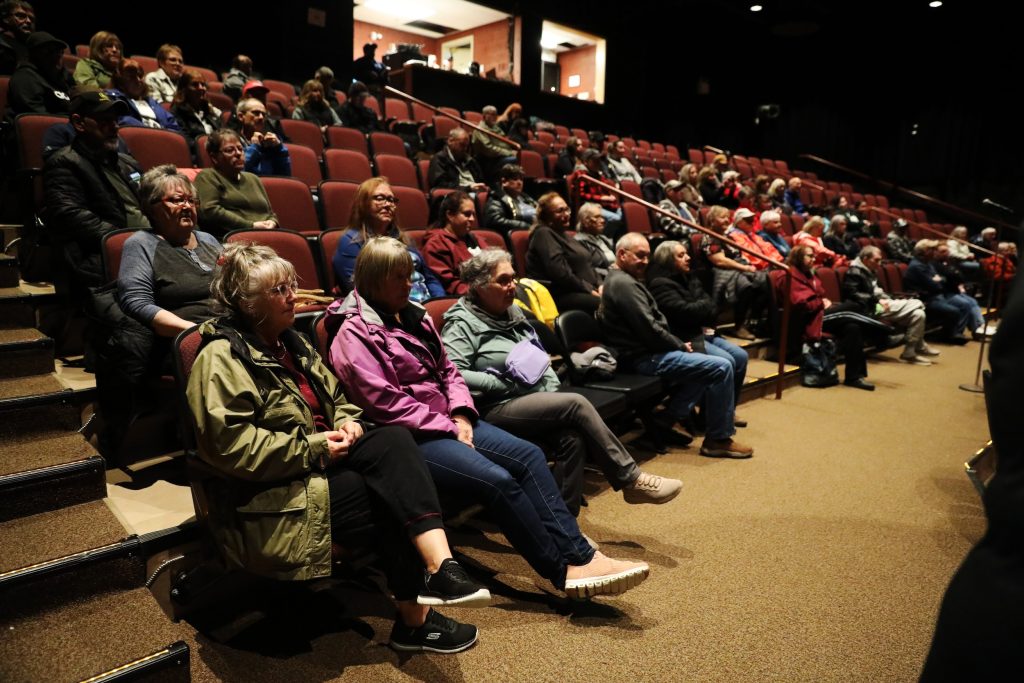
A week after four suspicious fires were fought in a single night, political leaders from all three levels of government gathered in Happy Valley-Goose Bay to hear from residents and discuss public safety.
Happy Valley-Goose Bay Mayor Bert Pomeroy said the Town convened the meeting after it was shaken by the four Oct. 24 fires, adding the local fire department responded to another fire in the community on Nov. 1.
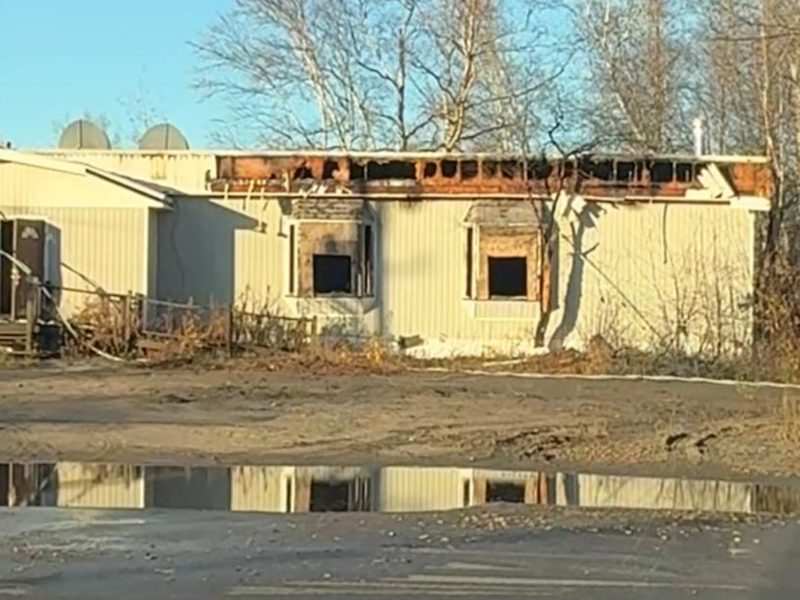
On the night of Oct. 24 and early morning hours of Oct. 25, emergency services responded to four fires, including one at the home of Deputy Mayor Jackie Compton-Hobbs.
The RCMP said evidence suggests all four fires were intentionally set and the force is asking residents to review any available CCTV surveillance footage around Palliser Crescent and Oliver Drive, Cabot Street, Hamilton River Road near the Northmart, and Corte Real Road for any suspicious activity.
Will you stand with us?
Your support is essential to making journalism like this possible.
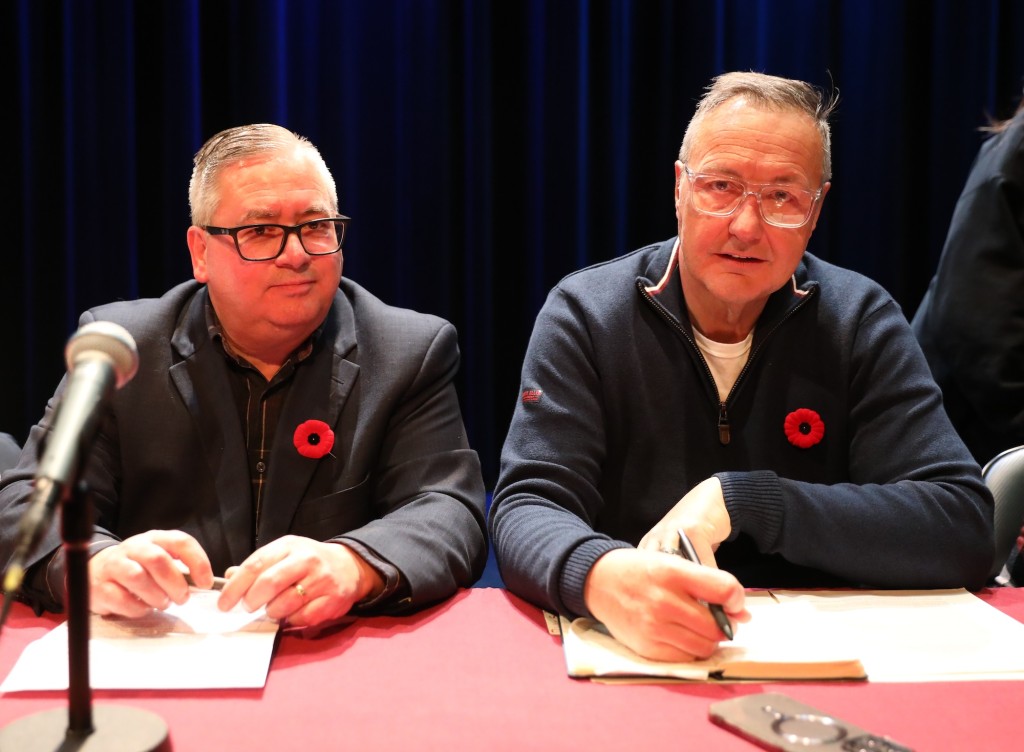
“Don’t look at this as another meeting, look at it as a start,” town resident Roy Gillette implored the council, Lake Melville MHA Keith Russell, and Labrador MP Philip Earle. About 75 people attended the discussion.
Public safety has been a concern for years in Happy Valley-Goose Bay. In 2022, residents organized a rally outside the town hall after an estimated 80 people were living in the community’s trail system, and multiple similar events have been held since then.
A ‘Policing Transformation Working Group’ convened by the provincial government in 2023 reviewed public safety in the area. The report’s recommendations, released in 2024, included hiring five more RCMP officers so the force could have 24-hour coverage in Happy Valley-Goose Bay, collaboration between the government and the RCMP to improve the community’s Mobile Crisis Response Team, for RCMP to wear body cameras, for the provincial justice department to provide the Town with funding for a community safety plan, to provide Indigenous cultural sensitivity training and orientation for officers, and to bring front-line workers and others together to enhance support for vulnerable people.
The Town says the community safety plan is in the works, RCMP have since begun providing 24-hour coverage, and RCMP have begun wearing body cams throughout Labrador.

Concerns around supports for victims of crime, hopes for future discussion
Residents at the meeting spoke about the need for more staffing support at the local Labrador Health Centre in order to keep up with growing demands in the emergency room and other hospital wards. Others called on the town, province and federal government to take a hard look at policies to see which programs and services have helped or done more harm. Specific policies weren’t identified in the discussion.
Falon Wilson addressed the panel, asking for greater support for victims of crime. Wilson explained her business—The Sandbar—was burned down a year ago, and there was little to no support for her family. A second business owner, Sacha Fraser, echoed that sentiment and explained the Town should consider the opinions of repeat victims of crime to help shape the future community safety plan.
Joan Saunders, a senior, expressed fear of walking the town’s trail system, where several unhoused people currently live. Saunders said she worries about people approaching her with ill intent and asked the Town’s community constables to walk the trails, not simply drive by the entrances.
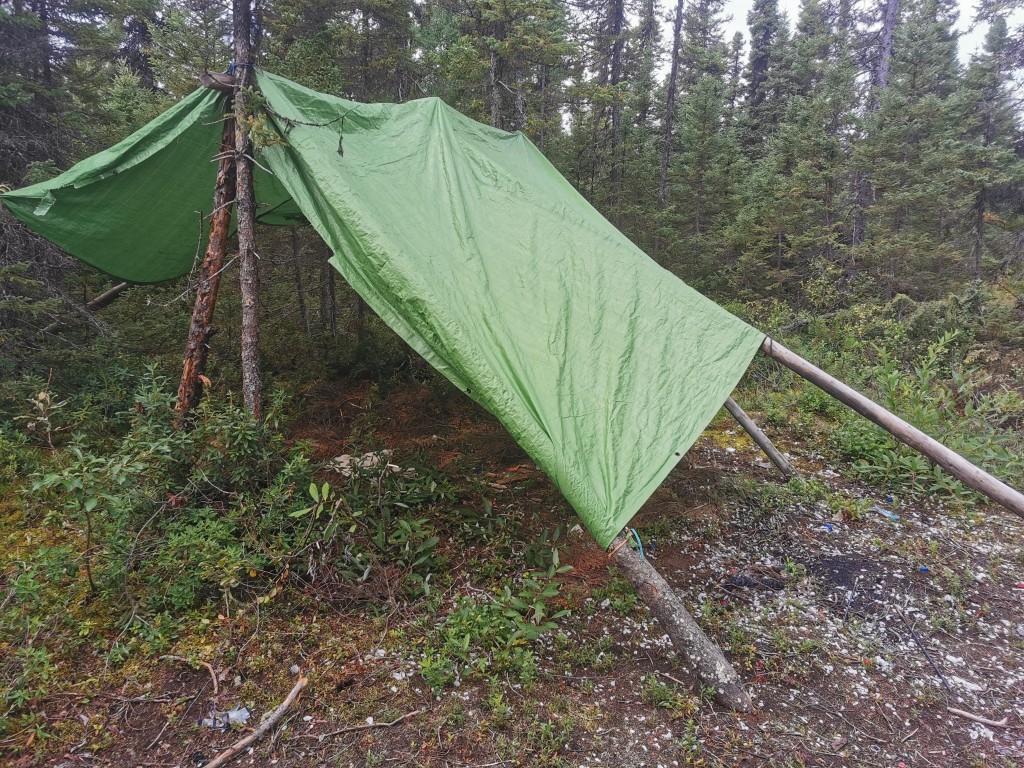
Happy Valley-Goose Bay resident Carol O’Brien said she was a nurse in the community, as well as in Natuashish and Sheshatshiu. She said she walks everywhere on the local trails because she doesn’t drive. “I can honestly tell you, I’ve never had a problem with any safety issue people-wise on your trail,” she told the gathering. “I run into lots of transient people, lots of Indigenous people. I know a lot of them, but never have had a fear. I’ve never feared anything.”
O’Brien said her main concern with the trail system is vehicle use, saying ATVs, side-by-sides and even trucks often travel at fast speeds on the trails without giving space for pedestrians. She’s also concerned about the impacts of the previous town council’s decision in 2023 to remove benches from the trails in response to loitering and what the town council at the time referred to as ‘illegal activity’.
“I’m trying to love this community, I really am,” O’Brien said. “But when you got a 73-year-old walking from NorthMart to […] where I live, and you can’t sit down […] there’s something wrong with your community.”
Town passes resolution asking for additional supports
On Oct. 28 the town council passed a resolution to formally ask the provincial government to provide additional support and resources to address “public safety concerns.”
“It’s devastating—scary—what’s happening in our community at times, and we’re here to say that, you know, enough is enough. We need intervention. We need support, and we need it now,” Pomeroy said. “We felt it was important to hold this meeting, not as a political gesture but as a clear message that we are all united in trying to deal with this issue.”
When asked what specifics the town council wants to see, Pomeroy said specifics will come from the meeting and an ongoing process to understand what responses residents want to see on the issue.
Compton-Hobbs said there’s been an increase in drugs in the community and the need for greater “public safety” measures has increased in the past 10 years. “Public safety has been put at a whole new level when you put someone’s life at risk, someone who could have burned in their home,” she said. “With five more minutes, everything could have went up — that is scary, and people in our community have every right to be scared. We need more resources in every avenue you can think of.”
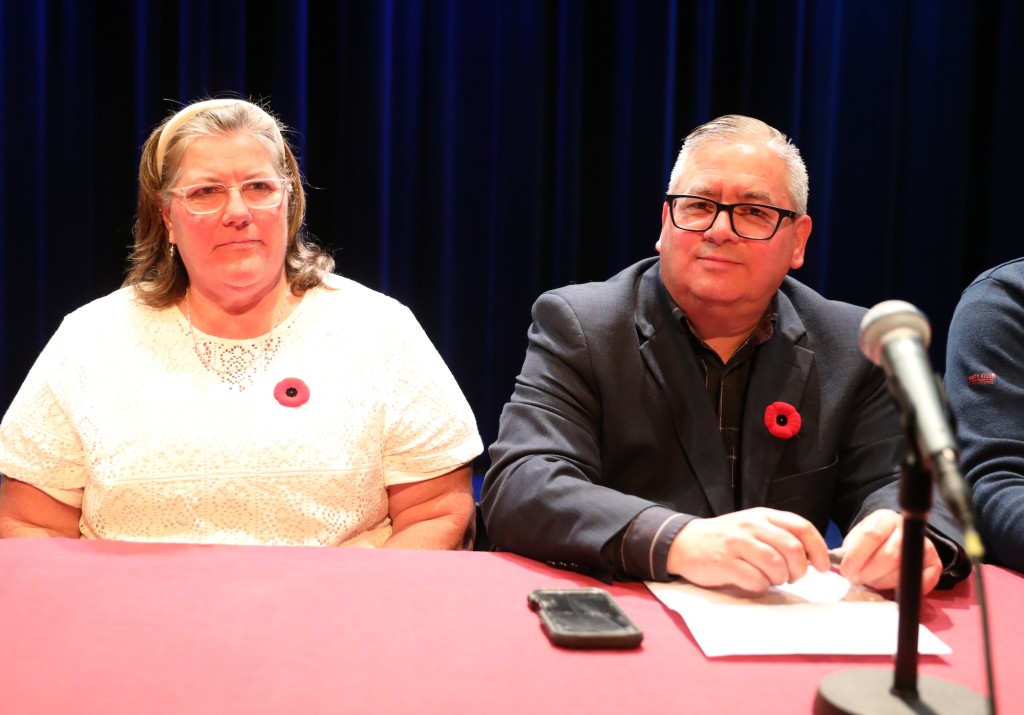
Compton-Hobbs said the community needs more mental health and addictions supports. She pointed to how there are no detox centres in Labrador and people wanting to detox need to either wait 12 weeks for a centre on the island, or travel out of province. She said these aren’t new issues. “I’m tired of talking about these issues, so today is a great start to try to move forward and deal with this public safety issue and put action, put our money where our mouth is, and let’s see action.”
Members of Sheshatshiu Innu First Nation and the Mary May Healing Centre took it upon themselves to create a detox centre for Innu five kilometres away from the community and on the land. Multiple cohorts have since passed through the program, preparing people to enter formal treatment programs.
Community plan in the works
The Town of Happy Valley-Goose Bay is working on a ‘community safety and wellness plan,’ led by Brian Davis and funded through a provincial government grant. Davis was born and raised in Happy Valley-Goose Bay, started Taiga Valley Farm and is the president of the Labrador Agriculture Association.
Project planning began about a month ago and the town is about to enter the engagement phase, Davis said. He explained the town is launching a website with surveys and a schedule of events over the next six months where people can get involved to share concerns and ideas for the future through a transparent process.
“It’s not just about policing or emergency response, it’s not just about the transient issue,” he said. “It’s about addressing root causes like housing, mental health, recreation, belonging and connection, while strengthening the systems that support people before crisis happens. You cannot separate well-being and safety.”
Pomeroy stressed the need to expand the authority of community constables, including reinstating their ability to stop drivers who appear intoxicated or are clearly on their cell phones. Currently the authority to pull over vehicles resides with the RCMP alone.
“We can’t even do that anymore, and that was something that was taken away from us within the last year or so,” Pomeroy said. “The RCMP don’t have the resources to go and keep doing that. So it’s a cycle. We can’t do it. The RCMP are too busy doing other things. Meanwhile, we have drunk drivers on our streets.”
In one weekend last month, the Happy Valley-Goose Bay RCMP says it arrested three impaired drivers.

Progressive Conservative MHA-elect Keith Russell said the community needs to cultivate a culture of respect for all residents. He also said the community needs more resources. “What we’re seeing here, though, too, is a very human thing happening. There’s crime, there’s drugs, there’s a lot of things, too,” he said. “But we’re also seeing, I’ll say, people almost lost in the shuffle, let’s say, in these very trail systems we’re talking about. So there’s a very human element.”
Acknowledging the human element doesn’t mean excusing crime, Russell added, explaining it’s important to find a balance between everyone’s needs.
Bail reforms coming, says MP
Happy Valley-Goose Bay resident Curtis Saunders asked the panel of politicians about the justice system. Saunders said it’s unfortunate when people are arrested and charged with serious crimes—such as drug trafficking-related charges—and are released on bail, only to soon after repeat the alleged crimes and released on bail again. “So what do we do?” Saunders asked the panel. “I don’t have the answers—far from it. But please, please, something got to be done.”
Earle explained the distinction between the executive (political) and judicial branches of government, adding the judicial branch can’t be directly controlled by politicians.
But there are some aspects politicians can help with, he added, pointing to legislation currently before the House of Commons, Bill C-14, An Act to amend the Criminal Code, the Youth Criminal Justice Act and the National Defence Act (bail and sentencing). If passed in its current form, the federal government says the legislation would introduce “sweeping reforms to make bail laws stricter and sentencing laws tougher for repeat and violent offending, to support the front lines, and to invest in long-term prevention.”
Canada’s Charter of Rights and Freedoms gives Canadians accused of a crime “the right to liberty and [to be] presumed innocent until they are proven guilty,” according to the government. “This means that an individual charged with an offence has the right not to be denied reasonable bail without just cause.”
At the same time, current bail laws under Canada’s Criminal Code have three main purposes: to “ensure those charged with an offence appear in court when required; to maintain public safety by assessing and managing any potential risks if an accused person is released; [and] to maintain the public’s confidence in the justice system system.”
Earle told the gathering that “even criminals have rights, and the justice system in Canada protects those rights, but I hope we have the bail system and the legislation right this time,” referring to the proposed legislation.
The federal Department of Justice says the Act is the latest in a series of reforms, and that in the coming months further changes are expected which will address court delays, strengthen victims’ rights, better protect people facing sexual and intimate partner violence, and keep children safe from crimes.
Earle said public safety is an issue that goes beyond political lines and that it’s important to reflect and share responsibility. He said he’s committed to working equitably with all residents to find a way to help the community of Happy Valley-Goose Bay.
“We live here. We care about the people here,” he said. “Keith [Russell] said it best. So collaboration number one. And look at it, because this is the first time we’ve all been on stage here together, committed to fixing this issue.”

Author

Related Articles

Changing Trails: Nunatsiavummiut losing traditional routes as climate change wreaks havoc in Labrador
Open brooks and thin ice are putting Inuit lives at risk

PCs under fire for ‘disappointing’ treatment of Black History Month
Celebrated Black community leader and anti-racism advocate target of racist comments after speaking out online

New play portrays barriers facing N.L. women in politics
Women won the right to vote a century ago but are still underrepresented in public office. St. John’s playwright Ruth Lawrence’s play tackles that head on.