
Palestinian sisters in St. John’s say brothers’ safe passage to Newfoundland in limbo
Immigration lawyer says Palestinians applying for a temporary resident visa are dying faster than their applications are being processed
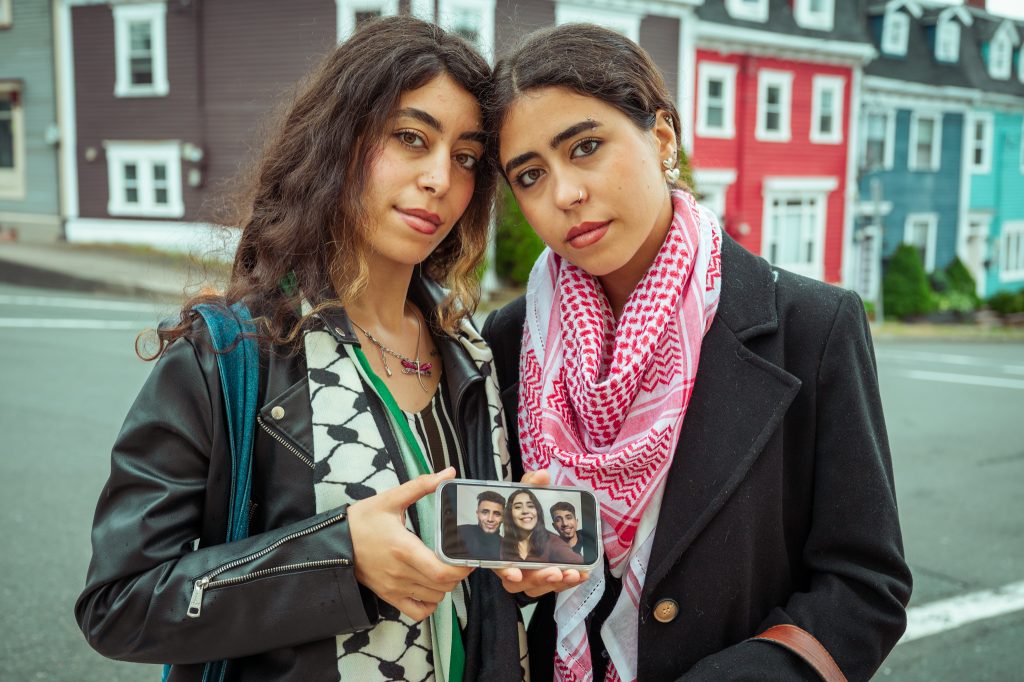
Marilyn and Meran Kasken laugh as they try to remember how old their younger brothers Talal and Fahed are. “Oh, oh, they are old now. I can’t picture that Fahad is 22 and Talal is 21. I can’t,” Marilyn laughs. “In my head, they were younger.”
But the smiles and laughs are short-lived.
Meran, 26, hasn’t seen her brothers since she and Marilyn left Palestine in 2021. Marilyn reunited with Talal and Fahed last February when she briefly travelled to Egypt to facilitate their exit from Gaza.
They sit on a sofa in their friend’s apartment in downtown St. John’s as their friend makes tea. The three of them talk back and forth, laughing frequently. Marilyn and Meran switch back and forth between English and Arabic.
Will you stand with us?
Your support is essential to making journalism like this possible.
Marilyn, 24, takes a deep breath when the conversation shifts to Palestine.
She says talking about the war on Gaza and the bureaucracy around Canada’s temporary resident program for Palestinians frustrates her and she would like her friend, Carmella, to speak when she can’t.
Marilyn and Meran moved to Newfoundland from Turkey in 2023 through the federal Human Rights Defenders program, which provides resettlement for activists who face persecution in their home country.
Now they are fighting to get their brothers to Newfoundland using the only means available to them.
In January 2024, Canada introduced a temporary resident program for Palestinians fleeing the war who have family in Canada.
The Kasken sisters started the visa application the day it was announced but say they’re frustrated by how slow the process has been.
As of mid-July just 177 Palestinians had arrived in Canada under the program — a number many say reveals an anti-Palestinian bias on the federal government’s part, especially when compared to recent efforts to help Ukranians fleeing Russia’s war on Ukraine.
Cap and confusion
The United Nations estimates more than 38,000 Palestinians have been killed, and another 1.9 million displaced, since the outbreak of violence in October 2023. Around 2.2 million people live in Gaza, which occupies an area smaller than the City of St. John’s and is considered one of the world’s most densely-populated regions.
From the outset, activists, immigration lawyers, doctors and Palestinian families have criticised Canada’s response to the war.
The Trudeau government’s temporary resident program came with a 1,000-visa limit, panicking Palestinian families in Canada hoping to get their loved ones to safety.
Pantea Jafari, founder of Jafari Law in Toronto, says no caps were imposed when the Ukraine Authorization for Emergency Travel initiative was announced for Ukrainians under similar circumstances. Since 2022, Canada has welcomed over 290,000 Ukrainians, who could apply to come to Canada whether they had families here or not.
According to Statistics Canada’s 2016 census, Canada is home to nearly 45,000 Palestinians. In May the Canadian Press reported that as of April 1, 7,500 people had submitted statutory declarations for their loved ones fleeing the war — the first step in the process of getting them here. Once a Canadian family member has submitted the declaration, and a personal information form, they receive a code from Immigration, Refugees and Citizenship Canada (IRCC), which is then used to complete the application.
In May, under public pressure, the Liberals increased the visa limit to 5,000.
As of mid-July, the government says, 3,546 completed applications have been submitted through the government portal.
But the process has required much more than submitting documentation, as the Kasken family’s experience shows.
Carmella Gray-Cosgrove, the Kasken sisters’ friend who offered up her home as a space for our interview, is a member of the grassroots group Palestine Action YYT, which has been organising weekly marches and rallies in St. John’s to demand an end to Canada’s complicity in Israel’s violence. Gray-Cosgrove has helped the sisters with the application and describes a sense of panic throughout the process.
“There was a lot of anxiety around having all the right paperwork,” she says. “There was no paperwork released ahead of time, so the lawyers were guessing at what the application would look like.”
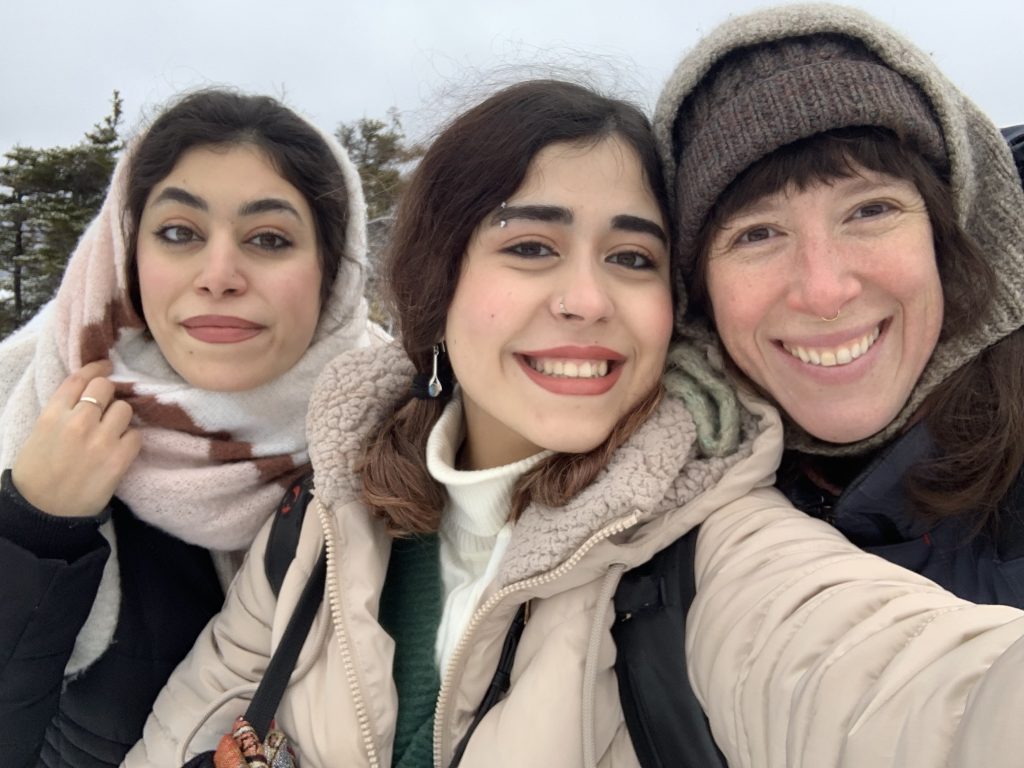
Immigration lawyers were also guessing when the applications would open on January 9. Marwah Law, the Ottawa-based firm working on the Kasken brothers’ application, had lawyers refreshing the government website around the clock to ensure they had the application in before the cap was reached.
Gray-Cosgrove received an email from the law firm at 1 a.m. that day asking for the necessary paperwork. She was in conversation with the firm and the Kasken sisters until 5 a.m., filling the statutory application form – a declaration that the sisters will help settle their brothers in Canada and will be financially responsible for them.
Invasive questions
The government is also coming under fire for its apparent discrimination against Palestinians via the application’s questions. It asks applicants to describe scars on the bodies of their family members, for a complete history of employment since age 16, for the addresses of every place they have lived, and for social media handles.
An IRCC spokesperson told the Independent in an emailed statement that the federal government implemented a multi-step process, including the exhaustive questionnaire, because Canada does not have an office in Palestine and is unable to collect biometric information — fingerprints and photographs — at the application stage.
“The amount and degree of information being requested is beyond unprecedented,” says Jafari, adding it’s “impractical to even come up with for any person, much less ones who are starved due to famine, bombed daily and fearing for their own life.”
Jafari says immigration lawyers are cancelling an unprecedented number of visa applications because the applicants in Palestine are dying before their process can be completed.
“Their clients have died, one after another after another after another, which most lawyers have never experienced in their entire career,” she said.
Marilyn remembers a call she received from her brothers. It was a goodbye, she says. Last November, Talal and Fahed walked roughly two hours from Rafah to Khan Yunis, where they were staying with a friend when Israel began bombing the southern Gaza city.
“We were so scared,” she says. “They read the Al Fatiha [A Quranic verse], which is what people read when they feel that they are about to die. They were saying this is our last night.”

Talal and Fahed lived with their grandparents and relatives when Israel began its bombardment of Gaza in October 2023, following Hamas’ attack that killed more than 1,100 people.
Marilyn says the brothers had to leave the rest of the family in Gaza City and escape to Rafah because no one else was able to walk at the pace necessary to avoid being shot by Israeli soldiers.
“You can’t stop walking,” the brothers told their sisters. “If you stop walking to help somebody, you’ll be murdered. You have to just move very quickly along this road.”
Amid all of this, Talal and Fahed were sending documents for their visa application.
“While they are fleeing and living in a tent and trying to survive bombardments, they’re also expected to be sending headshots for their visa application and photographs of their birth certificate,” Gray-Cosgrove says.
Immigration Refugee Citizenship Canada is making exceptions for some documents, but Jafri says that documents like birth certificates should not be required in such circumstances. “Despite knowing the reasons why someone wouldn’t have access to them, the government persists in asking families to explain why on a case-by-case basis.”
Jafri says the federal government must ensure those entering Canada do not pose a criminal or security risk to Canadians, and that the government has systems in place to screen for those concerns.
“These systems have been relied on for standard and humanitarian streams alike for decades,” Jafri explains. “Other populations with similar security risks—such as the risk of Taliban agents or sympathisers among Afghan applications—were not required to provide such significant information for additional screening.”

Securing safe passage
Canada has been unable to secure Palestinian applicants’ passage from Gaza to Egypt through the Rafah border; those who have made it across have done so on their own. Marilyn had to travel to Egypt and pay $10,000 USD to a private company in Egypt to get her brothers across in February. The fee didn’t cover food or accommodations.
“How could anyone have this amount of money [while] under about five months of bombardment?” Meran asks.
People who couldn’t travel to Rafah were trapped, she says. “So, what … [they] don’t deserve to survive?”
Israel and Egypt closed the Rafah border in May, making it virtually impossible for anyone to cross.
When Marilyn arrived at Hala travel agency’s office in Cairo at 5 a.m. one day in February, she found hundreds of other families camping there, desperately waiting for their loved ones across the border. It was two days before Marilyn could pay the fee, and another couple of days before her brothers arrived in Egypt.
“It was so humiliating to stand there in the street on your feet for hours and hours, seeing how many people are just desperate because they want their family members to survive. They’re not asking for better lives. They’re not asking for good health. They’re just asking for them to be alive,” Marilyn says.
Once in Egypt, Talal and Fahed completed their biometrics on March 3 and attended their final immigration interview on April 4, the sisters explain.
Marilyn and Meran started a GoFundMe page to support their brothers’ travel to Newfoundland. Most of that money has now been spent on the application, Marilyn’s travel to Egypt, and the Rafah border crossing fee.

A different response
After the Kasken sisters filled out the online forms last January about family members in Gaza, they waited for the government to send the code that would allow them to submit the visa application.
By February, they had not received the code. They met with St. John’s South–Mount Pearl MP Seamus O’Regan, then received the codes the following day. They don’t know what role O’Regan might have played in moving the process along, but that was the last time they heard from him.
Since then, Gray-Cosgrove says, they have been in contact with O’Regan’s office because his staff email IRCC weekly for a status check on the Kasken brother’s application. But she says O’Regan has declined in-person invitations to meet. On July 18, O’Regan announced he was stepping down as a cabinet minister and will not run in the next federal election.
Gray-Cosgrove also says provincial politicians can do more, and has started a click-to-email campaign asking O’Regan, federal Immigration Minister Marc Miller, St. John’s East MP Joanne Thompson, and MHA Gerry Byrne, the province’s immigration minister prior to a July 19 cabinet shuffle, to expedite the brothers’ application and ensure their safe arrival.
In 2022 the province set up a Ukranian Support Desk and dedicated government staff to help Ukranians looking to come to Newfoundland and Labrador.
“The pre-meditated and condemnable Russian invasion of Ukraine has brought calamity to the Ukrainian people and distress to the global community,” Byrne said at the time. “Our duty of citizenship calls us to work with our residents who have family and friends in Ukraine to support Ukrainians.”
When Ukranians began arriving by the hundreds on flights coordinated by the province, Byrne greeted them in person at the St. John’s airport.
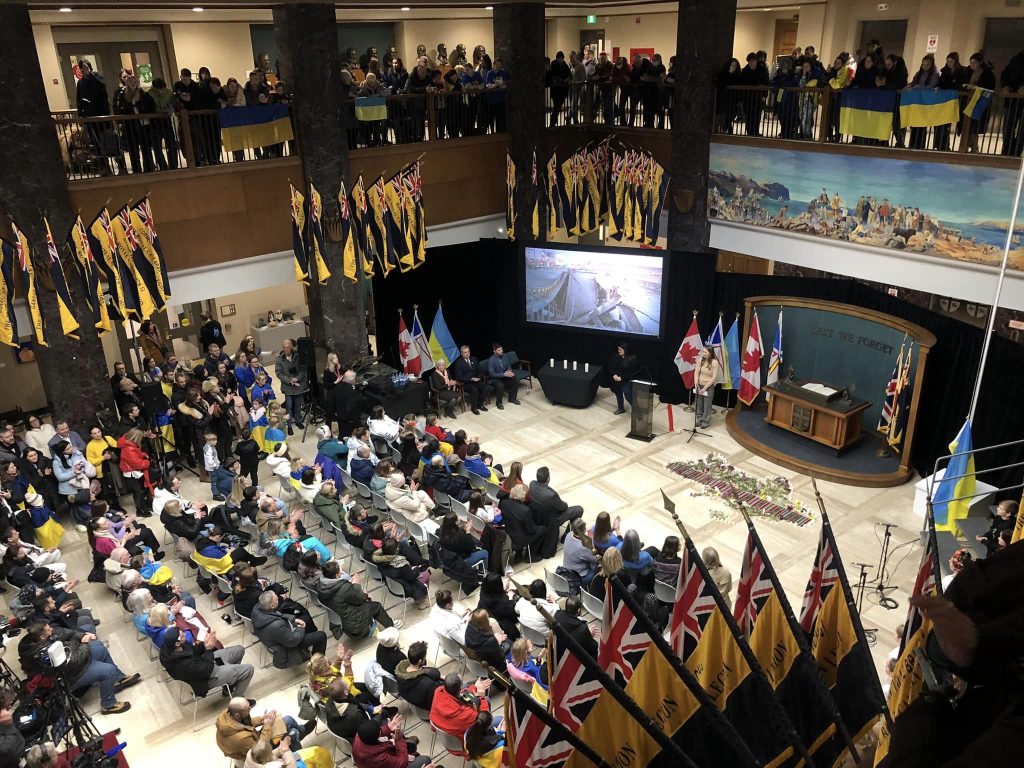
In 2023 Byrne announced $11 million in funding for housing and employment supports to help the nearly 2,800 Ukrainians who had settled in Newfoundland and Labrador.
The province’s department of immigration did not respond to The Independent’s emails asking what the Furey government is doing to facilitate the safe passage of Palestinians fleeing the war, and about the discrepancy between the province’s response to Ukrainians compared to Palestinians.
‘Plausible’ genocide, says international court
On Decermber 29, 2023, South Africa brought a case against Israel’s operations in Gaza to the International Court of Justice (ICJ) — the United Nation’s top court — alleging Israel was commiting genocide against Palestinians.
In January, the ICJ ruled that some of Israel’s actions in Gaza “appear to be capable of falling within the provisions of the [Genocide] Convention.” The Genocide convention is an international treaty that criminilizes genocide and defines what actions could be considered genocidal.
The court ordered Israel to take all measures to prevent individuals, including troops, from commiting acts of genocide, and to punish them.
The court further added that Israel must immediately provide basic services and humanitarian aid to people in the Gaza strip.
Finding community
It’s been almost four months since Talal and Fahed completed their immigration interview.
“There’s no need for this process to take this long,” says Gray-Cosgrove. “It’s an emergency response.”
Meran is frustrated with how the Canadian government has handled the temporary visa program. “How could the government […] leave people stuck in the area with no answers, no financial or health support?”
Marilyn says Talal and Fahed have survived the bombardment and starvation, witnessed death and experienced significant loss; now, they want to start their lives again with their sisters in Canada.
The Kasken sisters say their uncles and cousins were murdered. They believe their father was also killed. The last time anyone saw their father, he had gone to get food at a food truck, which they say Israeli soldiers raided.
“Fahed’s main goal, now, when he arrives in Newfoundland, is to be able to join the soccer team,” Marilyn said.
And Talal wants to buy an Xbox.
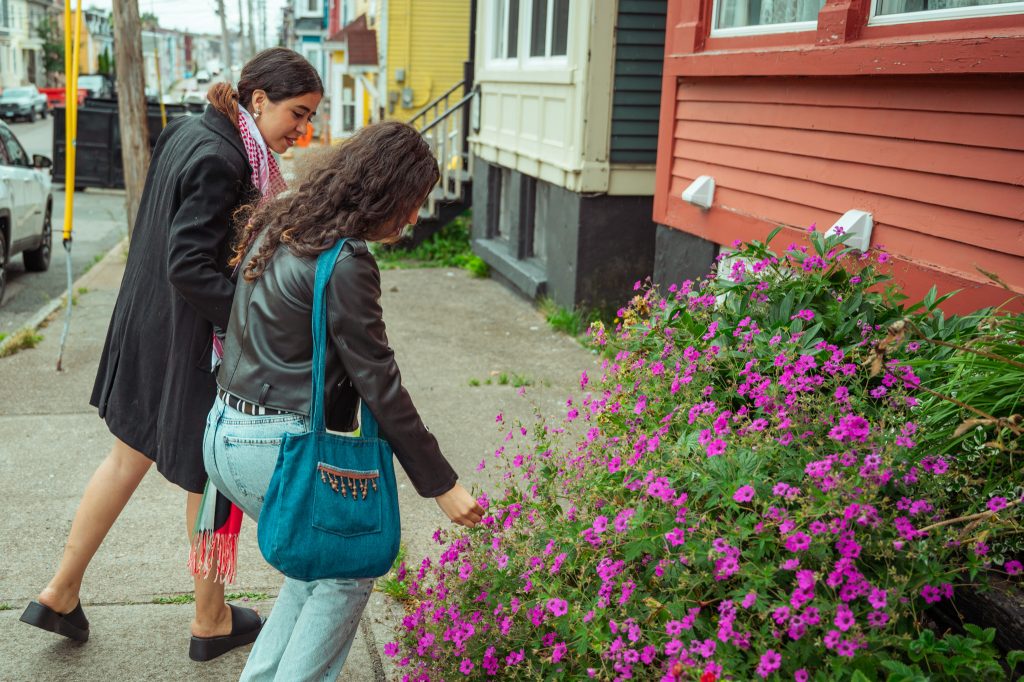
The sisters say the community in St. John’s has been monumentally supportive. From starting the GoFundMe page, to helping with the residency visa applications — community members have helped them through it all.
“I wouldn’t have survived this genocide without having this community around me,” Marilyn says. “They helped me through everything.”
The Independent’s General Assignment Reporter Fellowship was made possible through the financial support of the Canadian Race Relations Foundation’s Media Fellowships Program.


Author

Related Articles
INTERVIEW: Avi Lewis says N.L. is ‘ground zero’ for the biggest challenges facing Canadians
The federal NDP candidate says socialism and economic populism are the antidote to unfettered capitalism and the ‘epic market failures’ it has brought
LISTEN: Justin Brake talks Amber Bracken case & press freedom on CBC Radio’s ‘The Signal’ (with TRANSCRIPT)
An hour-long conversation led by CBC Radio host Adam Walsh, feat. Justin Brake, Geoff Budden, Karyn Pugliese, Brent Jolly and Ethan Cox
Cultural centre in Nunatsiavut is helping Inuit reconnect with culture and language
After winning the Arctic Inspiration Prize in 2024, Inotsiavik is offering Inuit in Labrador outdoor cultural programming, Inuttitut lessons, virtual programs, and more