
Premier says PCs ‘hoping’ to keep climate change targets
Opposition parties press for more information following The Independent’s reporting, say climate emergency demands more than hope
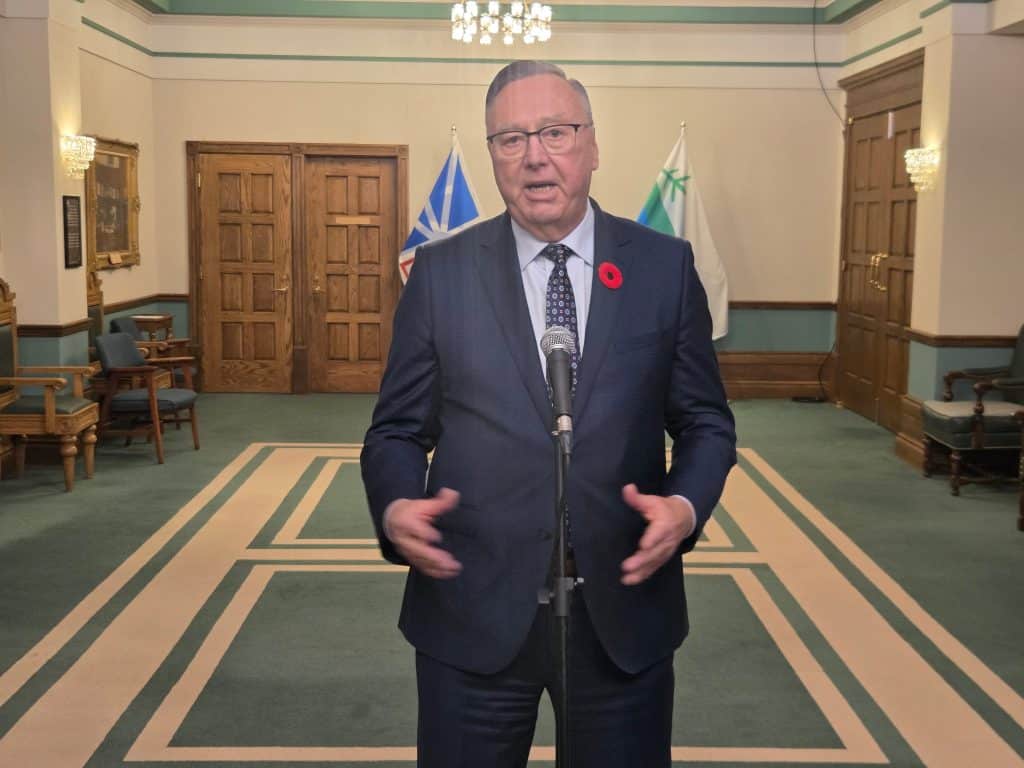
Premier Tony Wakeham says his government is hoping to meet its 2030 climate target, despite internal documents obtained by The Independent which show the province has forecasted it will overshoot its goal by 2 million metric tonnes – or 2 megatonnes (MT) – of greenhouse gas emissions, roughly the equivalent of putting nearly a half-million new gas-burning vehicles on the road for a year.
Speaking to reporters Monday, Wakeham suggested the Muskrat Falls hydro project and a non-binding energy agreement with Quebec and Ottawa could help the province achieve its climate targets. “That’s why we’ve been so adamant about the new deal that we’ve done,” Wakeham said in Torbay during an announcement of cost-of-living relief measures.
The premier then pointed to Muskrat Falls, saying the controversial project that outraged Innu and Inuit in Labrador has led to significant emissions reductions. “I think since 2019 – I can’t remember off the top of my head – there’s been over how many different millions of barrels of oil that’s not being burned anymore,” he said.
Pressed again on whether he is still committed to achieving the province’s 2030 goal of cutting emissions by 30 per cent below 2005 levels, Wakeham said the PCs are “certainly hoping to keep our targets.”
Will you stand with us?
Your support is essential to making journalism like this possible.
On Tuesday Wakeham clarified his prior comment on Muskrat Falls’ impact, saying the project “has saved 40 per cent of oil that used to be burned at Holyrood since 2019.”
Last week The Independent reported that internal government documents from July 2026 reveal the province has forecast it will blow past its 2030 emissions target by 2MT.
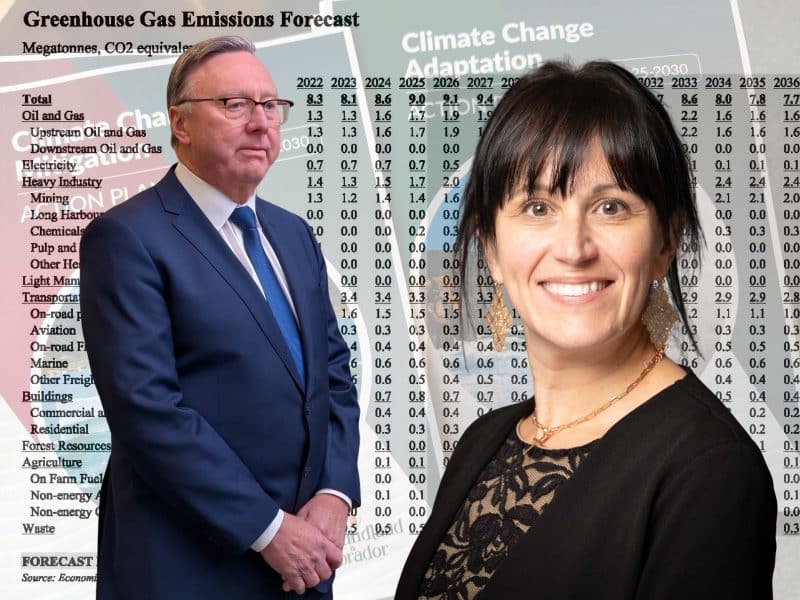
Liberal Environment Critic Michael King said Tuesday Wakeham needs to “move beyond hope and start taking action.”
“Climate change is already being felt across Newfoundland and Labrador, particularly in rural communities that are increasingly dealing with wildfires, hurricanes, coastal erosion and extreme weather events,” the Burgeo–La Poile MHA said in a written statement. “These communities need a government that is prepared to act, not one that is just ‘hoping’ for the best.”
Last week Environment Minister Andrea Barbour announced the government is launching stakeholder engagement efforts toward developing a new five-year climate plan.
NDP Environment Critic Sheilagh O’Leary, who was “shocked and disgusted” by last week’s revelations, wants more details on the government’s plan. “I’m a very optimistic person and I always want to have hope for the future,” she said Tuesday. “But something as serious as climate action cannot be based on hope alone.”
O’Leary is planning to press the PCs on the issue this week in the House of Assembly, but she may have to do it in the absence of Barbour, who did not make herself available to reporters Monday and was “granted permission,” Wakeham said, to not attend the House of Assembly Tuesday.
Wakeham told reporters Tuesday that Barbour is looking at the province’s emission targets, “to see how we go forward with them.”
During the 2025 election campaign, Wakeham said a PC government would abandon the Liberals’ climate plan in favour of one, according to the party’s platform, “with clear and achievable emission reduction targets, by sector.”
“Premier Wakeham is the leader of this province,” O’Leary said Tuesday. “And if he and his government were truly serious about addressing climate change and its impact on communities across Newfoundland and Labrador, they wouldn’t just hope for change – they would take concrete action.”

Authors


Related Articles

May Day Rally Shows New Face of Today’s Labour Movement
Turnout for May 1 march and rally in St. John’s one of the biggest yet in this province

Recimply the Best: Pitch and Pick Competition Winner Aims to Reduce Paper Waste
Recimply won big at Genesis’ annual Pitch and Pick competition last week. The startup is solving the problem of non-recyclable paper receipts.

Coming Home Queer for the Very First Time
For three days in July, queer Newfoundlanders and Labradorians from all over the world celebrated a rural homecoming 30 years in the making.
Residents, supporters protest impending closure of St. John’s transitional housing facility
Housing Minister Chris Tibbs ‘confident’ remaining Horizons at 106 residents will be relocated, but advocates say move could devastate progress made – and with no long-term plan

Canada Pension Plan Investment managers criticised in St. John’s for investing in fossil fuel companies and those with ties to Israel
Board member says fossil fuel investments total $28-billion, and that no Israel-linked investments amount to complicity in genocide

Liberal MP suggests Carney government may be investigating N.L. offshore acquisition
NDP pushes for federal intervention in acquisitions tied to Israel’s occupation of Palestine, while PCs, Liberals silent on Ithaca Energy’s takeover of Suncor’s stakes in Terra Nova, White Rose and West White Rose oil projects