
The Ties that Bind
Despite no significant increase in their numbers since the turn of the century, fisherwomen in Newfoundland and Labrador continue to build a strong community.
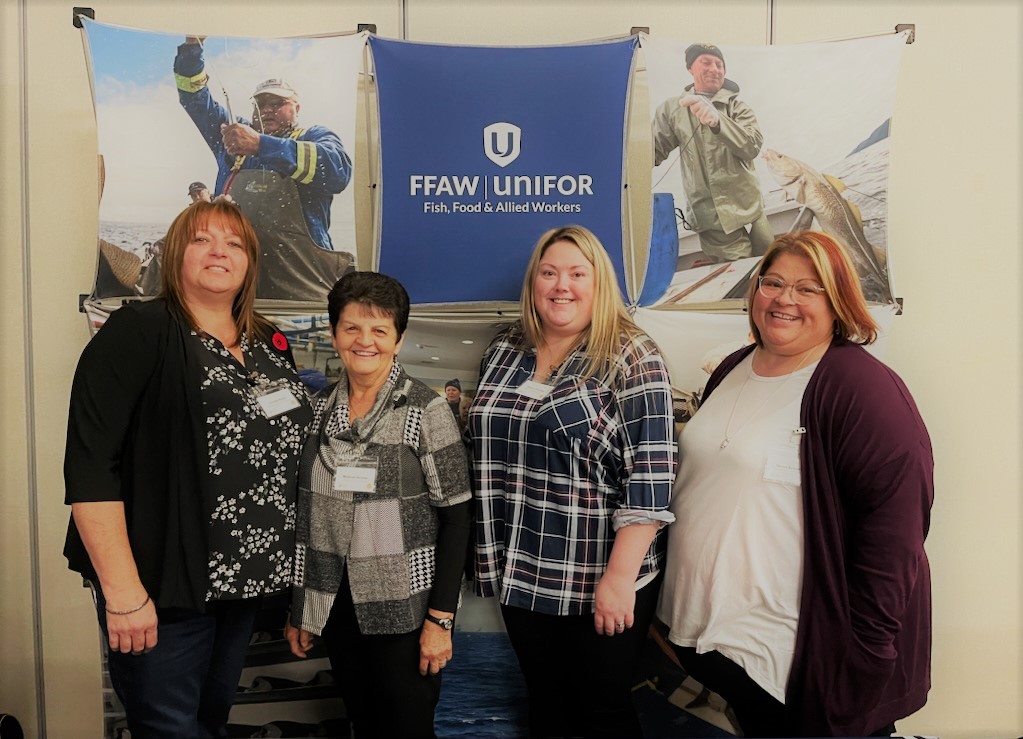
Nancy Bowers’ mother fished in the 1980s when it was uncommon for women to be out in boat. Since then, Bowers says, the fishing industry has come a long way. “[If] my mom was alive today and saw all these women that’s actually fishing, she would be mind-boggled.”
Bowers herself is one of these women.
But while there has been an increase in women fishing since her mother’s time, the number of women working in the industry hasn’t significantly increased in the past two decades. Since the early 2000s, the number of women fishers has remained more or less around 20 per cent.
Fisherwomen might be few in number, but they have a strong community. Bowers says what started as a couple of women wanting to stay connected became a group of over 100 fishers. They meet virtually once a month and once in person after the fishing season.
Will you stand with us?
Your support is essential to making journalism like this possible.
“[It’s] a time for us to calm down and talk to people that have the same interest,” she says.
That interest is fishing.
Women as Processors
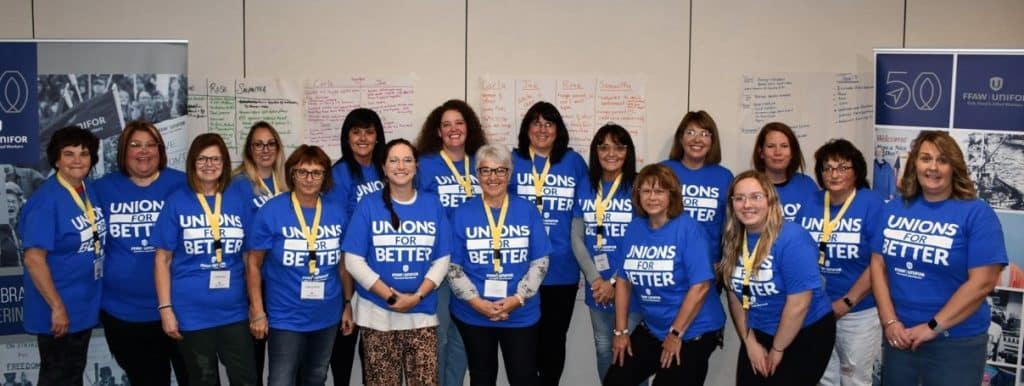
In the 1960s women predominantly worked in seafood processing plants where they represented up to 60 per cent of plant workers. However, that number declined over the years. According to a study by Memorial University researchers Barbara Neis and Charles Mather, by 2018 the number of men working in plants surpassed the number of women.
The study, which focused on recruitment and retention of women in the seafood industry, found that the demographic of women workers was aging. The study also found that fish processing plants are unable to retain young workers because they are moving on for better opportunities.
Neis, a professor of sociology at Memorial University, says women also tend to be concentrated in the types of jobs that make them vulnerable to shorter seasons, lower incomes, and greater safety and health risks compared to men working in the plants.
“When you have a gender division of labour with men doing certain kinds of jobs and women doing other kinds of jobs then you can end up with different types of patterns of injuries and illness,” Neis tells The Independent.
Shellfish processing, for example, is linked to health and safety risks like occupational asthma. Women are more likely to contract illnesses because they tend to be assigned to primary processing jobs like boiling shellfish which exposes them to allergens. Men, meanwhile, are more likely to be assigned to mechanical work like fork-lifting, loading, and maintenance, Neis explains.
The gender division could stem from several factors, according to Neis, including the traditional division of jobs, which then gets reinforced by habit and seniority, as people tend to come back into the same jobs they’ve previously performed.
She adds that women are also more likely to sustain micro-skeleton injuries due to repetitive work, lack of mobility, and constrained postures.
Neis and Mather also found that men in the industry received higher wages than women, regardless of whether they worked part time or full time.
Neis notes that the work season for women can be shorter because they mostly work when there is fish flowing into the plants, while men are often hired for positions that continue long after, including building and equipment maintenance, and the transfer of products.
“The seasons have gotten very concentrated, partly because of plant specialization and actually [women’s] eligibility for EI seems to be declining as is their share of employment,” she says.
Neis and Mather found that by 2021, the number of women claiming EI benefits has declined by almost 55 per cent. Men claiming EI benefits, meanwhile, has declined by only 38 per cent.
Women as Harvesters
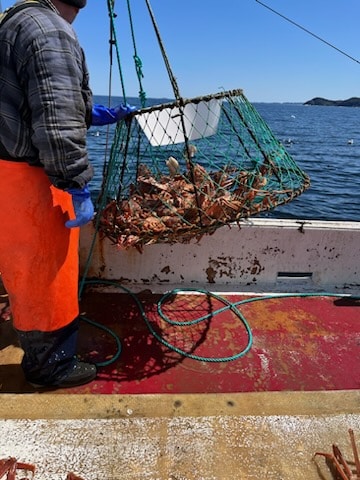
The closure of the cod fishery in 1992 and declining fish stocks have resulted in government policies that have made it harder for women and young fishers to transition into ownership roles, says Maria Andre Lopez Gomez, a postdoctoral research fellow at the Ocean Frontier Institute.
Following the cod moratorium, constraints were introduced on fishing licenses to downsize the industry and limit fishers whose main income was not from fishing, says Gomez.
A government policy put into place after the cod moratorium divided fishing licenses into two groups: core and non-core. Fisheries and Oceans Canada defines a core fisher as someone who is head of an enterprise, holds key licences (a vessel based license), has an attachment to the fishery and are dependent on the fishery. Core licenses can be transferred or sold to other fisheries, non-core have to be returned.
The aim was to remove people who were not dependent on the fisheries. Gomez says this policy discourages newcomers who want to try working part time first. “Part-time licenses are known to help people stay afloat in the fishing industry when they’re starting to work in the fishery and if they [decide they] like it they move on to full time,” she says.
But over the years, the cost of quota, boats, and licensing have made it difficult for crew members to transition from apprenticeship to the next levels.
There are three categories of certification with the province’s certification board: Apprenticeship, Level I, and Level II. Neis says women have been largely clustered in the apprenticeship category.
Gomez co-authored a study focusing on women’s experiences in 2019 with regards to recruitment, training, and retention in small-scale fisheries in Newfoundland and Labrador. The study found that women continue to be underrepresented in the fish harvesting sector. Small-scale fisheries are traditional fisheries involving family members and local communities, as opposed to commercial fishing companies.
Gomez surveyed 330 people working as fishers. Of those, 161 were fish enterprise owners, but just nine were women. Out of 168 crew members, 35 were women. In total only 13 per cent of survey respondents were women.
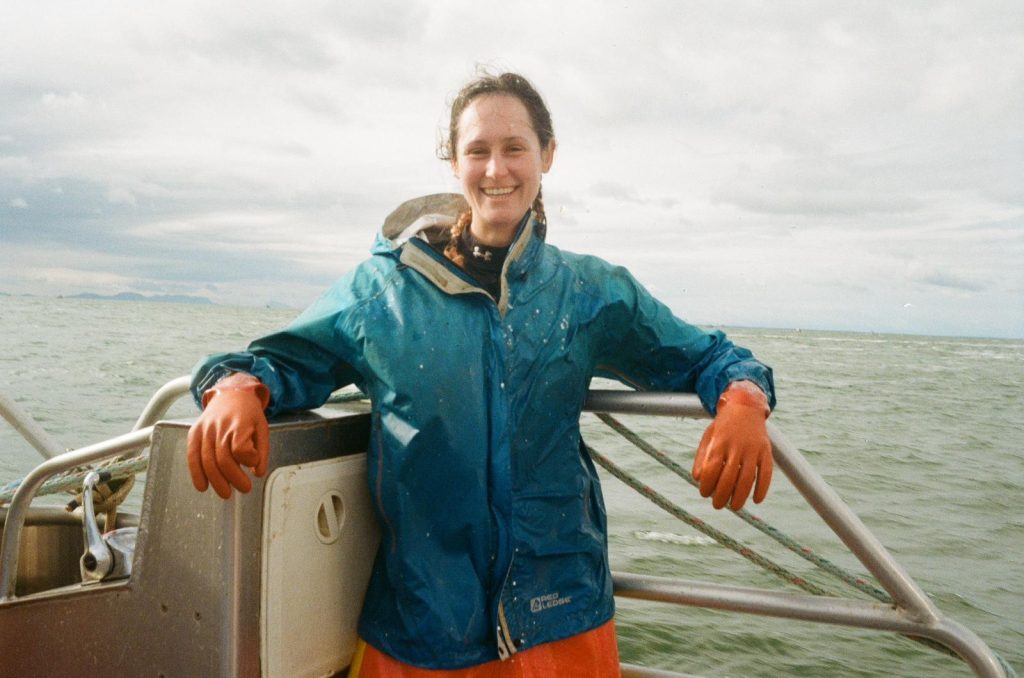
Lillian Saul fished in Alaska before moving to Newfoundland. She says she was surprised by how few women fish in the province. “In Alaska there’s tons of women, not only just on boats but also running boats and a lot of different types of fisheries.”
Initially, when Saul told older fishermen she was a full-time deckhand, they didn’t believe her. “[It’s] definitely challenging to break into an industry when people literally don’t expect anything of you and they’re shocked when they bring you on their boat and you do a good job,” she says. Once she proved herself, Saul says the skippers were supportive and taught her other aspects of working on a boat.
Women respondents also mentioned feeling discriminated against by the Fish, Food and Allied Workers Union and Professional Harvesters Certification Board, says Gomez. Alleged comments from members of the FFAW and the Board included, “Ok I’ll talk to your father,” and “No you cannot fish but your husband can.” These allegations have not been verified by the Union or the Board.
Gomez adds that conversations with interviewees and respondents revealed that children who are boys were more likely to receive their parents’ fishing enterprise.
Although around 20 per cent of women are certified fish harvesters, Gomez says 40 per cent of her male respondents said that at least one woman is on board when they go fishing. Gomez says this means the number of women participating in the fishing industry could be higher.
A Labour Market report by the Canadian Council of Professional Fish Harvesters found that in some regions in Canada women often joined their husbands as crew to improve family income.
Nancy Bowers agrees that the number of women fishing is higher than reported, because not all women apply for certification. Instead, many opt to work with their husbands. “There are a lot of us that are teams, like what me and my husband are,” she says.
Bowers says that while she wants to get a license, she does not see the need.
‘I wouldn’t be here if it wasn’t for the fishery’

Everyday Bowers wakes up at 3 a.m., swallows her medication for sea sickness and then goes about doing what she loves most: fishing.
She says that this has been her routine for 25 years. But she didn’t always love fishing. In fact, as a child, she shied away from telling people about her parents’ profession.
“I was embarrassed to tell people I was brought up in a fisherman’s home, because back in the early 1980s telling people your dad fished was like telling people you’re on welfare.”
But today, Bowers says she cannot imagine doing anything else. “I wouldn’t be here if it wasn’t for the fishery.”

Author

Related Articles
St. John’s teen says community, activism helped her find her voice
13-year-old Nyala Adam was inspired by a local summer camp focused on social justice and cultural inclusion

PC’s minimum wage increase ‘far from a living wage,’ says NDP leader
NDP Leader Jim Dinn is calling on the PCs to legislate wage increases

Changing Trails: Nunatsiavummiut losing traditional routes as climate change wreaks havoc in Labrador
Open brooks and thin ice are putting Inuit lives at risk