
Workers deserve allyship, not lip service
On Labour Day 2026, some tips for Labour Minister Lloyd Parrott
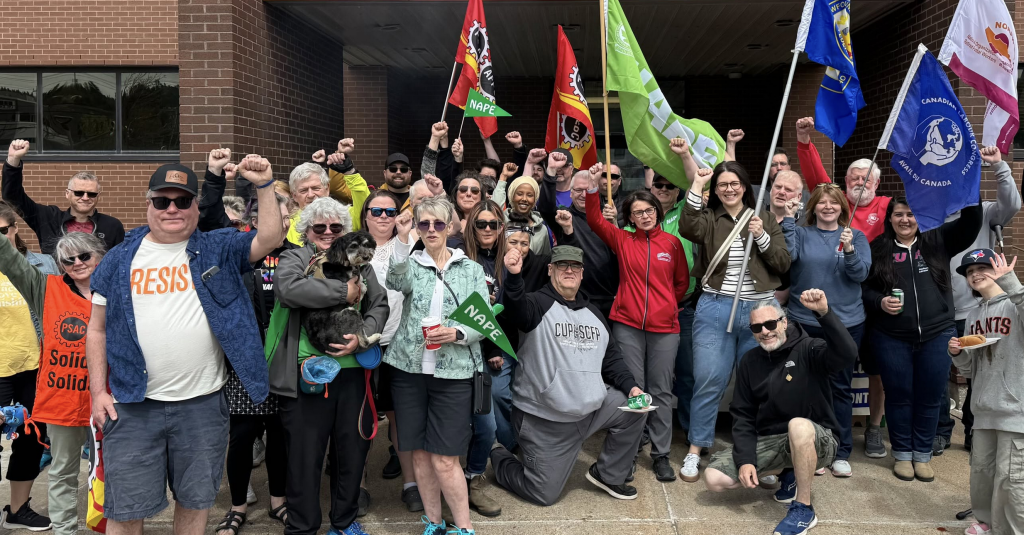
Newfoundland and Labrador has a strong, unique history of working class struggle, labour organizing, and hard-fought victories for workers’ rights — making Labour Day an obvious and opportune occasion for political leaders to express solidarity with the province’s roughly 250,000 workers and their families.
In his first Labour Day statement as Minister of Labour, Terra Nova MHA Lloyd Parrott missed that opportunity.
“Labour Day is an opportunity to celebrate the people whose hard work helps move Newfoundland and Labrador forward every day. Across every profession, every industry and in every region, workers continue to demonstrate the compassion, skill, resilience and determination that define our province,” Parrot said in a government news release issued at 3 p.m. on the Friday before the long weekend.
“The success of these opportunities will depend on the talent and dedication of our workforce, and today we recognize and thank workers for the important role they play in building a stronger and more prosperous Newfoundland and Labrador.”
Will you stand with us?
Your support is essential to making journalism like this possible.
That’s it, that’s all. No mention of the province’s unique history of working class struggle and labour unionism. No reference to the thousands of workers who struggle to put food on the table or save for their children’s post-secondary education because government refuses to close the gap between the minimum wage and a living wage. And literally no allusion to any of the issues standing in the way of a liberated and healthy Newfoundland and Labrador workforce – the kind that would truly be capable of building a strong and prosperous province.
Solidarity requires more than lip service. At the very least, it demands an acknowledgement of the ways government has eroded workers’ rights and a commitment to realigning policies, regulations and legislation with those rights.
If the PCs sided with workers over the billionaires and the corporate class, they would lay out their roadmap for improving the lives of this province’s roughly quarter-million workers and their families.
No-brainers: card-check certification and anti-scab legislation
Workers are exploited when they give more than they’re paid for, be that physical labour, emotional labour, or both. Or when they are made to work in unsafe conditions, often because safe working spaces cost employers more to maintain than precarious ones.
As individuals, workers have little-to-no power against those who sign their paychecks. But when workers unite and unionize, they build greater collective power. Unions negotiate things like salaries, working hours and conditions, overtime pay, vacation and sick leave, health and dental benefits, and more. Collective bargaining is so fundamental to workers’ rights that the right to join a union is enshrined in Canada’s Charter of Rights and Freedoms.
Of course, this doesn’t mean employers don’t try to interfere with union drives. When managers or employers learn workers are attempting to unionize, they often attempt to deter or outright quash those efforts. In cases involving large companies like Amazon or Walmart, they may even shut down an entire location rather than risk a successful union drive.
In Newfoundland and Labrador, workers’ ability to unionize was dealt a blow when the PCs abolished card-check certification in 2014.
Successive Progressive Conservative and Liberal governments have sided with the business and corporate lobby when it comes to wages, opting to limit minimum wage increases when those wages are far from what workers and families need to provide a decent quality of life – i.e. a living wage.
When collective bargaining falls apart and unions are unable to help workers meaningfully move the needle toward fair working conditions, Canada’s constitution also protects workers’ right to strike – though that right is presently under attack by the Mark Carney government.
When workers do strike, however, it’s imperative that governments protect workers by outlawing scab labour. Without anti-scab legislation, which the provincial NDP and organized labour in this province have been calling for for years, workers’ right to strike is rendered meaningless. British Columbia, Quebec and Manitoba all have anti-scab laws on the books. As of 2025, so too does the federal government. Introducing anti-scab legislation in Newfoundland and Labrador is a no-brainer for any government that wants to be at least partly perceived as one which cares for its workers.
Indeed, card-check certification and anti-scab legislation are two of the Newfoundland and Labrador Federation of Labour’s priorities when it comes to the plethora of ways government can help workers and working-class families in our province.
Today, on Labour Day, Minister Parrott could have taken a more honest and humble approach in speaking to the province’s working class.
He could have told the roughly quarter-million workers here that he has their backs, that he will help halt efforts by the business and corporate lobby to undermine their collective strength and power, and that he will represent their interests when dealing with the billionaires and corporate interests seeking to extract resources and wealth from our lands, waters and people.
The Wakeham government has talked tough when it comes to negotiating a fair Churchill Falls deal with Quebec and reinvigorating other sectors.
What the PCs have failed to admit, however, is that no amount of resource development, and no size of investment in any sector of the economy, will be fair to the average Newfoundlander and Labradorian until the policies, laws and regulations are in place to protect workers.
As Parrott said himself, “the success of these opportunities will depend on the talent and dedication of our workforce.”
And what will the talent and dedication of our workforce depend on?
A government that has its workers’ backs.

Author

Related Articles
The PC’s subtle Throne Speech caveat
Wakeham government quietly places an asterisk next to its promise, ‘For all of us’


Thank you Air Canada flight attendants
Why the CUPE-led flight attendants’ strike and labour victory is a win for us all