
Portugal’s energy poverty paradox
Like Portugal, Newfoundland and Labrador has more renewable energy than residents need, but unacceptably high levels of energy poverty.
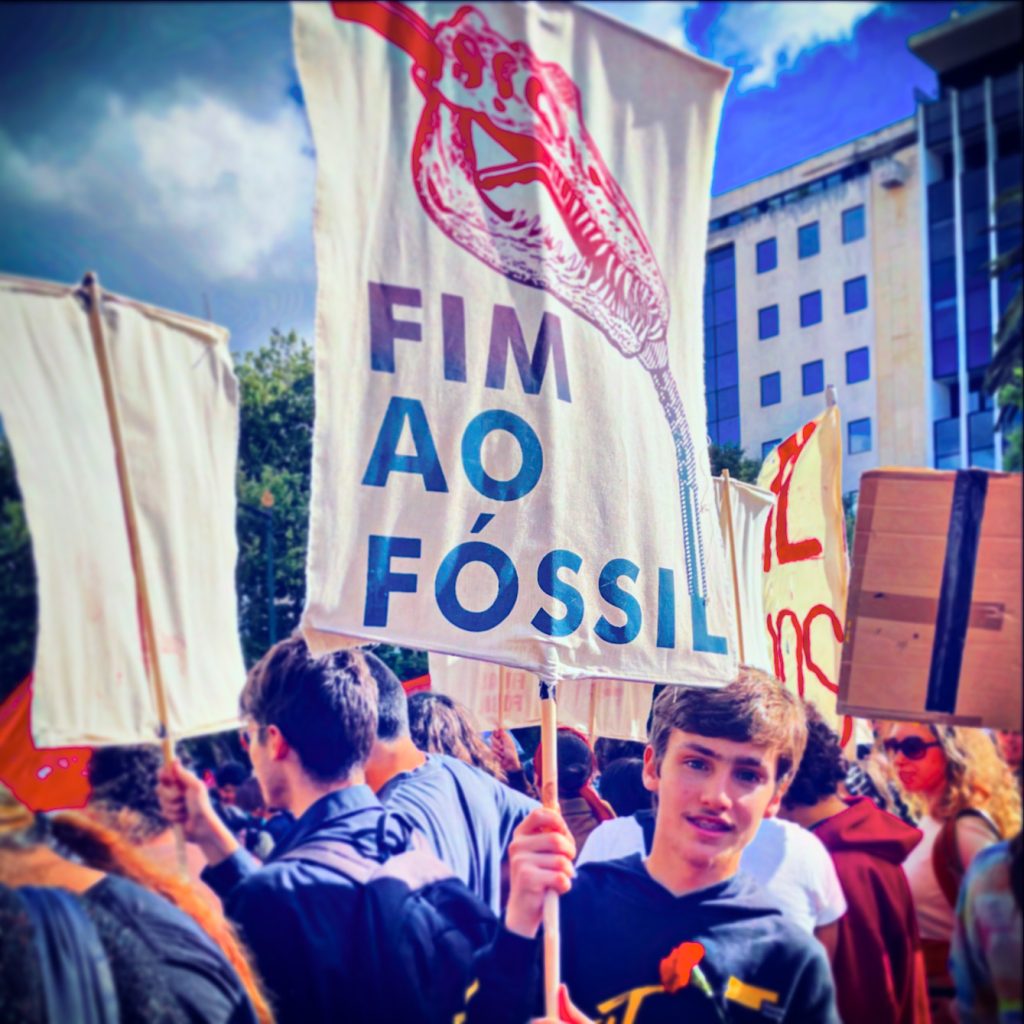
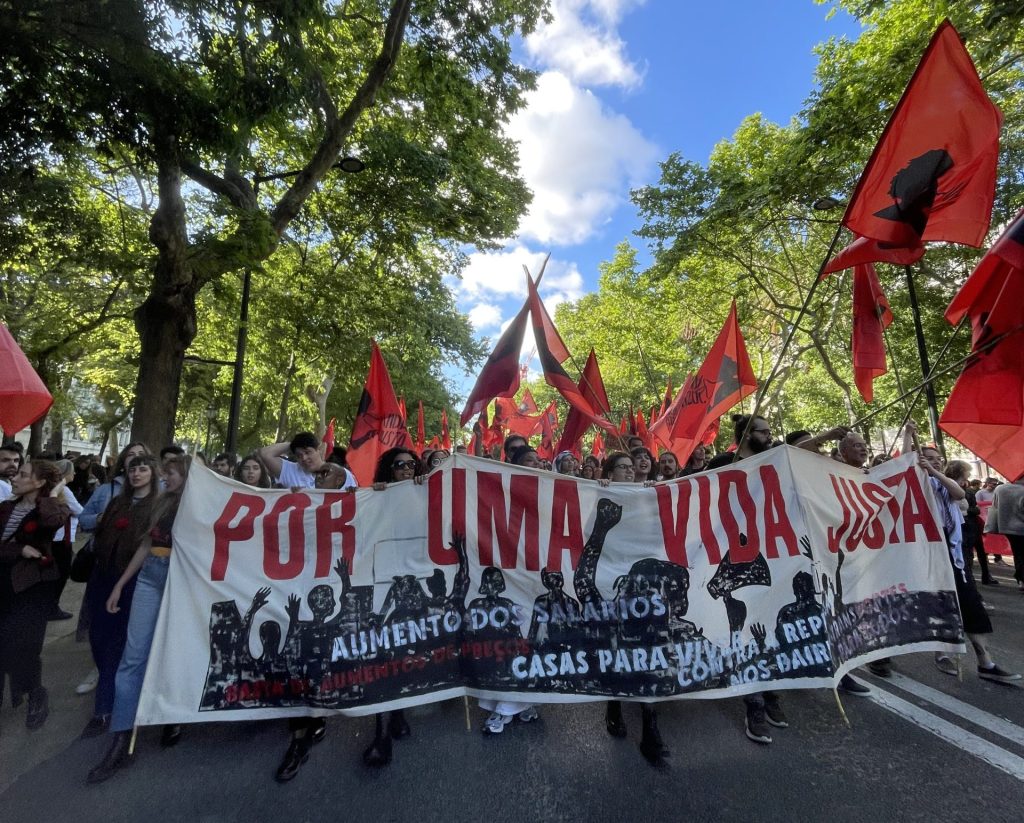
On a gloriously sunny day last month, I marched down Lisbon’s Avenida de Liberdade to the rumble of Brazilian drums, freedom songs, and anti-Fascist slogans alongside citizens, political parties, unions, environmental groups, journalists, students, children, and veterans of the Carnation Revolution. We paraded past luxury boutiques and five-star hotels to celebrate the 50th anniversary of Portuguese democracy.
Marchers with red carnations in their hands, hats, or buttonholes greeted each other warmly and walked arm in arm. There was a down-to-earth, homemade quality to the festivities: hand-painted t-shirts and banners, DIY placards, kids hanging out the back of an old ambulance, hundreds of people singing as seniors ate ice cream on the sidelines. It was impossible not to be swept up in the euphoria.
On April 25, 1974, a small group of Portuguese military officers overthrew Europe’s longest-running dictatorship. The fascist regime founded by Antonio Salazar had ruled the country for over four decades. The largely bloodless coup was called the Carnation Revolution because the officers were spontaneously joined by citizens who placed the flowers in the barrels of their guns. This was the beginning of Portugal’s democratic and colonial transformation.
Will you stand with us?
Your support is essential to making journalism like this possible.
Portugal’s renewable energy revolution
I’m here to study the country’s more recent revolution – its energy transition. Accompanied by colleagues from 20 European universities as part of Empowered Futures, here to meet citizens taking control of their personal and community energy needs and to research how this country has decarbonized its energy system so swiftly.
Portugal’s energy system imported over 85 per cent of its energy, until recently. Now, the privatized grid runs largely on renewables, and there’s often a surplus to sell to neighbouring countries like France and Spain. Although they’re not entirely free of oil and gas; the Portuguese transportation system has yet to be decarbonized and gas-generated electricity still provides some energy. But coal-fired generators have been completely phased out and the rest of the country’s power is provided by renewables such as wind, solar and (pumped) hydro. Last November, the Portuguese grid ran solely on renewables for six consecutive days. That may not sound like a big deal, but for Jorge Esteves from the country’s energy regulator ERSE, those six days represent a proof-of-concept that the country is well on its way to its 2050 net-zero goal.
Portugal has transformed its energy future by not putting all its eggs in one basket; instead it has developed a flexible and diverse mix of renewables. On cloudy days, more energy comes from (pumped) hydro and wind, while on sunny days the grid draws more energy from solar farms. The week I was in Lisbon, a KWh cost less than zero Euros. Here on the island portion of Newfoundland and Labrador, a KWh is 14.3 cents (including the customer charge) for domestic electricity. A KWh is a measure of energy use per hour; one KWh can power your fridge for 18 hours or your laptop for 20 hours.

Energy poverty
More than 30 per cent of Newfoundland and Labrador residents live in energy poverty. Although the Portuguese energy system is at a different scale than ours—they have a population of 10 million, while we have just over half a million—they have a similar percentage of energy-poor citizens, at 29 per cent.
Energy poverty refers to individuals who spend a disproportionate amount of their income on home energy costs and still do not feel ‘thermal comfort’ in their homes; whether it’s warm enough in the winter or cool enough during hotter months. In Portugal, energy poverty is exacerbated by poor insulation, single-pane windows and old housing.
We visited a neighbourhood where residents are addressing the issue by joining forces to share the cost of community solar projects.
Telheiras: A renewable energy community
Telheiras was once an olive farm on the edge of Lisbon. Now it’s a high-density urban neighbourhood within earshot of the Alvalde football stadium where Cristiano Ronaldo played before joining Manchester United. A population of just under 50,000 people live here in a mix of condos and medium-sized apartment buildings. There are parks, bike lanes, buses, a metro stop, a recreation centre, a church, a couple of schools, and a great community vibe.
We started our tour in the community garden where we met Antonio, a retiree who helped transform a dumping ground for gravel and debris from the stadium’s construction into a vital neighbourhood allotment. The day we visited, there were nasturtiums and carnations in bloom, and lettuce, cabbage, kale, and broccoli ready to be harvested.
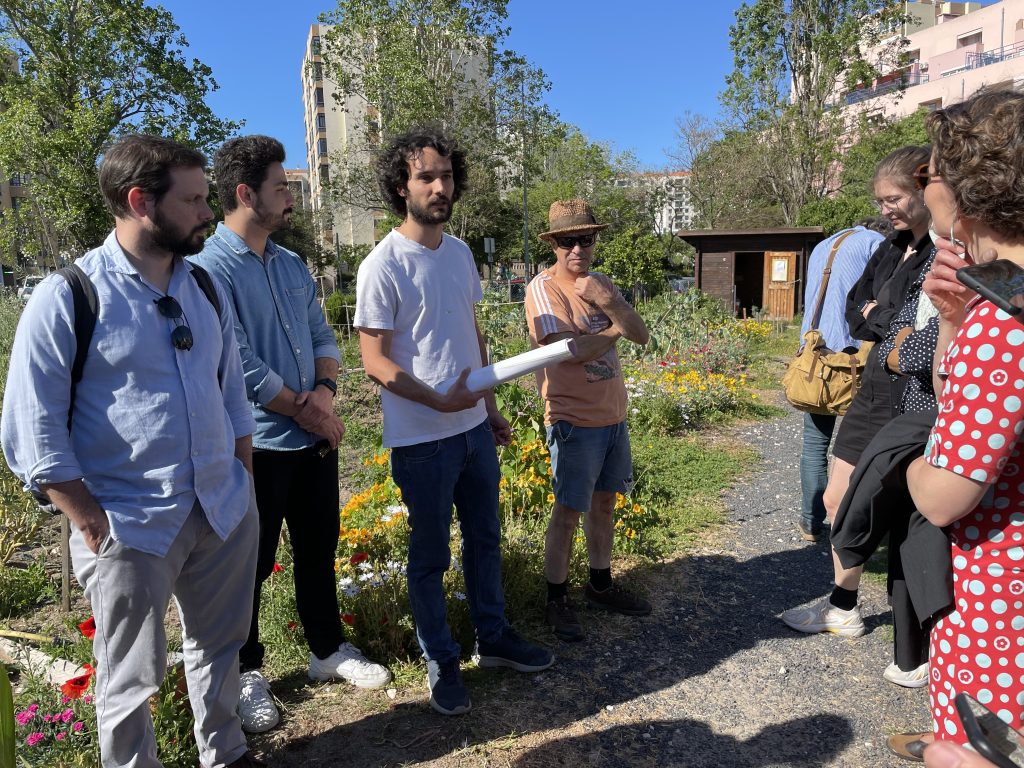
Our tour guide, environmental engineer and proud Telheiras resident Miguel Sequeira, said saving this city block from development so it could become a garden and gathering place for the community was the start of a new future for Telheiras. All the neighbourhood community groups now support each other under an umbrella organization and there is an annual fair where neighbours meet and discuss new projects. We left the garden and walked under a flowering pergola to the modest community centre — the site of Telheiras’ first energy pilot project.
In 2021, 16 families purchased a PV system and formed an energy community. What started as a fairly simple project to alleviate energy poverty and encourage energy citizenship encountered its fair share of red tape around licensing.
“Licensing an energy community is still a lengthy and complex process in Portugal,” Sequeira says, explaining the national licensing authority can take months or even years to license even small energy community projects. “It was six months in the Telheiras case just for the initial approval, due to lack of resources and bureaucracy. As we are using a public building, it was also necessary to interact with city planning authorities.”
But after five months of waiting, it was concluded that it was not necessary to license the installation with the authority, and that five days notice would suffice,” Sequeira explains. “As this is a pioneer project in Lisbon, I hope that the procedures are now clear for everyone that wants to follow our footsteps.”
With the license now in place, Miguel and his team are planning to install the PV panels on the community centre’s roof in the coming weeks. The project will share free solar energy equally among all members, but due to current Portuguese legislation, the community centre must use the energy first; and the families will share the surplus.
PVs convert thermal energy into electricity and work even when it’s cloudy. The Community Centre’s PV (solar photovoltaic) system is relatively small, taking up only 50 square meters on the roof with a maximum capacity of 7 kWp. Sequeira estimates their investment will be paid back in about three years. The project does not use solar batteries to store excess energy; instead the panels are connected to smart meters. When it is warm, the meters direct free energy from the PV panels to the community centre and onto members’ homes, overriding their regular electricity source.
Portuguese law is evolving to accommodate these citizen-led projects but states that members of renewable energy communities must live within a two-kilometre radius of the PV system. Once the first project is up and running, they plan to install additional PV systems on a municipality building, a primary school, and a large community gymnasium.
“Engaging citizens in the energy transition is crucial for two key reasons,” Sequeira explains. “First, because it is needed if the transition is going to be complete and rapid, we need people and businesses to adopt clean technologies and practices. Second, as a matter of justice, the transition should address existing inequalities, such as energy poverty, and better share the benefits of the future energy system. This is also fundamental for the social acceptance of this transformation.”
Coopernico: A renewable energy co-op
The Telheiras project is also supported by the renewable energy co-operative Coopernico. Started in 2013 by 15 friends, it currently has over 5,500 members and a two million Euro fund investment. Co-founder Ana Rita Antunes says Coopernico co-owns renewable energy plants, has collectively created an electricity retailer, and supports local energy communities, such as the one in Telheiras. They are the only non-profit electricity supplier in the Portuguese market.
Antunes estimates that by 2050, citizen-led initiatives will provide half of all renewable energy in Europe.
If there’s one thing Portugal has in droves, it’s warmth and sunlight — just ask the snowbirds from Newfoundland and Labrador. But what other infrastructural, social, financial, and institutional elements had to be in place for this rapid transformation to take hold?
Siddharth Sareen, co-founder of Empowered Futures and author of The Sun Also Rises in Portugal: Ambitions of Just Solar Energy Transition, describes in detail the—sometimes bumpy political, social, and legal—road to Portugal’s solar revolution.
“During 2017-2023, as Portugal raised its solar ambitions, numerous changes accompanied the shifting stakes for rapid sectoral revolution,” he explains. “These ranged from portfolio mergers in government ministries, to new ministries altogether, and the insertion of energy poverty alleviation into the national policy agenda. Market-based instruments in the form of solar reverse e-auctions helped facilitate access to capital for solar developers and drive foreign investment to usher in subsidy-free solar parks at world-record low tariffs. Questions of scales of solar deployment, land use, valuation of nature, and transmission infrastructure development gained urgency.”

“Portugal exited coal in 2021, and is likely to complete a smart electric meter rollout to households in 2024,” Sareen continues. “This makes valuation of the electricity distribution grid an important concern for energy flexibility in a smart network with a large percentage of renewable energy in the electricity mix. In 2023, solar targets were revised upwards to 20.4 GW installed capacity by 2030, eightfold growth within seven years.”
The research trip to Lisbon changed my thinking about energy: it’s not something that belongs to the government, NL Hydro or Hydro Quebec. Energy belongs to all of us.
The experience also raised a lot of questions. In 2022, 91 per cent of Newfoundland and Labrador’s energy came from renewable hydro. Why does a third of our population live in energy poverty when we have so much renewable energy? Why are towns struggling to pay heat and light for recreation centres, rinks, churches, and community centres when there might be a better way? If not a solar co-operative, why not a geo-thermal one? Why do we continue to subsidize and develop fossil fuel projects when the rest of the world is moving on? Are we missing out on developing a workforce of energy workers and engineers with future-proof, renewable energy skills?
There are already a dozen citizen-led energy initiatives across Canada. If you’d like to learn more about them and the work they do, the Community Energy Cooperative Canada (CECC) is meeting online on June 7.
Angela Antle is a writer and MUN PhD candidate, a member of the City of St. John’s Environment & Sustainability committee & NMBU’s Empowered Futures.

Author

Related Articles

What Québec’s provincial election could mean for the Churchill Falls deal
With the separatist Parti Québécois leading in the polls and 29 per cent of Quebecers undecided on who to vote for, anything could happen on Oct. 5, and beyond
Hydrogen Hype?
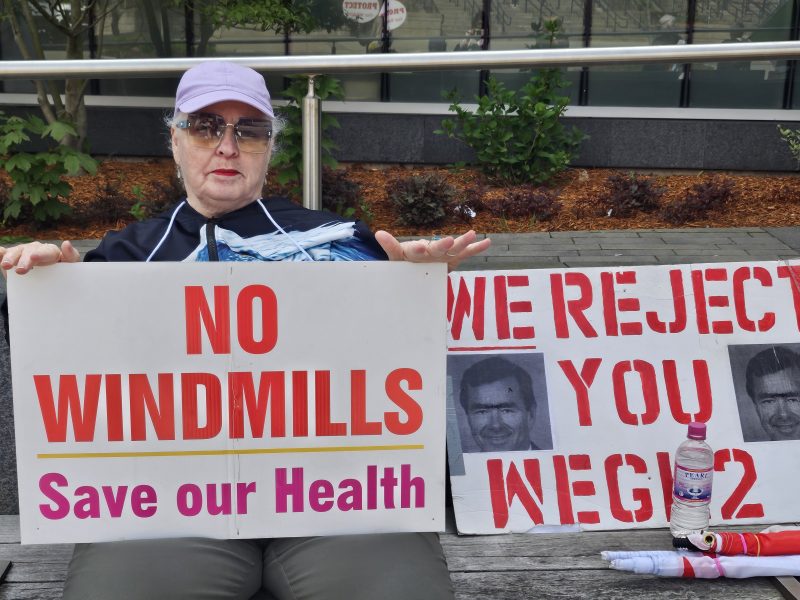
It seems the wind has been taken out of the sails of Newfoundland and Labrador’s wind-to-hydrogen hype. So what does this mean for the province’s renewable energy transition?
Canada must reverse refugee healthcare funding cuts
The cuts are likely to reduce medication adherence, increase hospitalizations, and download healthcare costs to the province