
Introducing ‘Making Connections’
Welcome to The Independent’s new series on transportation in Newfoundland and Labrador
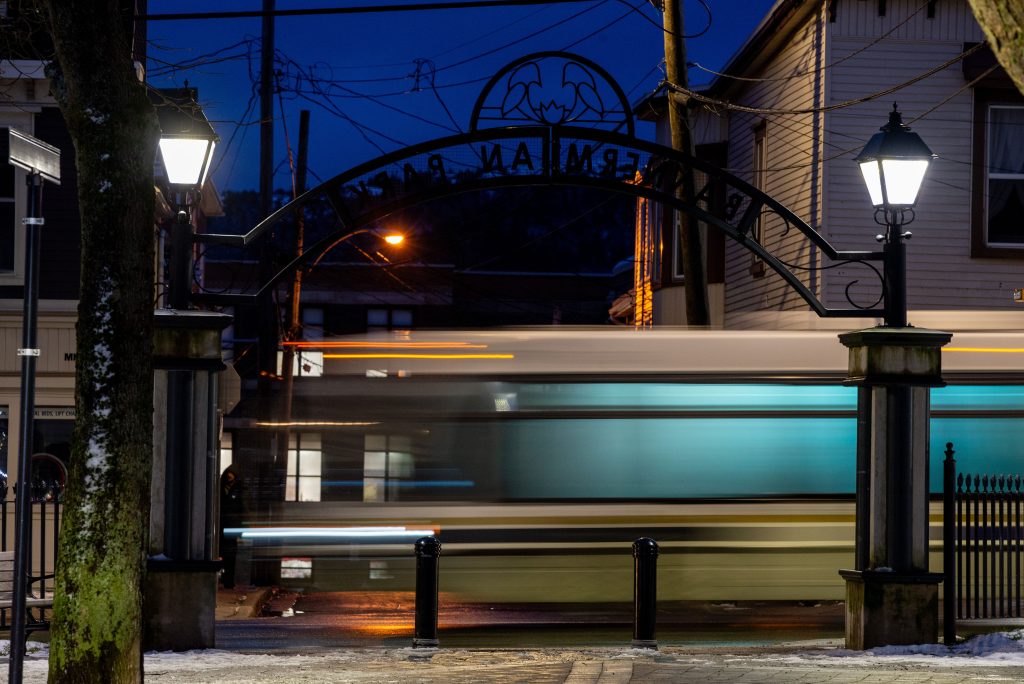
If we asked you to name three defining challenges in Newfoundland and Labrador right now, what would you choose? Housing and food security? Climate and environment? The future of our fisheries? Offshore oil, mining, and energy futures? Labour and employment issues? Healthcare?
Chances are, transportation wouldn’t make your list, despite its contribution to every issue just listed. When transportation issues do make the news it’s usually because of something that either threatens or reinforces the status quo: wildfires, storms, or strikes that shut down air, road, rail, or marine traffic; proposals to reduce ferry services; conflict over bike lanes or over taxes on carbon; an expansion of the road system; or subsidies to transatlantic flights.
It’s much rarer to see reporting that questions the nature of the current system or that shows us the intrinsic role of transportation in virtually any social or economic problem. And yet, transportation is inseparable from so much of what matters to us, from ecosystem breakdown to the cost of living, health, accessibility, and quality of life for families and communities.
This new column, Making Connections, will explore and capture transportation’s multiple dimensions. Most obviously, transportation is all about connectedness: moving people and things from here to there, bringing us together. But it’s also a vital link between many of the issues named above, issues that preoccupy the Indy’s journalists and readers.
Will you stand with us?
Your support is essential to making journalism like this possible.
We believe that different transportation options could be better supported, designed and connected. We both use bikes and our feet as well as public transit and cars to get where we need or want to go. We know firsthand the frustration and dangers of disconnected, blocked and under-resourced or non-existent infrastructure and services. We also want to hear from others all over Newfoundland and Labrador about their insights and experiences of making connections – and of how our capacity to do so might be improved through different approaches to mobility.
Debates about transportation are often framed as conflicts over the allocation of public money and public space. But these debates are also struggles for reality. Our current system, dominated by the private automobile, is so taken for granted that it can be difficult to imagine an alternative. That challenge is compounded by the “only common sense” explanation that what we have now is simply the outcome of “what people want.” History tells another story. There was nothing inevitable about the road we took. Equally, there is nothing compelling us to stay this course.
We are frankly on the side of decentering the private car and supporting modes of transportation that have better potential to connect people to one another as they go about their daily lives. The shift to motorized transport of people and goods certainly brought benefits. Under current circumstances, car ownership makes it easier to get where we need or want to go and can connect us to people we care about — at least for those able to drive.
At the same time, private automobiles and the infrastructure that supports them tend to block fortuitous connections. They isolate and alienate us from one another. By contrast, public and active transportation throw us together. They foster mixing between people who might otherwise not encounter each other, reminding us that our communities are spaces shared with diverse others, human and non-human. They increase autonomy across the life course, allowing children and adults who cannot (or can no longer) drive to get around independently. Research also indicates that people who use active transportation tend to be happier, healthier, and more concerned with the common good than those who use private autos.

How will this column work?
We see Making Connections as an opportunity to bring a variety of people and ideas together. We will do some of the reporting and analysis ourselves, either individually or jointly. We’ll also seek contributions from our readers and offer editorial support in turning ideas and perspectives into articles.
We’ll provide insight into issues as diverse as regional transportation and options for getting to and around in rural communities; the role of transportation in food security; traditional routes, such as inter-community trails and riverways; “the school run” and other transportation issues that matter to kids; the effects of infrastructure decisions on disabled residents; and the challenges of weather, especially for those who cannot drive.
We invite a range of genres and styles. These include reporting, informed commentary, analysis, and other forms of journalism. But we also hope to feature accounts based on “field tests” of existing and new infrastructure and services (bike lanes, bus routes, etc.), reviews of books and podcasts, accessible summaries of academic research, and interviews or profiles of unsung heroes of local transportation justice. We’ll welcome creative and conventional journalistic approaches.
Most of all, we hope this column will be a tiny contribution to the world we want. Please join us for the ride!
Have an idea you want to pitch? Reach out to us here or email us at transportation AT theindependent DOT ca.

Authors


Related Articles
Slowly killing research at Memorial University
A university is not its buildings, and it doesn’t exist to serve private-sector interests. It is about the pursuit of knowledge.
An LNG future for Fermeuse?
Proposal for massive liquefied natural gas hub exhumed on Newfoundland’s Southern Shore