
Meet two of St. John’s local heroes of transportation
Can community members help make walking safer in winter? Megan Clemens and Myles Russell think so
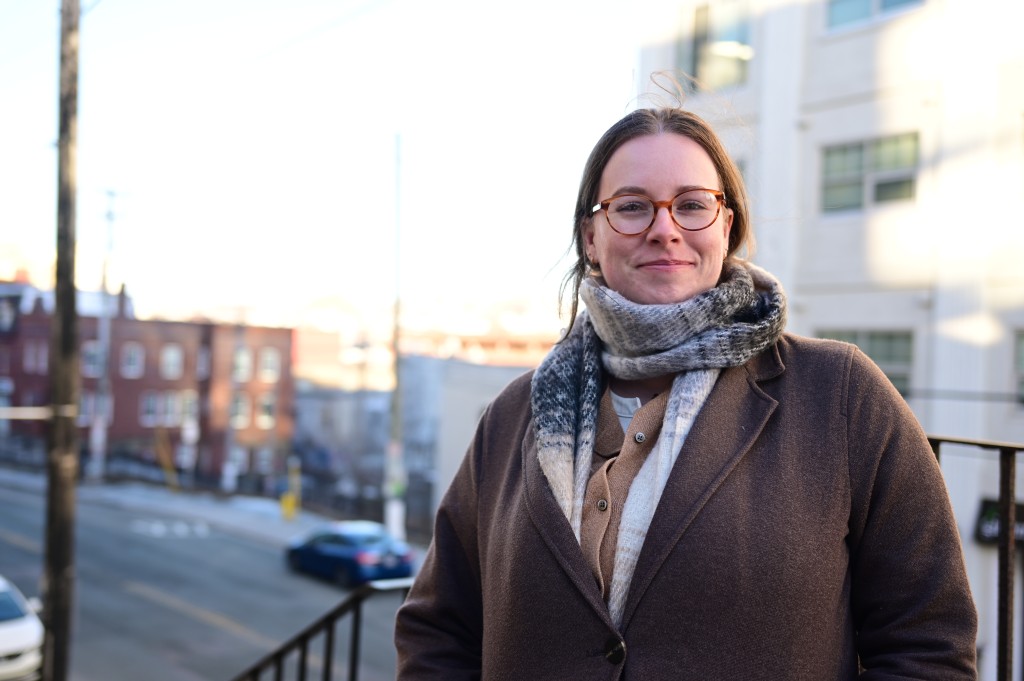
Megan Clemens and Myles Russell are both members of the local advocacy group Challenge Car Culture and stalwarts of active transportation. Recently they joined forces on a small intervention to make St. John’s a bit friendlier to winter walking and wheeling.
Clemens has an academic interest in active transportation. While doing a master’s degree in epidemiology and physical activity at Queen’s University, she came across data on people cycling or walking to work and realized this could be a good thesis topic. “The more I dug, the more I liked it,” she says, noting that getting around in an active way—whether by walking, wheeling, or cycling—is “somewhat of a silver bullet.”
“There’s so many advantages, in terms of physical health, which was the primary angle that I was thinking about, but also mental health, social health, building community, financial benefits,” she says. Clemens is now a third year medical student at Memorial University and still advocating for better conditions for pedestrians and cyclists every chance she gets.
Russell had a more dramatic awakening to the cause. He had a good job in the heavy civil industry — “the industry that builds dams, highways, building infrastructure” — and drove work trucks and an SUV, but he knew people who were really struggling economically. Being able to get around without a vehicle, or without a second vehicle, would mean huge savings for them, but it just wasn’t a viable option anywhere in the province. Even in the capital city, most sidewalks are left uncleared in winter and bus stops are often inaccessible. This means active and public transportation aren’t safe and reliable year-round options, especially for people with small children or living with disabilities. Russell wanted to help change that and then came the double whammy of climate change.
Will you stand with us?
Your support is essential to making journalism like this possible.
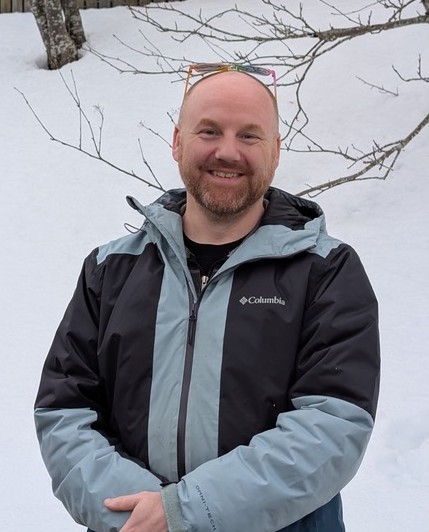
“The future scares me,” he says. “If we don’t make sweeping changes to the way North American culture works, we won’t see positive change. Better transit, better walkability, better density: they are climate goals that Europe has achieved well, Japan achieves well, South Korea achieves well, but us North Americans struggle,” he says. “I am but one of a million North American advocates. Now let’s get 100,000 more people interested. Let’s show people that good change benefits everybody.”
Russell “got frustrated with the lack of accessibility, the physical interactions, the transit space, the inefficiencies.” He changed careers and bought an e-bike to support his climate and transportation goals. Now he’s a civil engineering technologist, managing projects, doing investigations, designs and calculations for developments across Atlantic Canada.
Meanwhile, walking everywhere was already part of Clemens’s daily routine. When she moved to St. John’s from Kingston Ont. in 2023, she was surprised by peoples’ reactions to her preferred mode of transit. “They were profoundly worried about me,” she recalls. “They were saying, ‘Are you sure? Are you okay? Did your car break down? Do you need a ride?’” While she appreciated the kindness, Clemens was shocked a simple act like walking to get somewhere was so outside the norm. As a future physician, she recognizes that many people struggle with health issues, but “some risk factors, particularly exercise, are modifiable. I wanted to share all these excellent benefits that I had found in a city where people weren’t really availing of this.”
Whatever the reason—to improve health, build a more connected community, save money, or ensure a liveable future—people need safe accessible routes if they’re going to get around actively. Much of the work to make this happen falls on municipalities, but there are things individuals can do.
Clemens and Russell wanted to find some small thing they could do that would help, while drawing attention to the issue. After discussions with other members of Challenge Car Culture, the pair came up with the idea of salt boxes. It’s notoriously difficult for pedestrians to get around our capital city in winter, and salt—although not without its own environmental issues—is one key to making it easier and safer.
“Walking in St. John’s during the winter comes with real challenges, many of which are beyond our control, like steep hills, frequent freeze-thaw cycles, and heavy snowfall,” Clemens explains. “However, a risk we can address is icy walking surfaces. Melting snow often refreezes across roads and crosswalks, which turns routine trips on foot into hazardous ones.”
Other cities with similar conditions have found simple ways to help. In Ottawa, for example, Clemens notes the City has installed “grit boxes” at high-risk crosswalks. These boxes contain a salt-and-sand mixture that anyone can use to improve traction on icy surfaces. “While they don’t replace municipal snow and ice control, they provide an important stopgap when conditions change quickly or city resources are stretched,” says Clemens.
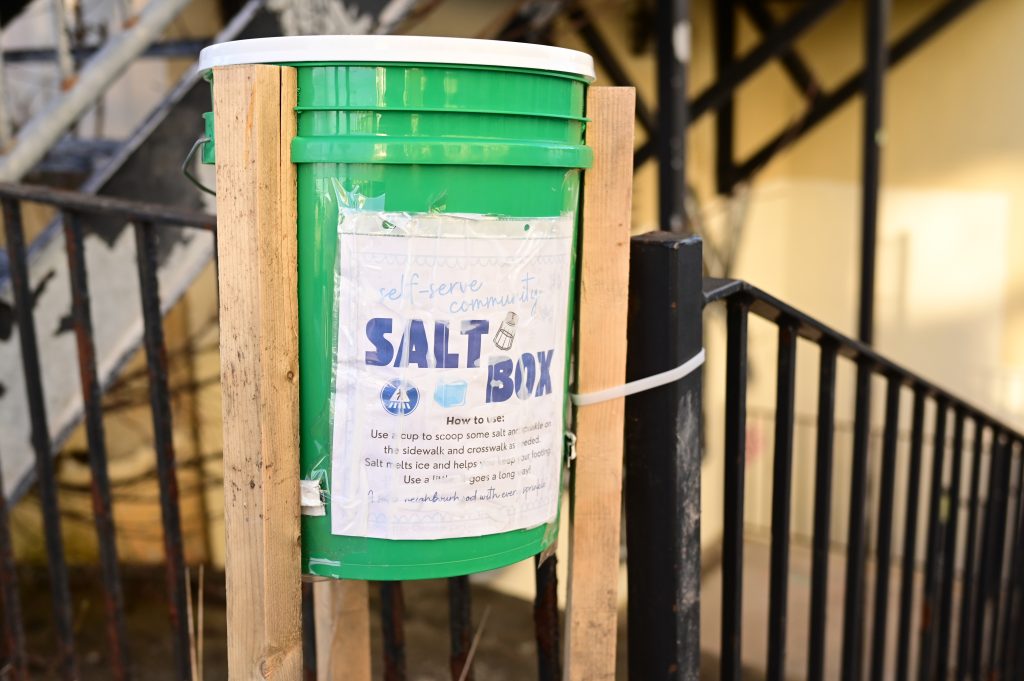
Inspired by this model, Clemens and Russell have started installing salt boxes on private property with the owners’ consent near challenging intersections in St. John’s. These self-serve boxes contain road salt and cups pedestrians can use to distribute it as needed. Anyone who notices an icy surface is encouraged to use the boxes.
Winter conditions in St. John’s can change quickly, making winter maintenance particularly challenging. These salt boxes are intended to support, not replace, the City’s ongoing snow and ice control efforts by helping residents prevent slips and falls before they happen.
Clemens emphasizes that this is a small grassroots project intended to fill short-term gaps, just one step toward safer active travel. “While salt boxes won’t solve every winter mobility challenge, they can make a meaningful difference for neighbours trying to get around safely,” she says. “Making walking and other non-car transportation options safer and more feasible benefits public health, reduces household transportation costs, and helps build a more connected community.”
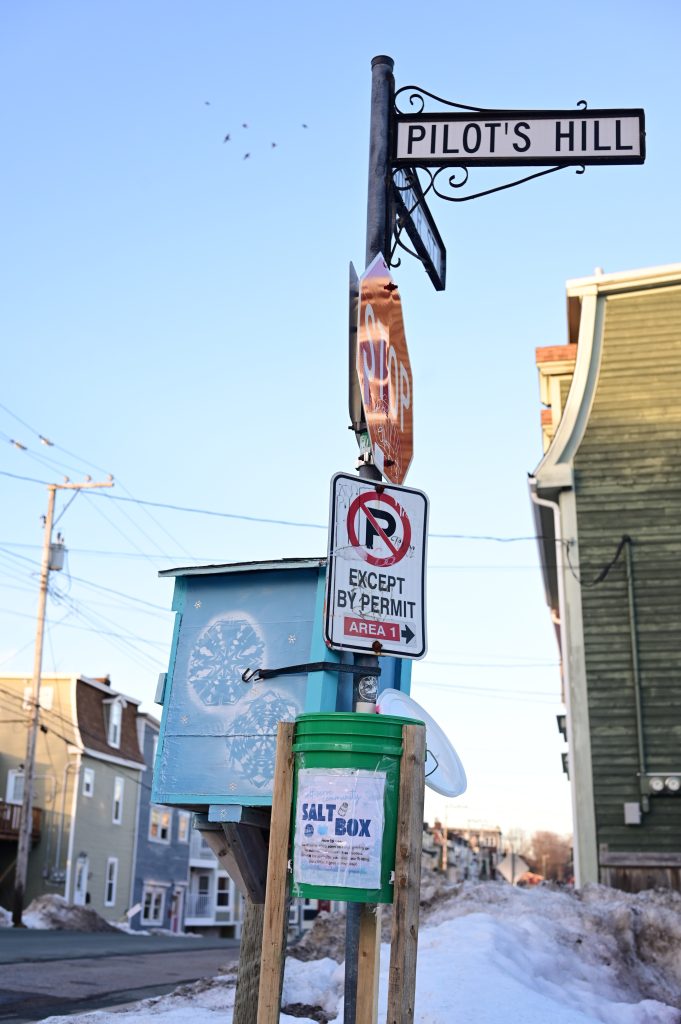
Russell sums up the spirit of the project: “People who are not in a car are second class citizens. They’re just not treated at the same level. The salt box project is just to show that this can be a piece of how we get around the city, to show people that we can, and that community works.”

Author

Related Articles
What would it mean to build a city for kids?
An interview with St. John’s active transportation advocate Ryan Green

The business case for public transit in St. John’s
Expanding public transit in the St. John’s Metro region may seem unrealistic, but when you look at the facts and figures, it’s both reasonable and doable

Why decades of government neglect of Nain Airport is about more than transportation
Government underfunding and broken promises about the services Inuit would have after being relocated from Hebron to Nain are part of the airport’s legacy