
Elder says long view of Innu history necessary for understanding today’s issues
Apitet (Ben) Andrew testified at the Inquiry Respecting the Treatment, Experiences and Outcomes of Innu in the Child Protection System
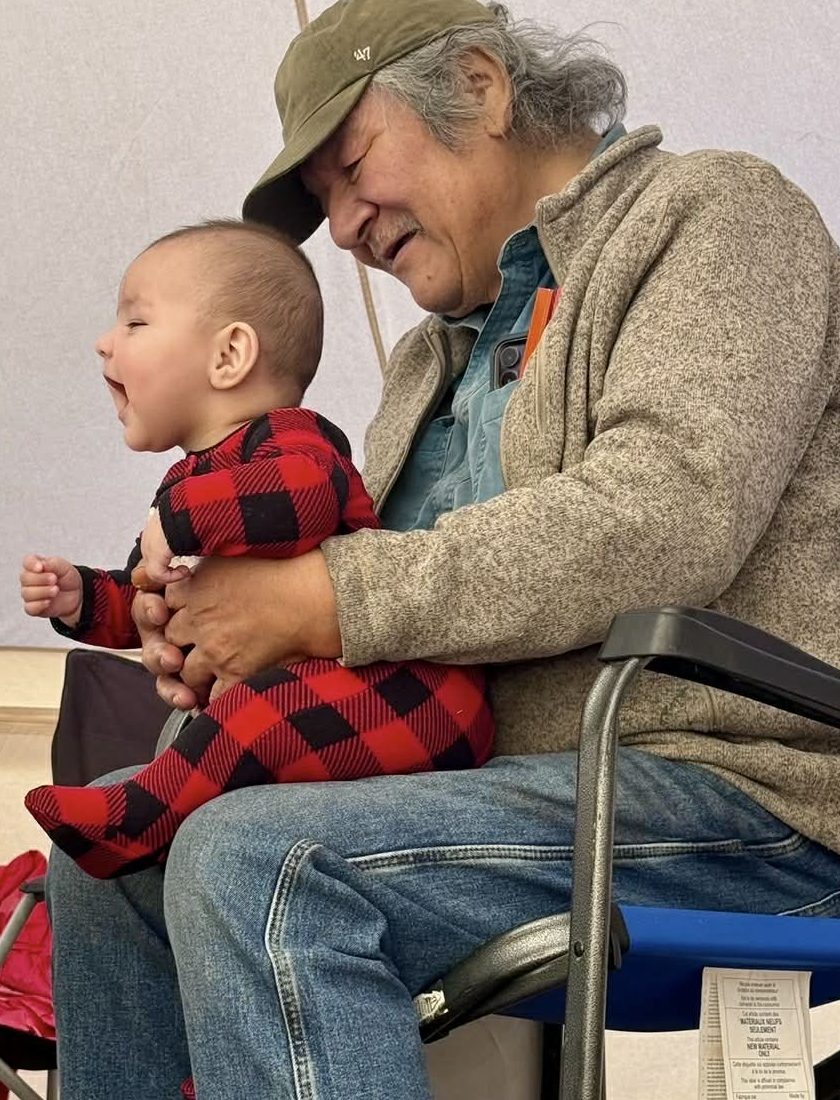
Innu Elder Apitet (Ben) Andrew has a somber expression on his face as he takes his seat in the Sheshatshiu Ussiniun Youth Centre in Sheshasthiu Innu First Nation. He’s about to testify before lawyers from the provincial and federal governments, the Innu Nation, and commissioners of the Inquiry Respecting the Treatment, Experiences and Outcomes of Innu in the Child Protection System.
It’s September 2025 and Andrew, 72, is sharing the long view of Innu history he has prepared, which he says is necessary for the Inquiry to understand the root causes of Innu children who are taken from their families and put in the province’s so-called child welfare system. He also says Innu history, and the experience of his people, are requisite in understanding the impacts on parents and families of children being taken into state custody, and any potential path forward.
Innu children are vastly over-represented in Newfoundland and Labrador’s child protection system, making up almost 14 per cent of all kids in the province’s custody despite accounting for just 0.6 per cent of the youth population. From their communities of Sheshatshiu and Natuashish, Innu kids are often sent to Newfoundland, or even further away to central or western Canada, where they’re placed in homes outside their communities and culture.
Will you stand with us?
Your support is essential to making journalism like this possible.
To understand where Innu are today and why this tragedy is unfolding, Andrew says we need to understand the nature and details of the drastic changes to Innu life over the past 200 years.
“This inquiry asks us, as Innu, this question,” he begins: “How did we get to this place in our lives where the non-Innu government is asking us how, as Innu, we got to this place in our lives?
“The answers I have are found in our history, [and] in my own experience of that history.”
‘Living as if we had our legs cut off at the knees’
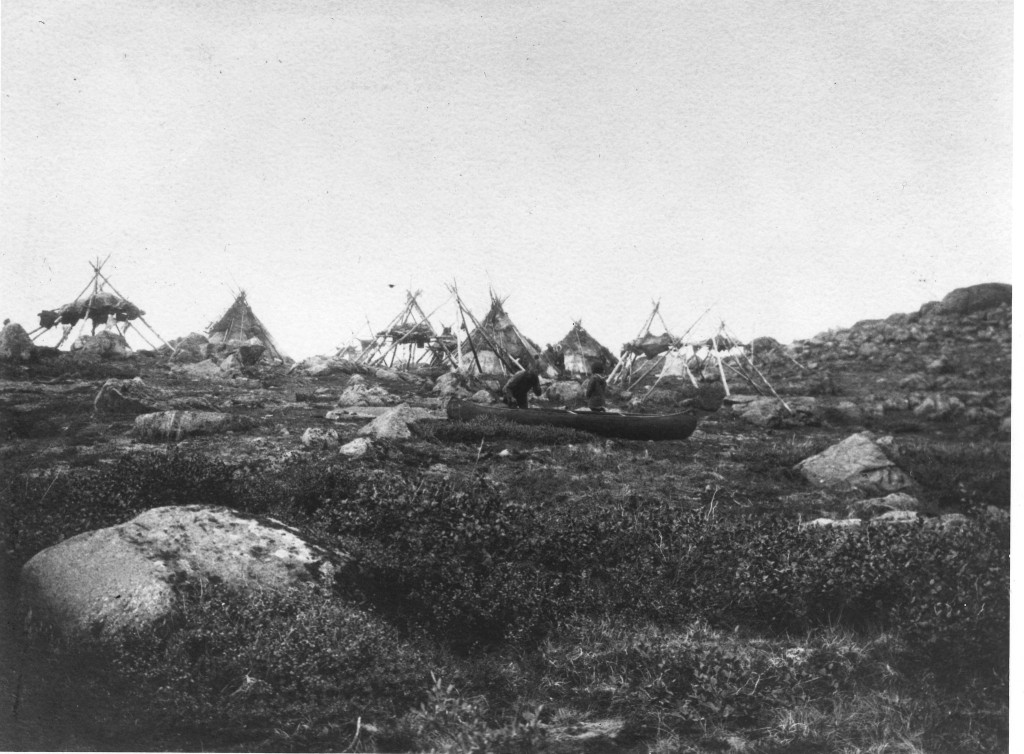
Andrew tells the Inquiry that prior to the 1950s, Innu were nomadic hunters living on an 800,000 square kilometre territory called Nitassinan, which means “our homeland” in Innu-aimun, for thousands of years.
Mushuau Innu were forcibly relocated by church and government officials in 1948 and again in 1967. Sheshatshiu Innu were forcibly relocated permanently in the 1960s to the North West River area, which was a seasonal gathering site for Innu, and settled in what would become the Sheshatshiu Innu First Nation Reserve. Andrew tells the Inquiry the forced settlement interfered with the Innu’s travel to their traditional hunting grounds, among other practices and customs. They faced deep-seated racism from provincial, federal and church officials, he explains.
As a child and teenager, Andrew says he spent time with Elders and adults who lived most of their lives in the country and listened in on their experiences, something that rarely occurs in his community today. “They had all been raised in Innu culture, immersed in Innu culture and only Innu culture, from the time they were born until they themselves had raised up children and grandchildren.”
It was rare to hear Innu discuss the past, and important for him to sit and listen when it happened, as Innu were forbidden from discussing the past and their culture, he says, explaining a priest in the community forbade Innu from discussing the Innu drum, dreams, Innu history and more. “In some ways, [Innu] took personal risks to share these stories because they knew that there could be repercussions for not keeping this knowledge, especially spiritual knowledge, hidden.”
A well-known Catholic priest who was stationed in Sheshatshiu from the 1950s to the 1970s wanted to cut the transmission of that knowledge to the younger generation so it could be easily replaced by western education, Andrew says, explaining some Innu sided with the church. Those individuals, he recalls, would tell church officials if Innu were sharing stories, which would often result in physical abuse from the priest.
This point in history also marked a division that still exists today, between Innu who have embraced Christianity and those trying to retain their traditional spiritual beliefs and ways.
“I remember the [Elders’] stories as clear in detail,” Andrew testifies. “They had no doubt or confusion about the truth of what they were sharing. I heard them tell stories about their experiences that I knew were very similar to stories that I read in the Bible, and this was amazing to me.”
When stories were being shared in the 1970s, Innu were forbidden from travelling and hunting on their traditional routes to provide for their families. This, Andrew says, led to heavy alcohol use throughout the community of Sheshatshiu.
“[Elders] shared when they were drinking because they had no other outlet for these stories, many of which were about their spiritual experiences,” Andrew recalls. “You need to understand that by the […] ‘70s and later, we are living as if we had our legs cut off at the knees. I don’t know how else to express it more clearly than this. Our hearts and minds could still feel and think, but they were filling up with sadness, grief and loss.”
Our hearts and minds could still feel and think, but they were filling up with sadness, grief and loss. –Apitet Andrew
The pain of having everything they knew taken away was overwhelming, and it started being passed on to their children, Andrew says. Today, he adds, “we call it collective trauma.”
“The normal Innu ways of passing down these teachings and sharing this knowledge were almost all gone. The formal transmission of this knowledge was forbidden by the priest. We were no longer being raised up immersed in our culture. We were immersed in some new and unknown culture of trauma. Our healthy Innu ways had been replaced by our powerful processes of the church and education.”
As the impacts continued to be felt by Innu, Andrew says he “continued to seek out Elders to listen to their stories, because I had a need to understand why we’re now living so differently than the way earlier generations have for centuries — lived in Nutshimit.” Nutshimit is the Innu-aimun term for being at home in the country. “Why were these differences so harmful, so widespread, affecting all the families, not just me and my family?”
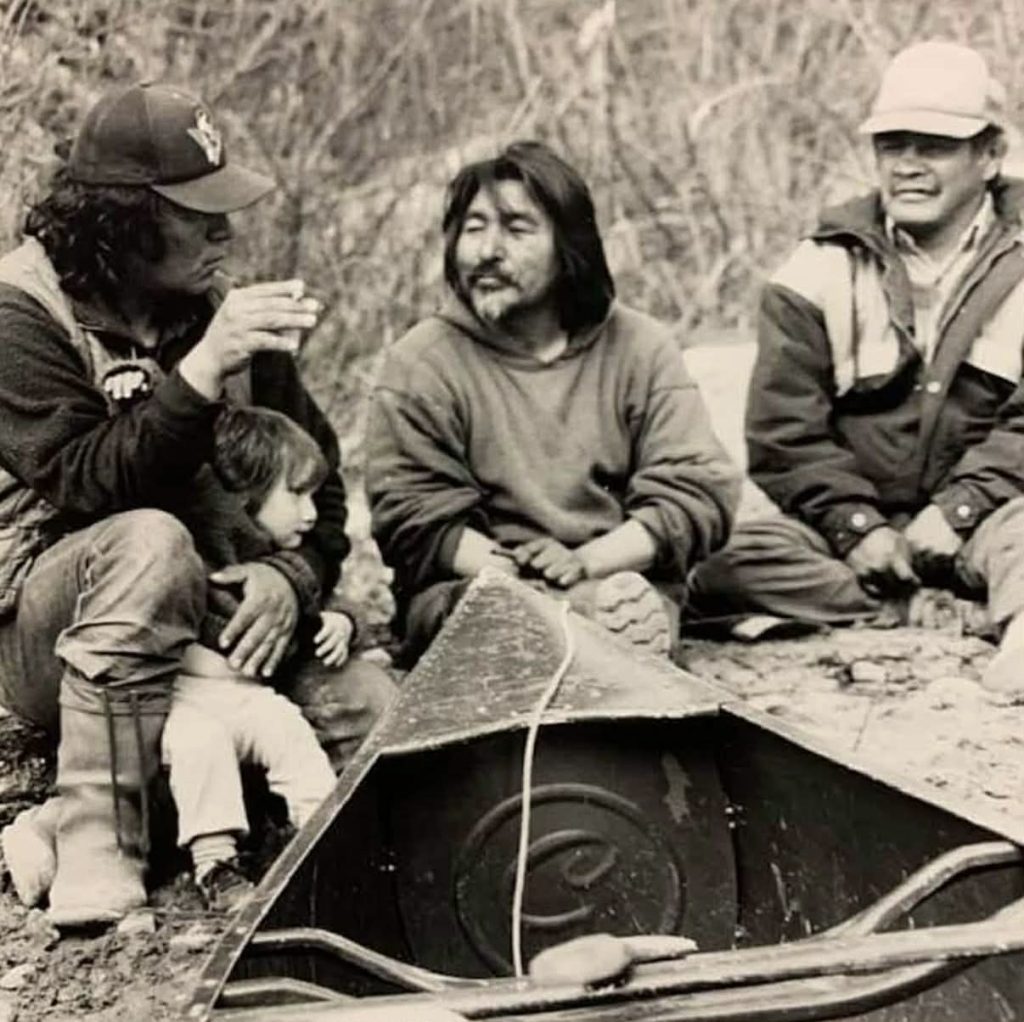
People often look at Innu history since the community of Sheshatshiu was formally created in the 1960s, Andrew says, but some Innu sites date back 3,000 years. Innu were nomadic; they traveled between hunting grounds for thousands years, even before Christ was born, he continues.
“This weight of thousands of years of history as nomadic people can’t be compared to the last 60 or so years of village living. Our experiences as Innu, and our history as a people, begins so far before any formal provincial child welfare system that it is almost incomprehensible, almost impossible to see how that bares and where we are now. I would argue that ours has been an oral culture. We must look at the written evidence, the concrete evidence we have about our lived culture and history,” Andrew says.
Understanding the depth of Innu history is key, as simply looking at Innu lives from the 60s and 70s is only looking at the top layer of the onion skin to use an onion, Andrew said.
“We all know that all the layers of skin have to be peeled back to reveal the onion to get at how we got to the place we are today is deeply rooted in our history. My roots are in Inu history.”
1600s: The ‘recipe for residential schools’
In the late 1400s, English, French and Portuguese explorers crossed the Atlantic in search of a route to Asia. Throughout the 1500s, British, French and Basque fishers set up camps along the Labrador coast, Newfoundland and the Gulf of St. Lawrence to exploit the abundance of fish and whales. Seasonal outposts evolved into year-round settlements, laying the groundwork for settler colonialism in what is now known as Atlantic Canada.
“In essence, this was the very beginning of the end for our nomadic culture. But obviously we could not possibly have known that then,” Andrew tells the Inquiry, explaining that European journals detail Innu life and the future Europeans planned for Innu without their consent.
In the Jesuit Relations, recorded by missionaries in New France (Quebec), Innu were documented from 1610 to 1791, comprising almost 200 years of records. Father Paul Le Jeune, a Jesuit priest and missionary, wrote a number of letters to his superiors in France.
At the time, Europeans focused on how the potential riches of the “New World” could serve Europe, how Europeans could convert First Peoples to Christianity, and how new waves of Europeans could come to the “New World” and be guided by First Peoples in how to survive, Andrew continues.
“Most often, our ancestors are called savages. [This] is obviously the origin of this label. Savages come from how Europeans saw us as being like wild animals: uncontrollable, uncivilized and preliterate. I don’t take offense at this label because it comes from the perceptions of Europeans who use this label. However, this is where reading descriptions of my ancestors shows me how inaccurate this label was.”
In 1633 and 1634, Le Jeune was in Quebec, most likely along the north shore of the St. Lawrence River, Andrew says. In one chapter of the Jesuit Relations called The Means of Converting the Savages, Le Jeune lays out a plan to dominate the Innu and a blueprint for what happened next, Andrew continues.
“‘If I can draw any conclusion from the things I see, it seems to me that not much ought to be hoped for from the savages as long as they are wanderers. You will instruct them today. Tomorrow, hunger snatches your heirs away, forcing them to go seek their food in the rivers and the woods,’” Andrew quotes, reading a passage from Le Jeune’s writing.
“‘They’re so occupied in seeking livelihood in these woods that they have not time, so to speak, to save themselves. I tried to live among them last autumn, I was not there a week before, I was attacked by a violent fever, which caused me to return to our little house to recover my health. Being cured, I tried to follow them during the winter, and I was ill the greater part of the time. These reasons and many others make me think that we shall work a great deal in advance, and advance very little if we do not make these barbarians stationary for they live only from one day to another.’”
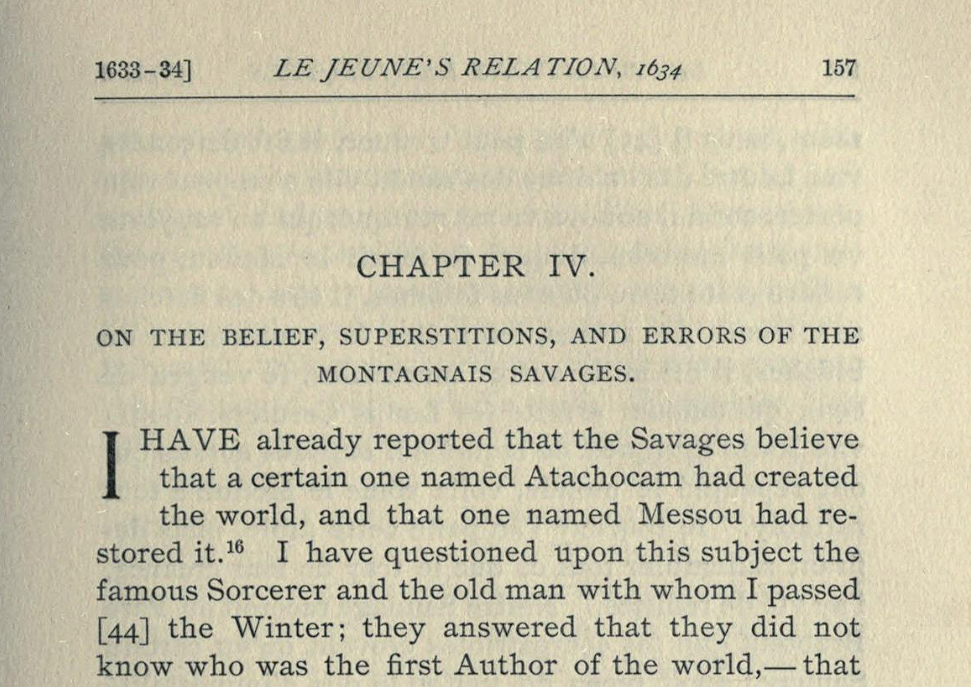
Andrew continues to read passages from Jesuit Relations, illustrating the explicit intention of early settlers to stop Innu from being nomadic, and to disrupt their way of life. “‘Although the savages are nomadic, the good seed of the gospel will not fail to take root,’” he reads. Le Jeune then says he believes another way of “‘making ourselves welcome,’” Andrew continues, “‘would be to erect here a seminary for little boys and in time, one for girls, under the direction of some brave mistress. The reason why I would not like to take the children of one locality and teach them in that locality itself, but rather in some other place. It is because barbarians cannot bear to have their children punished or even scolded, not being able to refuse anything to a crying child. They carry this to such an extent that upon the slightest pretext, they would take them away before they were educated.’”
In the early 1700s, this blueprint began to force Innu to remain in one location, not live off the land and instead cultivate food in one place, and for their children to be taken away from their families to be educated in European ways, Andrew says.
“This was the start of residential schools,” he explains. “Le Jeune was talking about my people, about Innu, and he believed and planned that there would be no more nomadic culture, no more living from the land, and no more raising up our children in our ways. These steps he outlined also contain the recipe for residential schools, which the Catholics did start to establish in the 1600s. Canada began funding these schools in 1883, authorizing formal support for the residential school system.”
The last federally-funded residential school, in southern Saskatchewan, closed in the late 1990s.
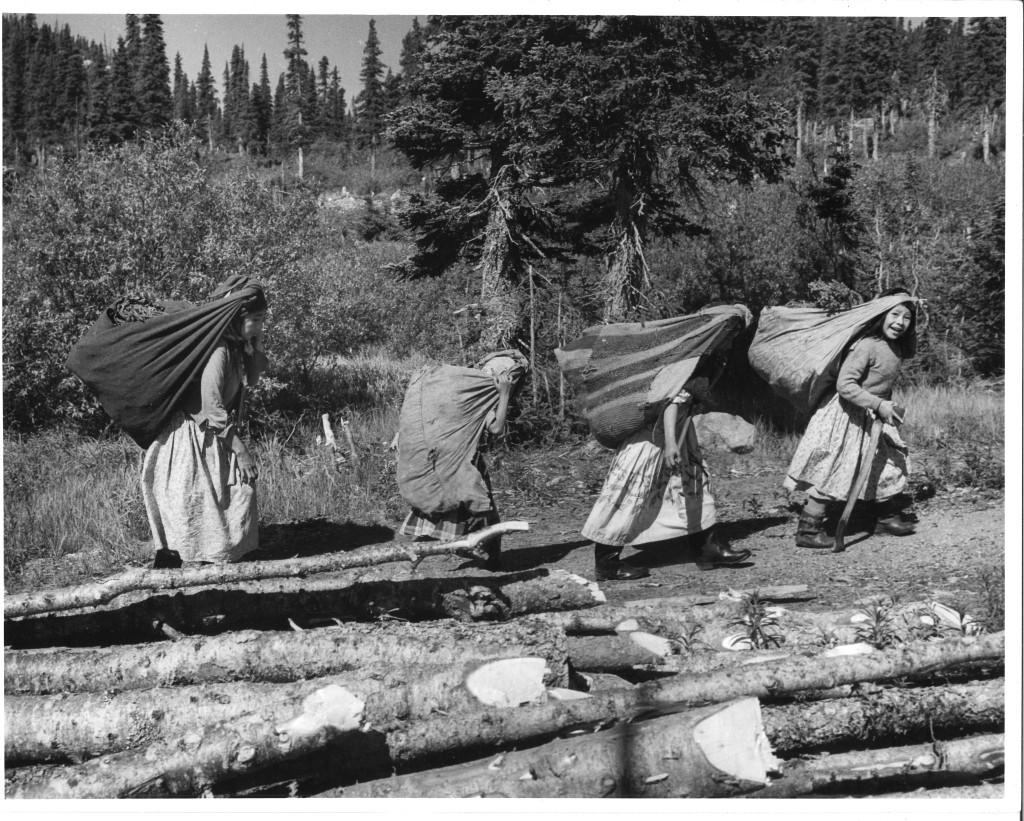
Innu were ‘living in such a good way’
From the 1600s onward, Innu spiritual beliefs were often regarded as ‘sorcery’ and Europeans couldn’t understand why Innu loved their spirits, their shaking tents and more, just as how the Europeans loved their God, Andrew says.
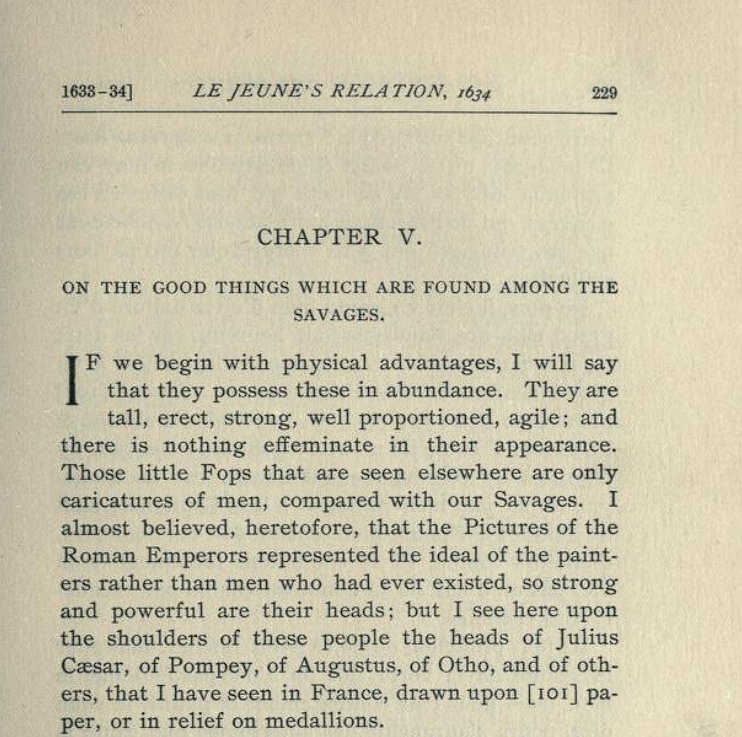
In one chapter of Jesuit Relations, the Europeans lay out what they called “the good things” which are found among First Nations, Andrew continues. “Our understanding of our ancestors comes from what we know about how they lived and cared for one another, but it’s still hard to explain how reading these words from almost 400 years ago impacted me, how it confirmed what we knew as Innu but had never seen written down.”
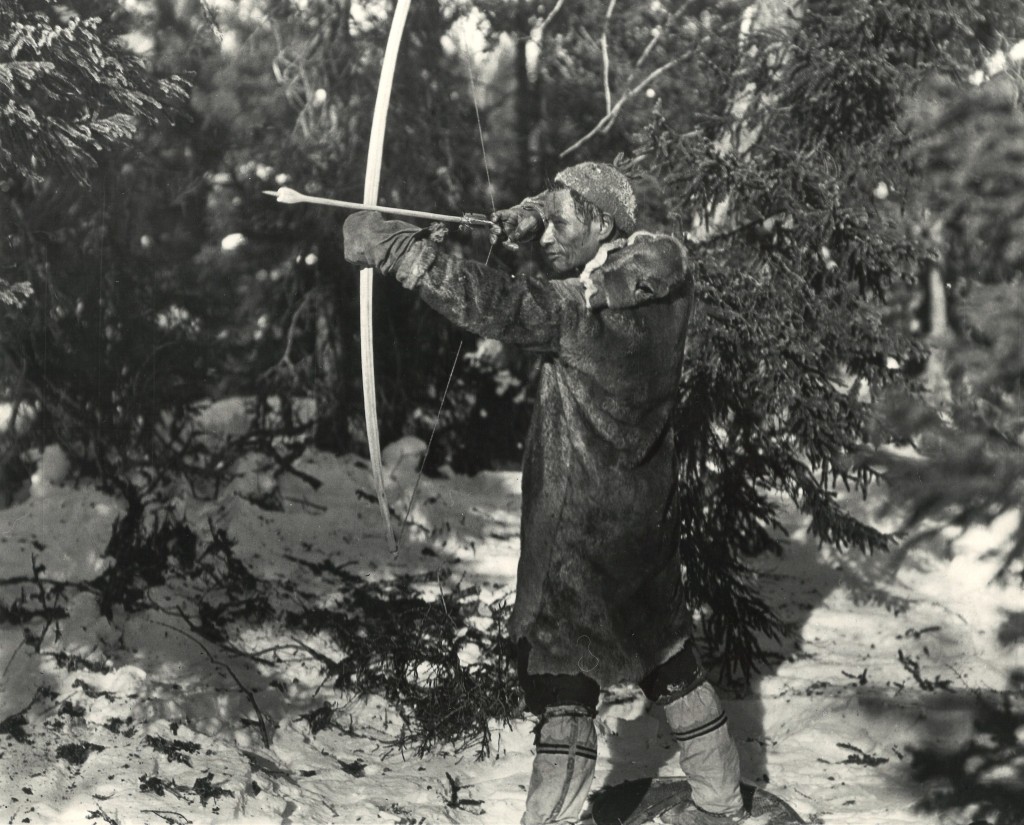
“To begin, with physical advantages, I will say that they possess these in abundance. They are tall, erect, strong, well-proportioned and agile,” Le Jeune writes.
“[Le Jeune] wrote that, in comparison, European men are only caricatures of men compared with our savages,” Andrew says.
Le Jeune continues: “As to the mind of the savage, it is of good quality. I believe that all souls are all made from the same stock, then they do not materially differ. Hence, these barbarians, having well formed bodies and organs, well regulated and well arranged, their minds ought to work with ease.”
Le Jeune wrote that the Innu were more intelligent than peasants in Europe, and while they had no political organizations, officers, or dignitaries, they obey their Chief through good will, never kill each other to acquire honours, and no one “‘gives them himself to the devil to acquire wealth.’”
Innu were content with their lives, and never angry, Andrew says, explaining Innu-aimun didn’t include a word for anger at that time.
Quoting Le Jeune, he continues: “‘Whoever professes not to get angry ought also to make profession of patience. The savages surpass us to such an extent in this respect that we ought to be ashamed. I saw them, in their hardship and in their labors, suffer with cheerfulness. They said to me, ‘We shall [be] sometimes two days, sometimes three without eating, for lack of food.’ Let thy soul be strong to endure suffering and hardship, keep thyself from being sad, otherwise thou will be sick.’
“Maybe my ancestors were among the first to coin the phrase ‘laughter is the best medicine,’” Andrew tells the Inquiry.
“Le Jeune described how he saw my ancestors in relationship to one another: ‘They are very much attached to each other and agree admirably. You do not see any disputes, quarrels, enmities or approaches among them. Men leave the arrangement of the household to the women without interfering with them. They cut and decide and give away as they please without making the husband angry. I have never seen my host asked a giddy young woman that he had with him what became out of the provisions, although they were disappearing very fast, I have never heard a woman complain because they were not invited to the feast, because men ate good pieces, or because they had to work continually going in search of the wood for the fire, making the houses, dressing skins and busying themselves in other very laborious work.’
“‘Tell the savage that another savage had slandered him, and he will bow the head and not say a word. If they meet each other afterward, they will pretend not to know anything about it, acting as if nothing had been said. They treat each other as brothers, and they harbor no spite against those of their own nation. They are very generous amongst themselves, and even make a show of not loving anything, of not being attached to the riches of the Earth, so that they may not grieve if they lose them. Not long ago, a dog tore a beautiful beaver robe belonging to one of the savages, and he was the first to laugh about it. One of the greatest insults that can be offered to them is to say that man likes everything. He is stingy. You will see them take care of their kindred, the children of their friends, widows, orphans. They are treated the same as the children of the father of the family, or at least, almost the same. This is truly the sign of a good heart and of a generous soul.’”
Andrew says while Le Jeune’s descriptions are through a European lens, they open a window to valuable information and observation Andrew cannot find written down anywhere else.
“I see a picture being created that describes my ancestors living in such a good way, the way of taking care of one another, of sharing with one another, of remaining calm and positive, of laughing to avoid becoming stressed — almost what I call a perfect society, the healthy culture,” he says. “I know there is no such thing as perfection, but the behaviours Le Jeune described, integrated with the spiritual beliefs that we know guided our ancestors, proved the overall well-being of our people and contrasted remarkably with our society today.”
[B]arbarians cannot bear to have their children punished or even scolded, not being able to refuse anything to a crying child. They carry this to such an extent that upon the slightest pretext, they would take them away before they were educated. –Paul Le Jeune, 1634
In the 1600s, the goals were clear: Europeans planned on taking full control of Innu, turning them into Christians, and changing them so that settlers could safely come onto Innu lands to exploit the riches of the land for economic gain, with a plan to force Innu to stay in one place, teach them to cultivate the land and take their children away to educate them, Andrew says.
Residential schools, forced settlements, Indian agents and more were established throughout Canada, but Innu felt the effects later than most of the country, he adds.
“The biggest factor from the Innu perspective was that our ancestors continued to live on the land, going on to the interior of this huge geographical area known as the Ungava Peninsula in the fall, and only coming out to coastal settlements in the summer. Sheshatshiu was a summering place for many generations before it became a settlement,” he says.
Early 20th Century: Awareness of ‘the Indian problem’
Many factors drastically impacted Innu in the early 1900s, Andrew tells the Inquiry. The Grenfell Mission — later renamed the International Grenfell Association, or IGA — managed Labrador and the St. Anthony Children’s Home, beginning a type of child welfare system, he explains.
A letter from August 1927 may be the first IGA correspondence to mention Innu, Andrew says. It was written by Harry Andrews to Father O’Brien, discussing the Innu who had been hit hard after the collapse of the fur trade. Andrews writes: “‘I’m sorry for the state of our Indian friends at North West River. It seems too bad to let these folks down. So isn’t it possible I wanted to find something for these people to do during the summer time so that they may be able to leave for their hunting grounds better equipped with provisions,’” Andrew reads.
“‘Deer and game have greatly decreased during the past few years, and this means that the Indian required more of the white man’s food to maintain his family. These poor old Indians do not receive many blessings, though being under the protective care of our legislature, as they are, in no way a bother or dragged to the government, I cannot see any just reasons why they would not at least lend them back the credit part of what’s taken from them.”
Andrew says this is the first evidence in Labrador records that the Hudson Bay Company and the Government of Newfoundland had awareness of an “Indian problem.”
Another letter, written by Ralph Parsons of Hudson’s Bay Company to Father O’Brien on Aug. 2, 1933, says Dr. Paddon of the IGA had plans to “‘centralize residents scattered along the coast in hopes of interesting them in farming,’” Andrew reads.
“‘But in practice, both you and I know that it will be a failure before it is begun. In the meantime, people will become so demoralized that their future would appear to be hopeless. You know their natural occupation is hunting. If you take them away from their present locations and trapping grounds, where they can obtain at least a few foxes in ordinary years, and assemble them in villages where it is impossible to find work of a productive nature for them to do, the result I fear will be disastrous.’”
Andrew says it seems even non-Innu could see the issues to come and didn’t always agree with each other, but not a single Innu person is directly spoken to or quoted. Andrew says all records he and the Inquiry team could find were non-Innu speaking for Innu people.
The 1950s: ‘I don’t know what my parents felt about all these enormous events impacting their lives’
The last bit of isolation was lost with the introduction of the airplane and radio, and there was now no turning back, Andrew testifies.
The Newfoundland and Labrador provincial archives shared historical documents with Andrew and the Inquiry. Andrew pointed to a 1952 government memo in which the Department of Mines and Resources communicates with the Minister of Health and Welfare.
“‘I need not stress the fact that our provincial government feels that the time is long overdue for a decision on the part of the federal government as to the extent of federal participation in the responsibility of caring for these dependent groups who, in the case of the Indian, at any rate, appear to be on the road to extinction,’” Andrew reads.
In 1954, a memo from the Director of Northern Labrador affairs describes a meeting between welfare officers, Hudson’s Bay Company post managers, and priests. “‘It was obvious that both father Pearson and Kay were strongly in favor of getting the Indians away from North West River and into their hunting grounds at earliest possible date, holding the Indians at North West River and away from their inland hunting grounds during the winter months, thus constituting an abrupt break with the past would not be wise at this time.’”
In 1959, the Deputy Minister for Public Welfare wrote a memo noting that “adult Indians” never had a chance to go to school, do not speak English, do not have vocational training, would not be experienced in mining operations or employment opportunities in Goose Bay. The memo says it cannot be assumed problems will disappear overnight and that there were deeply-rooted psychological attitudes to overcome and long, sometimes painful, integration needed.
“I was likely five years old when this memo was written,” Andrew reflects. “And I’m almost certain my parents, or any other Innu, knew nothing about what the then Province of Newfoundland was saying or planning to do with regard to change in the course of our lives. I honestly don’t know what my parents felt about all these enormous events impacting their lives.”
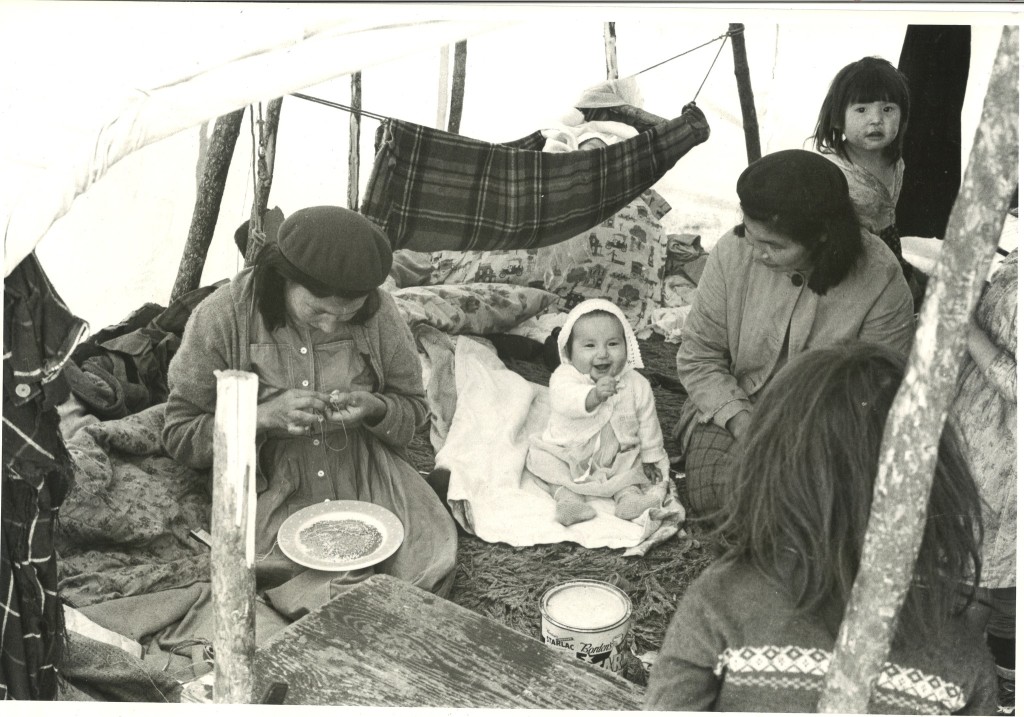
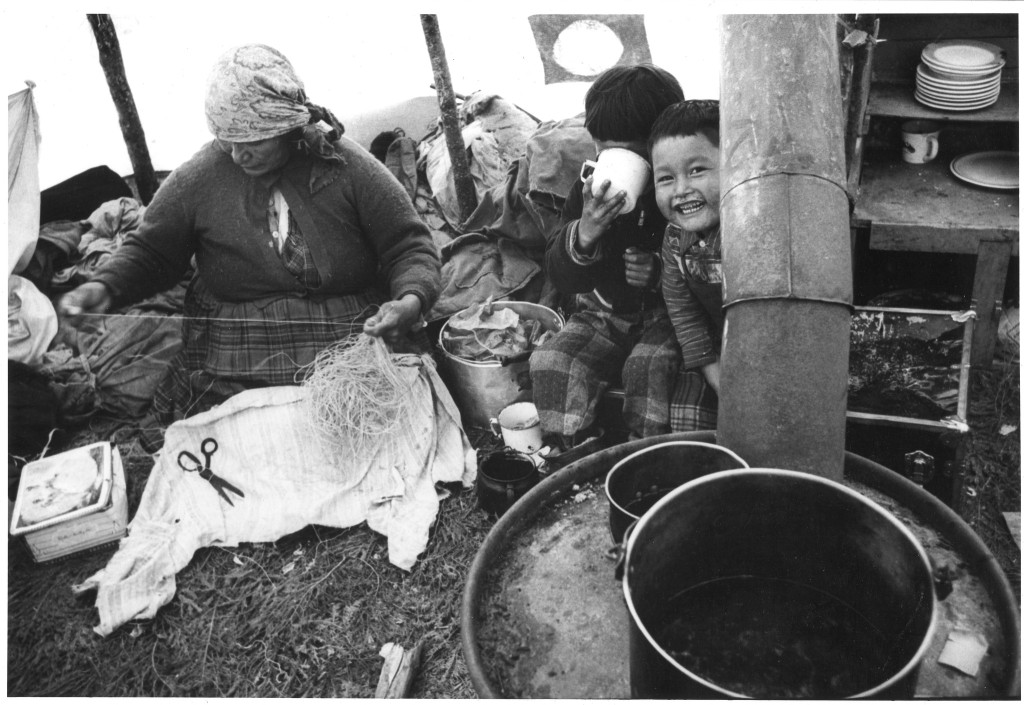
Andrew says he remembers living in a tent at that time, surrounded by adults talking and doing daily activities that involved learning why things happened the way they did, and why things were done the way they were.
“At night in the tent, when there are no doors, we would hear the stories being told, legends being shared, and that will be the last thing we would have an awareness of before we drifted off to sleep. It was immersion in our culture,” he recalls. “In the morning, we would wake up and have experiences with our parents or grandparents as our teachers. There was no school in Nutshimit; everything about our culture was seamlessly connected: ourselves, ideas, language, skills and spirituality.”
At night in the tent, when there are no doors, we would hear the stories being told, legends being shared, and that will be the last thing we would have an awareness of before we drifted off to sleep. It was immersion in our culture. –Apitet Andrew
Innu didn’t go to school but lived their education through their culture, and children felt they were part of their group, had a clear identity as an Innu child, and felt their world, Andrew said.
“There was a priest at Sheshatshiu, but no settlement of Innu. We had no skidoos or machines, radio, satellite phones, no calendars, no watches. We were living our lives in Nutshimit in small, interdependent groups where the well-being of the group was the most important. Our lives were still based on knowledge of the land and everything connected to the land and had been passed down from all the previous generations of Innu,” Andrew tells the Inquiry.
The 1960s: An ‘abrupt end’ to ancient way of life
With the collapse of the fur trade, the introduction of Christianity, and the priest holding significant power over the community — forbidding Elders from passing on their knowledge — Innu were forcibly settled into communities in the 1960s.
“I’m considered Sheshatshiu Innu because my parents were forced from their life on the land and into a settlement in Sheshatshiu. Hence, Sheshatshiu Innu. That didn’t happen until the early 1960s,” Andrew explains. “This makes me and my siblings the first generation of Innu ever to be raised into adulthood in a village [and] not to be raised up in our Innu nomadic way of life.
“You need to think about the significance of that, the implications of that abrupt end in just one generation from nomadic Innu culture that has been lived on for thousands of years, to sedentary village life,” he continues.
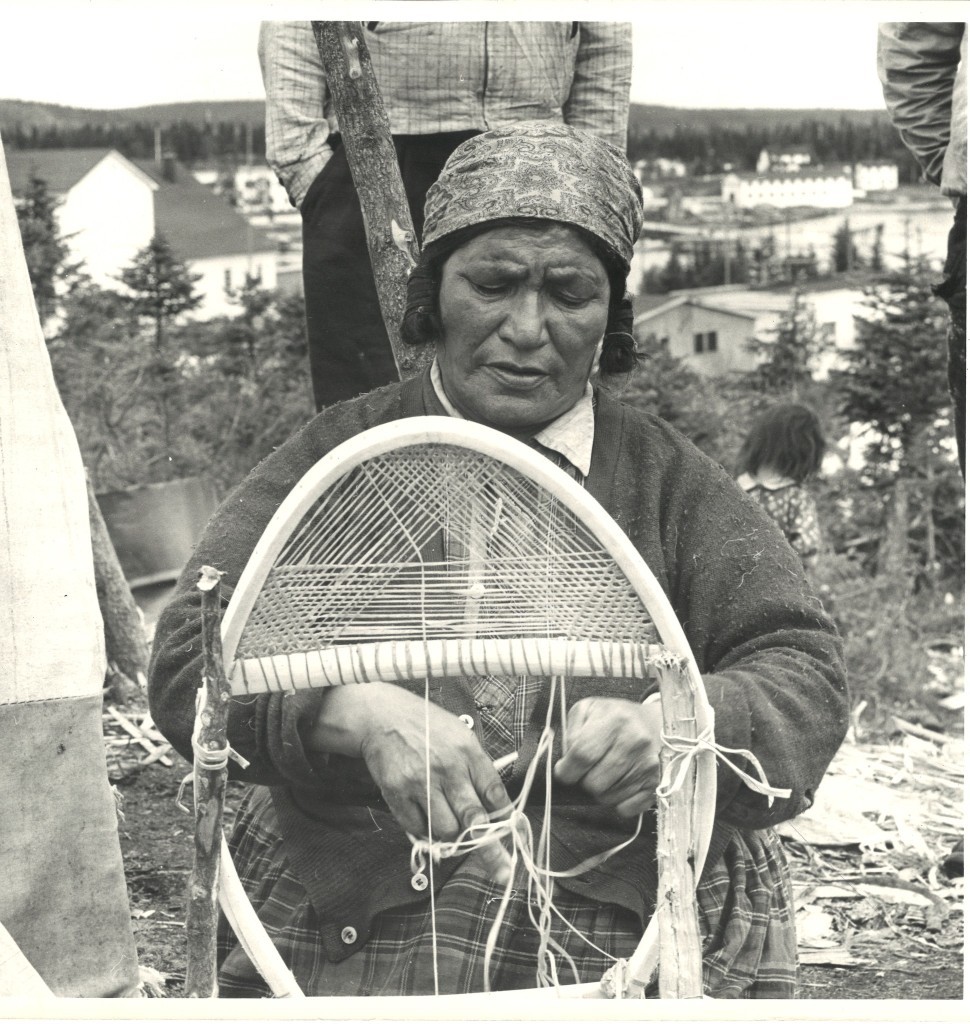
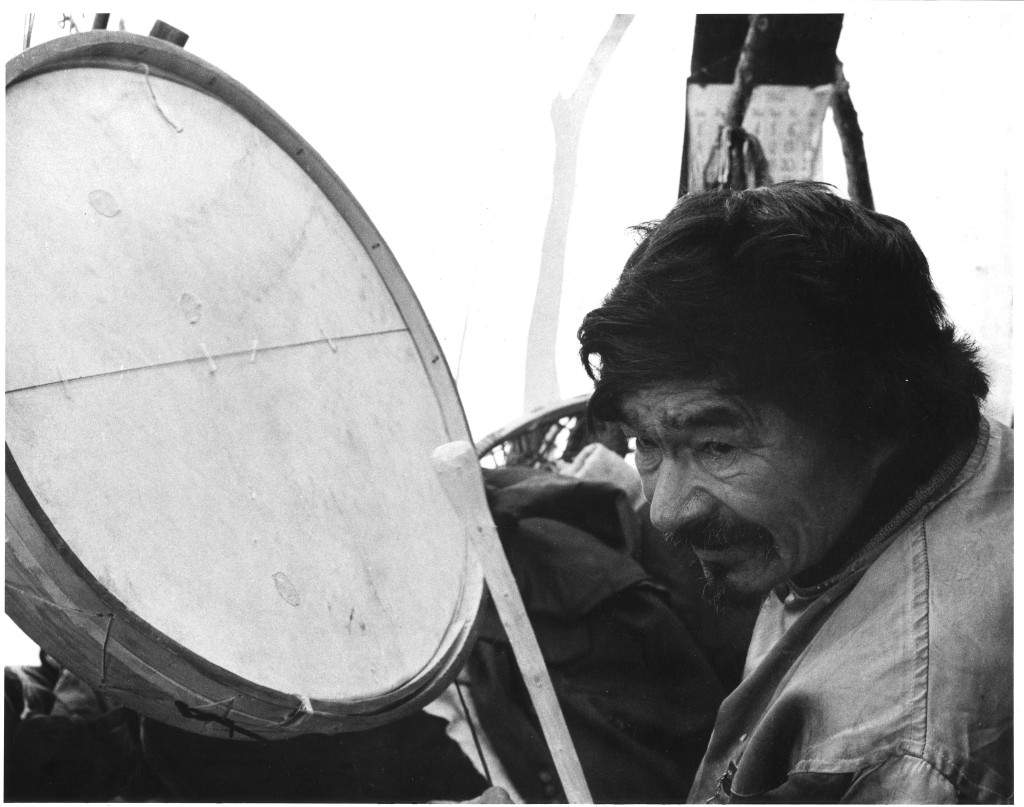
“I can’t emphasize enough the significance of our way of living, of how different in every respect of my nomadic culture was from Western European culture. So when the colonial process began to be more formal and my parents had to deal with government and church authorities, the impacts came much more rapidly, and for the most part, those impacts were very negative,” he says.
As Innu had everything they had ever known taken away, including their spirituality and the core of who they were, alcohol dependence started to take root in the community, Andrew recalls.
The 1970s: A ‘cancerous legacy’ of clergy abuse
The development of the Churchill Falls Hydroelectric Station brought more problems for the Inny, Andrew says, explaining Innu were told there would be a dam but weren’t informed it would flood thousands of acres around the Michikamau region in Central Labrador. Innu traditional travelling routes, campsites, traplines, burial grounds, and caribou travel routes were lost overnight. “I can’t imagine what it was like for them to find out this had had happened. It must have been devastating,” Andrew says.
Families like Andrew’s were placed in small houses — “more of a shack, really” — with no insulation, heat from a wood fire, electricity or running water, Andrew testifies.
Children were forced to go to schools to learn European ways, with a focus on assimilating Innu as opposed to educating Innu, he continues, noting a 1972 education report says Innu were still a semi-nomatic hunting and trapping people.
“‘Their days are governed by the sun and the season and not by the clock. Their contact with whites are still shallow and fleeting. These people have their own methods of bringing up children. It is often done by the grandparents, who are actually even further from the white way. Thus in school, they must often unlearn the pattern of responses learned in another culture as well as acquire a second language well enough to study other school subjects. Progress is necessarily slow, and we cannot hope to change these children quickly and easily,’” the report says.
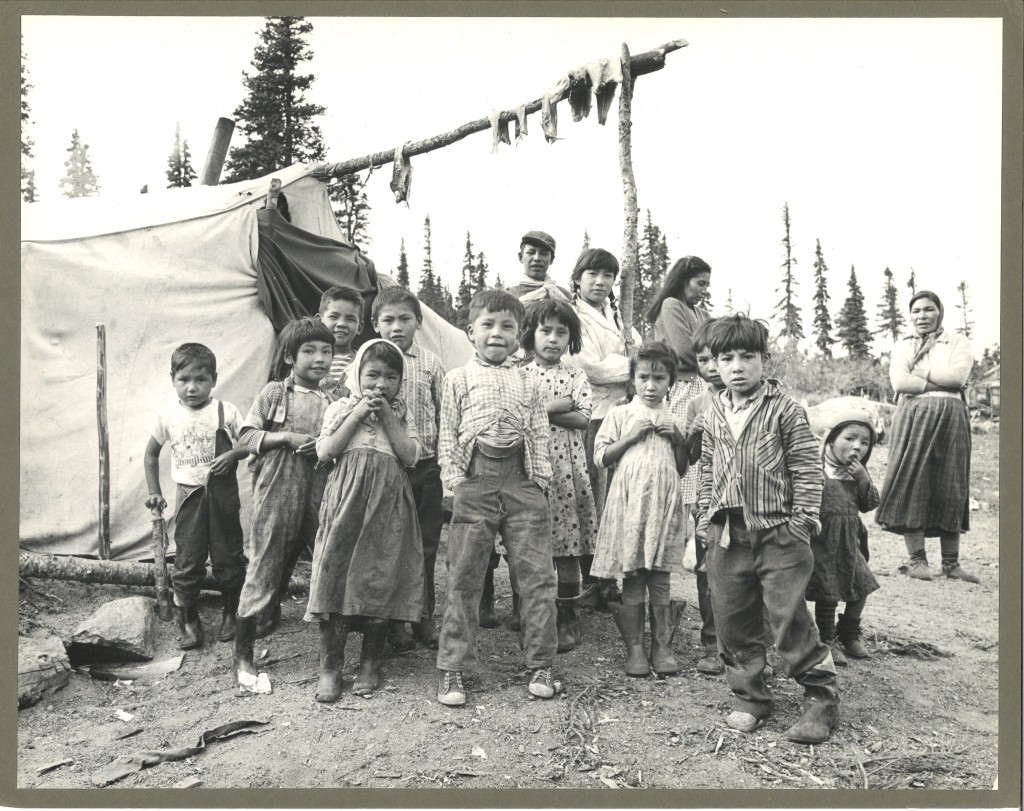
Andrew says physical abuse was commonly used to maintain control over defenceless children, and that the children couldn’t complain because the priest would physically abuse the parents if they tried to speak up.
Men were also told to go out to the country without their families, which was quite strange after generations of families travelling together and helping one another, Andrew continues.
“Father Pearson and subsequent priests had so much colonial power given to them by church and governments, and because the narrative of the non-Innu was that our culture was inferior, it shouldn’t be hard to see how we could be made to feel powerless and therefore vulnerable,” Andrew says. This is illustrated by the “experiences of rampant sexual abuse by the priests, brothers and teachers in Sheshatshiu,” he explains.
“This is like a cancerous legacy that has been passed down since the time of Father Pearson,” he says. “He began abusing boys, girls, women and men. In the 1960s or even earlier. He certainly left here as a known abuser.”
Andrew says the priest was sent to other Innu villages before retiring in the 1980s and dying following his retirement. “I think he is the main character in why Sheshatshiu is such a dysfunctional place to live in right now.”
The cycles of abuse had to start somewhere when looking at who Innu were in the past, Andrew explains, saying he can trace more than three dozen peoples’ sexual abuse experiences with Father Pearson.
“I counted 43 Innu men and boys,” he says. “Forty-three Innu men and boys who were my peers, my coworkers, my family, elected leaders, fathers, grandfathers, husbands and sons. I didn’t include any women and girls in this, so [in] every respect, the number is staggering for a small village. I think it is not surprising that almost all these Innu are now dead. They almost all suffered in silence.”
Abuse from Father Pearson specifically was also detailed in a 1993 report to the Government of Canada called ‘Gathering Voices: Discovering our Past, Present and Future,’ authored by the Innu Nation Community Research Project.
In 2001, The Globe and Mail published a report from a former Labrador Nun who alleges the Roman Catholic Church covered up allegations that Innu children were sexually molested by a priest in the 1970s. Gervais Penashue previously told the Inquiry that reporting a priest for sexually abusing him and his brothers resulted in the priest’s transfer, not penalties.
In addition to sexual abuse, priests were physically abusive to Elders, parents, children and more, Andrew says. “It is also how racism is created,” he continues. “I would be extremely angry if people told me all these lies about history, and as a result, I became racist in the favor of my group.
“In effect, the story of Innu […] has been built on lies, and that is what we have been taught through the education systems, both in the dominant culture and in Innu culture since we Innu started to go to schools.”
In February 1979, the Minister of Indian and Northern Affairs visited Labrador to discuss a proposal to constitute Indian bands at Northwest River and Davis Inlet. The government began formally creating reserves, and Innu submitted land-use and occupancy studies, but still today do not have a land claim formalized with the Government of Canada.
“That’s two generations of Innu children who have grown up in our communities, two generations of confusion, social distress and accumulating poor health in short collective, intergenerational trauma.”
Innu history is long and complex but the full history needs to be understood, Andrew tells the Inquiry. “It remains to be seen how we will go forward.”

Author

Related Articles

May Day Rally Shows New Face of Today’s Labour Movement
Turnout for May 1 march and rally in St. John’s one of the biggest yet in this province
Recimply the Best: Pitch and Pick Competition Winner Aims to Reduce Paper Waste
Recimply won big at Genesis’ annual Pitch and Pick competition last week. The startup is solving the problem of non-recyclable paper receipts.

Coming Home Queer for the Very First Time
For three days in July, queer Newfoundlanders and Labradorians from all over the world celebrated a rural homecoming 30 years in the making.
As Innu exhibit opens in Labrador, Grand Chief says truth must come before reconciliation
Innu Nation Grand Chief Jodie Ashini says it’s disappointing to open the Innu Pakassiun exhibit without the provincial government’s participation, but Innu know their history and who they are
Liberals’ Bill C-39 a wake-up call for Canadians: Avi Lewis
‘Cracks starting to show in the Carney consensus,’ Lewis tells N.L. NDP convention in St. John’s

As NDP convention gets underway in St. John’s, will N.L.’s third party prioritize growing rural support?
Former party candidates say it’s a steep hill to climb, but there are ways