
In historic first, St. John’s Anglican Cathedral set to host Pride service in 2027
Congregants gasped in support when they heard the announcement, made during a special queer-inclusive worship at St. Mark’s Church
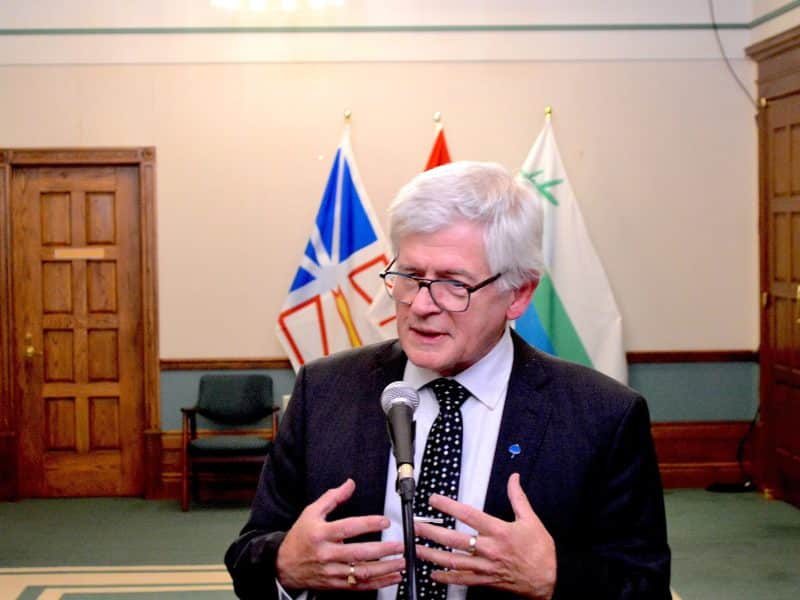
Approaching 60, Inuk Canon Tom Mugford grew up in Cartwright, Labrador. He is a beneficiary of the Labrador Inuit Land Claims Agreement. A follower of Jesus Christ. And a gay man.
That was how he opened his nighttime summer sermon at St. Mark’s Anglican Church in the east end of St. John’s June 29th, during a special pride worship meant to mark pride 2026 while attracting members of the queer community to make them feel welcomed in the church.
“I was raised in the Pentecostal tradition, a faith of fire and passion, but also at times a faith where I came to understand God’s love as conditional,” he told the congregation of about 100.
Mugford’s early experiences with Pentecostalism led to him eventually drifting away from the church. Then, in 2002, he was baptized as an adult in the Anglican Church. Fourteen years later, in 2016, following the Pulse night club massacre in Florida which killed 49 people and injured more than 50 others, Mugford fully came out as gay at the age of 49. He has been leading in the Anglican Church ever since.
Will you stand with us?
Your support is essential to making journalism like this possible.
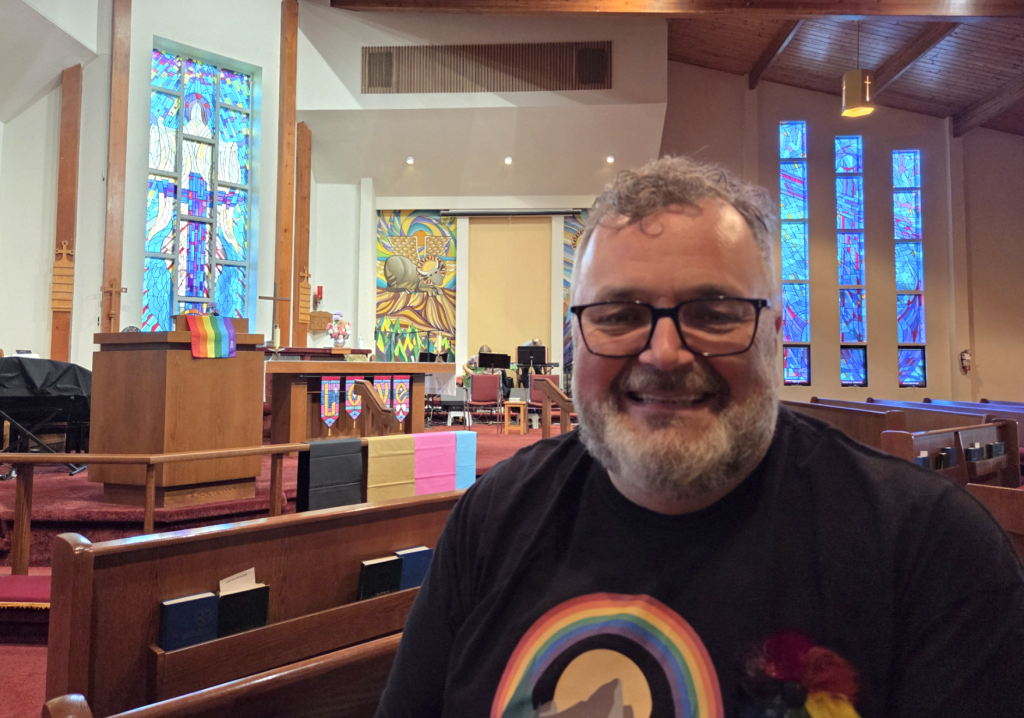
“Close friends knew, some colleagues knew. But I took it out loud and proud in 2016 and let the chips fall where they may,” he said. “My bishops knew I was a licensed lay minister actively in the Anglican Church, but also was a gay man, and I was able to live my life within that.”
Feeling welcomed in the Anglican Church prompted Mugford to stick around. He calls it a “homecoming” of sorts, during which not all questions were answered, but questions were “able to be held.” He now also serves in the role of Anglican Canon for Truth, Reconciliation and Right Relationships, a position that aims to strengthen the bond between the church and Indigenous communities.
“Being Indigenous, queer and Christian has meant that I carry the pain of exclusion, the labour of education and the hope of transformation,” Mugford said, adding there were times when he thought Indigeneity, queerness and faith couldn’t coexist.
A feeling of being welcomed, belonging
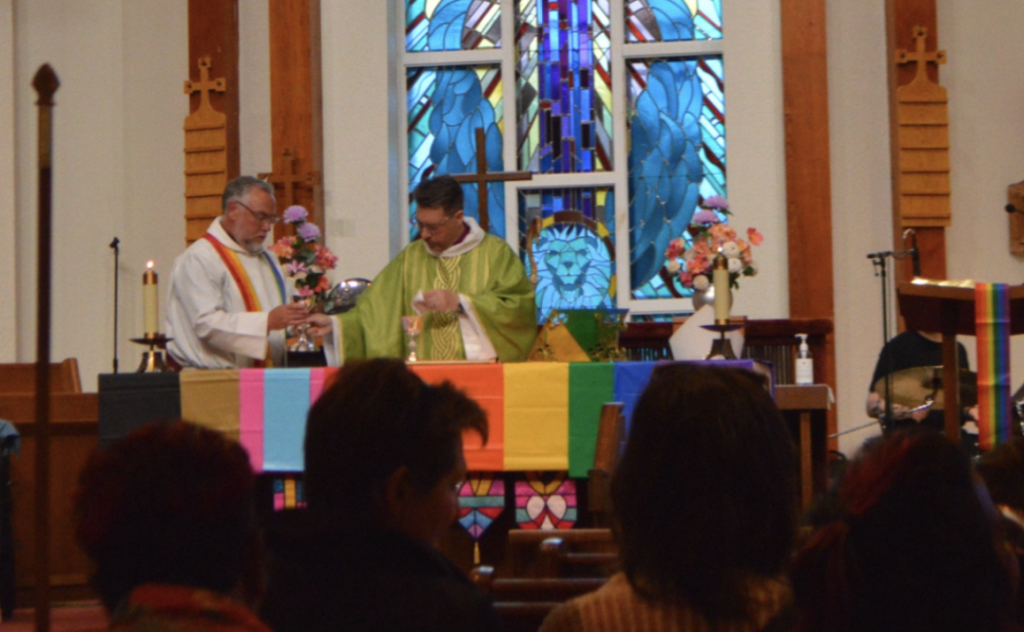
Black and brown reams of fabric, representing ‘Indigenous threads of humanity’, were added to the transgender and rainbow coloured sheets used to drape the altar. For the service, church leaders like the reverend donned rainbow sashes. Some in attendance wore Pride shirts and most dressed casually.
Couples, groups of friends and allies all sat next to one another. One woman had her dog on her shoulder. The congregation swayed and sang with the church band, who call themselves ‘The Saturday Band on a Monday Night’ as they normally play during the Saturday night service. The band could have passed for a soft rock ensemble at a pub.
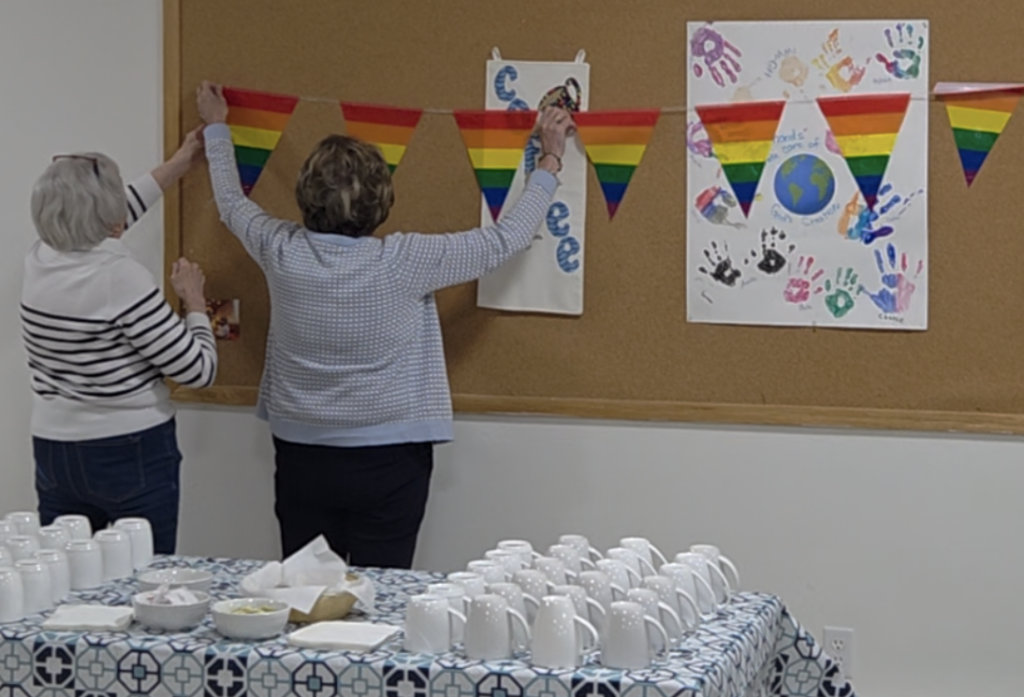
Though he took centre stage with his sermon, Mugford also showed up hours earlier, and with the help of other church members helped decorate the sanctuary and adjoining hall, which hosted a coffee and cookie afterparty.
“There’s a need for pride services for people to feel fully embraced for their sexuality, their queerness, whatever phrase we want to use today. And [to] allow people to be fully part of that without feeling judged,” Mugford said.
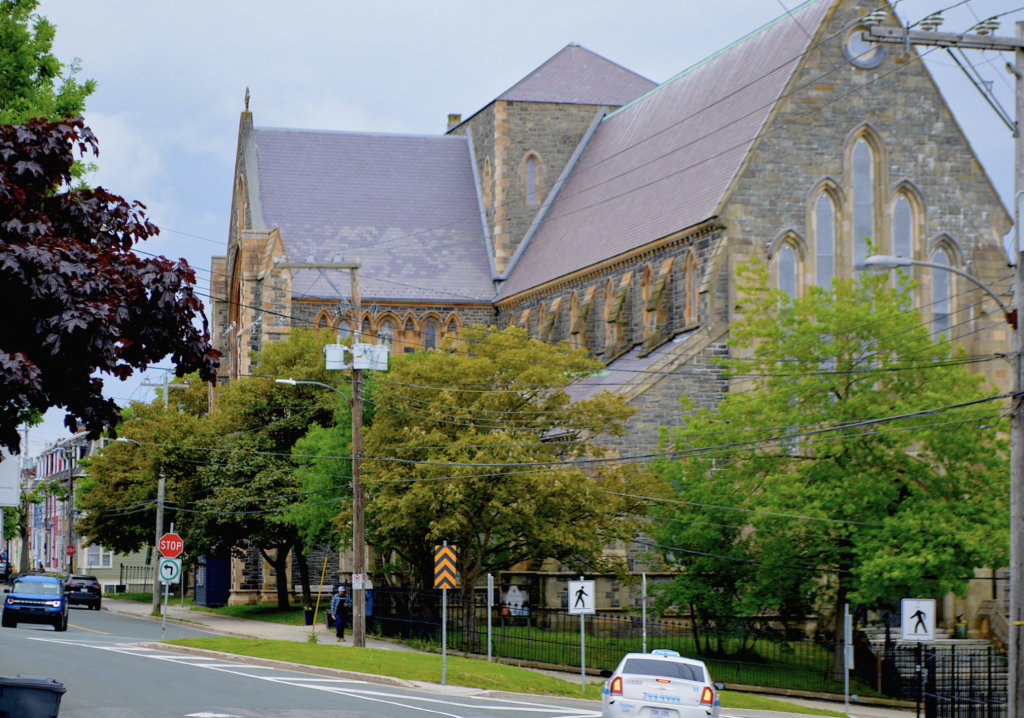
Head of Newfoundland and Labrador’s Anglican Church system, Bishop Sam Rose, also joined the Pride worship. He officially announced that next summer the grand Cathedral of St. John the Baptist will host the third annual Pride worship, a first since the Anglican mothership was built and opened in the mid 1850s.
It was only last year when the province’s Anglican Church system held its first service explicitly for members of 2SLGBTQI+ communities. Last summer’s event was held at Holy Innocents Anglican Church in Paradise, with Reverend Tracy Sullivan among those involved, in what leadership promise will be an annual event.
Sullivan, who serves as the Chaplin at Saint Luke’s Home in St. John’s, grew up in the Bonavista region in what she describes as a very religious home split between the Pentecostal and Roman Catholic faiths. In 2015, she enrolled at Queen’s College on the Memorial University campus in St. John’s to become a Pentecostal youth pastor, but realized it wasn’t the demographic she was most comfortable with. She also knew that, as a woman, she couldn’t be ordained in the Catholic Church, so she began exploring the Anglican way of believing.
Now in her mid-40s, Sullivan came out to her congregation during last year’s Pride service.
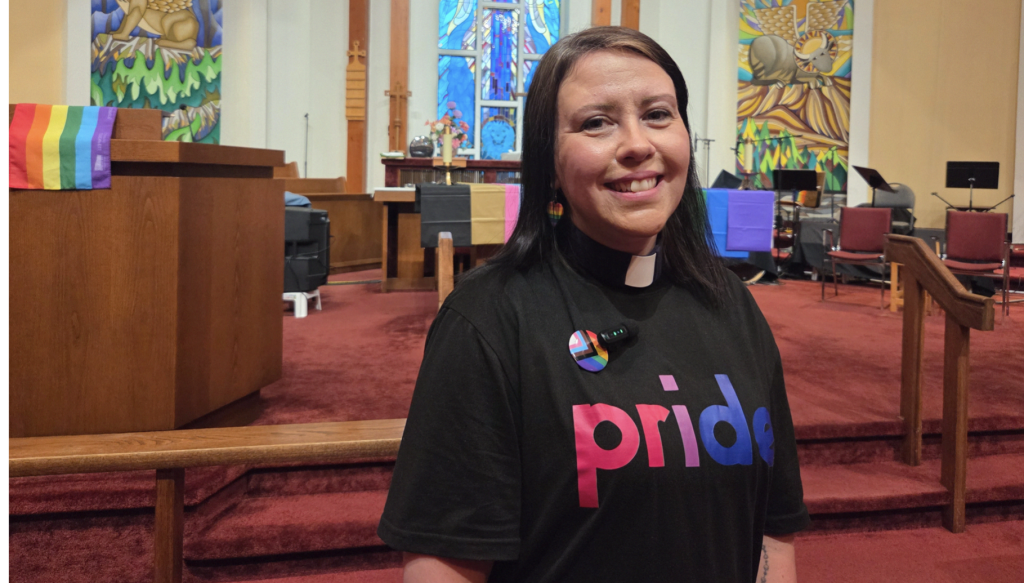
“I shared my story last year as a 45-year-old woman who finally, in front of my congregation, was able to say the words that I am part of this community,” she recalled.
“And that came with a lot of nerves and fear. But in doing so, it’s been an absolutely wonderful year full of blessings. I’ve had so many people reach out to me and say, ‘You know, you told my story. I can’t tell it yet. Thank you.”
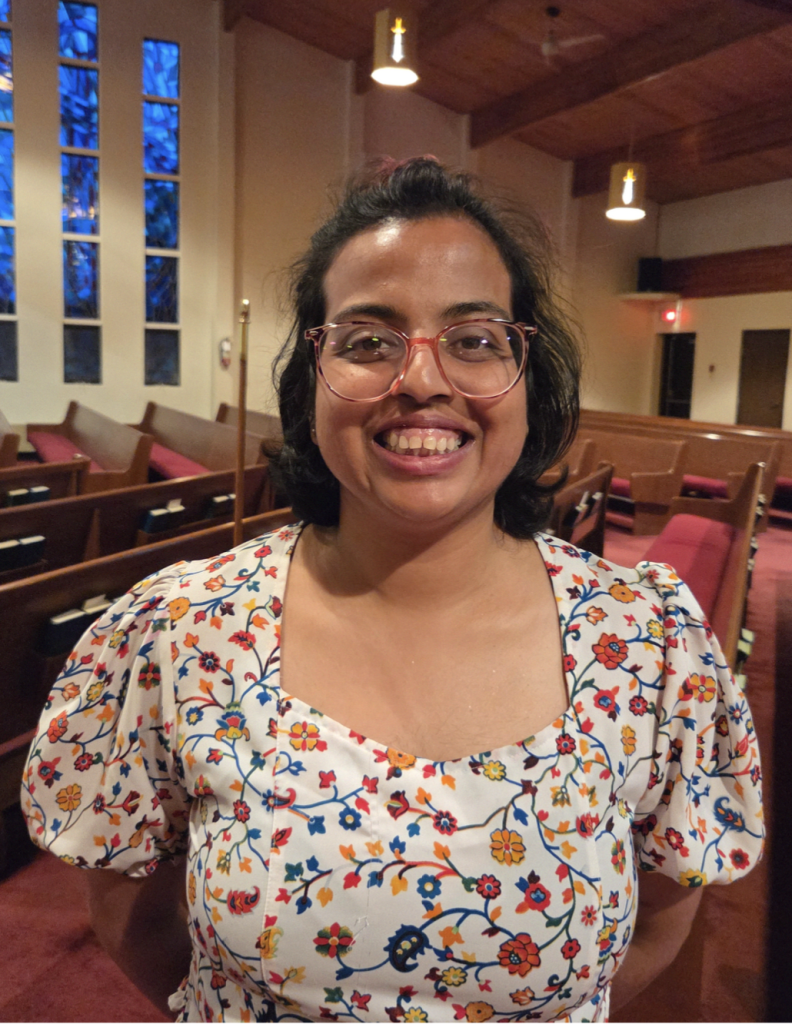
Tharuka Kannangara and her family came to Canada eight years ago from Sri Lanka. Kannangara now calls Newfoundland home and thought it was important to attend the Pride worship for her own enrichment and to provide allyship.
“Growing up in Sri Lanka you are taught it [is] a sin. But then at some point, like I met wonderful, wonderful people and I was able to build friendships, relationships,” Kannangara said.
“That’s actually where things changed for me,” she continued. “I had a friend who was complaining about his boyfriend and he was so upset because the boyfriend was being cruel to him. And then I looked at him and I said, ‘There’s no difference between your relationship and my relationship!’ I still remember the night; it was at a coffee shop in Sri Lanka and that’s the day things changed for me.”
Anglican leaders offer advice for other faiths
The Independent emailed the head offices of all the other major denominations in Newfoundland and Labrador and asked if there were any inclusive services planned in the near future for members of their faith communities who identify as queer.
Only the Jewish Community Havura responded before the time of publication, saying they’re planning events throughout the summer, including an Out in Faith program scheduled for July 9.
The Independent did not hear back from the Roman Catholic Archdiocese; the United Church; the Salvation Army; Muslim Association of Newfoundland and Labrador; Sikh Society Newfoundland; nor the Pentecostal Assembly by the time of publication. Following the story’s publication, Rev. James Ravenscroft of the St. James United Church, told The Independent that the United Church has been inclusive since the late 1980s and that his St. John’s congregation facilitates several queer-affirming groups. They’re also in the “early stages of developing a worship service that will be LGBTQ led as well as focused,” he said.
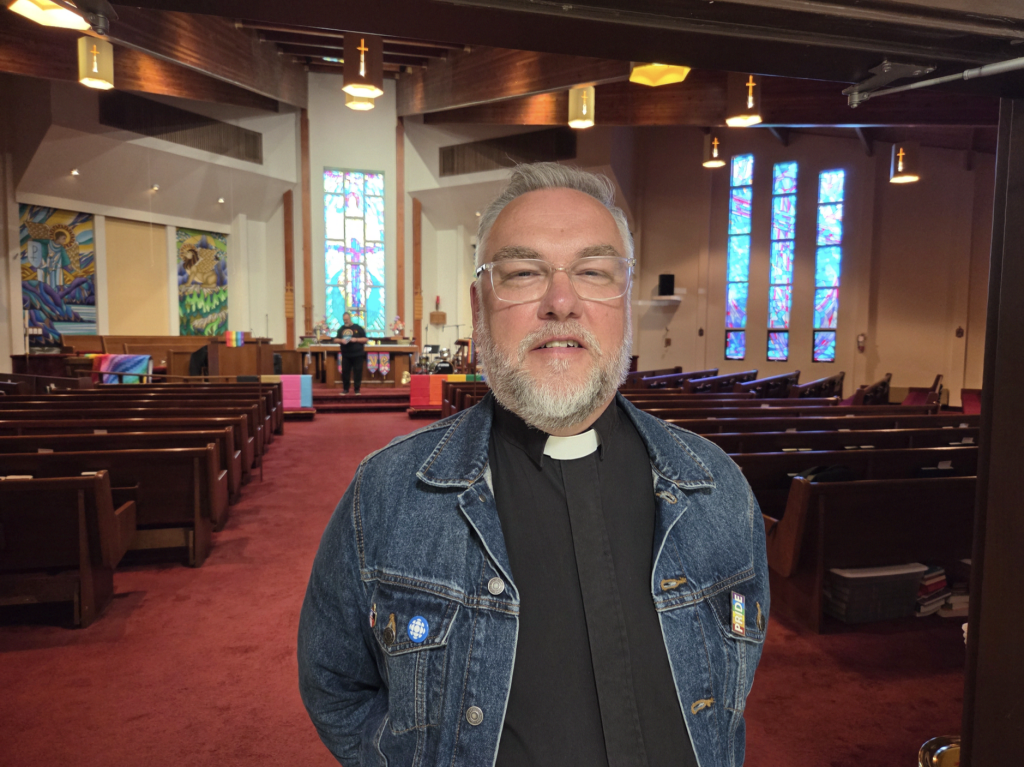
Queen’s College Dean of Theology Robert Cooke says, like Kannangara, exposure and understanding are key for other faiths and faith leaders to form similar bridges and bonds within their communities, similar to how he says the Anglican Church is doing it. He says literal interpretations of scripture shouldn’t be used to “cherry pick” support for one’s view.
“If there’s hate and discrimination, bigotry in your heart, you will read that into scripture. If you come from a place of love and inclusion, you read that into scripture,” Cooke said.
“My conversations with people who have moved from being non-affirmative to affirmative, a lot of it comes from personal experience,” he said. “So getting to know someone who is queer and realizing this person is just like everybody else, especially in the context of faith, comes from entering into an honest, open relationship with people. And from my experience, when people do that, it generally leads to more inclusion.”
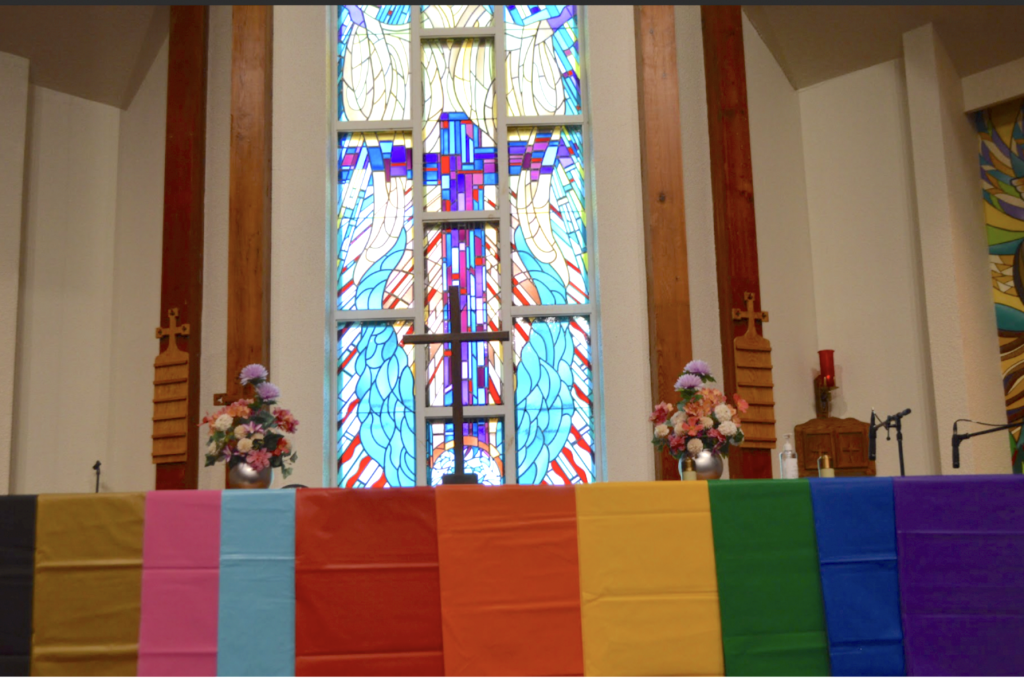
Nearing 10 p.m. during the Monday night service, Mugford and other members of St. Mark’s take down the Pride banners and flags, while encouraging those last to leave to take home a plate of leftover cookies. Mugford said the main Anglican Cathedral in St. John’s hosting the Pride worship next year is special, and he looks forward to joining in.
“My culture has taught me to listen. My career has taught me courage. My faith has taught me love. And Labrador, my home, has taught me endurance,” Mugford said.
“And somewhere in all of that, I learned this: God was not something I had to reach for. God was and is already here.”
Editor’s note: This story was updated on Aug. 3, 2026 to include an email from St. James United Church Rev. James Ravenscroft detailing his and other United congregations’ efforts to be more inclusive of sexual and gender minorities.

Author
Related Articles

May Day Rally Shows New Face of Today’s Labour Movement
Turnout for May 1 march and rally in St. John’s one of the biggest yet in this province
Recimply the Best: Pitch and Pick Competition Winner Aims to Reduce Paper Waste
Recimply won big at Genesis’ annual Pitch and Pick competition last week. The startup is solving the problem of non-recyclable paper receipts.

Coming Home Queer for the Very First Time
For three days in July, queer Newfoundlanders and Labradorians from all over the world celebrated a rural homecoming 30 years in the making.
As Innu exhibit opens in Labrador, Grand Chief says truth must come before reconciliation
Innu Nation Grand Chief Jodie Ashini says it’s disappointing to open the Innu Pakassiun exhibit without the provincial government’s participation, but Innu know their history and who they are
Liberals’ Bill C-39 a wake-up call for Canadians: Avi Lewis
‘Cracks starting to show in the Carney consensus,’ Lewis tells N.L. NDP convention in St. John’s
As NDP convention gets underway in St. John’s, will N.L.’s third party prioritize growing rural support?
Former party candidates say it’s a steep hill to climb, but there are ways