
BP withdrawal from Bay du Nord a ‘win’: climate advocates
Equinor says controversial project still on track, as concerned residents ask oil execs tough questions during public meetings this week
Six men from Equinor are seated at the front of the room, a small, carpeted banquet space inside Corner Brook’s Glynmill Inn.
Following introductions, they deliver an hour-long presentation on Bay du Nord, reminding the 10 or so residents in attendance how well thought out the proposed project is and how much it will benefit Newfoundlanders and Labradorians.
It will bring “significant money from taxes and revenues to the province — it’s lots of jobs — for years and years to come,” Equinor Canada Vice President Jim Beresford tells the handful gathered in the room. “But I can hand-on-heart say that the Bay du Nord project will touch every corner of this province and every person in some form or fashion.”
The presentation is followed by a question-and-answer session. Attendees ask about procurement policies, climate impacts, oil spill response capabilities, and the significance of Bay du Nord partner and global energy giant BP’s decision to pull out of the controversial project altogether.
Will you stand with us?
Your support is essential to making journalism like this possible.
Earlier this week BP announced it is selling its 37.2 per cent stake to Equinor, which is majority owned by the Norwegian people and their government.
BP’s Bay du Nord departure “doesn’t change anything [with] the project direction,” Project Manager Asbjørn Haugsgjerd tells a resident who asks about the recent development. Haugsgjerd says Equinor is still “really committed” to the project and the company will “explore other partnerships.”
The Corner Brook event is part of an island-wide series of consultations by the Canada-Newfoundland and Labrador Offshore Energy Regulator (C-NLOER) — previously the C-NLOPB — about Bay du Nord’s development plan.
The largely unknown tour visited Clarenville and Marystown last month and stopped in Gander Wednesday before wrapping in St. John’s Thursday. Two virtual sessions were held last month and no more are planned, but residents can make written submissions to the regulator until Aug. 20.
Equinor reps vague with answers
It’s not clear that attending the sessions in person offers any advantages, as most questions posed Tuesday in Corner Brook were answered vaguely or not at all.
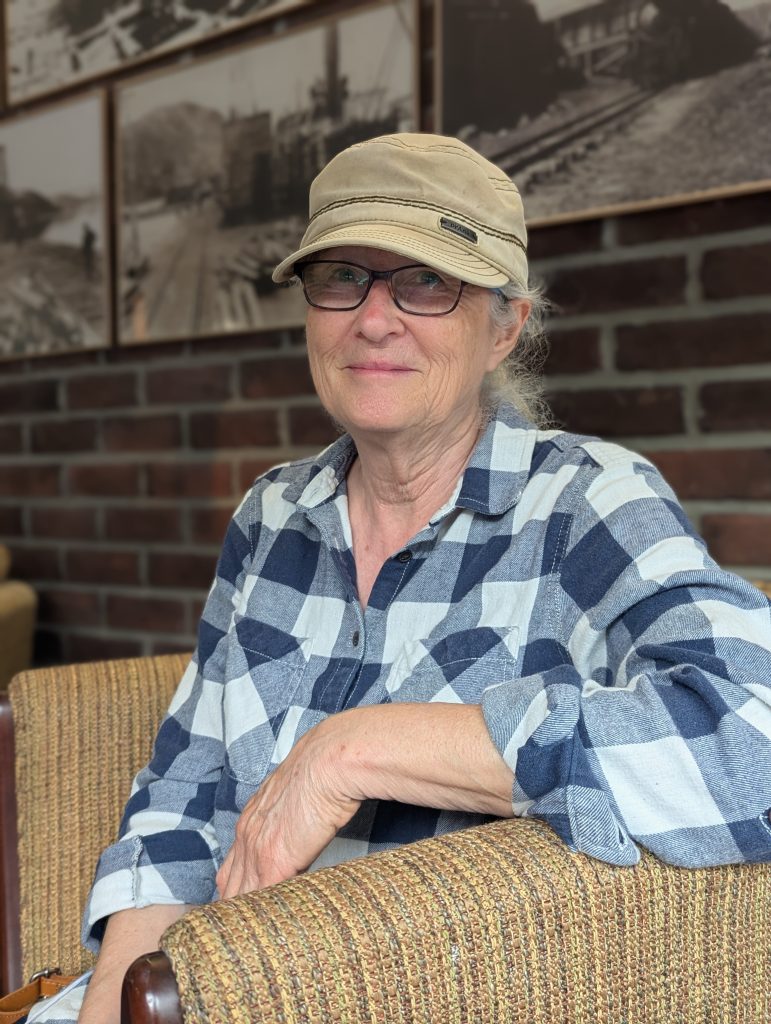
Steady Brook resident Chris Short asked the Equinor reps about the global shift to renewables and the accompanying economic uncertainty, and also about the company’s plan to respond to an oil spill or blowout.
Colin Moores, a safety and sustainability manager at Equinor, said spill response “starts with prevention and design of our wells,” but he never explained how the company would remediate a spill or blowout. Instead, he tried to reassure Short by saying his company has “drilled many wells, so we’ve gained a lot of experience there, and we implement industry best practices.”
After the event, Short told The Independent she “wasn’t expecting [a response], to be honest,” explaining she thought it was important to ask the question anyway for the benefit of those in attendance, and so that “someone at least is showing a concern for this.”
“It struck me that they’re so geared on this sort of process, and the safety aspects and the engineering aspect of it, but they don’t see anything else,” she added, referring to warnings from climate scientists that the world’s remaining oil reserves must be left in the ground to limit the worst impacts of global warming.
The C-NLOER prohibited The Independent from recording the public event for fear attendees may be afraid to speak freely. Instead, the regulator is recording the sessions itself and says it will post transcripts on its website in the coming weeks. Spokesperson Catherine Warren told The Independent the numbers of people taking part in each public session are not available to share.
Advocates say BP exit an opportunity to push government toward renewables
Climate advocates say BP’s withdrawal from the project is significant in more ways than one.
Sierra Club Canada Communications Director Conor Curtis, a native of Corner Brook, says the departure should be used as an avenue for Newfoundlanders and Labradorians to press the provincial government to do more to invest in, and attract, opportunities for renewable energy solutions.
“I saw a lot of spin in the media,” he says, referring to industry and government responses to BP’s exit. Curtis says companies like Equinor have an image to maintain as global oil demand and prices wax and wane.
“Oil and gas expansion is something that oil and gas corporations need to keep up the image of,” he says. “Their business model is built upon this bubble that is based upon the idea that oil and gas will expand. They will drag that on for as long as possible to keep that image afloat.”

Kassandra Drodge, an energy transition and advocacy coordinator for Sierra Club in St. John’s, has been leading public discussions around alternatives to Bay du Nord since 2022. She says she wasn’t surprised when she heard about BP pulling out.
“This project has been on the cusp of uncertainty for the last three years,” she says, adding new fossil fuel projects during the climate crisis “are not only environmentally risky, [they’re] economically risky.”
Drodge calls BP’s withdrawal “a win.”
“It’s a win for the environment. It’s a win for our oceans. It’s a win for the whales and the fish that are already feeling the stress of climate change outside of the risk of an oil spill happening from this project.”
Fossil fuels making planet hotter, more dangerous
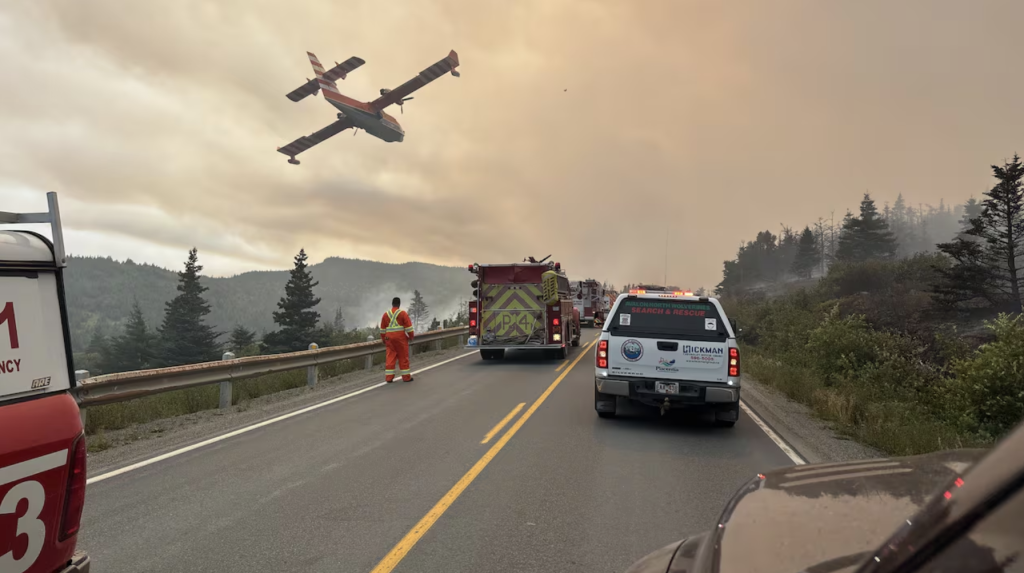
Sierra Club and other environmental groups echo climate scientists, saying the continued extraction and use of fossil fuels is making severe weather events more frequent, including drier conditions which lead to more, and more intense, wildfires. Citing Department of Fisheries and Oceans assessments, the group says developing Bay du Nord would put whales, salmon and other ocean species at risk.
If built, the project would represent Canada’s first-ever deepwater oil well, an unprecedented scenario that Sierra Club worries about when it comes to the potential for an oil spill or blowout in what Equinor itself describes as a “harsh environment” in the cold, iceberg-laden waters of the North Atlantic Ocean.
Sierra Club and Quebec partner Équiterre have been in a legal battle with Equinor. A lawsuit filed on their behalf by EcoJustice in 2022 accused the federal government, in its environmental approval of Bay du Nord, of failing to consider the project’s total emissions over its lifecycle.
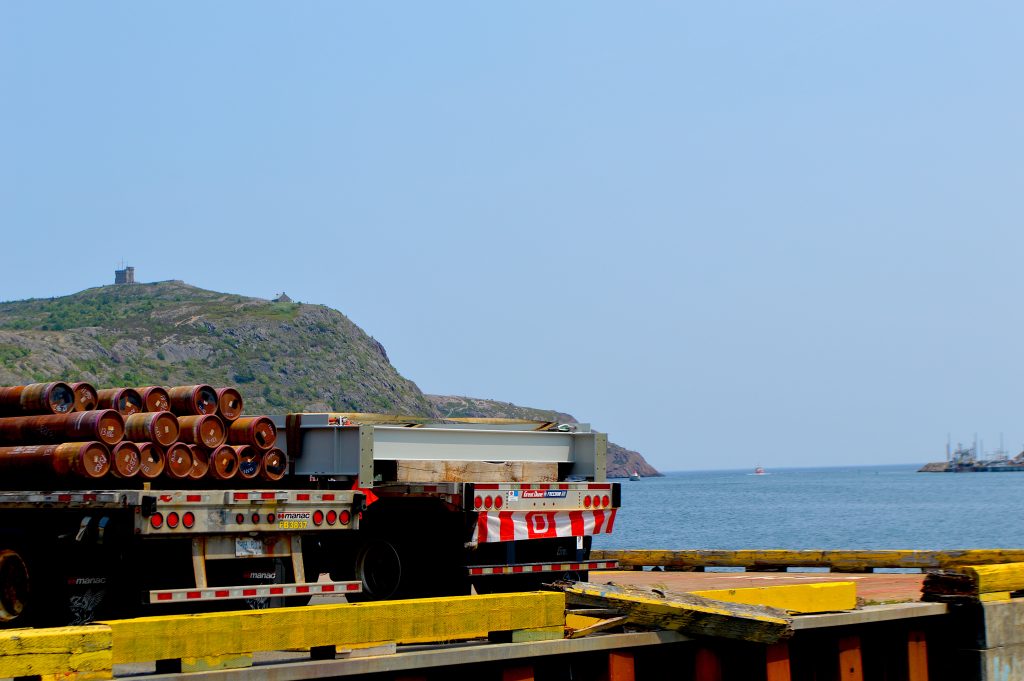
If brought online, some estimates put output from Bay du Nord at 175,000 barrels of oil per day, with more than half a billion barrels now projected. An environmental estimate put the emissions at an average of about 200,000 tonnes of greenhouse gas emissions per year.
In a 2023 Canadian Press story, a lawyer representing Equinor reportedly argued in court that the company could not be held responsible for downstream emissions — those which occur after the fossil fuels are extracted — because the company can’t predict how the oil will be transported and used. The appeal to overturn Bay du Nord’s approval was dismissed by the federal court in 2023.
Sierra Club and Mi’gmawe’l Tplu’taqnn, which represents eight Mi’gmaq First Nations in New Brunswick, appealed the federal court’s decision, arguing it failed to consider the impact that shipping the oil could have on Mi’kmaq fishing rights and in the government’s duty to consult First Nations. Last month the Federal Court of Appeal dismissed the groups’ application.
On Tuesday, an Ecojustice spokesperson said Sierra Club and other appellants have until early September to seek leave to appeal to the Supreme Court of Canada.
Bay du Nord remains a political and environmental football
In the age of pollution-driven climate change, Bay du Nord has been a football of sorts.
Sierra Club sees the project as a bulwark — a defensive wall against an oil and gas industry trying to expand. The group views delays and setbacks for Bay du Nord as a template for other groups to use when fighting other oil projects on North America’s east coast or across the country.
“The science is clear: there is no room for new oil and gas if we want a safe future. The law must catch up with the entwined climate and biodiversity crisis,” Sierra Club Executive Director Gretchen Fitzgerald said last month.
“Communities across Canada are rising up, demanding an end to fossil fuel expansion and environmental backsliding, and real protection for the lands, waters, and ecosystems that sustain us.”
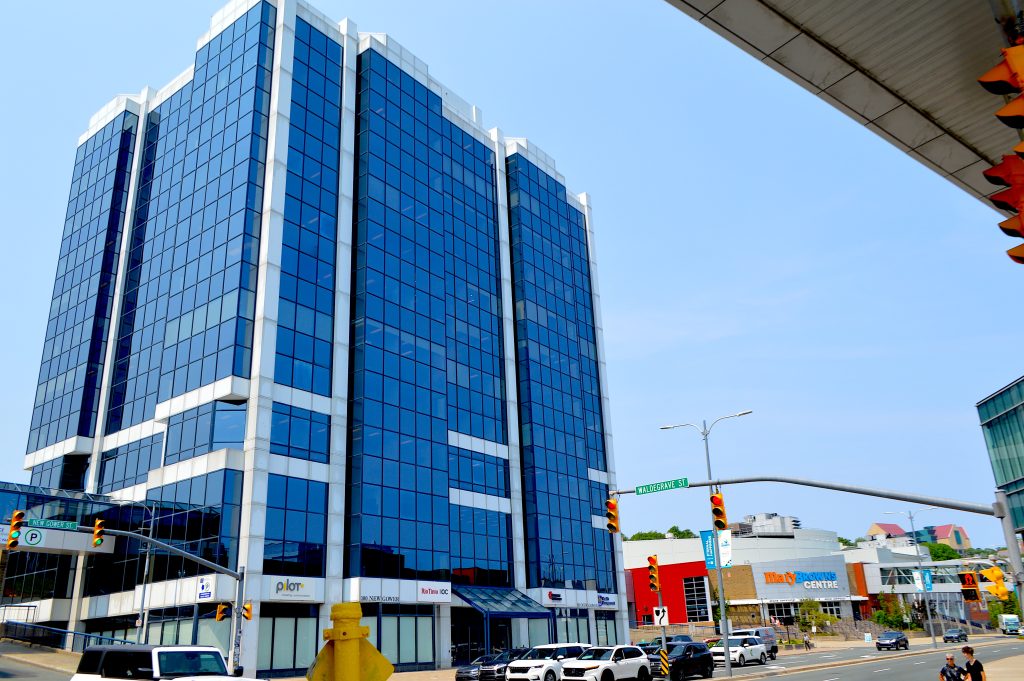
Politically, most provincial and federal politicians have embraced Bay du Nord, while others have been hesitant to run with it, like former federal environment minister Steven Guilbeault, a climate activist prior to his time in public office. Guilbeault faced harsh criticism as minister, particularly in Quebec, for even considering the project.
In 2022, Guilbeault approved Bay du Nord based on the final Impact Assessment Agency of Canada report that determined the project would not have substantial environmental impacts. In November, after being shuffled out of his portfolio by Prime Minister Mark Carney and amid continued rollbacks of environment and climate policies by the Liberal government, Guilbeault resigned from cabinet.
In 2023, Equinor announced it was pausing the project for up to three years, citing changing market conditions. Then, in June 2025, Equinor Canada Country Manager Tore Løseth announced in St. John’s that work would ramp back up, targeting at least two oil fields in the deep Atlantic Ocean 500km east of St. John’s — the Bay du Nord and Cambriol basins.
In an interview with Radio-Canada Monday, Løseth said BP’s withdrawal from Bay du Nord will have “no consequence for the progress” of the project. He called Bay du Nord “a strategic and strong project.”
Lobby group Energy NL also supported news that Equinor would go it alone. CEO Charlene Johnson — a former provincial environment minister — called “100 per cent ownership of the project by Equinor” another positive step toward sanction. Offices for Energy NL and BP are located in the same building in downtown St. John’s.
Premier Tony Wakeham, who was on a trip to Alberta when news broke that BP was out, said Equinor has made it clear it remains fully committed to making a final investment decision in 2027, adding in a statement that his government remains a strong advocate for Bay du Nord because it means “thousands of good-paying jobs, opportunities for local businesses, significant economic growth and long-term benefits.” On Tuesday, Haugsgjerd told people in Corner Brook the project would bring 650 direct jobs.
No public money for Bay du Nord, warns expert
“BP has been kind of struggling compared to its peers like Shell and other American supermajors,” says Yrjö Koskinen, director of research at the Institute of Sustainable Finance at Queen’s University and a professor at the University of Calgary.
Koskinen says it made sense for BP to sell its assets in Bay du Nord to help reduce the company’s debt and concentrate on projects that offer a “faster payback”. He thinks Equinor taking 100 per cent of the Bay du Nord risk is based in part on the company’s decades of experience extracting oil in deepwater environments, including the Arctic waters around Norway.
“This is bread and butter for Equinor. This is what they do. They are the best in the world,” he says, describing Equinor’s sole proprietorship as a “neutral situation” from an investment standpoint.
Still, Koskinen says Newfoundlanders and Labradorians should be wary of investing any public money in Bay du Nord, and that he agrees with those who say no public subsidies should flow Equinor’s way. “Private businesses always love public money,” he says. “The private sector keeps the money when things go well, and then they share the risk with the public sector when things go bad.”
Opposition to public subsidies for Equinor is common ground between Koskinen and Sierra Club.
“With those limited funds that we have, provincially or in terms of the federal government coming in and helping out, why aren’t we instead looking at how the future is going to be electric? We know one of the big obstacles there is transmission infrastructure. Why isn’t there public investment in that? That would make a lot more sense,” Curtis says. “We’re aiming for the future and we should be using public dollars to do that […] not wasting billions of dollars on oil and gas infrastructures as we’re doing across the country.”
Drodge challenges Wakeham and his government to consider that.
“When we invest in [renewable energy], we’re also investing in wildfire preparedness, we’re also investing in climate adaptation. When we build renewable projects or products, we’re also expanding electricity capacity as well as our transmission lines. And I know a lot of smart people here in the province who are already doing that work,” she says.
“I don’t see Premier Wakeham putting much attention into that — not as much as he should.”
Correction: A previous version of this story said Steven Guilbeault left cabinet in May; he in fact resigned last November and in May announced he was leaving federal politics.

Authors


Related Articles

As Innu exhibit opens in Labrador, Grand Chief says truth must come before reconciliation
Innu Nation Grand Chief Jodie Ashini says it’s disappointing to open the Innu Pakassiun exhibit without the provincial government’s participation, but Innu know their history and who they are

Liberals’ Bill C-39 a wake-up call for Canadians: Avi Lewis
‘Cracks starting to show in the Carney consensus,’ Lewis tells N.L. NDP convention in St. John’s
As NDP convention gets underway in St. John’s, will N.L.’s third party prioritize growing rural support?
Former party candidates say it’s a steep hill to climb, but there are ways