
Province shocks Innu, disputes their history in Labrador
Innu Nation cancels cultural exhibit, alleging executives of The Rooms provincial museum told them to remove reference to Innu presence in Labrador prior to 1700s
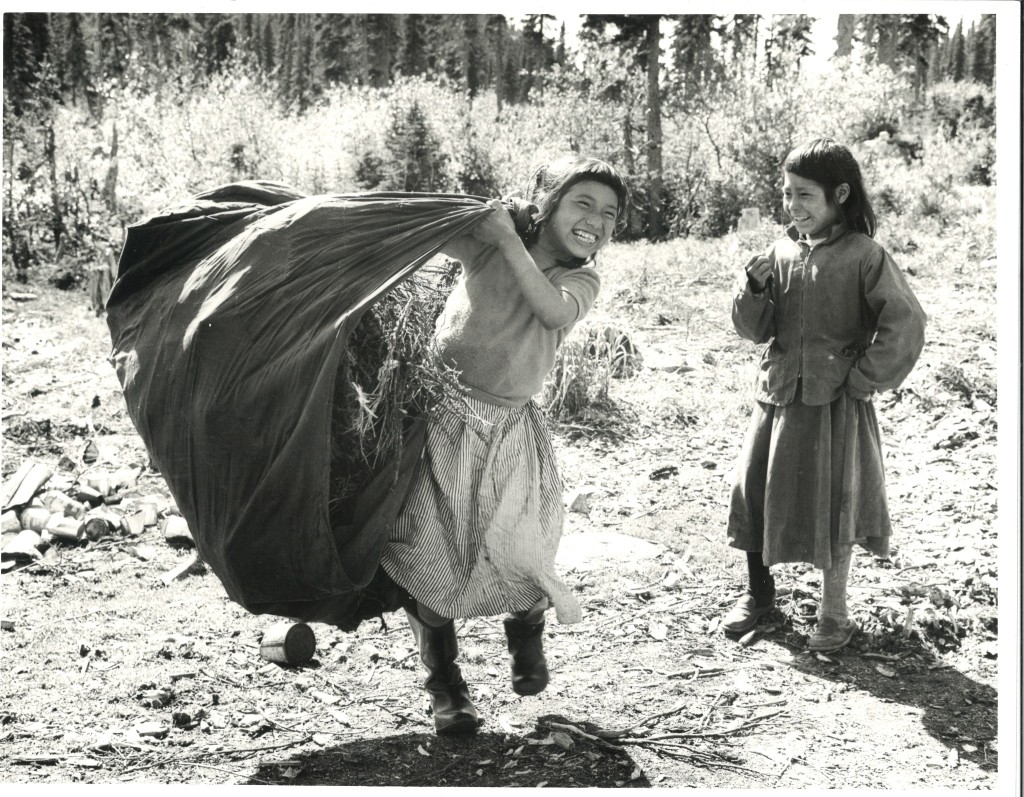
The Government of Newfoundland and Labrador is contradicting accepted historical knowledge and oral history that Innu have lived in Labrador for thousands of years.
In response, the Innu Nation, which represents Innu in the two First Nations communities of Natuashish and Sheshatshiu, has cancelled a much-anticipated cultural exhibit that was set to open at the Labrador Interpretation Centre in North West River on June 21, National Indigenous Peoples’ Day.
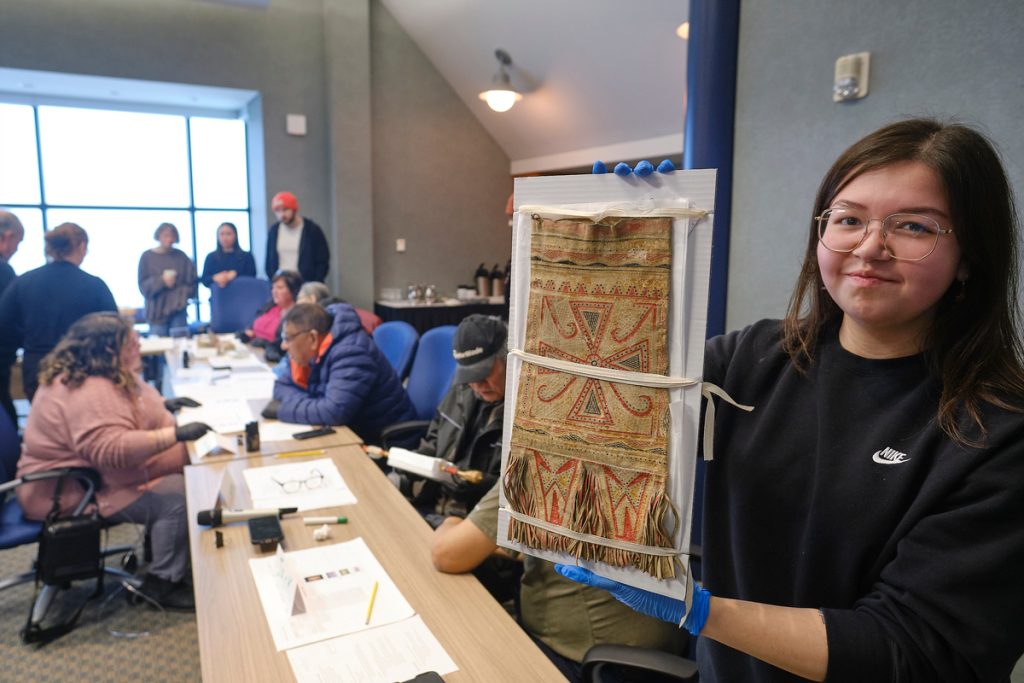
Innu Nation Cultural Guardian Jodie Ashini, a lead organizer of the planned public display, says she was instructed by executives of The Rooms provincial museum and archives to change the historical timeline and artifact details slated for presentation as part of the Innu Pakassiun exhibit.
Ashini says Innu and staff from the Labrador Interpretation Centre were unpacking artifacts on Tuesday, June 16 when she was asked to join a call with executives from The Rooms, a crown corporation which operates as a museum, art gallery and archives in St. John’s and runs satellite museums in other parts of the province, including the Labrador Interpretation Centre.
Will you stand with us?
Your support is essential to making journalism like this possible.
“We developed an Innu timeline to go with the exhibit and they told us that we can’t use it, that it’s not what the province believes is archaeologically correct,” Ashini recalls.
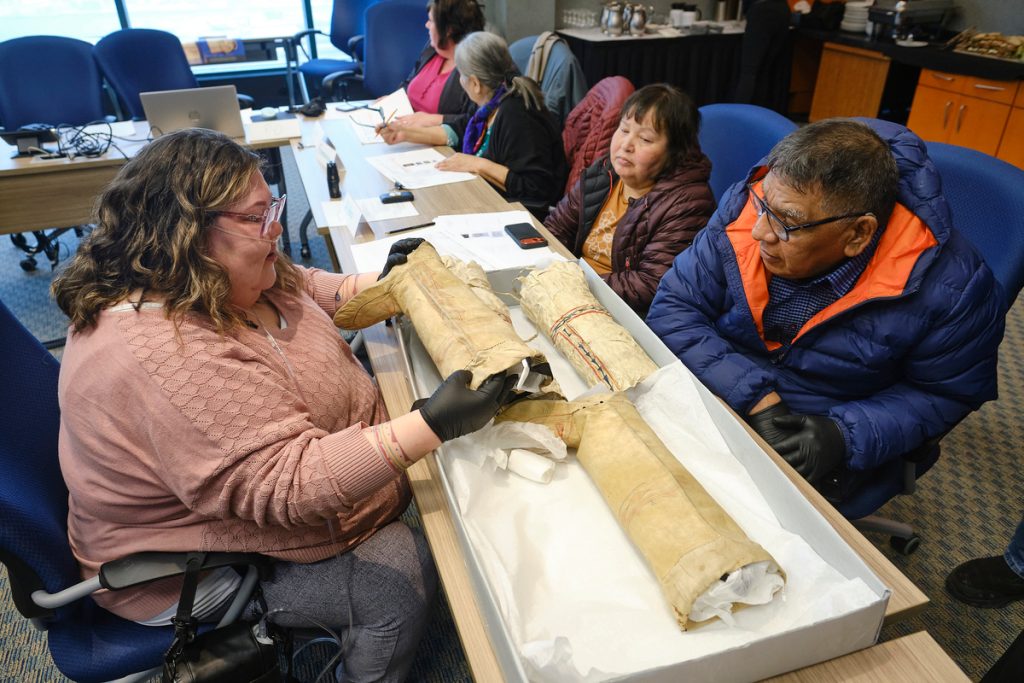
Ashini says she was told the Government of Newfoundland and Labrador believes Innu were not present in Labrador prior to the 1700s and had only been on the land for 300 years. All the stone tools found on traditional Innu sites weren’t allowed to be labelled as related to Innu, Ashini says, adding she was told the new timeline is accepted by the Government of Newfoundland and Labrador and could not be changed.
“We were just really taken aback and heartbroken,” she says. “This is their stance — that it’s not allowed to be presented, and they really said, ‘You can show whatever you want in your own building on your own land, but not in ours’ — and that was their words.”
Ashini says this was going to be the first ever Innu-led exhibit, and that the staff at The Rooms and Labrador Interpretation Centre worked incredibly hard to help Innu hold consultations and prepare the exhibit.
Government about-face related to court case?
The Provincial Archaeology Office appears to have accepted a new version of Innu history, evidenced in a 2023 court case.
During the case of R v Andrew et al over caribou hunting, the Government of Newfoundland and Labrador’s Department of Justice and Public Safety requested expert research reports on evidence for long-term Innu presence in Labrador from the Provincial Archaeology Office. The Provincial Archaeology Office told the court it found through archaeological and historical records that there is no evidence of Innu presence in Labrador between the 1500s to 1700s, that First Nations sites prior to the 1500s have no connection with Innu, and that Innu first arrived in Labrador around the 1700s.
The stance was taken by the head of the Provincial Archaeology Office and, according to Ashini, discredits Innu oral history about the evolution of stone tools across millennia. She says the province said the changing tools over thousands of years are evidence they belonged to different Indigenous groups. Ashini says Innu tools evolved and changed over time as her ancestors learned new methods and refined their technologies.
Ashini was surprised by the government’s about-face as she and her father Daniel helped the head of the Provincial Archaeology Office, Jamie Brake, with his Masters degree. Ashini says Brake worked on his masters about Innu history on Innu lands with a permit from Innu Nation and found an artifact Daniel identified as a snowshoe needle still used by Innu today, as well as charcoal samples dating back 1,500 to 1,600 years, while others were as recent as 300-700 years old.
Brake submitted his thesis in June 2007 to the Department of Anthropology and Archaeology at Memorial University. It is titled Ashuanipi Kupitan: Excavation at the Ferguson Bay 1 Site in Western Labrador.
In the 200-page document, Brake thanks Daniel Ashini “for spending time with us on Ashuanipi Lake, for telling us lnnu legends at night by the campfire, and for teaching me so much about Labrador and its wonderful people. Daniel also provided important information about some of the material culture encountered at the site, and it was him who suggested the title for this thesis.”
Ever since the provincial archaeology office changed its stance in 2023, Ashini says it has “been my nightmare.”
“I’ve been living constant battles with the province and they totally exclude our oral history,” she says. “They disregard Innu knowledge, Innu history and they’ve really taken the stance with the Provincial Archaeology Office.”
The Independent requested comment from the province’s Office of Indigenous Relations and Reconciliation, led by Minister Lela Evans, who represents Mushuau Innu in Natuashish in her riding of Torngat Mountains. The office referred the request to the Department of Tourism, Culture, Arts and Recreation, which is responsible for the Provincial Archaeology Office. The Independent asked the department for an interview with Minister Andrea Barbour, and one with Brake, but they did not confirm or deny the request by the time of publication.
Ashini says the province’s stance contradicts the findings and positions of many archaeologists. At the 57th Annual Meeting of the Canadian Archaeological Association in 2025, multiple academic papers were presented countering the Provincial Archaeology Office’s stance, including from Marianne Stopp, who authored one called Considering Innu Long Term Presence in Southern Labrador, Canada. Stopp argues that Innu cultural continuity can be tracked using different and combined evidence, and that Innu persisted through hundreds of years and had changing materials and tools.
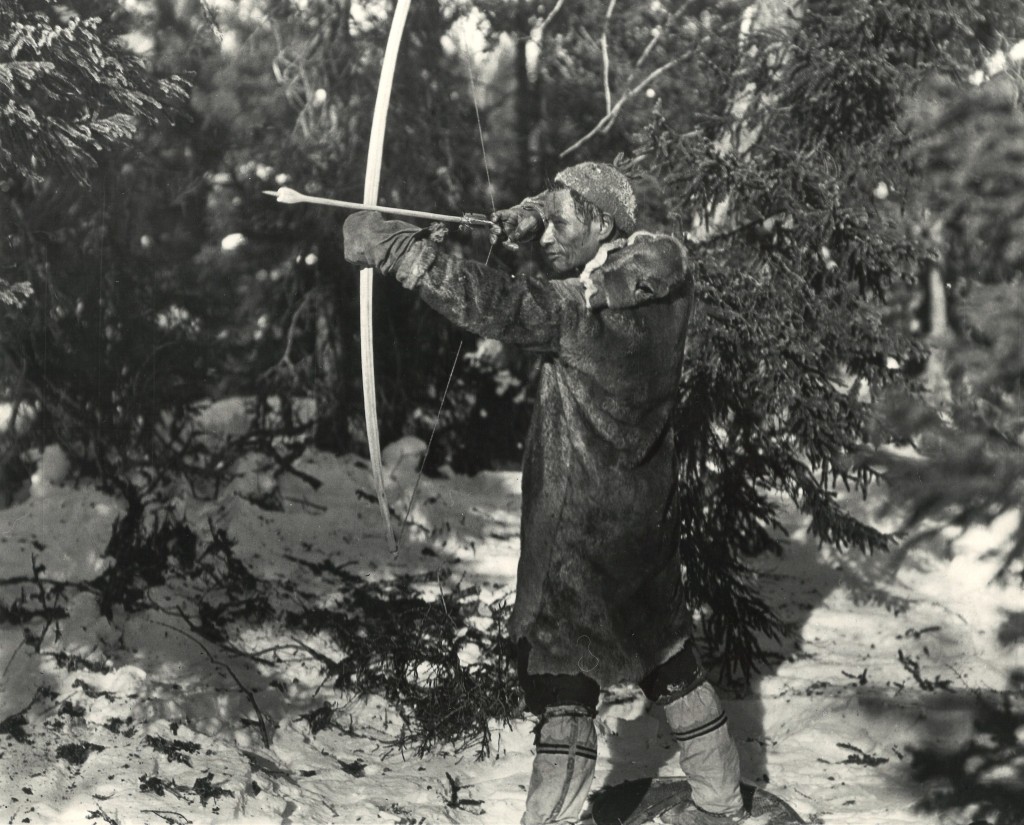
“Innu are present in the 16th century and there is no documentary indication that a different people rapidly occupy interior Labrador around 1700,” she writes. “Early cartography, reportage, and correspondence reveal broad Innu occupation of eastern Quebec and Labrador, and extensive geographic knowledge and overland travel. These records are bridging evidence for the 1500-1700 time frame during which Innu are said to be absent. They are, further, evidence that links early historic Innu with precontact ancestors.”
‘It’s extinguishing our rights’
Ashini says she is fighting back against the province’s timeline because she doesn’t want Innu history and her own family’s history to be erased.
“I’m not going to let someone that has never lived with an Innu person in the country — and lived off the land and lives off Nitassinan — tell me that my ancestors have not been here for more than 300 years,” Ashini says.
Innu Pakassiun translates to ‘Innu Tools for Survival.’ The exhibit was created through a collaboration between Innu Nation, the Canadian Museum of History and The Rooms, and was set to open this Sunday.
Ashini says work on the exhibit began two years ago with a grant from the the Department of Canadian Heritage. Innu Nation said the exhibit was intended to show a continuity of Innu culture over the past thousands of years, showcasing the ingenuity, resilience and survival of the Innu people.
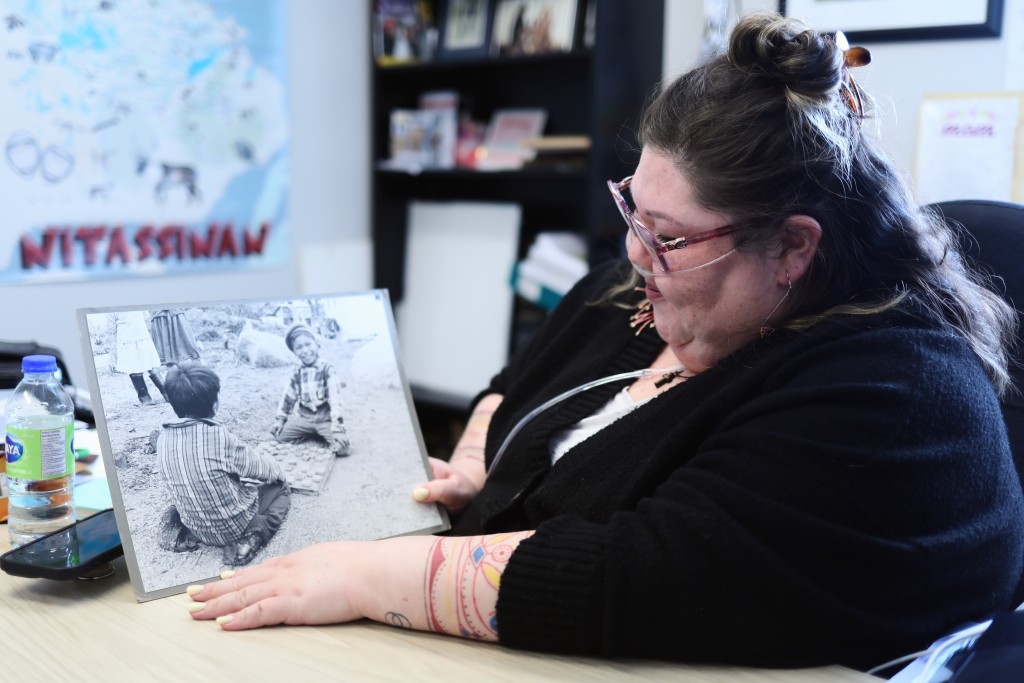
Funding was also provided by Mamu Tshishkutamashutau-Innu Education, Innu Parks and Nalcor, with The Rooms contributing time and staff to the exhibit and hosting gatherings with Elders to go through collections.
“Mary Ann Nui got to see work that her mother had made, and at that point her mother had just passed away, and she said to me, ‘It felt like a piece of my mom will come home,’” Ashini recalls. “They’re not just a coat, they’re not just snowshoes — these are people’s connections to their late loved ones.”
Innu were first settled into communities in the 1960s after living nomadically for thousands of years. Innu history and research have been repeatedly mentioned in the Government of Newfoundland and Labrador’s Provincial Archaeology Office’s yearly reviews, and the majority of past research showcased by the office says Innu have been in Labrador for hundreds, if not thousands, of years.
The 1990 Provincial Archaeology Office report states the “prehistoric Indian group known archaeologically as the Point Revenge Indians” are the ancestors of today’s Innu. The report says they were well-adapted to seasonal maritime exploitation and partial to the use of ramah chert, a semi-translucent light grey stone in Labrador.
The Provincial Archaeology Office’s 2004 Annual Review includes a Smithsonian fieldwork summary from archaeologist Stephen Loring, who describes a visit that year to Shipiskan Lake, where archaeologists found a large stemmed point of a chocolate-brown chert that was eroded on the beach and a small “late prehistoric period Innu campsite” with the eroded remains of a hearth, chert stone and ceramic sherds.
The office’s 2012 Archaeological Review says formal academic archaeological work surrounding the Innu began in the 1970s, with researcher Gilles Samson, who published articles on the Innu in 1975, 1978 and 1983, and discovered ephemeral traces of old sites. Those findings, the report says, demonstrate ancestral Innu peoples had moved into and utilized the interior area of northern Quebec and Labrador for thousands of years. Archaeologists Jean-Luc Pilon, Stephen Loring, and Scott Biggins added to the evidence through their work in western Labrador, Quebec and throughout the northern Quebec-Labrador peninsula.
In 2013, archeological sites important to the Innu were destroyed to make way for the construction of Muskrat Falls. A CBC news story from that time reported 40,000 artifacts were unearthed, most of them “of Innu origin” and dating back as far as 3,000 years.
In 2016, the Provincial Archaeology Office’s annual report says Innu sites were found with charred bone dating back around 5,560 years ago and 3,300 years ago in the Kamestastin area, a traditional Innu travelling region in northern Labrador. The difference in bone ages show the site could have been reused across millennia as sites were passed down in Innu culture, Ashini says.
“There’s meaning in areas and these places that have sites on top of sites — those are sites that Innu people shared,” Ashini says. “It’s continuity, it’s use over and over again because it means something to Innu people.”
In 2022, the federal Government designated Kameshtashtan a national historic site for its profound importance for the Mushuau Innu of Labrador after ancient campsites were found that date back at least 6,500 years.
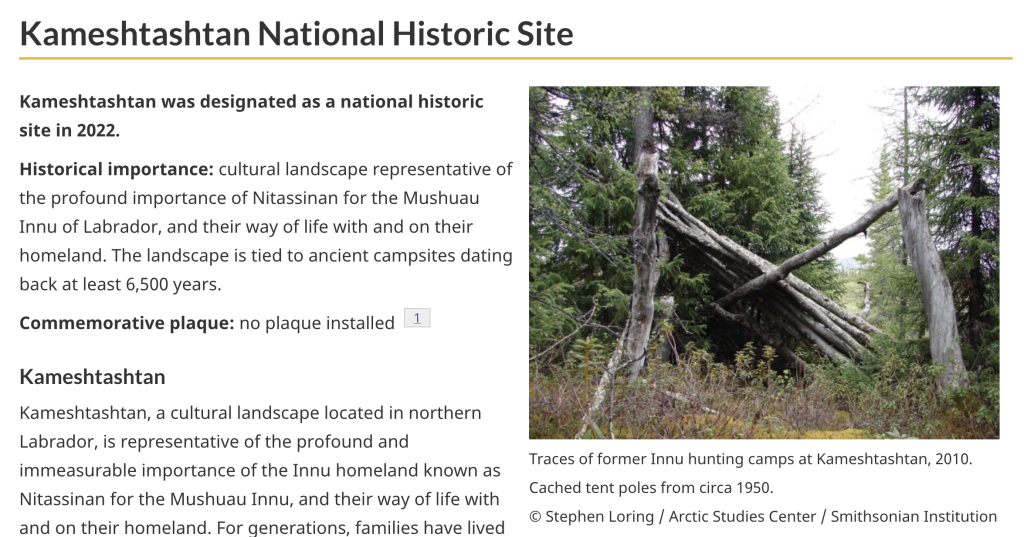
A screenshot of Parks Canada’s page dedicated to the Kameshtashtan National Historic Site, which the federal government says has historical importance because it is “tied to ancient campsites dating back at least 6,500 years.” Parks Canada.
That site contained crushed caribou bones that were put into a fire and burned, Ashini recalls, alluding to an Innu spiritual custom when, at feasts, Innu honour the caribou master by removing the marrow from the caribou bones, she explains, adding the bones are crushed in order to remove the marrow and look similar to the bones found dating back 7,000 years.
“Because there was no one back there to write it down or put it in a book, they refuse to take that as a sign,” Ashini says.
Ashini and archaeologists Anthony Jenkinson and Scott Neilsen are among the researchers continuing the work today.
Ashini says she doesn’t know what the Provincial Archaeology Office has to gain from changing the timeline to exclude Innu oral history and knowledge. “Other than hurting Innu people, I don’t know. It’s taking away our rights, extinguishing our rights. I don’t know what is there for them to gain.”
Ashini says non-Indigenous people are interpreting her culture without Innu present, then using that against Innu in publications. For truth and reconciliation to happen, she adds, Innu must tell their own story.

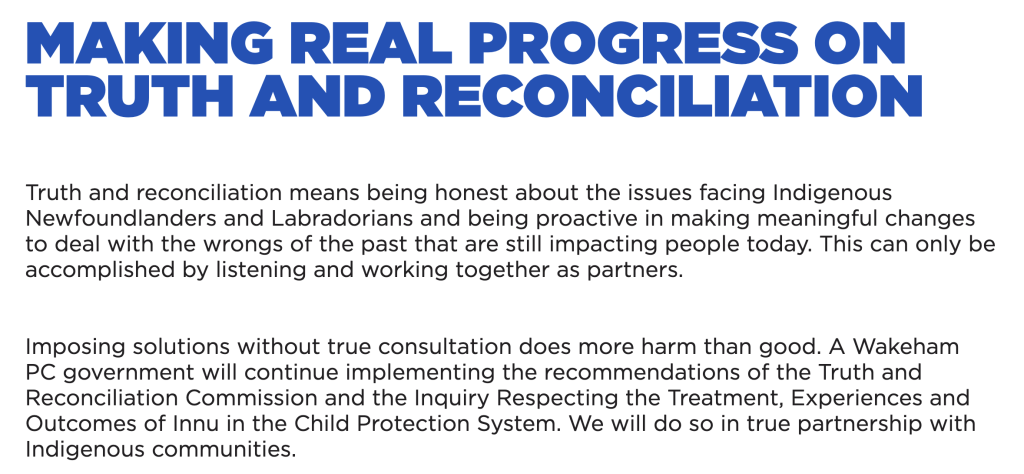
The Tony Wakeham government has promised to “make progress on the implementation of the United Nations Declaration on the Rights of Indigenous Peoples.” The declaration, which has been adopted into federal law and by the province of British Columbia, states that Indigenous Peoples have the right to self-determination, which includes controlling their own narratives, preserving oral history and dismantling stereotypes and past misinformation by sharing their own histories and worldviews.
“They’re pushing us back. It’s like the time of settlement and pushing us down and keeping us contained. They don’t want our story,” Ashini says. “It’s a way of trying to hold us in place rather than let us grow.”
Ashini says Innu must be treated as equals in Newfoundland and Labrador, and be allowed to write their own stories. She says she will continue to fight because she refuses to go back to the Innu Elders and tell them their stories are wrong, she explains.
“Their story matters, too, and I refuse to tell them otherwise. Innu kids need to be proud of who they are, where they came from, and no longer be suppressed in colonial systems. I refuse to continue to bow down to that.”

Author

Related Articles

May Day Rally Shows New Face of Today’s Labour Movement
Turnout for May 1 march and rally in St. John’s one of the biggest yet in this province
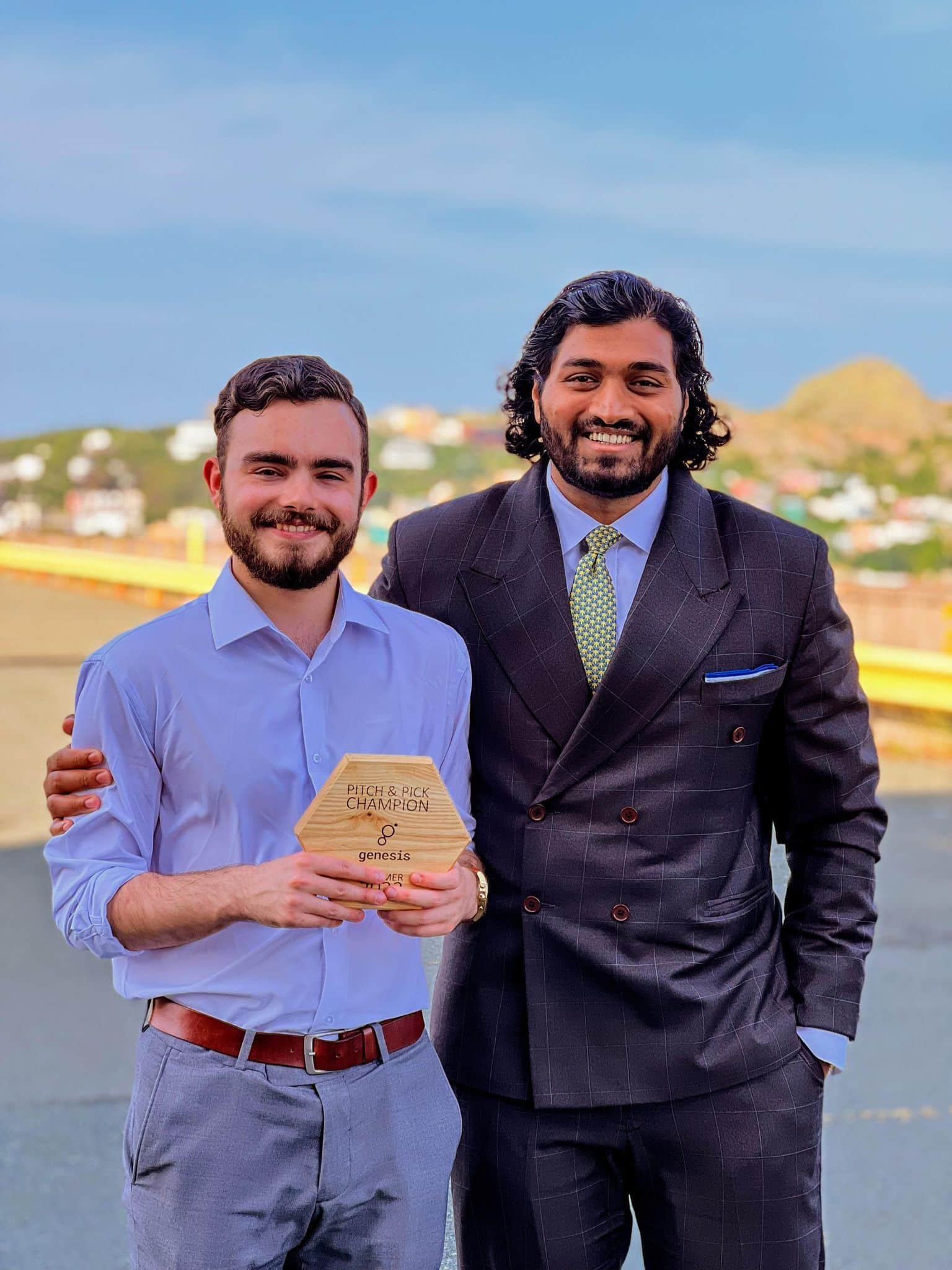
Recimply the Best: Pitch and Pick Competition Winner Aims to Reduce Paper Waste
Recimply won big at Genesis’ annual Pitch and Pick competition last week. The startup is solving the problem of non-recyclable paper receipts.

Coming Home Queer for the Very First Time
For three days in July, queer Newfoundlanders and Labradorians from all over the world celebrated a rural homecoming 30 years in the making.

Liberal MP suggests Carney government may be investigating N.L. offshore acquisition
NDP pushes for federal intervention in acquisitions tied to Israel’s occupation of Palestine, while PCs, Liberals silent on Ithaca Energy’s takeover of Suncor’s stakes in Terra Nova, White Rose and West White Rose oil projects
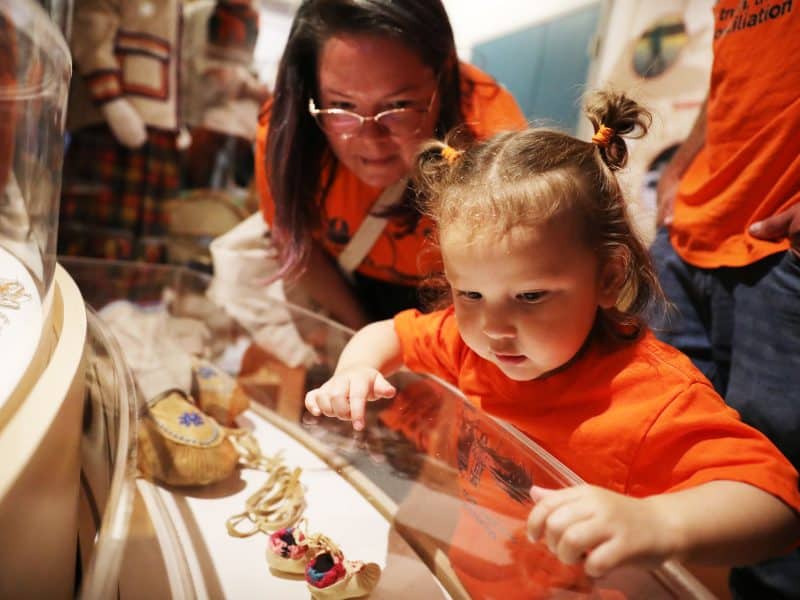
As Innu exhibit opens in Labrador, Grand Chief says truth must come before reconciliation
Innu Nation Grand Chief Jodie Ashini says it’s disappointing to open the Innu Pakassiun exhibit without the provincial government’s participation, but Innu know their history and who they are

Liberals’ Bill C-39 a wake-up call for Canadians: Avi Lewis
‘Cracks starting to show in the Carney consensus,’ Lewis tells N.L. NDP convention in St. John’s