
Report highlights components of Innu healing
Researchers hope holistic view of Innu health and well-being will reach non-Indigenous health practitioners

Healing and health can have a lot of different meanings to different people. It can mean spiritual, physical, emotional, or social health, all of which can be damaged and require healing.
For the Innu of Labrador, health is all-encompassing and each part can’t be treated as a separate thing. This is one of the thrusts of a presentation representatives of the Innu Round Table Secretariat gave earlier this week at the 18th International Congress on Circumpolar Health in Halifax.
The presentation centred around the findings of a recently published paper, ‘A process of healing for the Labrador Innu: Improving health and wellbeing in the context of historical and contemporary colonialism,’ which is based on an Innu health research study commissioned by the secretariat with funding from the Canadian Institute of Health Research.
One of the researchers, who also helped present the findings, is Annie Picard, health coordinator for the secretariat. She told The Independent that the paper and presentation were about Innu Minuennium, a word in Innu-aimun that can be translated as health and wellbeing, and is described in the paper as “an aspirational state of being associated with a place where Innu are together with family and community in intimate closeness with past and present generations, connecting to life around them with the sacred present in everyday life.”
Will you stand with us?
Your support is essential to making journalism like this possible.
Vital to look at healing as a whole
Picard said the research looked at minuennium, the impacts of historical and contemporary colonialism on it, and how it is vital for health and social service providers (especially non-Innu providers) to understand the importance of spirituality in Indigenous processes of healing.
“I think this is something that is known across Canada with the Indigenous people,” she said. “We don’t look at healing as just physical healing or just mental wellbeing. For us, everything is interconnected. You can’t be whole when a part of you is broken.”
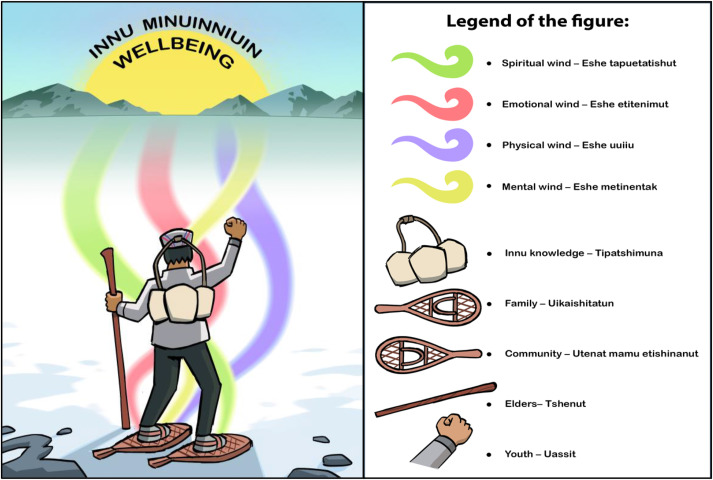
Picard referenced a concept highlighted in the paper, the four winds, which represent the spirit, the body, mental wellness and spirituality, saying all four need to be whole for a person to feel well. She said it needs to be recognized by the existing systems they work within that all are necessary for Innu to heal.
“The healthcare system, but also the governments and our partners, need to know that. For example, a person cannot feel well or whole if they’re living with 15 other people in one house,” she said, referencing the shortage of housing in Sheshatshiu and Natuashish, and in many First Nations communities across Canada. “So that has to be looked at because it has an impact. People need to have a good surrounding around them, because that is one of the things that’s important, being able to have a good environment around you.”
Colonialism still having significant impacts
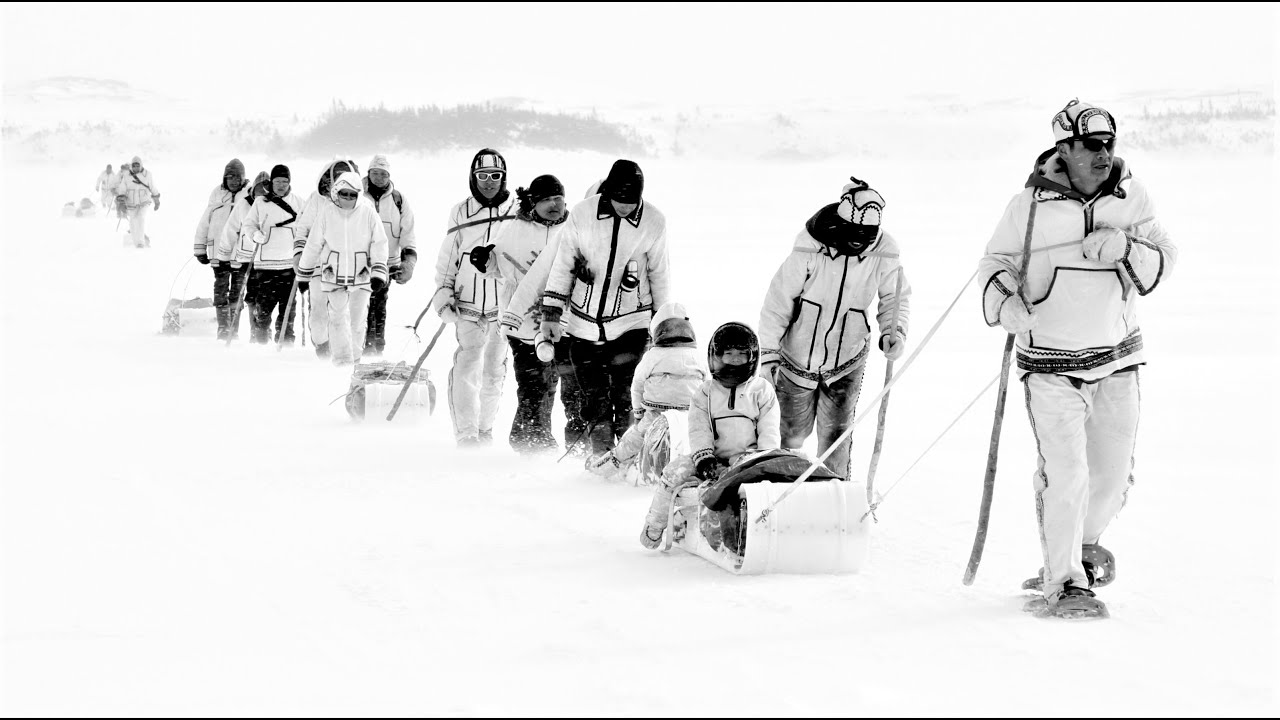
Picard said it’s important for people to remember that colonization is a relatively recent experience for the Innu, who maintained their traditional migratory lifestyle until halfway through the last century.
“Our community is very young compared to the rest of Canada,” she said. “My grandparents, who raised me for a time, were one of those people that were first settled. They remembered being on the land, growing up in the country, they would talk about, ‘Remember when we walked from this lake to that lake,’ and it just seemed like that was such a natural thing to do. It wasn’t that long ago, and we’re still trying to come to terms with what it did to our people, and how it affects us.”
Many of the 39 Innu interviewed for the paper described experiences of racism that had significant impacts on their lives, and therefore on their overall health. The paper describes five stages of healing: being ‘under the blanket’; finding spiritual strength; extending hands out; finding strength and power; and helping others. One of the participants described being ‘under the blanket’ as when a person feels as though they “cannot move from under the blanket, seeing all dark around, only seeing what happened [to you], looking down and [having] hands down […] feeling grief, sadness, anxiety [and] no hope, nothing to lean on.”
According to the paper, some of the people interviewed felt they were still under that blanket, and had not been able to move on to the other stages of healing. To move on, they need to find spiritual strength, which different people can accomplish in different ways.
“You got to be able to find [spirituality], and when you do find it, it looks different for every individual,” Picard said. “For some, it is through cultural activities and a lot of times it’s going back to our teachings that we learn from our elders. Sometimes it’s connecting to our lands and connecting to our surroundings and getting rooted in that, and for some it was through strengthening our relationship with our Creator.”
Spirituality was an important part of the traditional Innu way of life, and colonial policies attempted to remove it from them, to varying degrees of success. According to the paper, healing for the Innu involves re-discovering or regaining the prominence of spiritualities in their lives, as well as support from elders, a return to culture, and resistance to negative stereotypes.
“We provide health professionals with valuable information for considering Innu healing as a model that expands their views for the benefit of Innu seeking mental health services,” the paper reads. “Implications for non-Innu health and social service providers are about broadening their understanding of the significant role of self-determination among Innu, learning Innu ways-of-knowing and being, recognizing one’s own biases, and acknowledging the power imbalances between themselves and Innu people.”
Picard said the research and the paper are important steps for her people in achieving minuennium, and she’s hopeful of the impact it may have. She said one of the things that made it important to her as well was that some of the research had been done by Mary Janet Hill, a well known Sheshatshiu community member who passed away in 2023.
“It was really good for me to be able to work with her side by side,” Picard said. “We did have a lot of conversations about things and how we saw things, and how things used to be. I remember those conversations, and she was really strong about her opinion, about how we need to be that voice for encouraging people, our people, to recognize that we have a really strong culture too.”

Author

Related Articles
People dying in the streets, advocates say, as PCs draft new poverty reduction strategy
With poverty skyrocketing in St. John’s, frontline workers plea for stable funding, better income supports and adequate housing
Residents confront St. John’s mayor, who says city is ‘in pretty good shape’
During public event, Danny Breen acknowledged issues as residents challenged him on safety, development, council fights, and even the threat of a class-action lawsuit
St. John’s to host first Dyke March
Organizer Shaylin Smith says the July 16 event will mark a ‘return to grassroots protest’