
‘Skepticism and cynicism’ marring public view of Churchill Falls and Gull Island, says researcher
Grand Chief Jodie Ashini says Innu Nation won’t support proposed deal ‘while fundamental issues with the Innu remain unresolved’
A proposed 50-year deal with Quebec and Canada on hydroelectric development of the Churchill River. An about-face by the premier, who promised to give Newfoundlanders and Labradorians final say in a referendum. Strong opposition from protestors on Confederation Hill. And an Innu Nation that refuses to see history repeat itself.
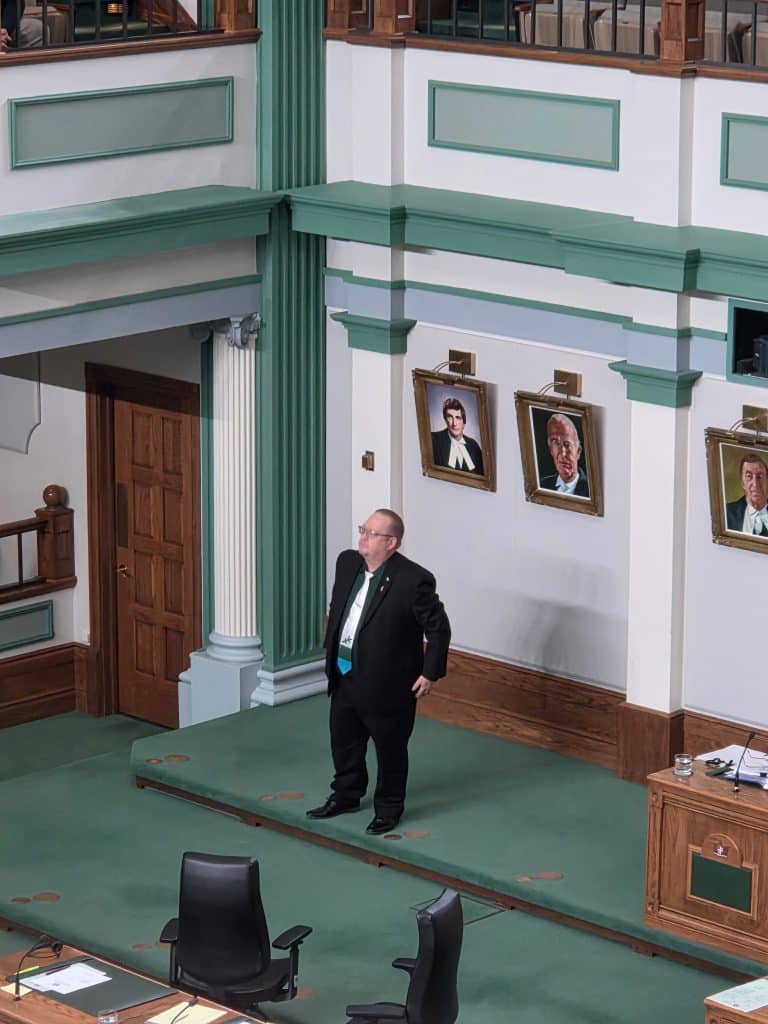
The highly controversial special sitting in the province’s House of Assembly that could determine the outcome of the province’s future got off to a shocking start Monday when, moments after the legislature opened, Labrador MHA Keith Russell announced his departure from the PC caucus to cross the floor and sit as an independent member.
The move shocked the PC caucus, including Russell’s fellow Labrador MHA, Lela Evans, who later suggested Russell may have left because he was unhappy he had not been given a cabinet portfolio. In 2014 and 2015, Russell served as the minister of Labrador and Aboriginal Affairs under then-Premier Paul Davis.
The MHA for Lake Melville, ground zero for any further hydroelectric development on the Lower Churchill River, Russell’s position on the proposed MOU matters. He did not speak with reporters Monday.
Will you stand with us?
Your support is essential to making journalism like this possible.
Russell’s unexpected move comes amid mounting skepticism from the public and opposition parties who fear the Wakeham government is repeating some of the same mistakes that led to the Muskrat Falls disaster.
Mark Stoddart, a sociology professor at Memorial University who has studied public response to Muskrat Falls and the political fallout, says Newfoundlanders and Labradorians have a right to be skeptical because it doesn’t appear lessons from Muskrat Falls’ failures are being applied to the new MOU with Quebec and the federal government.
“Do people have the appetite to go through it again – the appetite to mobilize again over similar concerns around the further development of the Churchill River? Whether that’s landscape transformations, whether that’s downstream environmental risks and health risks,” he asks.
In a published research paper, Hydroelectricity, Environmental Governance and Anti-Reflexivity: Lessons from Muskrat Falls, Stoddart and his colleagues examined why the megaproject “failed to live up to its promised benefits” and instead delivered “a double disaster of economic cost and environmental risk.”
Politicians are talking about Gull Island and expanding capacity at the Churchill Falls Generating Station the same way they were talking about Muskrat Falls before it was built: like “a done deal.” Stoddart thinks the “build and compensate later” approach taken with Muskrat is being repeated. “I’ve seen extremely little evidence the government is showing any signs of having learned anything,” he says.
With a $13.5-billion price tag and almost double its original budget, Muskrat Falls led to a decade of social, political, and financial upheaval in Newfoundland and Labrador. Pushed through and sanctioned by former premiers Danny Williams and Kathy Dunderdale, Stoddart in his research describes the megaproject as “the biggest example of financial instability in the last 25 years in the province.” He says the public is keenly aware of what could go wrong with any new projects.
After months of reworking an earlier version of the MOU laid out by previous Liberal governments under John Hogan and Andrew Furey, on Aug. 17 Wakeham’s PC government reached what it called a “new and better deal” that would make Newfoundland and Labrador the “primary beneficiary of its own resources.”
Despite campaigning in last fall’s provincial election on a promise to put any proposed Churchill Falls agreement to a referendum, Wakeham backtracked on the commitment and instead decided to re-open the legislature for four days.
This week’s sitting could influence how both provinces, together with the federal government, move forward on new pricing agreements for energy produced on the Churchill River.
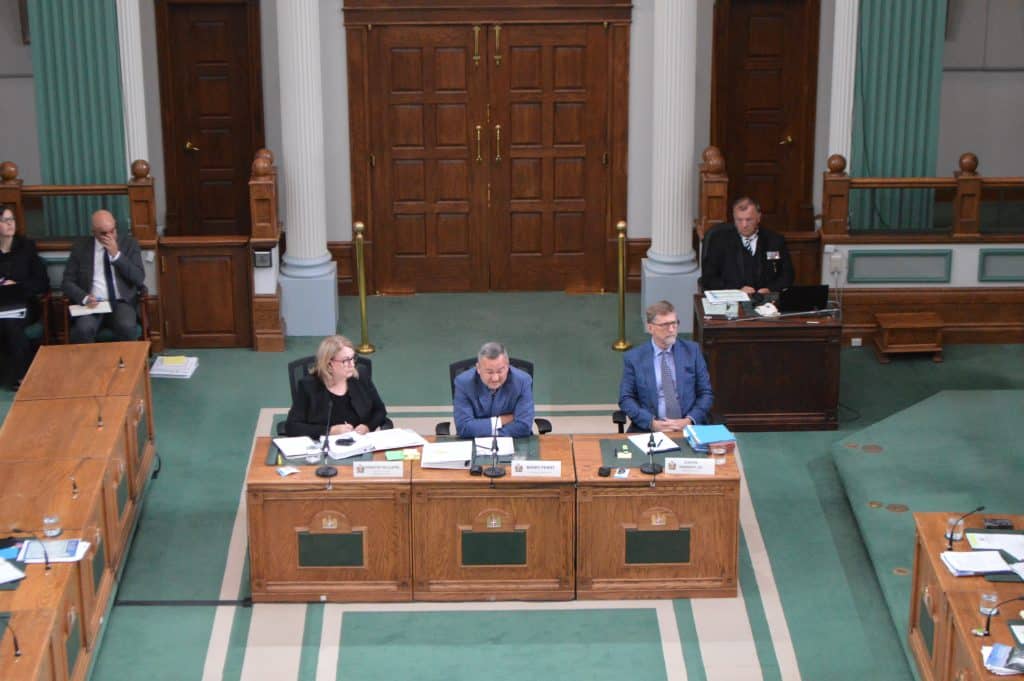
During the first day of debate Monday, lead negotiator of the new deal, former President and CEO of Fortis Inc. Barry Perry, tried to sell the work that’s been done. “It is an amazing contract [and] will become the base of the province’s financial plan going forward,” he told MHAs. “It has very little or no volatility. Very low risk to it compared to revenues from mining or offshore oil. This is a different contract,” he said.
Perry pointed to what he said is $50 billion in projects waiting for Labrador, among them $29-billion to be spent at Gull Island, $5-billion to upgrade the Churchill Falls generating station, an $8-billion wind farm, and a Gull Island transmission expansion valued at $5 billion.
“We have talked about Gull Island in this province for a very long time; we are now on the cusp of this going ahead,” he added, warning: “If this dies, Gull Island dies.”
Perry cautioned that Quebec plans to spend $200-billion over the next decade fortifying its energy grid, “and they need certainty.” If the MOU doesn’t pass, “this would be the second time we didn’t move forward,” he said, adding Quebec is “not going to trust us again.”
Perry also said having Gull Island’s debt guaranteed by the federal government, “almost ensures the project goes ahead.” If the deal falls through, he said, losing the extra generating capacity that would come with Churchill Falls expansion would also jeopardise future mining developments in Labrador.
The province’s current Churchill Falls contract with Hydro-Quebec expires in 2041, at which time Newfoundland and Labrador would regain full control of the project’s electricity and revenues. But waiting until that time to negotiate a new deal isn’t the obvious path forward, Perry said, adding the proposed MOU represents a “remarkable amount of value.”
He said a deal with Quebec now would provide the province with over $1 billion annually until 2041. “With no deal, Churchill Falls delivers no money to the province for the next 15 years,” he said.
On Monday Wakeham reiterated a talking point he has shared in numerous social media posts: the province’s “new and better deal secures billions in value for Newfoundland and Labrador before 2041 while creating jobs, supporting economic growth, expanding opportunities in Labrador, and helping make Canada strong.”
Protestors take issue with lack of public engagement, length of proposed deal
Brenda Chaytor said she’d rather wait. One of about 150 people who rallied outside Confederation Building Monday, Chaytor, a 76-year-old mother and grandmother, said she doesn’t “have to worry about this affecting me for much too long. But it is sure going to affect my children, my grandchildren, my great grandchildren, and maybe even my great-grandchildren’s children.
“That’s what I’m fighting for,” Chaytor said, explaining she was a lifelong Liberal voter but voted for the PCs last fall based on Wakeham’s promise to hold a referendum on the future deal.
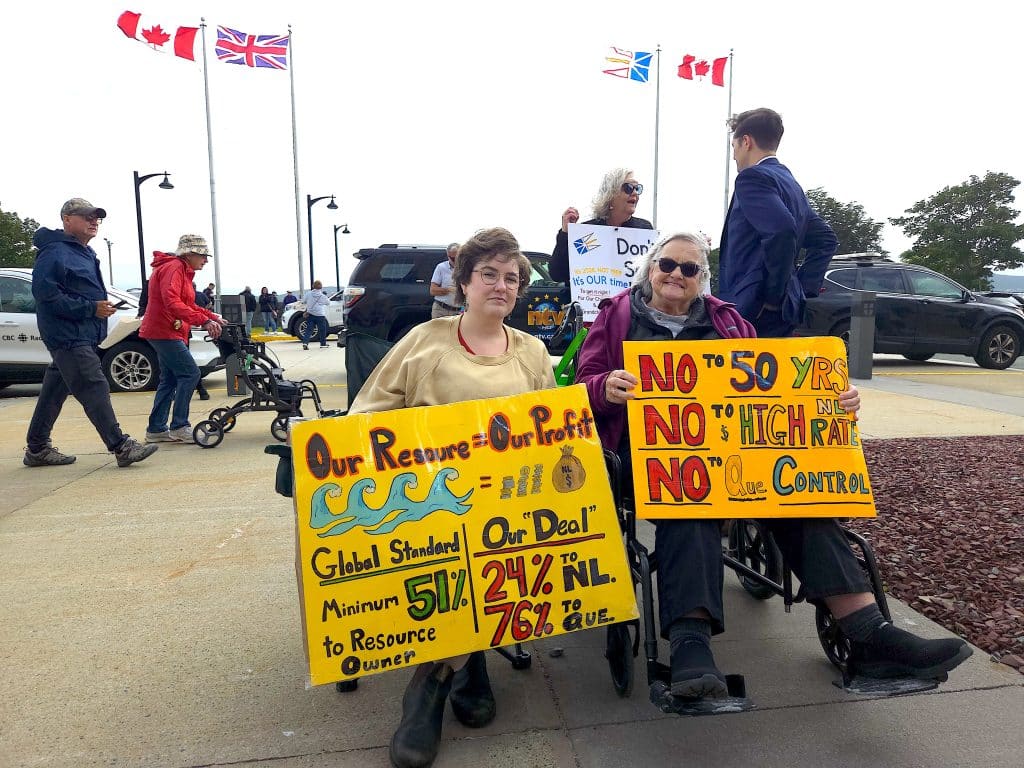
Beyond breaking their promise of a referendum, the PCs gave the public less than a week to share feedback on possible changes to the proposed Churchill Falls agreement. Stoddart says that wasn’t enough time for the public to get involved ahead of this week’s sitting.
The Independent asked the provincial government about concerns its public engagement timeframe wasn’t long enough, how many responses it received before the Sept. 10 deadline, and who would read the replies ahead of this week’s sitting. They did not respond by the time of publication.
Stoddart says this, much like the leadup to Muskrat Falls, represents “flawed engagement” with the public. “Expecting people to respond on extremely tight timelines, to digest a lot of complex information,” he says, is “not really fitting good practices for meaningful public or stakeholder engagement.
“These are tactics that minimize the possibilities for meaningful stakeholder and rights-holder engagement,” he continues. “Those are all things that raise red flags around how this is proceeding.”
He says Muskrat Falls was a “really potent and powerful example of how these failures of governance around meaningful engagement, consultation, impact assessments, project management, and so on, could lead to the economic and environmental impacts, downstream environmental health risks, and the concerns that mobilized that level of opposition.”
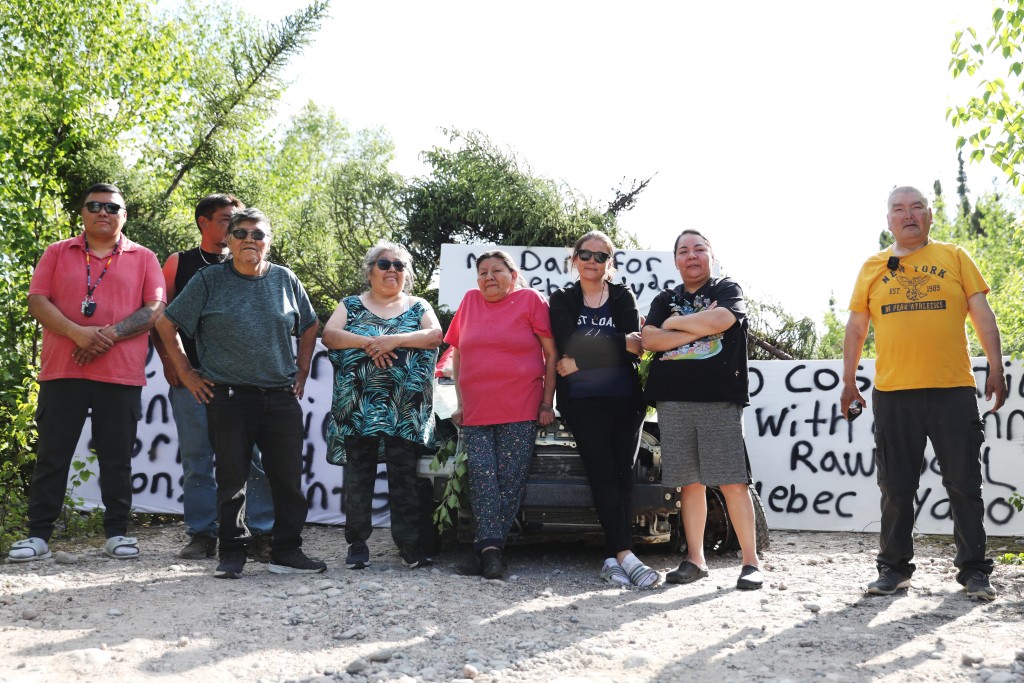
“No one does 50-year deals now,” said protester Peggy Pumphrey, flanked by two friends on Confederation Hill Monday.
“We are basing our next 50 years on it – it is ridiculous,” said Peg Lannon, adding she would prefer if there were “off ramps” or times to negotiate aspects of the deal based on market and economic conditions every five years. “We can’t sign on for [even] another 25 years – this can’t be 1969 2.0,” she said
Among the speakers at Monday’s rally were organizer Noah Davis Power, blogger Des Sullivan, and former Innu Nation Deputy Grand Chief Simeon Tshakapesh.
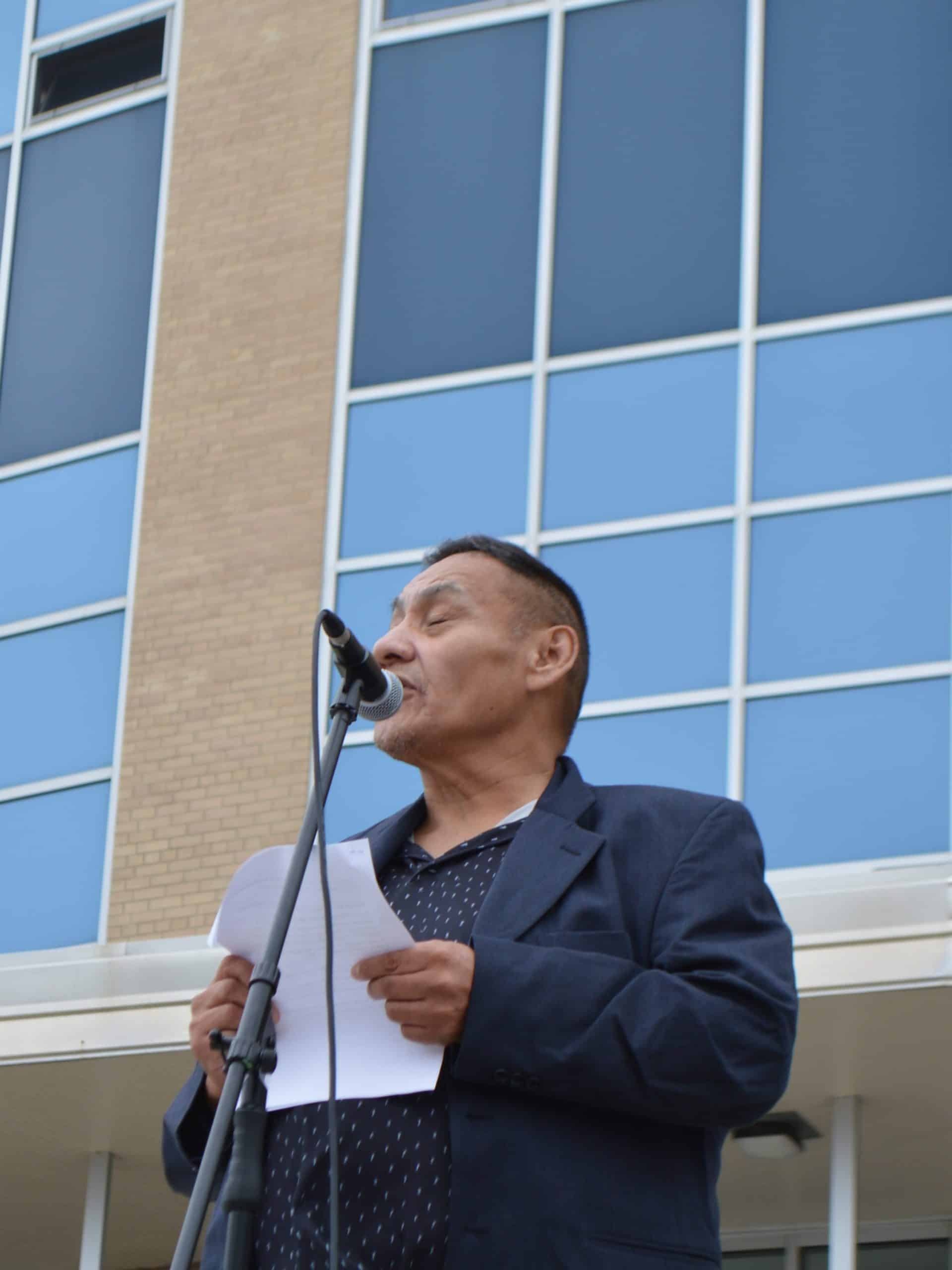
“The deal they have at present, the MOU with the federal government and Quebec, is a deal they want as occupiers in Newfoundland and Labrador,” Tshakapesh said to cheers from the crowd. “Today, we cannot afford another insufficient deal. We have paid the price already and surely we cannot pay it twice. We are the victims of the old deal,” he said.
“Let us all send a message to the Canadian government and the provincial government: Newfoundland and Labrador, and its resources, are not for sale!” the former Innu leader concluded, prompting the crowd to chant “Not-for-sale” following his speech.
Stoddart says the PCs, like their predecessors on Muskrat Falls, are failing to recognize Labrador’s resources as more than just a revenue stream. When it comes to Gull Island, much of the “rhetoric and political discourse” he’s hearing still treats the Churchill River as the “piggybank for the province, to be run from St. John’s and NL Hydro.” Instead, politicians could be focusing on relationships Labradorians have with their lands and waters, he says.
During his last fieldwork trip to Central Labrador, Stoddard felt “a lot of cynicism” from residents over what they perceived was a foregone conclusion on further hydroelectricity development – that the provincial government “had decided Gull Island was already a done deal.”
“Ultimately, as a province we should be learning from these things and not just repeating the past,” he says. “I’ve been saying cynically for the last few years, especially after chatting with folks in Happy Valley-Goose Bay, that Gull Island will be a test case for [the question]: Is there such a thing as, ‘There’s no mistake so bad we can’t repeat it again a decade later’?”
“These are all looking like red flags that make me feel a bit of a sense of deja-vu,” he continues. “That’s mostly what I’ll be watching, is whether we see signs that the current government has learned much from the failures of the previous boondoggle.
“We have some really excellent people doing the work of being critical voices, but I think they still tend to be overshadowed by a lot of the pro-developmentalism, pro-extractivism of our governments, whether it’s Liberal or Conservative.”
Liberals dispute debate format, NDP lays out conditions for support
On Monday Liberal Leader John Hogan accused Wakeham and the PCs of “hiding from questions,” saying the format of this week’s sitting will limit and cap any substantive debate. “They proposed rules to avoid accountability, they created rules to silence themselves,” Hogan said as he stood in the House.
The NDP also took issue with the party’s allotted 30-minute time for statements, saying they were “up against a wall” trying to digest and counter the information that’s been provided. The party has laid out three conditions for its support: an independent review by the Public Utilities Board; a vote on final agreements; and approval from the Innu Nation.
“I was 10 years old when the 1969 [deal] was signed, and I’m looking at my granddaughter who will be 10 in October,” Dinn told The Independent. “At some point in the future, I hope we don’t have this rehashing of history and everything that went with it: Newfoundland and Labrador nationalism, the anti-Quebec sentiment, the Liberals versus Conservatives, and so on.”
Despite the enormity of what’s being proposed, Dinn wants the deal to succeed. But the former teacher says the process has “been so marred in partisan politics, we just need to make sure what we are getting is indeed the best possible deal.”
The NDP is calling for the public utilities board (PUB) to hire an independent overseer, like Manitoba Hydro, to review any finalized package, and then present a summary as they see it. He believes a draft could be finalized and ready for review by the end of December.
Dinn said whatever the conclusions of an independent review, it would allow the public and politicians to determine if what’s being proposed is worth it. “We would have the document in front of us that says, ‘Yeah, this makes sense that Quebec is indeed the best partner, and Quebec Hydro is indeed the best organization to build this – that a 50-year deal is the best […] or it’s not.’”
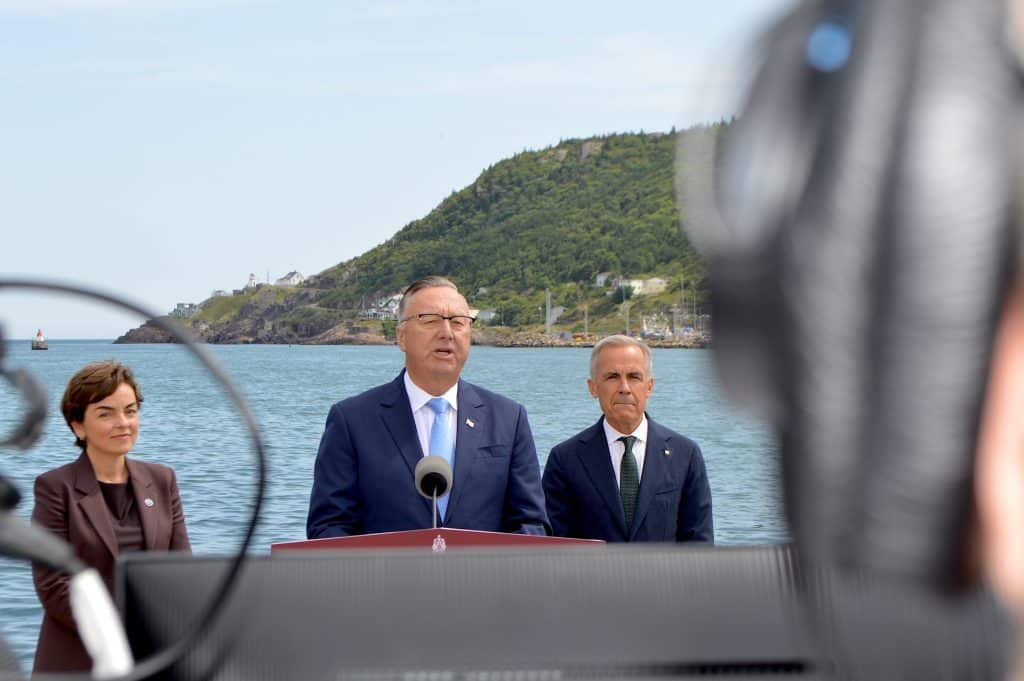
Dinn said NDP support is also contingent on a vote on the finalized details of the agreements, and support from the Innu Nation, with whom the province is embroiled in a conflict after The Rooms provincial museum and archives prohibited the Innu from displaying their millennia-old historical timeline in Labrador at a cultural exhibit earlier this summer. To date, the Wakeham government has not apologised, but instead promised to have an independent party review the Provincial Archeology Office’s research that purportedly supports the claim Innu have only been in Labrador for 300 years.
“We can have all the debates we want in the House,” Dinn said, “but in the age of truth and reconciliation, if this means anything, the conversation needs to have been starred before.”
Innu Nation support also contingent on benefits for Innu
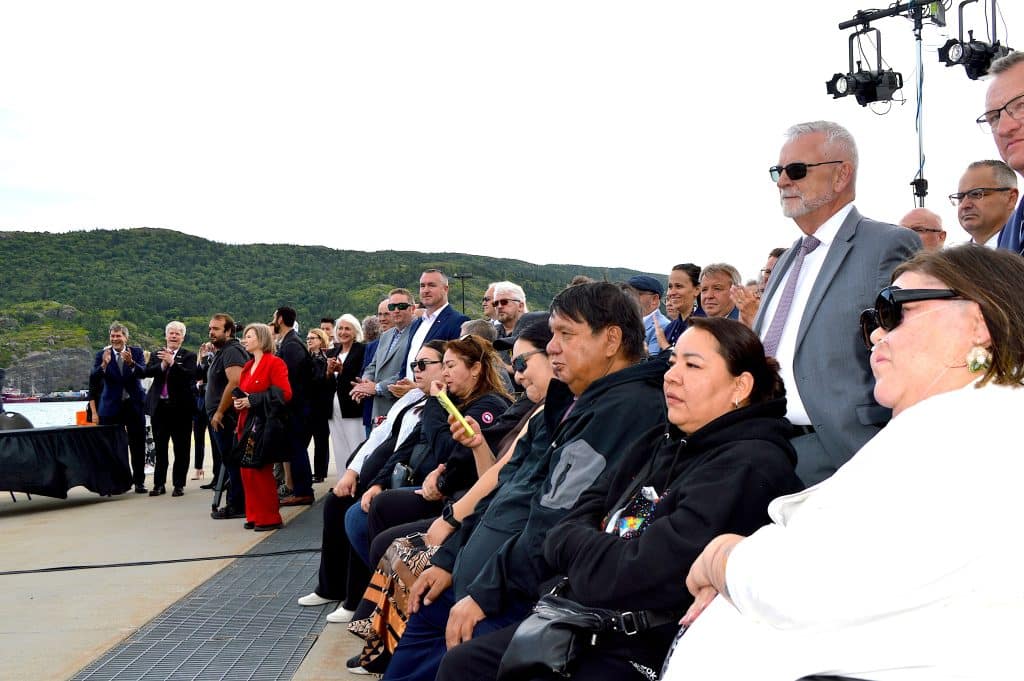
At the Churchill Falls MOU announcement last month in St. John’s, Jodie Ashini and her delegation were seated in the front row, not at the podium alongside Wakeham, Quebec Premier Christine Fréchette, and Prime Minister Mark Carney. Just a day earlier, Ashini was elected grand chief of Innu Nation, which represents the Innu communities of Sheshatshiu and Natuashish in negotiations with the provincial and federal governments. Her first order of business was to attend the announcement.
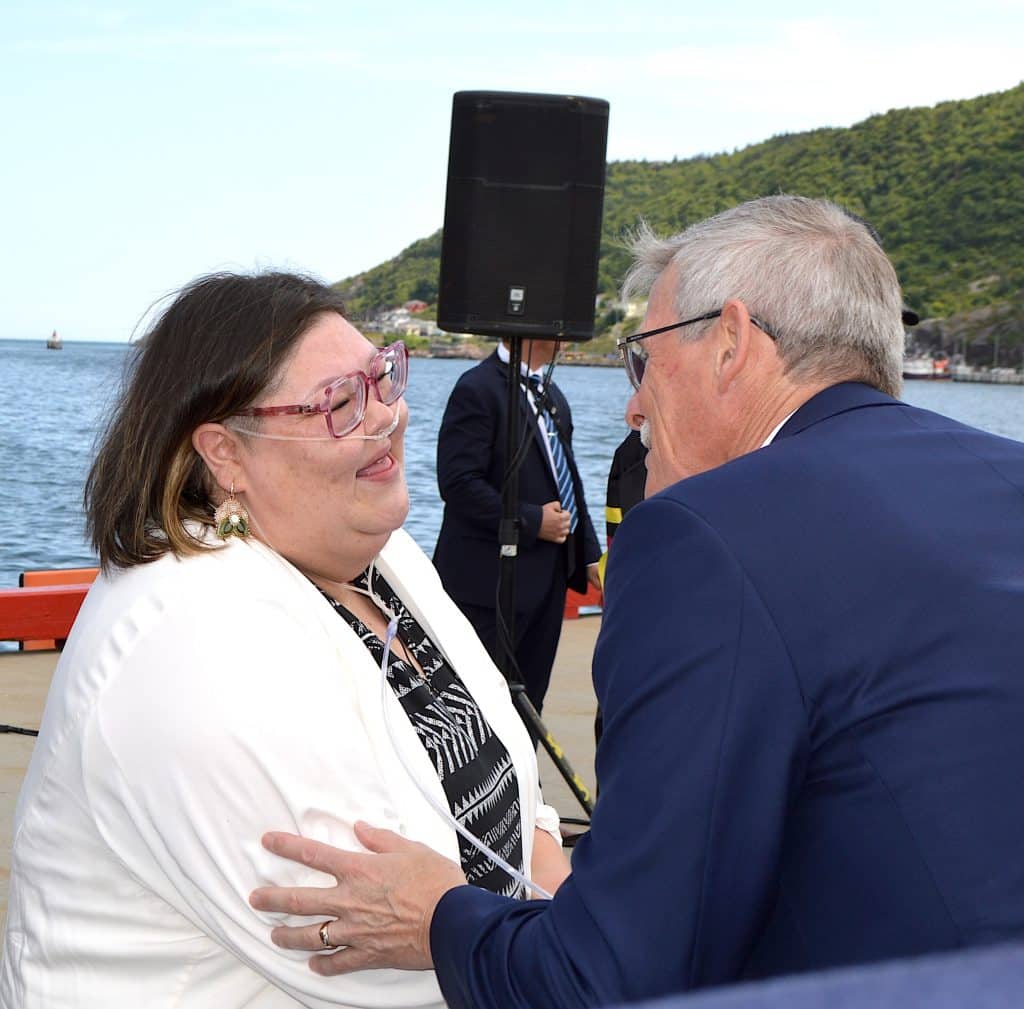
Ashini spoke briefly with reporters that day, saying the new MOU “had been renegotiated while the Innu Nation was in election mode,” and that “nobody was a part of this part of negotiations. We are just hoping now that we can take it to the people and that it is fair and equal for Innu people.”
When asked about the possibility of Labrador becoming home to a massive new wind farm, Ashini said she was open to the idea if the benefits were obvious, including the possibility of using wind energy to electrify Natuashish, which still relies on diesel.
Ahead of the House of Assembly’s reopening this week, The Independent requested an interview with Ashini but didn’t hear back by the time of publication.
On Monday evening Ashini said in a social media post that after watching the debate, “one thing is very clear: there are serious and important issues involving the Innu that this government has still not resolved.”
The grand chief went on to say that Innu history “cannot be defined by a Provincial Government timeline,” and that Innu history “did not begin when Newfoundland decided to document us.
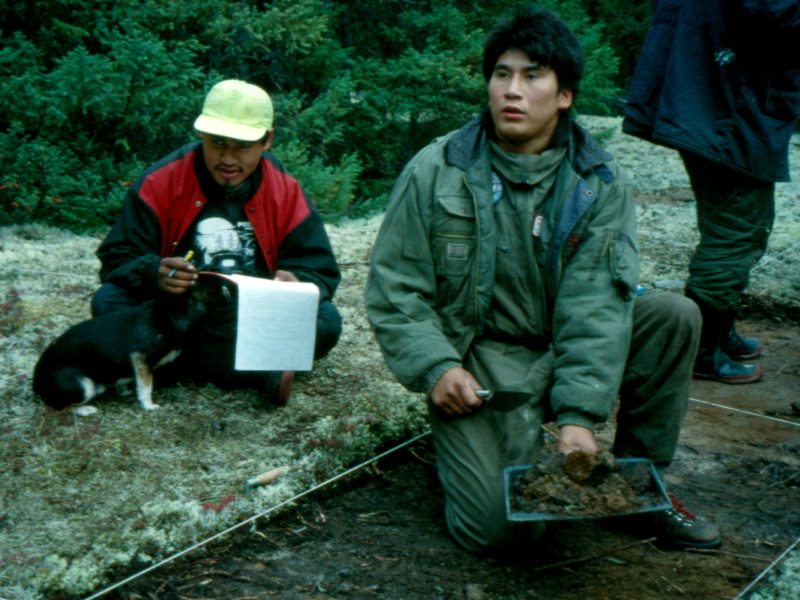
“Our presence on this land is carried through our people, our oral history, the archaeological record, and generations of Innu who lived, travelled, hunted and cared for Nitassinan long before Newfoundland became part of Canada,” she wrote.
“So I want to be equally clear tonight. As things stand today, and unless Premier Wakeham changes his position, I can guarantee that the Innu will not meet the December 31 deadline and will not support the new Churchill Falls/Hydro-Québec agreement in its current form. Reconciliation cannot be dictated by someone else’s deadline, and the development of Nitassinan cannot continue while fundamental issues with the Innu remain unresolved.”

Authors


Related Articles
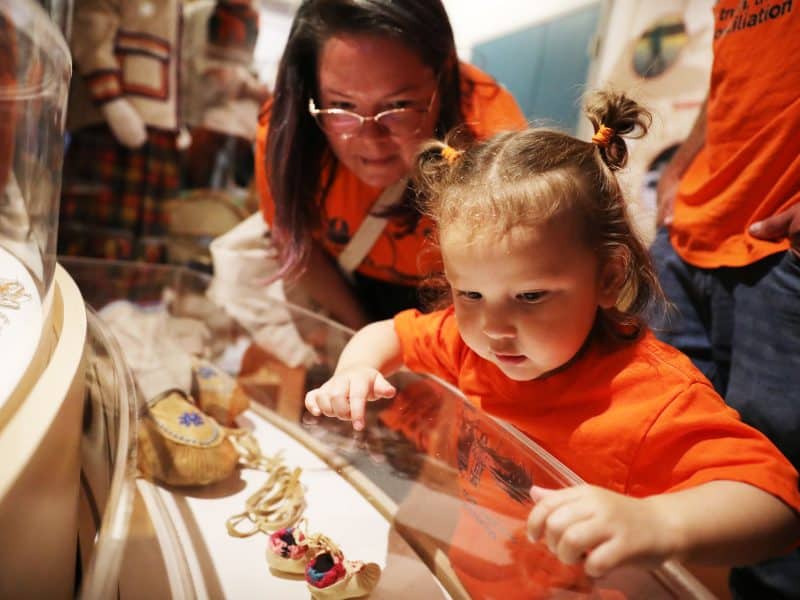
As Innu exhibit opens in Labrador, Grand Chief says truth must come before reconciliation
Innu Nation Grand Chief Jodie Ashini says it’s disappointing to open the Innu Pakassiun exhibit without the provincial government’s participation, but Innu know their history and who they are
Liberals’ Bill C-39 a wake-up call for Canadians: Avi Lewis
‘Cracks starting to show in the Carney consensus,’ Lewis tells N.L. NDP convention in St. John’s
As NDP convention gets underway in St. John’s, will N.L.’s third party prioritize growing rural support?
Former party candidates say it’s a steep hill to climb, but there are ways