
Inside the Provincial Archaeology Office’s theory that Europeans inhabited Labrador before Innu
Archaeologist Stephen Loring, whose work is being disputed by the provincial government, says archaeology is “wildly political” and can be misinterpreted “to promote a political agenda like land claims.”
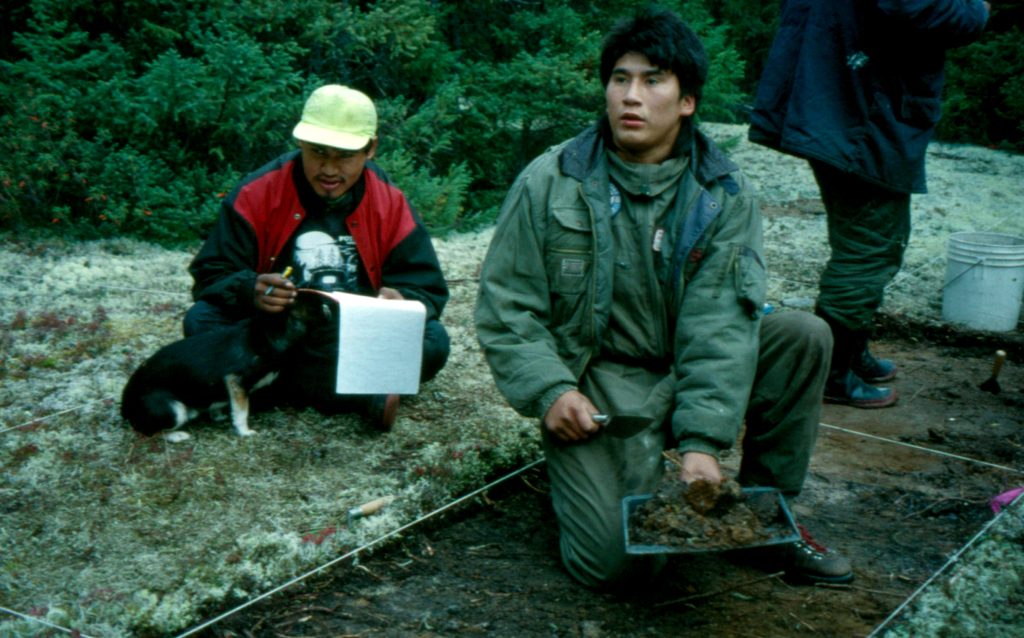
A veteran archaeologist whose work is being disputed by Newfoundland and Labrador’s Provincial Archaeology Office is speaking out about what Innu say is an effort by the provincial government to erase their history.
Stephen Loring, an arctic archaeology and museum anthropologist with the Smithsonian’s Arctic Studies Centre in Washington, says it’s “convenient” for the province to claim that the Indigenous People who lived in Labrador prior to European contact disappeared or went extinct, rather than acknowledging the archaeological evidence and oral history linking Innu to the territory for 8,000 years.
Loring says the province’s position that Innu have only been in the Labrador portion of Nitassinan, the Innu homeland, for around 300 years appears to be an attempt to disenfranchise Innu from their history and culture so the government can weaken the Innu’s position in their land claim negotiations and in their right to participate in future land-use and economic development in the province.
“Archeologists are materialists. Our whole way of thinking is based on material culture and how we twist the objects to tell the story that we want to tell, and it just flies in the face of cultural continuity,” he says, speaking with The Independent by phone from his home in Maryland. “People don’t disappear.”
Will you stand with us?
Your support is essential to making journalism like this possible.
Loring has been doing fieldwork in Labrador since 1975, with much of his recent work taking place at Kamestastin — a lake about 140 kilometres west of Natuashish near the Quebec-Labrador provincial border — in conjunction with the Tshikapisk Foundation and Innu Nation.
The long- and widely-held understanding that Innu presence in Labrador dates back thousands of years is now being challenged by the Provincial Archeology Office. Provincial archaeologists Jamie Brake, Stephen Hull and John Erwin co-authored a 2026 paper titled Labrador Beothuk: A reconsideration of the Point Revenge complex, alongside co-author Amanda Samuels from the State University of New York’s University at Albany.
They argue the “Point Revenge” people — a First Nations group living in Labrador prior to European contact, who the Innu say are their ancestors — did not migrate into Labrador’s interior, as many archaeologists have believed for decades. Instead, the authors say the “Point Revenge” people crossed the Strait of Belle Isle to Newfoundland around the early 1500s after being pushed out by Inuit expanding southward and Europeans arriving from the east.
The provincial archaeologists argue the “Point Revenge” people merged with the Beothuk already living in Newfoundland, who are widely believed to have gone extinct with the death of Shanawdithit in 1829. They also say, based on their analysis, that “there is every reason to believe that the people of the Point Revenge complex were essentially precontact and proto-historic Beothuk,” instead of ancestral Innu.
The new theory implies Innu arrived in the Labrador part of Nitassinan from the western portion of the Innu homeland in what’s now known as Quebec, and therefore have no ancestral ties to Labrador prior to the early 18th century.
The position contradicts Innu oral history, which puts the Innu and their ancestors on the Quebec-Labrador Peninsula around 8000 BP [before present] following the retreat of glaciers from what’s now known as northeastern North America. Archaeologists have long supported the Innu’s version of their own history, arguing Innu descend from the earliest First Nations People to inhabit the region, whose artifacts have been found in the Labrador portion of Nitassinan.
The government’s new position refutes Loring’s longstanding belief that around the time of European contact, “Point Revenge” people migrated to the interior and began hunting caribou, occasionally returning to the coast through their nomadic travels. It also refutes another theory that the “Point Revenge” people were killed off in conflict with Europeans or other First Nations groups from what’s now known as the St. Lawrence region.
For his part, Loring believes archaeology can provide a bridge between the 18th and 19th century collections of Innu materials housed in museums, and the ancestral Innu groups who lived in Labrador.
‘Erasure of Innu history’: Grand Chief
Earlier this month, days before Innu were set to unveil a new cultural exhibit at the Labrador Interpretation Centre in North West River on National Indigenous Peoples’ Day, exhibit co-organizer Jodie Ashini says she was instructed by executives of The Rooms to change the timeline detailing Innu presence in Labrador, or else move the exhibit elsewhere.
Instead, Innu canceled the exhibit, Innu Pakassiun, and the fallout has continued to grow.
The province’s position “amounts to the erasure of Innu history,” Innu Nation Grand Chief Simon Pokue said. “It is contrary to the accepted historical and archaeological record and dismisses the knowledge, history, and lived experience of our people.”
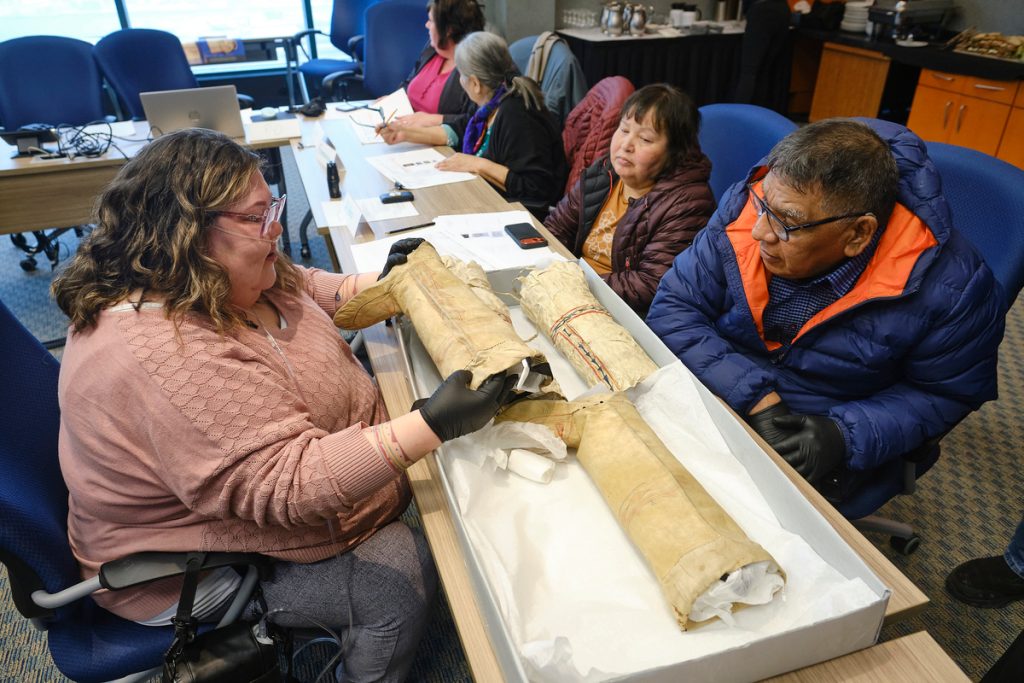
Innu Nation, a political organization representing the people of Mushuau Innu First Nation and Sheshatshiu Innu First Nation, says it’s not aware of any other working archaeologists outside the provincial government who support the theory advanced by the Provincial Archaeology Office.
“We will not be told who we are by the Government of Newfoundland and Labrador or anyone else,” Pokue said. “It is simply wrong for the province to use a cultural exhibit, on Indigenous Peoples Day no less, to try to rewrite the accepted history of the Labrador Innu.”
Archaeological theories don’t trump oral history, say archaeologists
Last week, archaeologists from Memorial University wrote a letter of support to Pokue and Ashini, expressing concern the controversy “might be more than a disagreement over wording in a museum exhibit, and rather reflect an attempt by a provincial institution to impose a narrow and outdated interpretation of archaeological evidence over Innu historical knowledge, Innu oral history and a substantial body of archaeological and ethnohistorical scholarship.”
The eight co-authors say archaeological interpretation “properly depends on multiple lines of evidence, including material remains, landscape use, oral histories, linguistic evidence, ethnohistory, historical records, Indigenous knowledge, and collaborative research with descendant communities.”
They say museums and archaeological institutions “have a responsibility to present evidence carefully,” and that responsibility “does not authorize them to erase Indigenous histories, dismiss oral traditions, or prevent Indigenous communities from interpreting their own heritage.
“In this case,” they write, “the reported actions of The Rooms and the Provincial Archaeology Office have undermined public trust, damaged a collaborative exhibit, and caused harm to Innu Elders, knowledge holders, families, and youth.”
Loring says while he respects the provincial archaeologists as individuals, the Provincial Archaeology Office — led by Jamie Brake, who has worked with the Innu — is not giving enough weight to oral history or deep evidence of language and place names, and instead appears to be interpreting the data to suit its theory.
“To value the few stone tools that archaeologists find or don’t find as having more value than any oral history and traditional knowledge is disingenuous at best,” he says.
William Fitzhugh, director of the Smithsonian’s Arctic Studies Center and Loring’s mentor, was a graduate student at Harvard when he began working in Labrador in 1968. He laid out the framework of time periods for Indigenous presence in the region, based on different stone tools, settlement patterns, and cultural markers, Loring explains.
The three cultural periods have three names for different people during the time periods: the “Maritime Archaic” (~8000-3200 BP), the “Intermediate Indian” (~3200-2000 BP), and the “Point Revenge” people (~2000-500 BP). These First Nations groups all gathered on the same lands and lived similar nomadic lives using various types of tools.
A brief history of Labrador ‘Prehistory’
Like other academic disciplines, archaeologists have developed terminology to make sense of their work and findings. The term “prehistory” is used to describe the “period of time that predates the written word,” according to the Newfoundland and Labrador Heritage Website, which explains that in Newfoundland and Labrador, that period “ended with the arrival of Europeans in the late 15th and early 16th centuries.”
The “prehistory” of Labrador traces back to the retreat of the Wisconsin glacial ice in Labrador. By about 8000 BP, the ice that once covered northeastern North America had receded from all but the far north of the Quebec Labrador Peninsula, Loring says.
When the ice melted, the Maritime Archaic people moved into the region and expanded where they were living, he explains. When Loring began working in Labrador as a young researcher — alongside Memorial University’s group which included archaeologist Jim Tuck — they were surprised by the age of the sites they found. “We very quickly found sites going back to 7,000 and 8,000 years ago, so that was very exciting,” he recalls.
Today, Innu still tell the story of Kautuasukuaniskuanast, a little boy who brought back the summer and became the white-crowned sparrow, which aligns with the ice receding in the last ice age.
Innu oral history — or atanukana — is more than folk tales or legends, Napes Ashini writes in a 2018 paper co-authored with Loring and others. Oral histories “are almost historical; they connect people to their past, contain the philosophy of the Innu, transmit the morals of their hunting culture, relay lessons on the human and animal relationships that govern it, and help individuals develop strength, endurance and an ethic of autonomy within a network of obligations to others,” the authors write in To Bring Back the Summer: Seeking a Concordance between Innu History and Archaeology.
Anthony Jenkinson, a long-time archaeologist and co-author of that paper, explains that while archaeologists are often used to having something physical to measure and examine, oral history needs to be considered and given due credibility because it conveys historical information and reflects deep historical memory.
“Some people, primarily non-Innu people, will look at [the To Bring Back the Summer research paper on oral history] and think it’s just a legend without deeper meaning,” he says. “But to Innu eyes, it comes across as a memory of the occupation of a land where residual glacial ice still existed.”
The tools, homes and culture of the Maritime Archaic of the Quebec-Labrador Peninsula remained similar from 8,000 years ago until around 3,200 years ago, a span of roughly 4,800 years, Loring explains. Maritime Archaic peoples made most of their stone tools from Ramah chert, which is found in the mountainous regions north of the Saglek Fiord in today’s Torngat Mountains National Park.
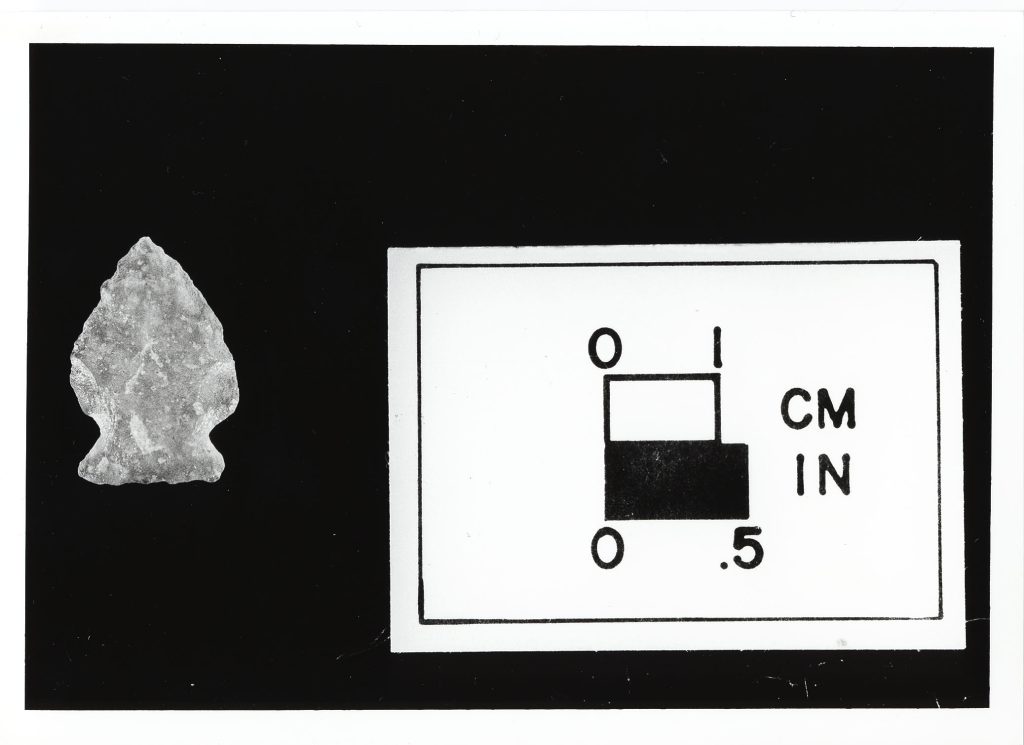
The Dorset Paelo-Inuit (also referred to as just ‘Dorset’) arrived in what’s now known as northern Labrador around 4,000 years ago, Loring explains. The Dorset were distinct from the Thule Inuit, who migrated into what’s now known as northern Labrador around 1250-1450 CE (common era) and are the ancestors of Inuit who still reside there. The Dorset Paleo-Inuit culture disappeared but is remembered in Inuit oral history.
According to archaeologists, the “Intermediate Indian” complex ran from about 3200 to 2000 BP. Loring and Jenkinson call this interval the “Shashish Innu” period, explaining it reflects a change in stone tools and culture, with many tools at the time being made from a stone they believe may have been found in the Snegamook-Pocket Knife Lake region, north of the Naskaupi River and about 150 kilometres northwest of Happy Valley-Goose Bay.
Archaeologists refer to the final “prehistory” era as the “Daniels Rattle-Point Revenge” period, which dates from 2000 BP until European contact around 500 yeas ago. Loring instead calls this the “Ancestral Innu period,” noting stone tools shifted back to being made from Ramah chert instead of the chert favoured by earlier groups.
“Suddenly there’s just this switch,” Loring says. “It’s just like, ‘We’re still the same people, we’re just making our tools out of a different stone.’” He says the change in stone type found by archaeologists is “not valid evidence for them saying it’s a totally different group of people, because otherwise they’re living in the same kind of place, they’re building the same kind of sites.”
This position is shared by Jodie Ashini, who is the Innu Nation’s cultural guardian and says Innu tools evolved over time as her ancestors learned new methods and refined their technologies.
The “Point Revenge” people were harpooning seals, hunting walrus and harvesting other marine animals. Loring says the Thule Inuit moved south into Labrador from further north around 1000 BP, and archaeological evidence suggests they eventually engaged in conflict with the “Point Revenge” people over land and resources.
Following conflicts with Inuit north of modern-day Hopedale and Border Beacon along Labrador’s north coast, Loring believes the “Point Revenge” people moved further inland, where they transitioned from harvesting marine animals to harvesting animals like caribou.
Loring says when Ancestral Innu — a term he uses interchangeably with “Point Revenge” — moved away from the Ramah Bay area in northern Labrador where they could access Ramah chert, their stone tools became smaller, were resharpened more frequently, reshaped when necessary, and only disposed of with great care and red ochre, a clay used by Innu for painting and ceremonies.
European contact
Prior to European contact, the “Point Revenge” or Innu Ancestor peoples were living in central and interior Labrador and crafting their stone tools from the Ramah chert found in northern Labrador. They are believed to have traded Ramah chert with other First Nations peoples living in the Strait of Belle Isle and on the island of Newfoundland—the ancestors of the Beothuk.
Loring says when Basque Whalers arrived in Labrador in the 1520s to harvest oil-rich Right Whales in the Strait of Belle Isle, they would have encountered “Point Revenge” and Beothuk peoples. He points to an archaeological site on Saddle Island near Red Bay, “which I interpret as evidence that the Innu are there, that they have contact with the Basques, that they hadn’t disappeared or gone anywhere.”
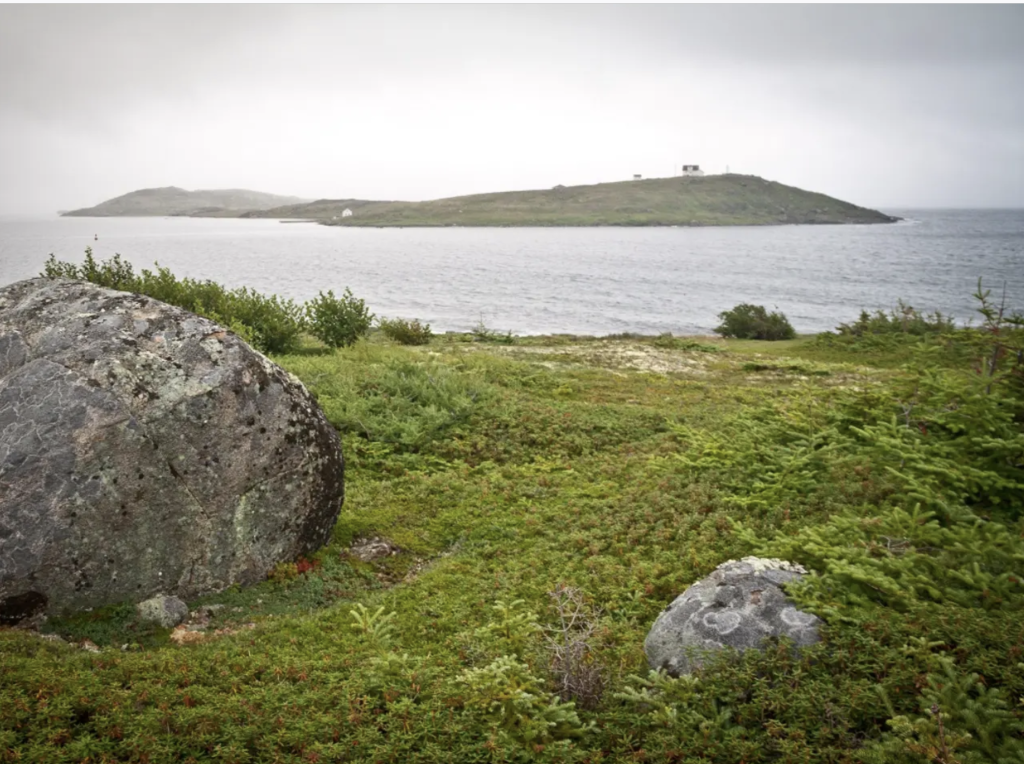
Brake, on the other hand, interprets the Saddle Island find as the largest and last “Point Revenge” site in Labrador, a place where “Point Revenge,” “Little Passage” and “Anse Morel”—a First Nations culture further south in Quebec along the north shore of the St. Lawrence—intersected. The provincial archaeologists say that because the majority of the corner-notched points found at this point were made of Newfoundland cherts rather than Ramah chert, that means the “Point Revenge” people were already merging with their Newfoundland relatives and preparing to withdraw across the Strait to Newfoundland.
Loring says Indigenous cultures evolve, much as Western culture does today.
“If you did archeology in New York City in the 1870s, it would all be full of horse manure. Horses are going everywhere,” he explains. “But if you went in 1920 — 50 years later — there’s not hardly a horse to be seen, except taking the tourists around. It’s all moved to automobiles.”
Loring says this “rapid culture change” can explain some of the gaps some archaeologists see in the archaeological record. Ancestral Innu changed the type of stone tools they used, how stones were carved, among other things, he explains.
What bothers me is this kind of policy to try to divorce people from their heritage and their land, and I think that’s what’s happening. –Stephen Loring
“I’m willing to push that the Innu of today have direct contact descent to the whole 8,000 years of Indian life in Labrador,” he adds.
Loring says it’s okay for Newfoundland archaeologists to interpret the data he gathered differently than he has, and to come together with other academics in intellectual discussion and debate around archaeological findings. “We both can bring the evidence to bear on that point,” he says. “What bothers me is this kind of policy to try to divorce people from their heritage and their land, and I think that’s what’s happening.”
Archaeology can be a ‘blunt instrument’: Jenkinson
Since the controversy erupted when The Rooms censored the Innu’s version of their history, neither the Provincial Archaeology Office nor the Wakeham government have publicly explained why or precisely when they changed their position to assert that Innu only occupied parts of Labrador after Europeans arrived. The government also didn’t respond to The Independent’s request for clarification on the matter.
If the policy change is a result of Jamie Brake’s own work, then the government’s official position appears to come down to what other archaeologists say is a flawed interpretation of a specific arrowhead. Brake’s March 2026 paper argues the distinctive corner-notched Ramah chert arrowhead is the specific and definitive mark of the “Point Revenge” people, and finding these points on the Newfoundland coast — and not in the Labrador interior — proves the “Point Revenge” people crossed to the island rather than moved inland. The argument about where people went and who their descendants are relies heavily on whether or not the one specific style of stone arrowhead is found.
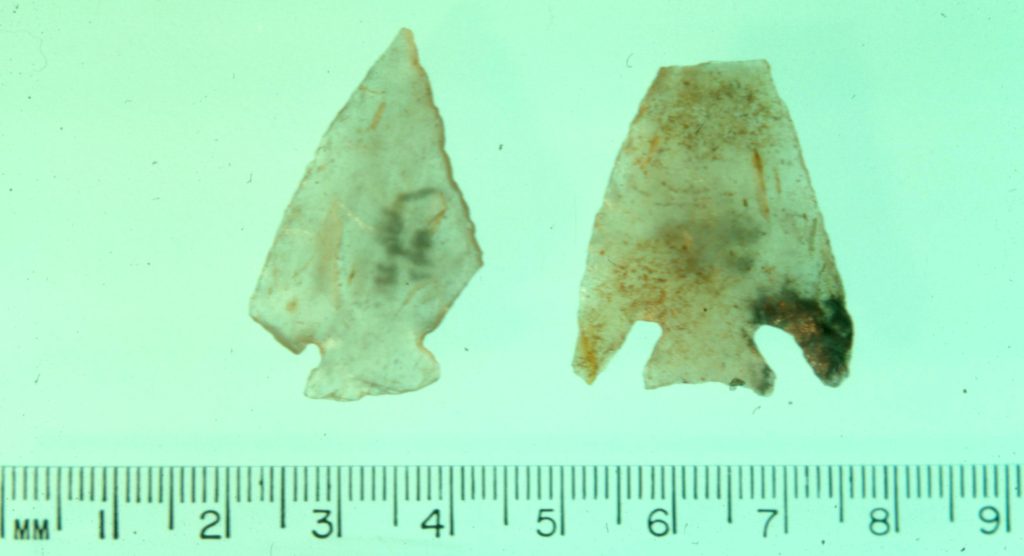
Cultures are more complex than a single arrowhead style, says Jenkinson, and archaeology needs to consider Indigenous knowledge and oral history or it risks conflating stone tools with entire cultures.
“I think it almost sort of betrays the weakness of an approach where you view things in such a narrow focus” he continues. “Although I love archeology, it is prey to that limitation, and this narrow focus on using diagnostic corner notch points for defining who is and who is not part of this or that political ethnic or cultural group? I think it’s a rather blunt instrument.”
The eight Memorial University archaeologists who co-authored the letter of support for Innu say the position that Innu presence in Labrador only began around the 1700s is not a neutral scientific conclusion and that the theory rests on a “methodologically flawed assumption” that changes in tools “necessarily indicate the arrival, disappearance, or replacement of distinct peoples, and that oral history, Indigenous knowledge, land-based knowledge, and continuity of practice are secondary or inadmissible forms of evidence.”
While groups of pre-contact First Nations Peoples may have been related, they each had different styles of shaping their specific arrowheads, with each individual member of the groups having their own personal preferences, Loring explains. “Style changes, things change over time.”
At a site in the Smallwood Reservoir, and at Kamestastin, archaeologists have found similar notched points that have shallow side notches as opposed to deeper corner notches, Loring says, offering an example. There are also differently notched points found all together in Saddle Island, in the Strait of Belle Isle.
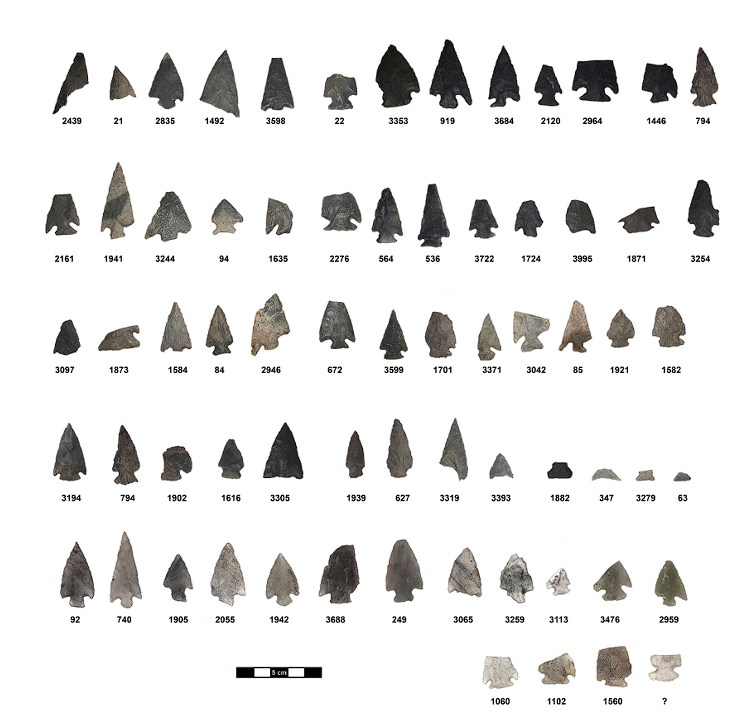
So while the Provincial Archaeology Office interprets style changes as evidence of distinct Indigenous groups who made them, Loring says the changes simply reflect changing styles through time, which happens throughout history, which is why, he says, “I don’t put that emphasis as much on those stylistic differences.”
Loring says it can be challenging to find Innu archaeological sites because of the way Innu respected the land and did not leave as many traces of their camps through the years, but that doesn’t mean Innu weren’t there. This challenge is “just the problem that this is all boiling down to,” he adds.
Jenkinson hopes the damage to provincial-Innu relations can be repaired. He wonders if non-Innu people with the province understand just how much damage and hurt has been caused by promoting this theory and enforcing it the way they did. “It may be partly explainable by a lack of understanding of the nuances,” he says. “Science can be quite arrogant in the face of ways of knowing about the world which are different to the conventional Western vehicles for inquiry into how it all works.”
Loring says Indigenous Peoples, “from one end of the continent to the other have had to deal with Europeans claiming their land.”
Now the province is continuing that tradition and its “Western way of thinking,” he says. “And it flies in the face of Indigenous knowledge and Indigenous perceptions.”
Loring says archaeology is “wildly political” and can be misinterpreted for political means. “I disagree with those that claim archaeology as a science isn’t political, that it isn’t subject to misinterpretation to promote a political agenda like land claims.”

Author

Related Articles

May Day Rally Shows New Face of Today’s Labour Movement
Turnout for May 1 march and rally in St. John’s one of the biggest yet in this province
Recimply the Best: Pitch and Pick Competition Winner Aims to Reduce Paper Waste
Recimply won big at Genesis’ annual Pitch and Pick competition last week. The startup is solving the problem of non-recyclable paper receipts.

Coming Home Queer for the Very First Time
For three days in July, queer Newfoundlanders and Labradorians from all over the world celebrated a rural homecoming 30 years in the making.

Liberal MP suggests Carney government may be investigating N.L. offshore acquisition
NDP pushes for federal intervention in acquisitions tied to Israel’s occupation of Palestine, while PCs, Liberals silent on Ithaca Energy’s takeover of Suncor’s stakes in Terra Nova, White Rose and West White Rose oil projects
As Innu exhibit opens in Labrador, Grand Chief says truth must come before reconciliation
Innu Nation Grand Chief Jodie Ashini says it’s disappointing to open the Innu Pakassiun exhibit without the provincial government’s participation, but Innu know their history and who they are

Liberals’ Bill C-39 a wake-up call for Canadians: Avi Lewis
‘Cracks starting to show in the Carney consensus,’ Lewis tells N.L. NDP convention in St. John’s