
St. John’s residents uncertain, concerned over Memorial University building sales on Signal Hill
Some wonder if a land deed potentially issued from the Catholic Church to the people of Signal Hill could carry some weight
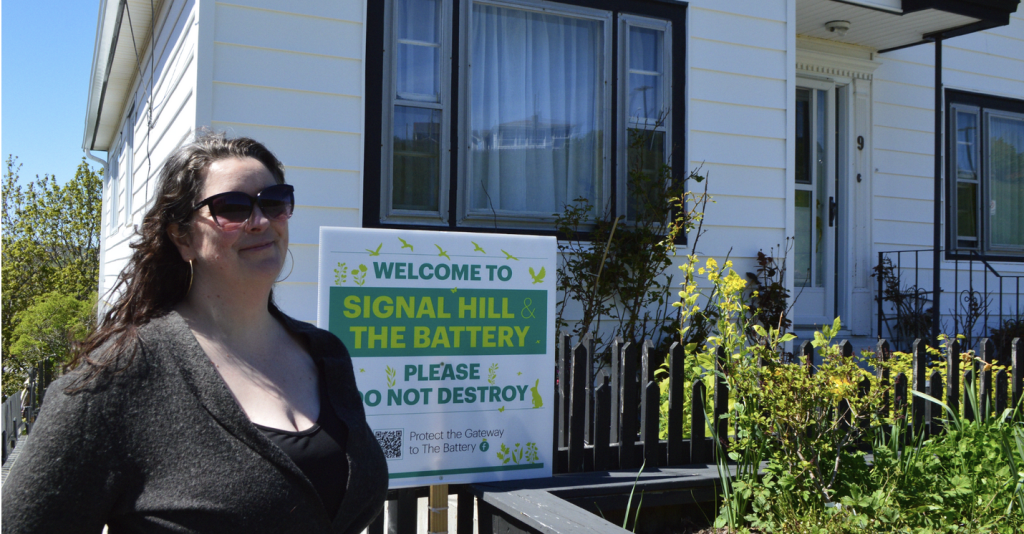
“If you live in this neighborhood you have to be like a hawk for developments and developers because they’re very sneaky.”
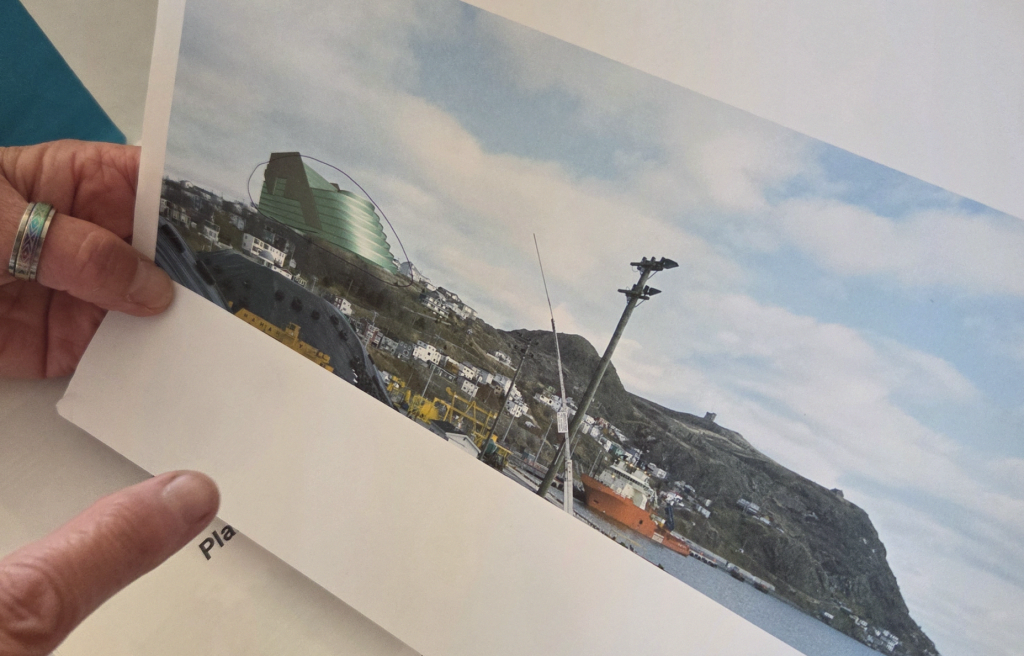
Diana Daly has lived in the Signal Hill Road and Cabot Avenue area for a decade. In her yard is a sign that reads, ‘Please do not destroy Signal Hill & The Battery.’ Like others in her neighbourhood and the broader St. John’s community, Daly is concerned about the possible sale of the nearby Emera Innovation building and Johnson Geo Centre properties.
“We’re not anti-development at all costs. But we are appropriate development please,” Daly explains, standing in her front yard and gesturing north a few hundred feet to where the Geo Centre property begins.
“The Geo Centre, I would hope it gets used or repurposed for something […] but what I don’t want is cookie cutter—the same houses you’d see in Burlington, Ont. Or another hotel that’s empty,” she says.
Will you stand with us?
Your support is essential to making journalism like this possible.
“I like the skyline. We like trees. We like our fauna,” she continues “We like all of the little animals that live around here. And it’s not just for tourists, too. We live here. Do you see how many people are walking around the hill today?”
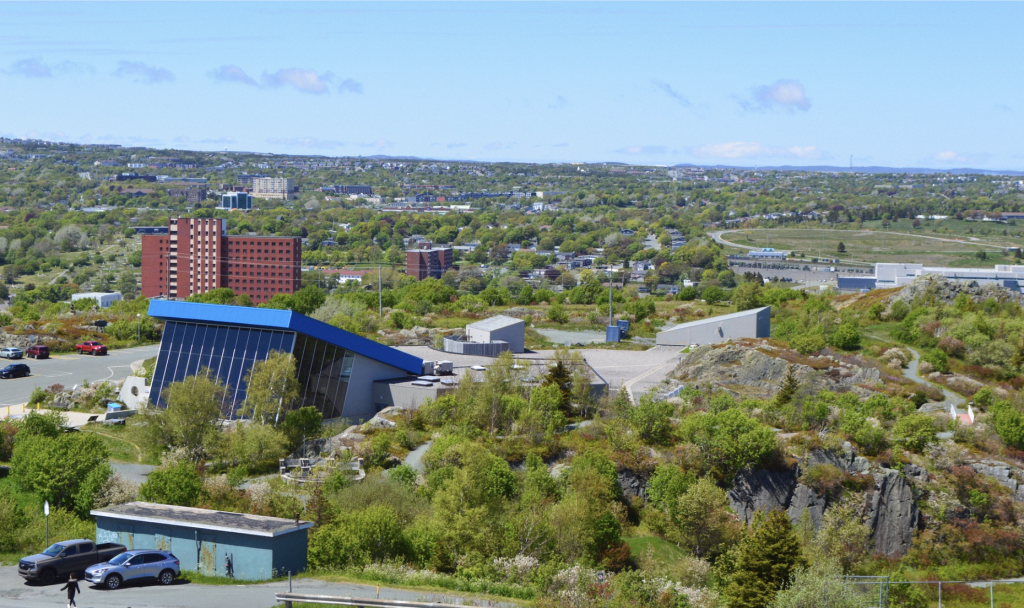
The multi-acre Johnson property, established by the late Paul Johnson, is among three large premises in the area residents like Daly are concerned could be redeveloped. The Limeville property in the nearby Battery neighbourhood has already been sold to Trifecta group, which plans to turn it into a $600-thousand- to $1-million-per-home subdivision. That proposal has been the root catalyst for demonstrations and pushback already. Along with the listing for sale of the Emera Innovation building, also known as Memorial University’s Signal Hill campus and a space formerly known as The Battery Hotel and Suites.
Daly is worried about the potential transfers of ownership and what that could mean for the future of the Signal Hill neighbourhood.
“The municipal issues are real, like parking, snow clearing, fire emergency, all that stuff. But we have to think further than that. What kind of a city do we want? I can’t think of anything more St. John’s than this area. And so why are we selling off our most beautiful assets?” she asks. “For who? It’s not for the people who live here and it’s not for the people who visit here.”
Daly believes the Signal Hill area is a form of public space that belongs to the people, and that “selling it off to the rich” will keep allowing what she calls the “slow creep of mansions” being built. Worrying the Geo Centre lot in particular will get “turned into some sort of crazy subdivision.”
Community meeting held looking to summer ahead
Later that evening Daly joins about 20 other concerned residents for a community meeting at the nearby Battery Cafe. Sipping their coffee and beer as the long June sun warms the dining room, they have gathered to discuss the latest updates about what’s going on.
“There is still more land below the Grand Concourse that, it’s my understanding, [could] also be for sale. So we are talking about acres and acres of land basically between Quidi Vidi and The Battery,” says Erin Callahan St. John.
Callahan St. John, who lives just down from the Geo Centre and has been a vocal organizer from the start, leads the meeting. Callahan St. John says pressure needs to be applied not only to city council, but also to administration at Memorial University.
Earlier this year Memorial University said the Geo Centre would cease operations by December 2026 if a sale or transfer of the property was not complete. The university also said any revenue forecast from the sale of the property was not a ‘driving force’ behind the decision to sell it off.
“With Signal Hill Campus and the Geo Centre we have time. [The sale] has been announced [but] these properties are not sold. So that’s something we are trying to keep on our radar as well, because this is all the same hill.”
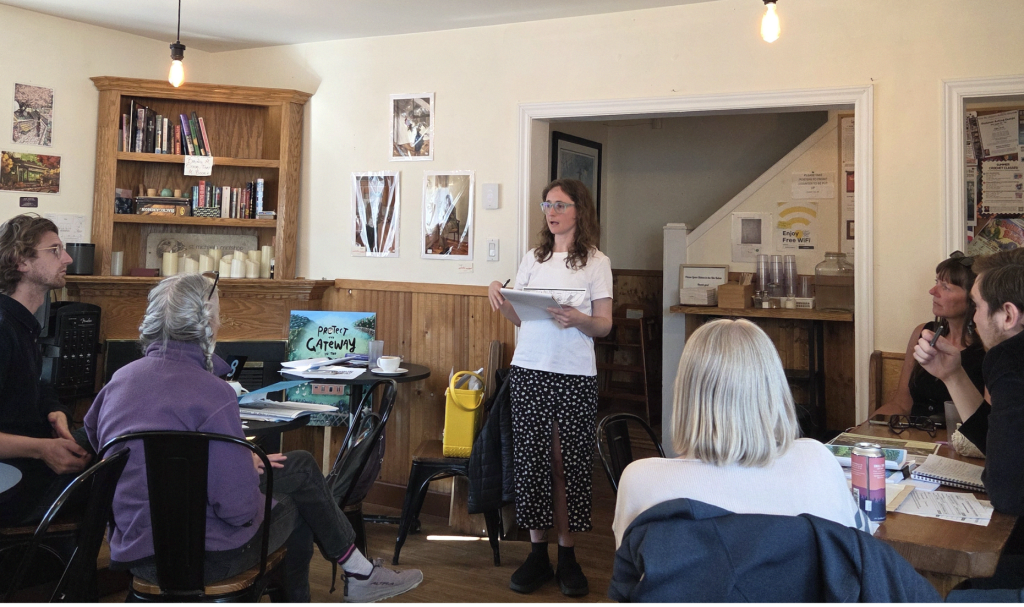
Callahan St. John tells those in attendance that they could talk and think about what their vision would be for the Signal Hill campus and Geo Centre areas.
“They are iconic locations and we really want the city to actually protect these spaces as well. And I know it’s Memorial University who is selling these properties, but we can potentially apply for rezoning of these locations.”
The Signal Hill area properties, along with recent news the demolition of a building on Water Street was approved by city council, has brought sharp criticism of those involved with the decisions, with a specific lens of what many see as a lack of consultation and regulation aimed at preserving heritage and culture.
“We’re kind of trying to unify this,” Callahan St. John says, “the heritage decisions and the heritage at risk throughout downtown and through Signal Hill.”
“Challenging the city, basically saying, you know, they don’t have a vision. They’re really not thinking through these ideas. Things don’t really seem cohesive,” she continues.
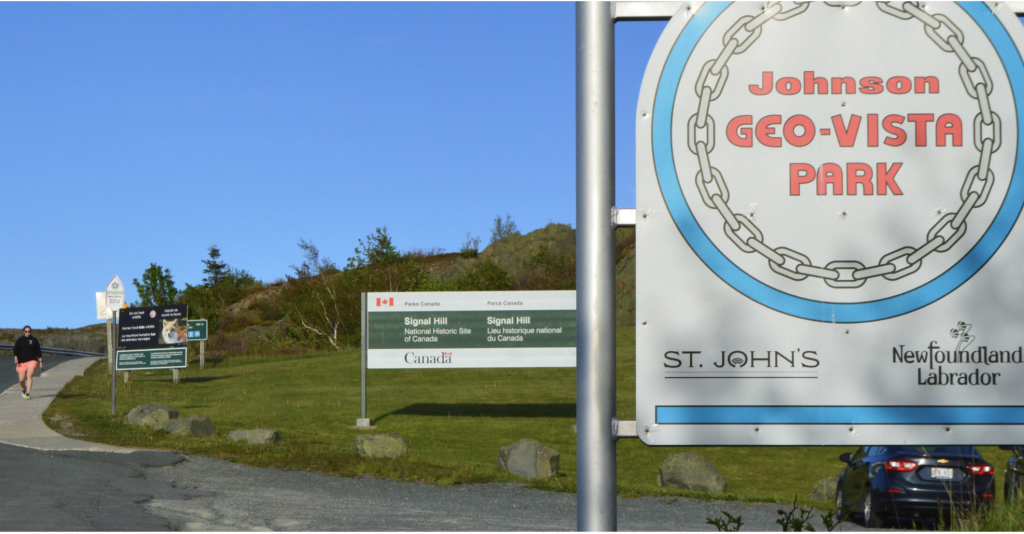
Those in attendance nodded in agreement, prompting one to echo that they too thought part of the responsibility of what happens to the Signal Hill properties rests with Memorial University. That resident also suggested Parks Canada take more of a stance in favour of preservation or “appropriate development” given the Geo Centre also borders the Signal Hill National Historic Site.
It’s an idea supported by St. John’s East–Quidi Vidi MHA Sheilagh O’Leary, who is also at the meeting.
O’Leary says the issue of future development in The Battery and Signal Hill areas was “expanding quickly” and suggests the group set up clear mandates about who it is they are targeting with their concerns.
“Sometimes it’s the government. Sometimes it’s the university. Sometimes it’s the city council firmly not doing the planning job, the envisioning that they’re supposed to be doing,” O’Leary tells the group.
O’Leary, a former St. John’s city councillor and deputy mayor, says connecting the potential impact developments in the area could have on the tourism industry, and tourism dollars that could be lost, could also help.
“I think the power, as unfortunately it is with most things, is: where does the money go? Where’s the money? And the money is the tourism industry,” she tells the group.
“And I’m sorry to have to say that […] but unfortunately, we have to try to create a language that they understand.”
O’Leary says with the House of Assembly closed until October, it would be difficult to see any movement from the provincial government on the issue until the legislature reconvenes. But she did say she is meeting with St. John’s Mayor Danny Breen and Ward 2 Councillor Brenda Halley at the end June. O’Leary says a meeting with Siân French, Parks Canada’s field unit superintendent for eastern Newfoundland, is also in the works.

The conversation in the coffee house varies, with others in attendance vocalizing the impact should trees be cut down in the neighbourhood, and how that could affect absorbing smoke from ships in the St. John’s Harbour. Others lament the potential loss of walking and hiking trails in the area and the animals that share them.
In an update shared with The Independent following the publication of this article, Memorial University spokesperson Elizabeth Furey says that, as of June 25, neither the Johnson Geo Centre has not been listed for sale and the Emera Innovation building has not been sold. In both cases, she says, the university is waiting on “some approvals to advance with the next steps of the divestment process.”
Deterring development for decades
Callahan St. John alludes to another proposal 15 years ago that proposed to turn the then Battery Hotel into a 10-storey condominium, adding that dealing with these types of concerns over developments and zoning in the city has been going on for decades.
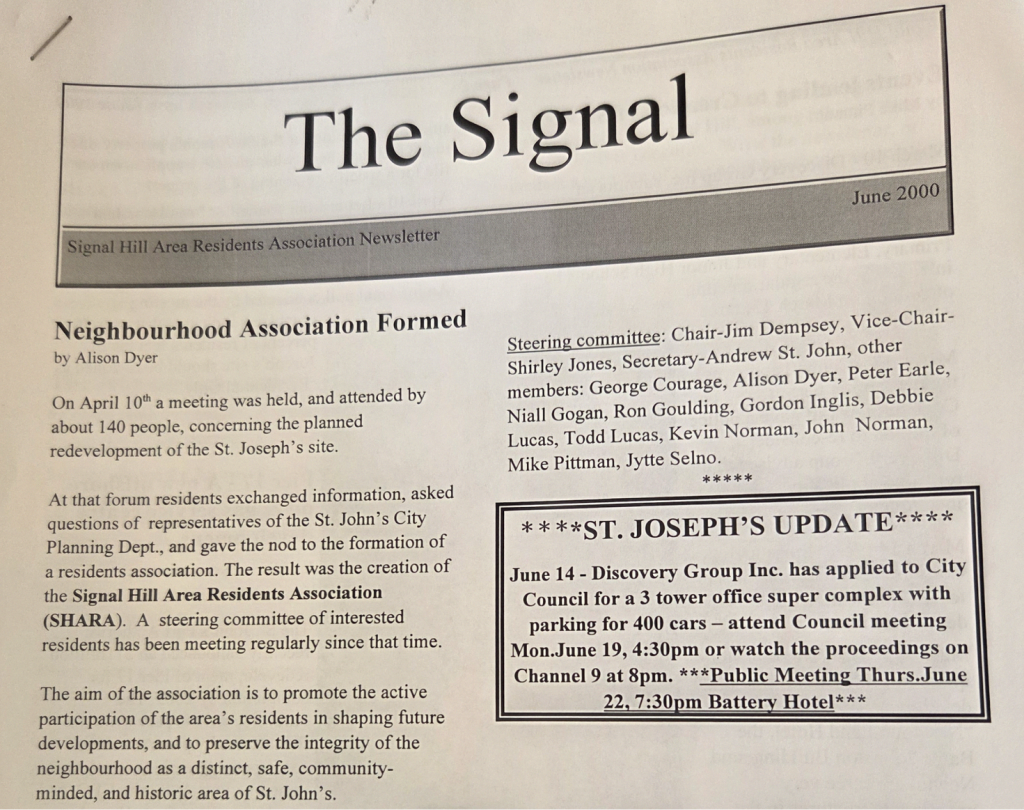
The Independent was able to view a section of the newsletter The Signal, created by the Signal Hill Area Residents Association in 2000. Nearly three decades ago Signal Hill neighbours in the region united to oppose the development of a multi-tower office building with parking for hundreds of vehicles proposed for nearby St. Joseph’s Lane.
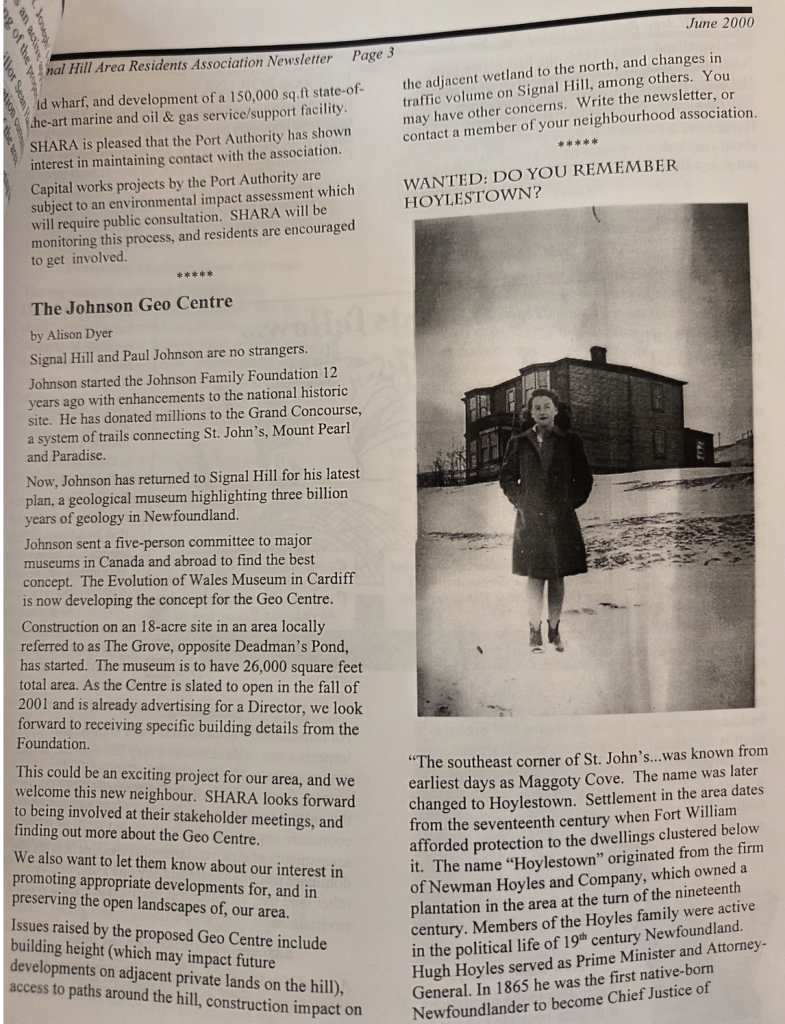
The same June 2000 issue contains a section on the Johnson Geo Centre, which was then only getting off the ground. It reads that Paul Johnson and the Johnson Family Foundation were ‘no strangers’ to the Signal Hill area, returning again for his latest plan for the Geo Centre ‘a geological museum highlighting three billion years of geology in Newfoundland. Johnson sent a five-person committee to major museums in Canada and abroad to find the best concept. The Evolution of Wales Museum in Cardiff is now developing the concept for the Geo Centre,’ it reads.
It says construction on the 18-acre site, referred to by locals as The Grove and across from Deadman’s Pond, is slated to open in the fall of 2001.
‘This could be an exciting project for our area, and we welcome this new neighbour,’ reads the newsletter, ‘SHARA looks forward to being involved at their stakeholder meetings, and finding out more about the Geo Centre.’ Going on to say the community group wants to let developers know about their interest in promoting appropriate development and preserving the landscape in the area.
Questions over who owns land surrounding Geo Centre
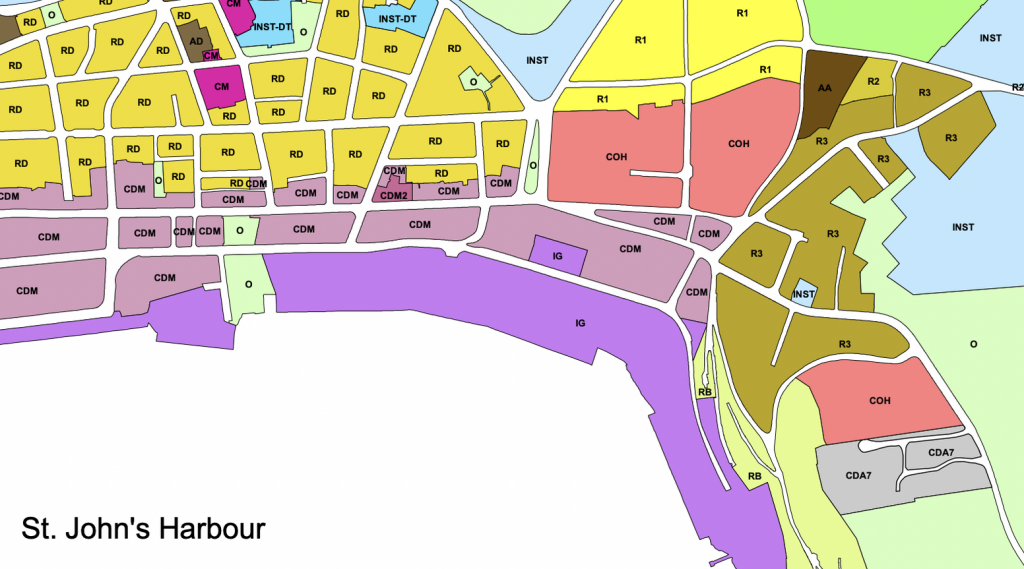
During the community meeting there are questions about potential other owners of some of the property surrounding the Johnson Geo Centre acreage. A City of St. John’s zoning map from 2021 shows the Johnson Geo Centre and adjacent fields zoned as ‘O’ — or ‘Open Space’ — in accordance with the Urban and Rural Planning Act.
City of St. John’s spokesperson Jackie O’Brien confirmed that 175 Signal Hill Road falls within the Open Space zoning. And that “if a developer wanted to propose a use that is not within the permitted or discretionary use categories of the zone, then they would require a rezoning application,” she said.
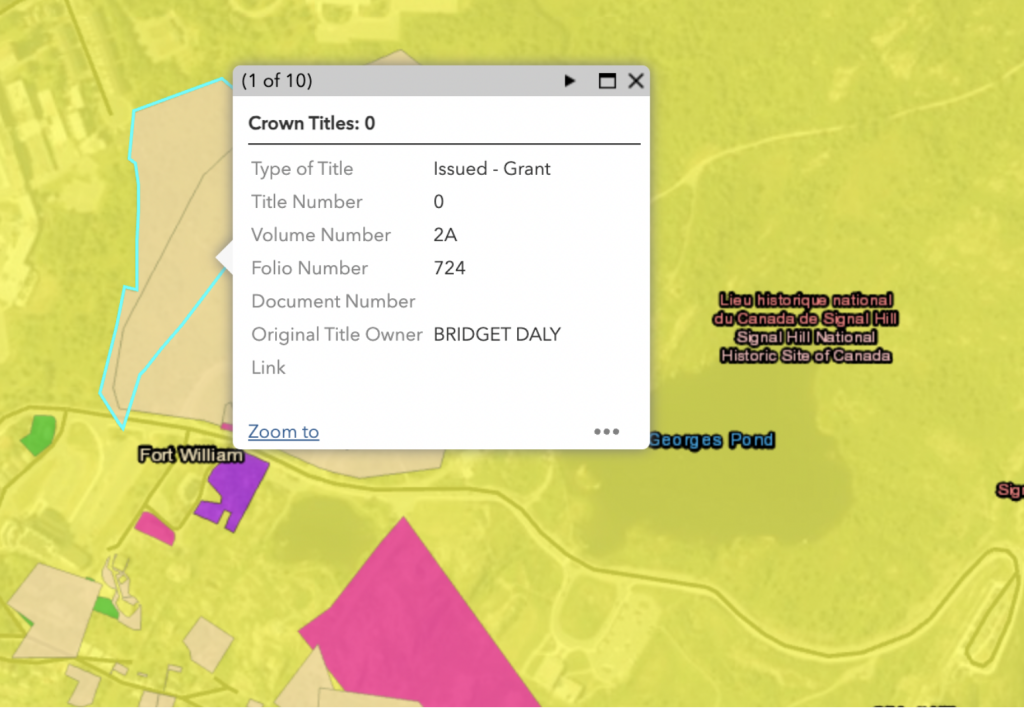
A search of the provincial Land Use Atlas, which shows administrative boundaries and was created to process Crown lands applications or any potential land use conflicts, shows a woman named Bridget Daly as a possible nearby original title holder, along with a James Crowdy. However, the provincial government notes that applications shown on the Land Use Atlas may not be current.
Did the Catholic Church give land to Signal Hill residents?
Callahan St. John says they’re also looking into Catholic Church-owned farming land that the Church possibly transferred to the people of Signal Hill years ago. “There is a deed somewhere from the Church to the people of Signal Hill. That could be 70 plus years ago. So it’s changed hands a few times,” Callahan St. John said.
“We need to be acting now, putting pressure immediately, and then also continuing doing research on what Signal Hill is, what it can be, who owns it, who’s making decisions,” Callahan St. John tells those at the meeting.

Taking it all in and looking to the months ahead
Seated in the crowd and taking in the information being presented is Renee Keough. Not a resident of the Signal Hill area, Keough lives in the nearby Georgetown neighbourhood and is here to show her support.
“Paul Johnson built that for the community. Then it was given to the university. And now the university is just discarding it,” Keough says.
“I live in a densely populated part of the city, as most of us do here. You walk or even drive up Signal Hill and all of a sudden you’re in the wilderness almost. You know, it’s beautiful. We can’t be turning this into a god damn subdivision.”
Back on Cabot Avenue, Diana Daly could soon need the fingers on her second hand to count the development battles she and her neighbours collectively have on their hands.
“I mean we’re all really tired and sad. Everybody’s got work and life to do,” she says. “There’s lot of elderly people who made a beautiful place for everybody to pass through, take their pictures and feel safe.”
Editor’s note: This story was updated on June 25, 2026 to include a comment received from Memorial University after the time of publication.

Author

Related Articles

May Day Rally Shows New Face of Today’s Labour Movement
Turnout for May 1 march and rally in St. John’s one of the biggest yet in this province

Recimply the Best: Pitch and Pick Competition Winner Aims to Reduce Paper Waste
Recimply won big at Genesis’ annual Pitch and Pick competition last week. The startup is solving the problem of non-recyclable paper receipts.

Coming Home Queer for the Very First Time
For three days in July, queer Newfoundlanders and Labradorians from all over the world celebrated a rural homecoming 30 years in the making.
As Innu exhibit opens in Labrador, Grand Chief says truth must come before reconciliation
Innu Nation Grand Chief Jodie Ashini says it’s disappointing to open the Innu Pakassiun exhibit without the provincial government’s participation, but Innu know their history and who they are

Liberals’ Bill C-39 a wake-up call for Canadians: Avi Lewis
‘Cracks starting to show in the Carney consensus,’ Lewis tells N.L. NDP convention in St. John’s

As NDP convention gets underway in St. John’s, will N.L.’s third party prioritize growing rural support?
Former party candidates say it’s a steep hill to climb, but there are ways