
Son of late Innu leader says Hydro-Québec does not have consent for Gull Island, wants work halted immediately
Innu Nation recently gave the Québec utility a conditional green light to do survey work for the proposed hydroelectric megaproject. Jerome Jack wants Innu leaders to step down and call a general election before Innu vote on the proposed deal.
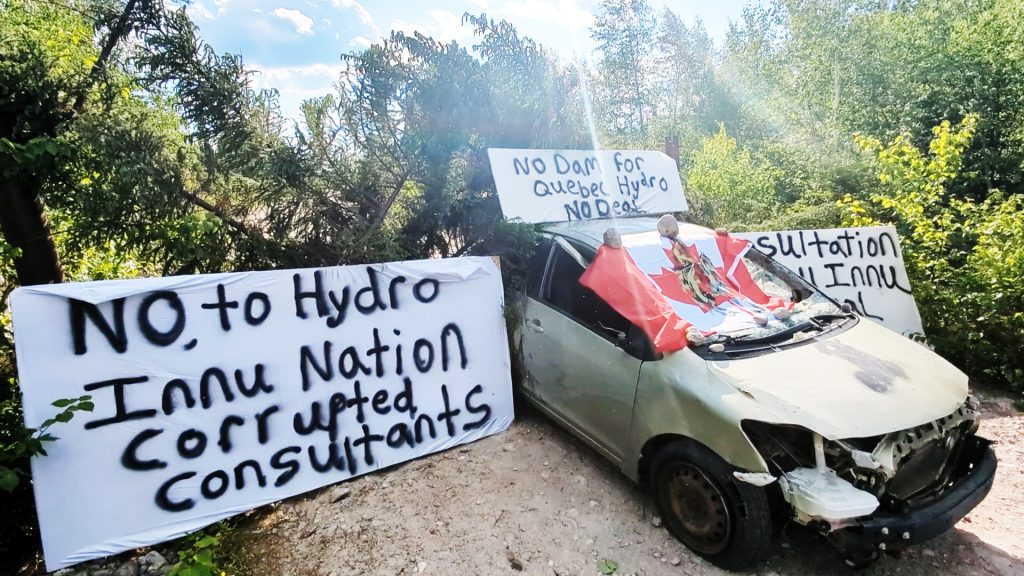
A Sheshatshiu man is calling for Innu leaders to step down and for all work at Gull Island to stop after Innu Nation gave Hydro-Québec a green light to resume preliminary work before Innu have their say in a referendum. Innu Nation’s assent precedes a forthcoming vote by Innu on an agreement between Innu and the Québec public utility for the proposed hydroelectric megaproject in central Labrador and to settle a legal challenge.
“I was furious. I was very upset,” said Jerome Jack, an Innu land defender and son of late Innu leader Bart Jack, who was instrumental in the Innu resistance to Muskrat Falls nearly a decade ago. “They still don’t have the consent from people, and they’re still going ahead with everything.”
Jack said Innu Nation is violating its own agreement with Hydro-Québec because it’s allowing exploratory work to go ahead without Innu consent.
Hydro-Québec said in a statement to The Independent that it has met with Innu Nation Grand Chief Simon Pokue to discuss the field investigations and cultural importance of an Innu gathering site at Gull Island where Innu meet each year.
Will you stand with us?
Your support is essential to making journalism like this possible.
“Hydro-Québec, as the co-developer and prime contractor, is working with Innu Nation to put in place mitigation measures to reduce disturbance at the gathering site and gradually resume field work, with the assurance that Innu land guardians will be hired and involved in this work as soon they are available,” the statement said.

Hydro-Québec says it will respect the integrity of the gathering site, be transparent, and consult with community members. It also says Innu Nation “liaison officers” will be hired as soon as possible.
While Hydro-Québec is not a signatory to the 2011 Lower Churchill Impact and Benefit Agreement (IBA) between Innu, the Government of Newfoundland and Labrador and then-provincial Crown energy corporation Nalcor Energy, it says its current field work at Gull Island is authorized by that agreement, in tandem with the December 2024 memorandum of understanding between NL Hydro and Hydro-Québec that enabled both utilities to update engineering and environmental studies required for the projects. Hydro-Québec spokesperson Lynn St-Laurent also pointed to the fact that Innu Nation Grand Chief Simon Pokue “signed an official acknowledgement of the MOU confirming the province’s commitments to the Innu of Labrador.”
As part of the December 2024 MOU, NL Hydro and Hydro-Québec “agreed that Hydro-Quebec would update studies for the Gull Island Project,” including “engineering and environmental studies required to inform the development costs,” the province’s Cabinet Secretariat said in an emailed statement to The Independent. Hydro-Québec is “responsible for all costs related to such studies until the execution of the definitive agreements,” the statement continued.
Hydro-Québec said its fieldwork involves geological mapping, hydrogeology assessments, water-well drilling, and tree cutting, which will be ongoing until the end of October. It said no construction work will begin in 2025.
‘Reconciliation and Collaboration’ deal a separate matter: HQ
On June 20, Hydro-Québec announced a proposed deal between the utility and Innu Nation, which advocates and negotiates on behalf of Innu rights holders in Sheshatshiu and Natuashish.
Hydro-Québec says that proposed agreement is a separate matter that aims to settle the legal challenges related to the construction, operation and maintenance of the Churchill Falls hydroelectric complex, and to establish a new relationship between the parties.
Innu are set to vote on the proposed deal this fall. In early July, Innu Nation held meetings in Sheshatshiu and Natuashish and presented the agreement-in-principle to Innu. Jack believes the agreement is being rushed because members of Innu Nation’s negotiating team are involved in businesses that could profit off the work at Gull Island.
Hydro-Québec’s June 20 release says that once Innu Nation presents the proposed agreement-in-principle to Innu, “all terms of the agreement in principle will then be made public,” and that negotiations “will continue to finalize the terms of a formal agreement by the fall of 2025.” To date, the terms of the proposed agreement have not been made public. “Once a final agreement is reached, Innu Nation will present it to its members for ratification,” the release states.
Limited access is still access
Jack said Innu Nation granting Hydro-Québec access to the area before Innu are able to vote on the proposed deal to settle the legal challenge led to a call for a general election at the Innu Nation Annual General Meeting in Sheshtshiu on July 3. No election has been called and Innu Nation has not responded to The Independent’s interview requests.
“These individuals will not vacate their seats because they want this project to go ahead because they have companies that are lined up so they can bid on these major contracts,” Jack said. “They’re using everything in their power to not use peoples’ consent, or Elders’ consent, or youth consent.”
Jack says Innu Nation leadership did not acknowledge the youth who walked to Gull Island in July, then, just a few days after youth completed their walk, announced Hydro-Québec could resume its work at the site.

Innu Nation said on July 24 it’s not opposed to Hydro-Québec’s environmental work continuing, as long as there is no disruption to Gull Island. In the social media post, the organization said the utility will not construct a camp at Gull Island and there will be no road traffic to the traditional Innu gathering site. It said any future road access will not be through the site, and that two “Innu land guardians” will be hired.
“Innu Nation has always supported scientific investigations. Assessing land for potential future use is no exception,” the Facebook post says. “Hydro Québec needs to make decisions about any potential project at Gull Island and Innu Nation also needs this environmental information for our communities to make informed decisions.”
The organization’s Facebook post came four days after Angel Jourdain McKay and Percey Montague walked from Sheshatshiu to Gull Island to advocate for a rejection of the proposed agreement between Innu leadership and the Québec utility. That walk followed a blockade of the site by Innu land defenders who opposed Hydro-Québec’s presence in the territory; it remains in place and land defenders continue to visit the site.
The Independent asked Innu Nation whether results from Hydro-Québec’s preliminary work could impact the proposed settlement agreement, and why the work is going ahead prior to the court settlement agreement vote. The organization did not respond to the requests.
“It’s appreciated that Gull Island will be left alone this summer, with no camp, no road, and no traffic,” Jourdain McKay said in a statement to The Independent. “I still disagree with the decision to allow Hydro-Québec to continue environmental studies in the area.”
The 19-year-old said even if the access is just for research, it could open the door to further work down the road, potentially harming the land and culture Innu are trying to protect. If Hydro-Québec is accessing Innu territory, she wants Innu Nation to be transparent on the hiring and selection process for the Innu guardians.
“Our people have already said no to development at Gull Island. We shouldn’t have to keep defending the same answer,” Jourdain McKay said.
Process proceeding without Innu consent: Jack
With Innu Nation offices closed for the summer, it’s not clear if the communities will be consulted again before a final draft of the agreement is presented to Innu. The Independent sought clarification from Innu Nation but did not receive a response.
Hydro-Québec says it’s committed to following the terms of the 2011 IBA, including “Optimizing benefits for Indigenous and local communities; sharing information in a respectful, open, and timely manner; listening and responding to issues important to residents and communities; respectfully engaging with Indigenous governments and communities; and maintaining the highest standards of environmental protection and stewardship of the land.
“We will ensure our subcontractors abide by these commitments,” the utility said in its written statement. “Throughout the expected construction period, we will do our utmost to resolve any issue that may arise, in good faith, and through open communication.”
Things are happening quickly and without adequate consultations with Innu, Jack says. “The timeline for the referendum, I feel, is like you’re pushing someone down the stairs to agree with you,” he said. “Is it going to be good? Is it going to be a safe journey down the steps? But no, you push someone down the steps, you’re going to injure someone.”
Jack wants to see a better process play out than the one that led his late father Bart Jack, a former Innu leader and Elder, to rescind his support for Muskrat Falls in 2016 when he spoke out publicly against the project.
In 2016, Bart Jack said he had originally supported the second dam on Mista-shipu because it “promised a lot of things for the Innu,” including jobs, business opportunities, and significant revenues. But he joined land defenders partway through the dam’s construction, saying it became clear the project was a bad deal and could devastate Innu families once the reservoir was flooded.
WATCH: In 2016, Innu Elder Bart Jack explained his change of heart over hydro development on the Lower Churchill River, known as Mista-shipu to Innu.
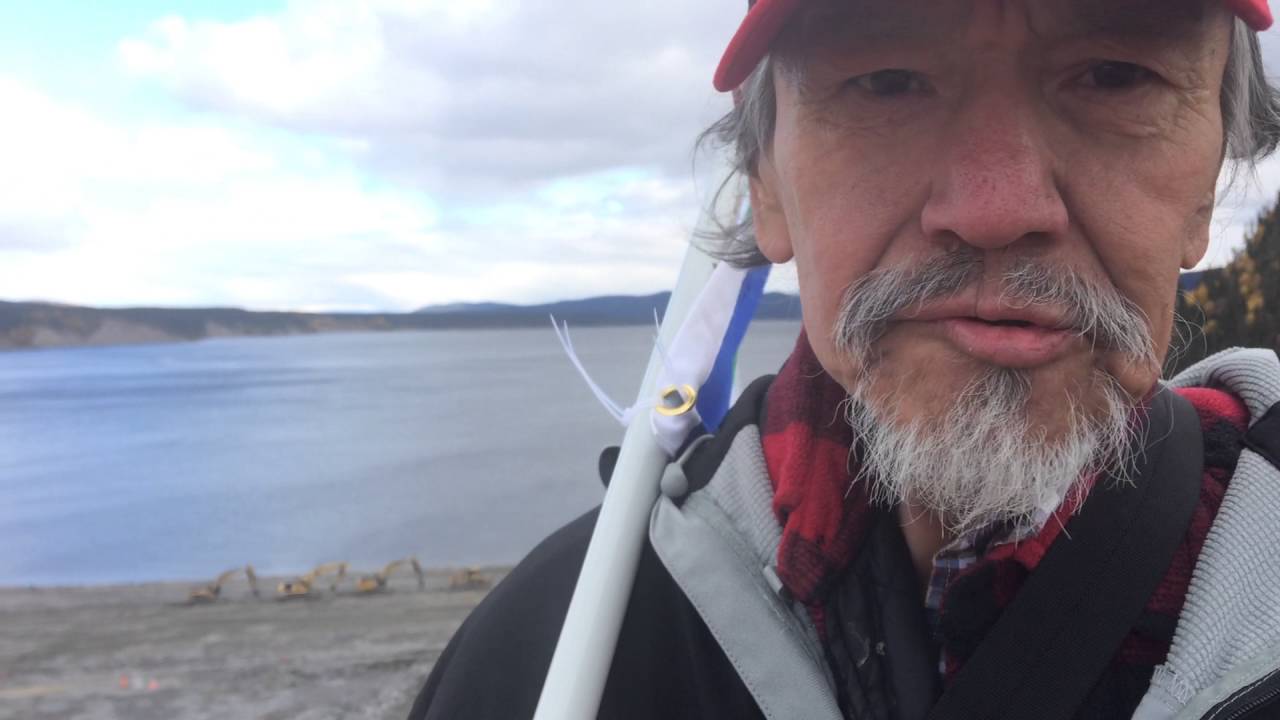
Jerome Jack said Innu Nation leadership and the negotiating team are thinking first and foremost about the financial benefits Gull Island could bring, without considering the long-term impacts and the Innu’s right to free, prior and informed consent. “Hydro-Québec should be removed from the province. I do believe that they have no right to be stepping on Innu land without consent, the proper consent from the people,” he said.
Jack said officials with the Government of Newfoundland and Labrador need to step in and halt the work, and Hydro-Québec needs to listen to the Innu people, not just Innu Nation leadership. “My people want a general election,” he said, adding leaders are “not speaking for the people.”

Author

Related Articles
PCs have no plan to meet ambitious housing targets
Finance minister pins housing hopes on federal funding, says his own portfolio of rental properties doesn’t put him in a conflict of interest
Photos returned to Innu ahead of Labrador exhibit showcasing history, culture
Cultural Guardian Jodie Ashini hopes the archival photographs will help strengthen youth’s connection to Innu culture, and ultimately improve mental health
Can N.L. have oil and gas, and climate targets too?
Finance minister says yes, but ATI requests show there’s no plan for how to do both — and reveal significant unpublished emissions estimates