
PCs have no plan to meet ambitious housing targets
Finance minister pins housing hopes on federal funding, says his own portfolio of rental properties doesn’t put him in a conflict of interest
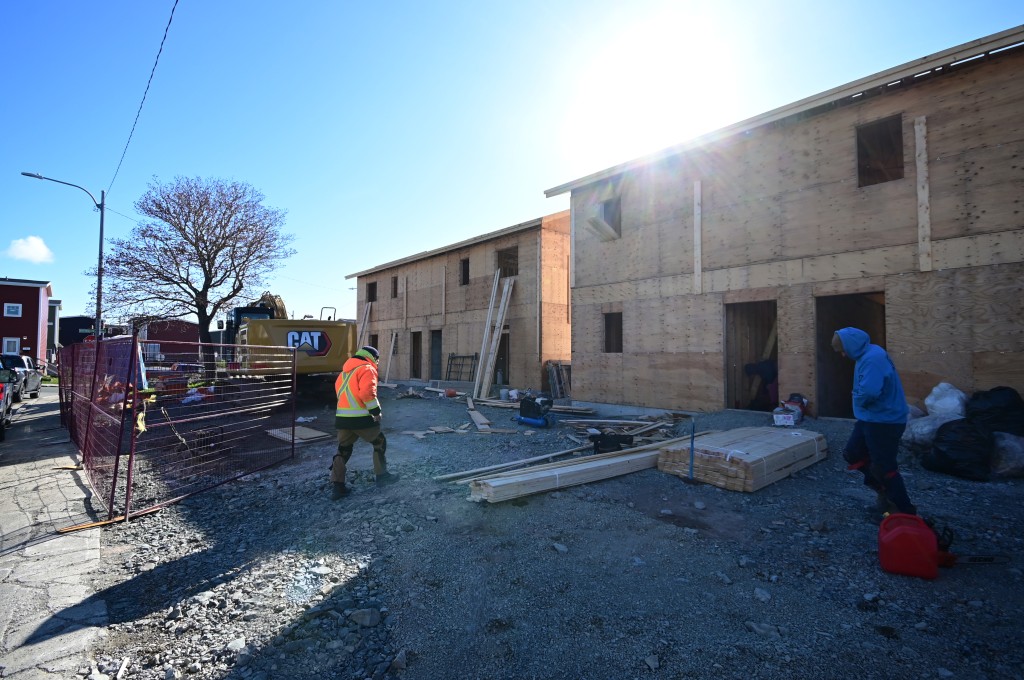
In the wake of the party’s first budget since coming to power last fall, Newfoundland and Labrador’s Progressive Conservative government has no plan to meet its commitment of 10,000 new housing units by 2030.
In a sit-down interview with this outlet, Finance Minister Craig Pardy pinned progress on housing to new federal funding, and stopped short of embracing rent controls. Pardy is himself a landlord, operating seven rental units with his spouse, and although he touts his unwillingness to raise rents for seniors in his units, he acknowledged making “market adjustments” to rents between tenants that would likely be illegal in neighbouring Quebec.
Beyond the commitment to 10,000 new housing units, plans are also hard to find when it comes to the development of a housing and homelessness strategy, ending no-fault evictions, recognizing housing as a human right in provincial law, and replacing the St. John’s transitional housing project that it’s shutting down at the end of the year.
But the province’s crown housing corporation, the Newfoundland and Labrador Housing Corporation, says the PC government has “set out a plan” for housing and is “working toward these priorities,” which include increasing “the number of people whose housing costs do not exceed 30 per cent of their incomes – giving everyone the opportunity to have a safe and suitable home within their budget,” creating “affordable and independent housing for seniors who prefer to move into a supportive community environment,” and acting to “aggressively repair or replace uninhabitable NL Housing units.”
Will you stand with us?
Your support is essential to making journalism like this possible.
Doug Pawson, executive director of End Homelessness St. John’s, says there appears to be a roughly five per cent reduction in funding for housing in the PC budget released earlier this month. Part of that, he says, may be due to the completion of work to establish the Horizons at 106 transitional housing facility that End Homelessness operates near the city’s airport. Even that project, shrouded in controversy due to the building’s owner at the time being a Liberal Party of NL donor, has no clearly defined future and will close when the current lease expires at the end of 2026.
Given the dire need to address the housing and homelessness crisis, Pawson hoped to see more movement on the actions his organization and others have been requesting for years.

“We’re not necessarily seeing net new money going into the overall Newfoundland and Labrador Housing Corporation budget, [or] how things are going to be reprioritized within the existing budget,” he says. “And there was no commitment to targets around housing builds and housing units coming online throughout the year.”
The provincial budget allocated $31 million in funding for new housing builds, but with no details on where or when those builds will happen. That funding, Pawson says, was already expected as part of the province’s bilateral agreement with the feds related to the 2019 National Housing Strategy. “We knew the last three years of that strategy there was gonna be a significant portion of money allocated for capital builds, but it’s not net new money,” Pawson explains.
In their election campaign, the PCs promised to build 10,000 new housing units within five years, by the fall of 2030. At an estimated construction cost of $350,000 per door, Independent housing columnist Hope Jamieson recently wrote, $31.1 million could amount to fewer than 90 units. “If accounting for the net decrease pointed out in that same AG report, it means that NL Housing’s portfolio will expand by about 30 units if we benchmark per-door costs optimistically,” Jamieson wrote. “That amounts to about a 0.6 per cent increase in the total number of public housing units, and would address 1.2 per cent of 2025 waitlist demand, which sat at 2,603 households.”
Beyond the numbers, there’s also no clarity around the nature of the new units. “Are those NLHC units? Are those community-based housing [units] that are being supported? Or are those other arrangements? We don’t really know,” says Pawson. “The budget didn’t really provide any details or descriptions of what those plans would be.”
In an emailed statement Thursday, housing corporation spokesperson Marc Budgell said high priority areas for the construction of new NLHC homes “will be determined based on NLHC’s waitlist in different areas of the province, with a focus on construction outside St. John’s. There are certainly other factors at play, including municipal regulations and the availability of NLHC land, but demand will be based on waitlist need.”
Budgell also noted the government is in “active discussions” with Build Canada Homes about building more “transitional and supportive housing.”
Housing demand won’t be met without more help from feds: Finance Minister
In a recent interview with The Independent, Finance Minister Craig Pardy said the province won’t be able to meet the housing demand without help from the federal government. “To do it without federal money is going to be a problem, [but] I think we’ve got a partner in the federal government,” he said, adding provincial housing minister Joedy Wall has been in talks with the feds.
“We will develop more housing units primarily with the help, to reach our goal, [of] the federal government, and Minister Wall is confident that we will have them as a partner going forward in order to create the housing.”
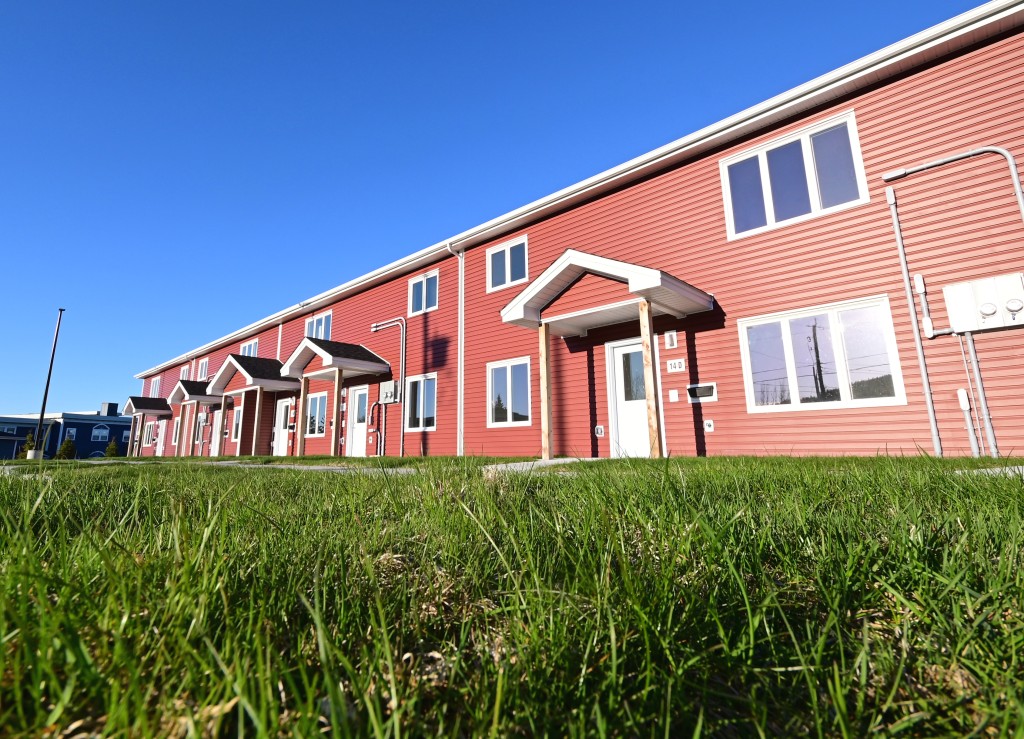
On Thursday the NLHC told The Independent that there are “numerous [public] housing developments in progress in St. John’s,” including 32 recently completed homes in the Pleasantville neighbourhood, where the occupancy process has begun. It also pointed to the recent start of construction on a 40-unit apartment building in the same area, and of 10 micro homes in the city’s Buckmaster’s Circle neighbourhood. “This does not include many other housing projects from other partners, such as Build Canada Homes expansion plans in the Pleasantville area,” Budgell wrote.
Pardy also said the government needs to “utilize those agencies that know from the ground as to where the best utilization of resources would be. We need to let them lead the way as to what we develop.”
Pawson says End Homelessness St. John’s has met once, in December, with Wall to “communicate the broad strokes” of his organization’s 2024 St. John’s Community Plan to End Homelessness, the first recommendation of which is to “develop and implement a provincial housing and homelessness strategy.”
That, Pawson said, was the “extent of our conversations with the government at this point.” He has asked the government for weekly meetings with his organization, from which they “hope to be able to form a plan and a commitment that we can more broadly share with our staff and residents and the general public. But as of today, we just don’t have the ability to communicate a plan.”
Are landlord cabinet ministers in conflict of interest when it comes to rent controls?
Pardy, who with his spouse owns seven rental properties in the Trinity Bay region, admits that the funding in this year’s budget “doesn’t match with what we’ve predicted and what we want to roll out.”
Asked if the public should have confidence that a provincial government with multiple cabinet ministers whose families draw income from rental housing would fix the housing crisis, Pardy defended his investments, saying he hasn’t raised rent for his tenants in years, with the exception of making “market adjustments” after a tenant moves out and before new tenants move in.
“If I have seniors in properties that I have, there are no rent increases, and that’s probably a reason why they don’t move out,” he said. “The only time if somebody moved out, there would be a market adjustment to know that I’ll go with what the market adjustment would be only when the tenants move out.
“I would think that if you spoke to any tenants that would be in the units that I have, then they would say that they’re quite pleased where they are and the rent is quite affordable.”
In Newfoundland and Labrador, a landlord can raise a tenant’s rent every 12 months, with no cap on the increase. By contrast, British Columbia, Manitoba, Ontario, Quebec, New Brunswick and Prince Edward Island all have rent control laws that cap how much a landlord can raise rents.
In Quebec, provincial law caps annual rent increases at a fixed percentage (usually between 3-4 per cent), and a market adjustment of more than that amount between tenants would be illegal.
Since coming to power last October, the PCs have only announced plans for around two dozen new subsidized public housing units.

Pardy insists private landlords are needed to provide housing.
“We’ve got to have people that are going to invest in having properties that would be affordable for people to live in,” he continued. “If this market was void of people that were going to invest their own money into properties in order to rent to people around the rental market, I think we’d be in a tough spot.”
Jamieson says the private market can play a role in fixing the housing crisis, but that the broader conversation around public housing and rent control, for instance, “is about not leaving it up to the altruism of individual landlords,” noting “some landlords will be nice, some won’t be.
“There is a certain percentage of people who will increase rents exorbitantly simply because they can, and creating conditions where that’s the case leaves tenants vulnerable and exacerbates conditions which are contributing to widespread housing insecurity,” they continued. “It’s not a responsible policy choice.”
In 2023, The Independent reported the story of a young mother in St. John’s who lost custody of her baby after her landlord raised her rent beyond what she could afford, then evicted her, sending her back onto the streets. Living in a tent at a St. John’s homeless encampment, which the province later evicted, the mother fought back tears as she recounted her traumas, explaining she had “talked to six other mothers that had to either put their kids with family members for custody, or put them up for adoption” because they were experiencing homelessness.

The provincial NDP has repeatedly called on Liberal and PC governments to strengthen rent controls in Newfoundland and Labrador, with particular attention to no-fault evictions and significant rent increases. Last month, St. John’s East-Quidi Vidi MHA Sheilagh O’Leary asked Government Services Minister Mike Goosney in the House of Assembly if he would “commit to bringing in rent caps and vacancy controls so that people are not forced into homelessness as a result of excessive rent increases?” In response, Goosney said he’s “going to make sure there’s no homelessness, and I’m here to work with [O’Leary] to make sure that doesn’t happen under my watch.”
In a written statement, Goosney told The Independent that any changes to the Residential Tenancies Act “must protect responsible renters and diligent landlords.” He also said his government “welcome[s] conversations on how to move forward and what changes could be made,” adding they will “explore and consider all options in consultation with housing advocates and community partners.”
Presented with the story of the young mother who lost custody of her child after her landlord significantly raised her rent, Pardy said he would “like to be engaged in conversations that would prevent that,” but stopped short of saying he would support any proposed legislation that would strengthen rent controls in the province.
“There are ways to go about it,” he said, before pointing to the province’s rent supplement program for low-income households.
Budgell also notes that over 60 per cent of NLHC’s waitlist is “individuals or families who have a home, but are struggling to afford rent.” He says Canada Housing Benefits “have been an effective tool to help families stay housed in the private market,” explaining the provincial budget provides funding for 500 new recipients to “help reduce the waitlist further.”
Financial support for low-income renters, however, must go hand in hand with rent control measures, says Pawson. “A big challenge that I have with the fact that we need so many rental subsidies for folks to afford housing is that we’re transferring wealth, often not to mom-and-pop landlords, but into corporate landlords through those subsidies,” he says. “And that allows for the rents to continue to increase and subsidies needing to be used.”
Jamieson says rent supplements for tenants renting in the private market is “essentially funneling infinite amounts of money from the province through poor people into the pockets of landlords in our current situation.”
Pawson says strengthening the province’s Residential Tenancies Act around no-fault evictions “is something fundamental that needs to happen,” noting Newfoundland and Labrador has “very weak legislation” compared to other provinces.
As for MHA landlords, “they’re there to represent the people, whether they rent to them or not,” he continues. “Strengthening [legislation] to ensure that landlords can’t operate on a whim to evict people and benefit from the crisis is something that they can control. And if they need to recuse themselves because they’re landlords, then they need to do that. There needs to be those mechanisms for disclosure and for decision-making that are transparent.”
Though the province’s premier, Tony Wakeham, who is also a landlord, has acknowledged housing as a human right, and despite Canada’s move in 2019 to legislate adequate housing as a human right, “no province has taken the step of enshrining this in legislation,” says Budgell. Instead, the government is “focused on implementing policies to rapidly expand access to housing in this province.”

Author

Related Articles
Gander didn’t protest U.S. ambassador during 9/11 visit, but still sent a clear message to Trump
There were no boos when Pete Hoekstra appeared at the 25th anniversary commemoration. Instead, Newfoundlanders kept their focus on the nearly 3,000 lives lost — and reminded America that Canada will not bow to anyone

Watchdog says it can’t investigate Deloitte over use of AI in $1.6M government report
Internal emails reveal Deloitte helped craft government’s response to The Independent’s investigation

Will declaring an epidemic help end gender-based violence?
Three provinces in Atlantic Canada have made formal declarations — but is that enough to quell violence against women, girls and gender-diverse people?